

Illustrative patient discussing recovery questions after a tooth extraction with a clinician
Specialized Care

Post-Extraction Care in Erin

Standing in front of the pharmacy shelf after an extraction, it is hard to know which pain reliever suits you. In Erin or Hillsburgh, you can phone our team about comfort options, what your symptoms suggest, and whether reassurance, an examination, or further care is the right move.

Comfort while healing in Erin

Which painkiller, how much, and for how long?

Pain relief is usually the first practical decision once the freezing fades. The right choice is not the same for everyone. It depends on the extraction you had, your health conditions, other prescriptions, and any added procedure. Your treating clinician or pharmacist can tell you what fits, and that advice should come before anything you read online.

Some aching and tenderness are expected in the first days, along with mild swelling and a little blood-tinged saliva. Pay attention if the pain stops responding to what you were advised, starts climbing again, or comes with fever, a bad taste, or swelling. That is the point to call, even if you are not sure it matters.

From Erin village or Hillsburgh, contact the office that removed the tooth first, since they know what was done and what they recommended. If you cannot reach them or want a local view, phone our Bronte Street practice with the extraction date, the name of the treating office, and a list of what you have taken so far.

Ask about pain relief during recovery
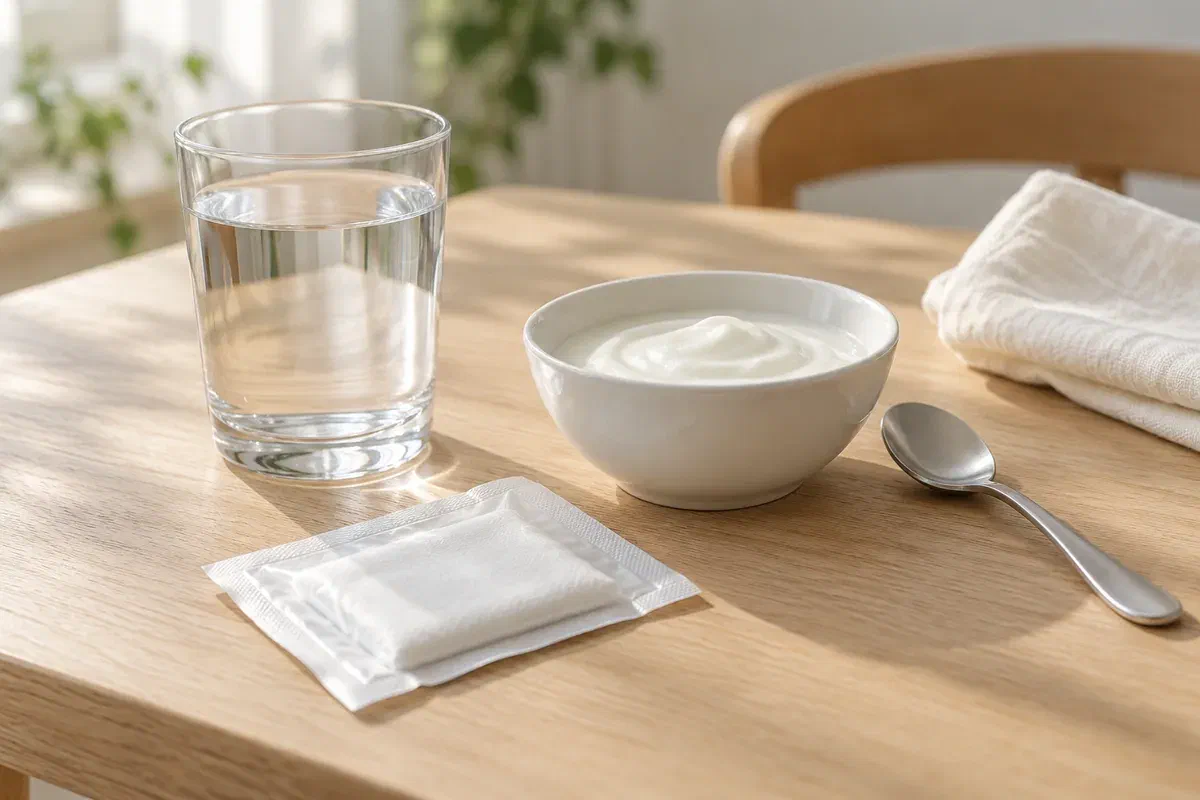
Illustrative recovery supplies with water, a soft-food bowl, and packaged gauze
When pain relief is not enough

Is the discomfort easing, or outrunning your medicine?

Tell the team what you have taken and how the pain is behaving, so they can judge urgency. Please phone rather than use a website form for a problem that needs prompt attention.

Bleeding that persists

Explain whether you see a faint pink stain or ongoing bleeding from the socket, and what pressure you have tried. Mention any medicine that affects clotting, including some over-the-counter pain relievers. Keep to your instructions, and seek advice for bleeding that does not stop or if you feel unwell.

Pain that breaks through your medicine

Say what you are taking, how often, and whether it is still helping. Note when the pain changed, whether it is spreading toward the ear, and whether fever, a bad taste, or limited opening has appeared. These clues help, but only an examination can confirm a dry socket, infection, or another cause.

Stitches, sensation, or the socket

Let the team know about a loose stitch, numbness lasting longer than expected, or a socket that looks concerning. Do not try to relieve pain by pressing on the site or packing it yourself. Report changes in feeling to the clinician who did the extraction.

Pain medicine should never mask an emergency. Heavy bleeding that will not stop, swelling spreading fast, trouble breathing or swallowing, or feeling seriously ill needs emergency medical care. Call 911 in an immediate emergency.

Beyond the pharmacy shelf

Comfort works best when the cause is understood.

If pain is not following the expected course, a review helps explain why. The clinician considers the extraction, how your symptoms have progressed, and what the examination shows, then tells you whether things look like healing or a problem that needs care. Where uncertainty remains, a good clinician tells you so rather than offering comfort based on dates.

The visit is also the right moment to sort out a medicine plan that suits you. Bring your list of prescriptions and any supplements. Ask how pain relief fits with them, what to do at night, and when to stop. Leave with the advice written down and a clear number for questions.

An examination of the painful area

As needed, the clinician checks the socket and nearby teeth and gum, keeping the original procedure in mind. Ask what the findings account for and whether the treating office should be contacted. The outcome may be reassurance, treatment at the site, or a referral.

A medicine review for your situation

Bring packaging or a list of everything taken, with doses and times. Ask which options suit your health and other prescriptions, and whether any should be avoided. Do not exceed recommended amounts or combine products with the same ingredient, and never start leftover antibiotics.

A plan for when to taper and recheck

Ask how long pain relief is likely to be needed and when continuing pain should bring you back. Confirm whether you need follow-up for stitches, a dressing, healing, or later tooth replacement, and who to call outside clinic hours.

How we work through it

Medicines, symptoms, and an examination when needed.

Simple language is fine. Describe what you have noticed, how it has changed, and which medicines you have tried, and the team can focus from there.

  1. Review the procedure and your medicines

    Give the extraction date and treating office, and say whether a graft, implant, or other treatment was included. List every medicine you take, prescribed or not, and relevant health conditions. Explain how your pain differs from what you were told to expect.

  2. Assess how quickly to see you

    The team considers bleeding, swelling, pain control, overall health, and other symptoms. You may be offered a visit or directed to urgent care. If your pain or swelling worsens before then, call back.

  3. Examine and discuss options

    The clinician examines the relevant area and explains the probable cause or what remains uncertain. Some problems need treatment at the socket, others a change in instructions or further investigation. Ask whether proposed care treats the cause or mainly relieves pain.

  4. Leave with a clear comfort plan

    Before going, confirm the pain relief plan, what to change at home, and when to return. Ask how to report worsening symptoms. If another provider is still managing your recovery, check what will be shared with them.

Comfort and care at home

Soothe the area without disturbing it.

Your treating clinician’s instructions come first, especially after surgery or an additional procedure. If they do not cover pain relief or something else you need, ask instead of combining advice from different sources.

Protect the clot through the first day

Typical instructions say not to rinse, spit, or touch the socket for the first day. Guard against biting a numb lip or tongue, and leave hot food and drinks until feeling returns. Ask whether a cold compress on the cheek is part of your instructions.

Gentle meals and careful cleaning

Choose soft foods early on and follow the guidance for brushing nearby teeth and introducing gentle rinses. Avoid scraping the socket or probing it with your tongue. Ask about smoking, vaping, and exercise, since healing timelines vary between extractions.

Take medicines exactly as advised

Follow the dose and timing your dentist or pharmacist recommended. If bleeding starts, apply pressure as instructed and call if it continues. Never stop a prescribed anticoagulant or antiplatelet medicine yourself; that decision belongs to the clinician who prescribed it.

Patient information: UCLH — dental extraction aftercare · Royal Devon — post-extraction bleeding and anticoagulant precautions

When pain leads the conversation

More medicine is not always the answer.

Ask why a recommendation suits your symptoms and examination. Pain after an extraction does not automatically mean infection, and many concerns are not solved simply by adding another medicine.

When healing appears to be on course

Adjusted comfort advice and a review

The team may explain what to expect and suggest changes to your home care. Ask what improvement should feel like and when to call back. Reassurance should be based on the examination and a plan, not a promise that pain will be gone by a particular day.

When the site itself needs care

Treatment for a painful socket

A dry socket may be cleaned and dressed by the clinician to help symptoms, which pain medicine alone may not settle. It is not an infection and does not automatically need antibiotics. Ask what the treatment can do and whether a recheck is planned. Do not place oils, crushed tablets, or homemade packing in the socket.

When a different level of care is needed

Further or emergency assessment

Persistent bleeding, suspected infection, altered feeling, or another complication may need the surgical team that treated you or another suitable provider. Ask who will arrange the next step. Serious warning signs need immediate emergency care.

Patient information: East Sussex Healthcare — dry socket and symptom management

Erin pain relief FAQ

Medicines and comfort after a tooth comes out.

Call the treating team or a pharmacist when you are unsure or symptoms change. Your health and the procedure shape the advice, especially if you take other medicines.

(905) 876-4488
Can I alternate two over-the-counter pain relievers?
Some people are advised to, but it depends on your health, other prescriptions, and the products involved. Ask the dentist or a pharmacist before combining or alternating anything, and keep within the recommended doses.
Is it safe to put a crushed tablet directly on the socket?
No. Do not place tablets, oils, or homemade remedies in or on the socket. Take medicines as directed and call the treating team if pain is not controlled.
Pain is worse on day four even with medicine. Does that mean infection?
Not necessarily. Dry socket and other causes are possible, and an examination is needed to tell. Describe what you have taken and how the pain has changed, and do not start leftover antibiotics.
I take a daily aspirin. Should I skip it while the socket heals?
Do not stop prescribed aspirin without advice from the clinician who manages it. Use the bleeding instructions given and call if bleeding persists, telling the team exactly what you take.
Will I need prescription pain medicine after a surgical extraction?
That depends on the procedure and your health. The treating clinician will advise on what is appropriate. If what you were given is not controlling the pain, call them rather than adding more on your own.
Can I look at the socket to see whether the pain is from a dry socket?
Appearance alone cannot confirm that. Describe your symptoms and their timing to the treating team, and avoid pulling your cheek back or probing the area.
Erin post-extraction care

Bring your medicine list, and tell us how the pain has behaved.

Reach our Bronte Street practice by phone at (905) 876-4488 to discuss a recovery concern and assessment availability. Please have the procedure date, the treating office, your instructions, and a complete list of medicines ready when you call.

Recovery and pain relief needs differ with the procedure and your health history. Online forms are for non-urgent questions only; call about symptoms that are getting worse and seek emergency care for severe warning signs.

Visit Milton Dental Clinic
Unit 1, 342 Bronte St. S, Milton, ON L9T 5B7
Get directions Clinic hours
Monday–Thursday
11am–7pm
Friday–Sunday
By appointment only

Areas we serve

  • Milton
  • Oakville
  • Mississauga
  • Georgetown
  • Halton Hills
  • Acton
  • Campbellville
  • Brampton
  • Burlington
  • Puslinch
  • Rockwood
  • Erin
  • Caledon
  • Etobicoke
  • Old Milton
  • Bronte Meadows
  • Timberlea
  • Dorset Park
  • Dempsey
  • Clarke
  • Beaty
  • Coates
  • Harrison
  • Scott
  • Willmott
  • Ford
  • Bowes
  • Cobden
  • Walker
  • Mountain View
  • Milton Heights
  • Hawthorne Village
  • Valley View
  • Fallingbrook
  • Nassagaweya
  • Trafalgar
  • Esquesing
  • Nelson
  • Brookville
  • Moffat
  • Glen Williams
  • Norval
  • Limehouse
  • Stewarttown
  • Ashgrove
  • Hornby
  • Silver Creek
  • Speyside
  • Scotch Block
  • North Oakville
  • River Oaks
  • Glen Abbey
  • West Oak Trails
  • Palermo
  • Bronte Creek
  • College Park
  • Joshua Creek
  • Uptown Core
  • Preserve
  • Iroquois Ridge
  • Lisgar
  • Meadowvale
  • Meadowvale Village
  • Churchill Meadows
  • Erin Mills
  • Central Erin Mills
  • Streetsville
  • East Credit
  • Creditview
  • Heartland
  • Sheridan
  • Mount Pleasant
  • Credit Valley
  • Huttonville
  • Churchville
  • Springbrook
  • Northwest Brampton
  • Bram West
  • Fletcher's Meadow
  • Fletcher's Creek South
  • Alton Village
  • Orchard
  • Millcroft
  • Headon Forest
  • Tansley
  • Brant Hills
  • Tyandaga
  • Kilbride
  • Lowville
  • Aberfoyle
  • Morriston
  • Arkell
  • Hillsburgh
  • Freelton
  • Carlisle
  • Waterdown
  • Flamborough
  • Mountsberg

How can we help?

Milton Dental Clinic

Have a question about your smile? Choose the option that works best for you.

For urgent dental concerns, please call.
Messages are reviewed during clinic hours.