

Illustrative patient discussing recovery questions after a tooth extraction with a clinician
Specialized Care

Post-Extraction Care in Puslinch

A little preparation before the extraction makes the first few days at home much easier, especially in a rural household. Living in Puslinch, you can call our team ahead of time or during recovery to go over instructions, describe symptoms, and decide whether reassurance, an exam, or more treatment fits.

Getting ready in Puslinch

Set up the kitchen and the calendar before the tooth comes out.

Out in the township, a forgotten item can mean an extra drive just when you want to rest. Stocking soft foods, having gauze on hand, and knowing who to call make the days after an extraction smoother. Exactly what you need depends on the procedure planned, your health, and whether anything like a graft will be added.

Once the tooth is out, mild soreness, a bit of swelling, and slightly pink saliva are common. The real question is whether each day improves on the one before. A symptom that worsens, refuses to settle, or does not match your written instructions is worth a phone call, and you need not judge whether it is normal first.

From Puslinch, ask the treating office before the appointment for written aftercare and an after-hours number, and plan when any follow-up visit will fit around work, chores, and family. If another provider performs the extraction, they will know the details best. Our Bronte Street practice can talk through local review options if you need them.

Plan your recovery with our team
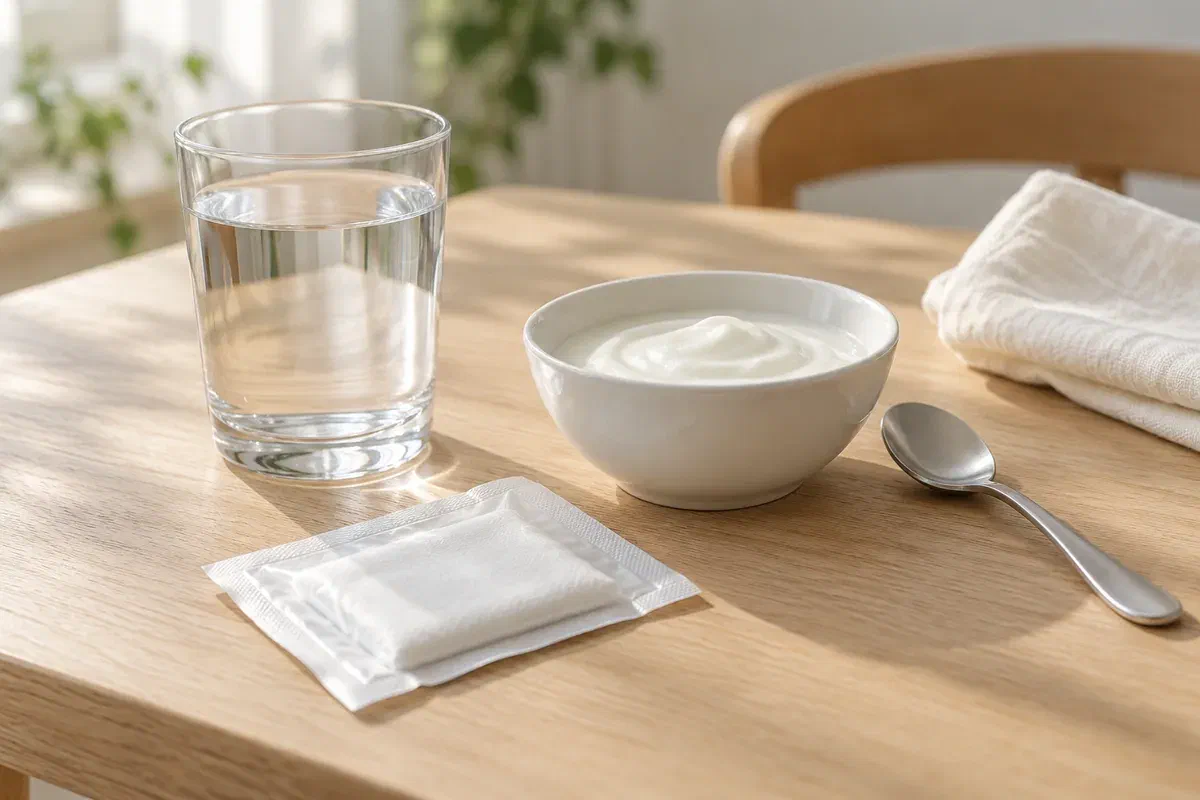
Illustrative recovery supplies with water, a soft-food bowl, and packaged gauze
When to pick up the phone

A short list worth pinning to the fridge.

Knowing ahead of time what to report saves guesswork later. Phone rather than email when a problem cannot wait, and give the team a clear description so they can judge urgency.

Bleeding that keeps going

Note whether there is just a pink tint or real flow from the socket, and how long you have pressed on it. Use the method from your instructions, which is why having gauze at home matters. Persistent bleeding needs professional advice, particularly with clotting medicines or if you feel unwell.

Pain or swelling that builds

Track the day the pain started, whether it is rising, and whether it dipped before coming back. Fever, a bad taste, and stiffness when opening are all relevant. Those notes help the team plan, though dry socket or infection can only be confirmed through an examination.

Stitches, numbness, or the site’s look

Mention a stitch that has worked free, feeling that has not returned when expected, or an appearance that bothers you. Keep fingers and tools away from the wound. Report numbness that lasts longer than predicted, or that changes, to the clinician who treated you.

Some problems call for emergency care, not a dental appointment: bleeding pressure cannot stop, swelling spreading fast, any difficulty breathing or swallowing, or feeling seriously unwell. Call 911 for an immediate emergency.

Why a review is worth the trip

Make one visit count for everything you need to know.

When you do come in, the clinician relates your symptoms to the procedure and to what the examination shows. You can ask whether things fit normal healing or point to a problem that needs care. If there is uncertainty, a straightforward explanation should say so rather than offer comfort based only on how many days have gone by.

Arrive with a written list so nothing gets missed. Food, brushing, lifting and physical work, and medicines can all be discussed for your situation. Leave with instructions on paper and one clear number to call, especially if the extraction and the follow-up are at different offices.

An examination of the actual concern

If it is needed, the clinician examines the socket and the gum around it, keeping in mind how the tooth was taken out. You can ask what each finding tells them and whether the first office’s records are worth requesting. You may leave reassured, treated at the site, or referred on.

Comfort advice for your household

Bring the names of any pain medicines on hand and how they have worked. Ask which are suitable with your health and other prescriptions. Keep to recommended doses, check for shared ingredients, and never use antibiotics left over from another illness.

Follow-up grouped where possible

Ask whether you will need to return for stitches, a dressing, a healing check, or later tooth replacement planning, and whether visits can be combined. Confirm what change should bring you in early and who answers outside clinic hours.

If you call during recovery

A few questions, a decision on timing, and a clear plan.

Describe what you notice in everyday terms, how it has changed, and what you have tried. The team does not need you to name the complication.

  1. Tell us about the procedure

    Give the date, the office involved, and whether a graft, implant, or other treatment was done. Share your medicines, health conditions, and the instructions you were sent home with. Explain where your recovery has differed from what you were told.

  2. Decide whether you need to come in

    The team considers bleeding, swelling, pain, general health, and other symptoms. You may be booked in, given advice for now, or directed to urgent care. If anything changes before the appointment, call back.

  3. Examine and explain

    Once you are in the chair, the clinician takes a look and gives you the most likely explanation, or is upfront about what cannot be said yet. Treatment may happen at the socket that day, or the fix may be new instructions or a further test. Ask what each step is meant to achieve.

  4. Head home with a written plan

    Confirm what to change and what to keep doing. Ask when to come back and the best way to let the team know if things slide. If another provider remains responsible for your care, check what information will be shared with them.

The first week at home

Soft food in the fridge, gauze in the drawer, and patience.

Your treating clinician’s advice is the foundation, especially after a surgical extraction or added procedure. If anything is unclear, ask before the appointment or call afterwards instead of combining online routines.

Rest the socket on day one

Standard advice is no rinsing, spitting, or touching the area for the first day. Mind your lip and tongue while they are numb, and leave hot drinks and food until feeling comes back. Add any extra precautions given for your procedure.

Prepared meals and gentle brushing

Having soups cooled to lukewarm, yogurt, eggs, or mashed vegetables ready means less effort early on. Follow the advice on brushing nearby teeth and starting gentle rinses, and keep away from the socket. Ask about smoking, vaping, and heavy physical work, since recovery varies with each extraction.

Bleeding supplies and steady medicines

Keep gauze where you can find it. If bleeding starts, apply pressure as shown and call if it does not stop. Do not keep lifting the pad to check. Your usual blood thinner or antiplatelet tablet stays on schedule unless the person who prescribes it says otherwise.

Patient information: UCLH — dental extraction aftercare · Royal Devon — post-extraction bleeding and anticoagulant precautions

After an assessment

Sometimes advice is enough. Sometimes the socket needs care.

Ask why the recommendation fits your symptoms and examination. A tender socket is not necessarily infected, and recovery questions do not share one answer.

When healing seems to be continuing

Practical guidance and a check-in

Often the answer is a clearer picture of the days ahead and a tweak or two to your routine. Find out what steady progress should feel like and what would be worth a second call. Any reassurance ought to grow out of what was actually seen, with no fixed day promised for the last of the soreness.

When the socket needs professional care

Treatment for dry socket or similar

Where the clot has been lost, the clinician can rinse the site and settle a soothing dressing into it, which tends to help the ache. Dry socket and infection are separate problems, so a prescription for antibiotics is not a given. Find out how many visits the dressing might need, and keep oils, tablets, and kitchen remedies out of the socket.

When more is needed

Specialist or emergency care

Recurring bleeding, signs of infection, feeling that has not returned, or some other complication can mean a return trip to the surgeon or a referral elsewhere. Make sure you know who is booking that. Serious warning signs go straight to emergency care.

Patient information: East Sussex Healthcare — dry socket and symptom management

Puslinch planning questions

Before and after the extraction.

Call the treating team if you are unsure about anything or symptoms change. The procedure and your health shape their advice, particularly when medicines or other treatments are involved.

(905) 876-4488
What should I have at home before my extraction appointment?
Soft foods, clean gauze or supplies your clinician recommends, any pain relief they have approved, and your written instructions with contact numbers. Ask the treating office if there is anything specific to your procedure.
Can I go back to farm work or heavy lifting the next day?
Strenuous activity may affect bleeding early on, and advice differs with the procedure. Ask the clinician who removes the tooth when it is reasonable to return to physical work, and stop and call if bleeding starts.
Should someone drive me home after the extraction?
That depends on whether you have sedation or medicines that affect driving. Follow the treating office’s advice, and arrange a driver if they recommend it.
Can my stitch removal and a dental check be booked together?
Often visits can be combined, depending on the procedure and how healing looks. Ask when booking so the appointment can be planned to cover both where appropriate.
Is worsening pain after a few good days a sign of infection?
Not always. Dry socket and other causes are possible and need an examination. Describe the timeline and other symptoms, and do not start antibiotics left over from before.
If a graft is placed, will my home care be different?
It may be. Follow the instructions from the clinician who places it, and ask about any differences from routine extraction advice before mixing routines.
Puslinch post-extraction care

Plan ahead, and call when something changes.

You can reach our Bronte Street practice at (905) 876-4488 to ask about aftercare, discuss a recovery concern, or check when an assessment is available. Keep the extraction date, treating office, instruction sheet, and medicine list together by the phone.

No two extractions heal on quite the same schedule. Save the website form for questions that can wait; ring when symptoms are getting worse, and use emergency services when serious warning signs appear.

Visit Milton Dental Clinic
Unit 1, 342 Bronte St. S, Milton, ON L9T 5B7
Get directions Clinic hours
Monday–Thursday
11am–7pm
Friday–Sunday
By appointment only

Areas we serve

  • Milton
  • Oakville
  • Mississauga
  • Georgetown
  • Halton Hills
  • Acton
  • Campbellville
  • Brampton
  • Burlington
  • Puslinch
  • Rockwood
  • Erin
  • Caledon
  • Etobicoke
  • Old Milton
  • Bronte Meadows
  • Timberlea
  • Dorset Park
  • Dempsey
  • Clarke
  • Beaty
  • Coates
  • Harrison
  • Scott
  • Willmott
  • Ford
  • Bowes
  • Cobden
  • Walker
  • Mountain View
  • Milton Heights
  • Hawthorne Village
  • Valley View
  • Fallingbrook
  • Nassagaweya
  • Trafalgar
  • Esquesing
  • Nelson
  • Brookville
  • Moffat
  • Glen Williams
  • Norval
  • Limehouse
  • Stewarttown
  • Ashgrove
  • Hornby
  • Silver Creek
  • Speyside
  • Scotch Block
  • North Oakville
  • River Oaks
  • Glen Abbey
  • West Oak Trails
  • Palermo
  • Bronte Creek
  • College Park
  • Joshua Creek
  • Uptown Core
  • Preserve
  • Iroquois Ridge
  • Lisgar
  • Meadowvale
  • Meadowvale Village
  • Churchill Meadows
  • Erin Mills
  • Central Erin Mills
  • Streetsville
  • East Credit
  • Creditview
  • Heartland
  • Sheridan
  • Mount Pleasant
  • Credit Valley
  • Huttonville
  • Churchville
  • Springbrook
  • Northwest Brampton
  • Bram West
  • Fletcher's Meadow
  • Fletcher's Creek South
  • Alton Village
  • Orchard
  • Millcroft
  • Headon Forest
  • Tansley
  • Brant Hills
  • Tyandaga
  • Kilbride
  • Lowville
  • Aberfoyle
  • Morriston
  • Arkell
  • Hillsburgh
  • Freelton
  • Carlisle
  • Waterdown
  • Flamborough
  • Mountsberg

How can we help?

Milton Dental Clinic

Have a question about your smile? Choose the option that works best for you.

For urgent dental concerns, please call.
Messages are reviewed during clinic hours.