

Illustrative patient discussing a concern after dental surgery with a clinician
Specialized Care

Post-Operative Dental Concerns in Burlington

The pharmacy label, the surgeon's handout and your own memory of the chairside chat do not quite match. If you are recovering in Burlington and unsure what to take or do next, call us before you change anything.

Burlington recovery, one question at a time

Three sets of directions, one sore mouth

Recovery often starts with a bag of gauze, a prescription and a page of advice handed over when you were still groggy. By the next evening it is easy to wonder which tablet goes with food, whether a rinse is allowed yet, or why your stomach is unsettled. Those are fair questions, and they belong with a clinician rather than a guess.

Context changes the answer. Removing a tooth, placing an implant, grafting gum tissue and taking a biopsy each come with their own precautions. So does the way a symptom is behaving: settling slowly, stuck in place, or flaring again after a better day. The number of days since surgery is useful, though it should never be the reason a severe problem is ignored.

Call us to describe the concern and ask which assessment times are open. When another office handled the operation, reach out to that team as well, and keep their written aftercare beside the phone. Their procedure notes might change what we suggest or mean that they ought to review you first.

Ask about your recovery instructions
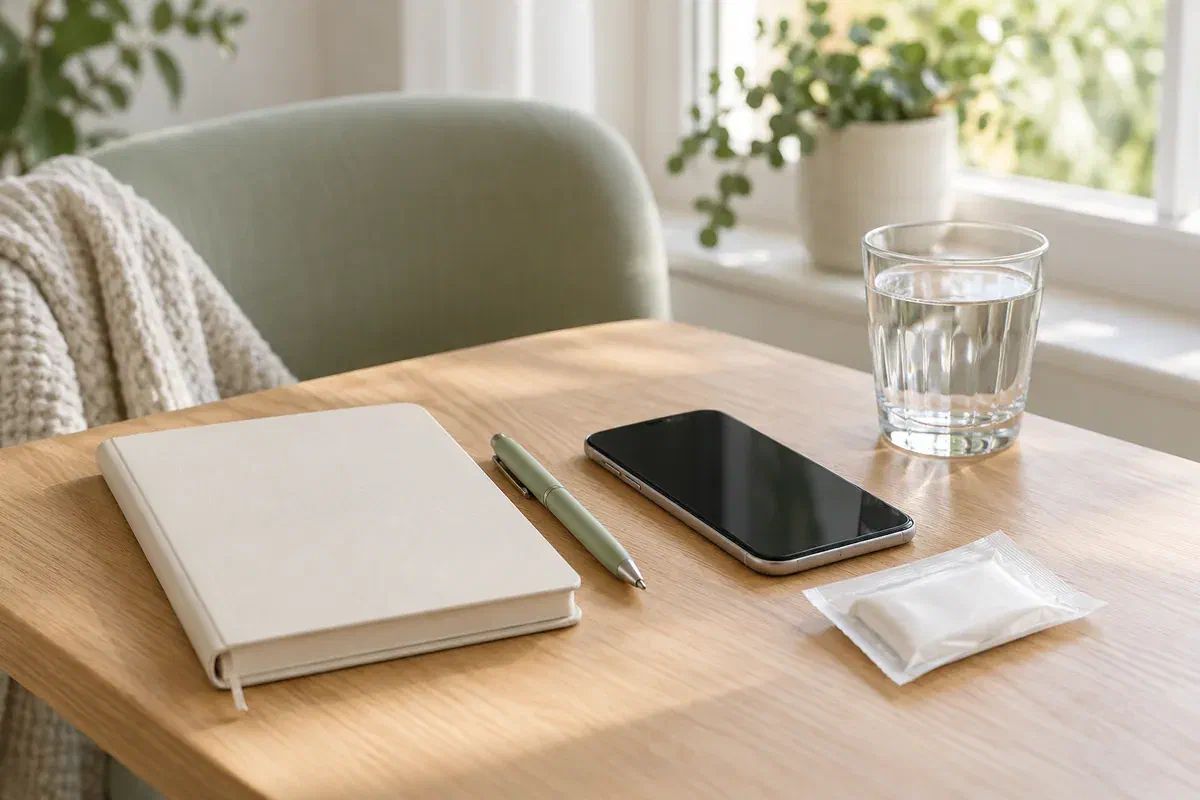
Illustrative follow-up notebook and phone beside water and packaged gauze
Before you dial, gather this

Medicines, symptoms and the wound: say what has shifted in each.

A concern that could need quick attention is a phone conversation, not an email. Open the call with any serious symptom so the person answering can think about urgency immediately.

Worsening pain, swelling, bleeding or illness

Say whether each is climbing or easing, and mention any temperature, a jaw that will not open properly or trouble sipping fluids. Pink-tinged spit is not the same as fresh blood, so be specific. If something changes markedly, do not hold off just because a check-up is already scheduled.

A new sensation or an altered wound

Tingling, persistent numbness, a sharp ridge under the tongue or a wound that looks unfamiliar all deserve a mention. Note the day each appeared and what you were told was normal. Leave any loose stitch or packing untouched while you describe it; the clinician will decide on advice, an exam or a call to the surgeon.

Tablets, timing and a possible reaction

Have every bottle or package nearby and read out the names and how you have taken them. Hives, a rash, nausea or heavy drowsiness might be a reaction and should be reported. Please do not double up, switch products or use a family member's prescription while waiting to hear back.

Some situations cannot wait for a callback. Bleeding that will not slow, swelling that is spreading fast, struggling to breathe or swallow, signs of a severe allergic reaction, or a person who is hard to wake after sedation: call 911.

What you can expect to leave with

Fewer unknowns, and a clear owner for each loose end

When you come in, the clinician's job is to say whether the change sits within the usual pattern of healing, needs a specific treatment, or cannot be judged without more details. Feel free to ask what observation led there and what remains open. If the surgeon's records or input are required, you should hear how they will be obtained and what to do until they arrive.

A visit also helps pull apart questions that have merged. The medication schedule, wound cleaning, stitch care and a pending lab result are four different matters, and they may sit with different people. Settling who handles each keeps a quiet, comfortable site from hiding the fact that a result or another stage of care is still outstanding.

An exam built around your complaint

The area in question is checked and compared with what the surgery involved. You can ask whether the issue is local or whether it suggests a wider problem. A picture from home may help, yet it cannot settle every question when something important is unclear.

One version of the instructions

Bring the handout, the pharmacy printout and any notes you made. Point out where they conflict. The treating team can confirm the routine meant for your operation, so you are not choosing between generic directions written for someone else's procedure.

Signposts for the days ahead

Ask how improvement should look, which signs mean calling again and whether an in-person check is booked. Confirm who to contact after hours. Concrete signposts are easier to act on than a general instruction to monitor things.

How a review unfolds

What was done, how urgent it is, what we find, and what follows

Nobody expects you to know the clinical name for the operation. The date, the office that treated you and a simple account are enough. Bring along any instructions, records and medicine packaging you have.

  1. Map the surgery and the symptom

    Explain the site, whether a graft or implant was involved and whether sedation was used. Describe when the change began and how it has evolved. We also ask about health conditions, every medicine you are taking and anything you have tried already.

  2. Set the urgency

    Severity and what accompanies it guide the decision more than the date of surgery. Keep to the timing suggested and phone back if things deteriorate. If serious medical warning signs appear, go for emergency help instead of waiting for a dental slot.

  3. Assess the area and talk it through

    The clinician examines the tissues or the treated site and may need records or extra tests. Ask whether a specific cause was found and what treatment would deal with it. You should be able to tell which steps ease symptoms and which address the underlying issue.

  4. Write down the plan and coordinate

    Confirm any change to aftercare or medicines, any recommended treatment and why the next visit is booked. If the original surgeon or a specialist needs to weigh in, agree on who makes contact. A written summary keeps every thread visible.

In the meantime

Keep to the plan you were given until someone changes it.

Your procedure's written instructions still apply unless a treating clinician adjusts them. If one is confusing or impractical, call and ask; working around a fresh surgical wound on your own can create new problems.

Leave the surgical area undisturbed

Stitches stay in, dressings stay put and grafts are not for inspecting with a stretched lip. If anything feels loose, phone and describe it. Whether that matters depends on the procedure, so tips that suit an uncomplicated extraction should not be borrowed for a more involved wound.

No medicine changes without advice

Talk to the prescriber or treating team about a suspected reaction before stopping, starting or swapping anything. Follow the post-sedation rules on transport and supervision exactly. Feeling more awake is not, by itself, proof that driving, working or caring for a child is safe yet.

A short log helps

Write down when symptoms change and which medicines or care steps you used as directed, with times. Bring the log to your review. There is no need to keep checking for bleeding or to pull the area into view for a photo; describing it is fine.

Patient information: Guy's and St Thomas' — procedure-specific gum-surgery recovery and review · Guy's and St Thomas' — protecting a gum graft during recovery

What the response might be

Explanation, treatment or another team

It is reasonable to ask why a recommendation fits and what would change it. A calming word and a new prescription should each follow from the findings, not from the mere fact that you had dental surgery.

If healing appears to be progressing

Reassurance backed by clear steps

You may hear which changes are typical and get answers about food, brushing, rest or stitches. Ask what to watch for and when to come back. Reassurance is only useful if it comes with something practical to do and an easy way to report a change.

If a local cause is identified

Care targeted at a confirmed issue

A new dressing, local treatment or another procedure might be appropriate, depending on what is found. Ask what it should achieve and whether more visits are likely. Any medicine is chosen for the diagnosis and your health, rather than issued as routine for discomfort.

If the details or severity call for it

The original surgeon, a specialist or emergency care

Implants, grafts, lingering altered sensation and complex wounds may need the surgeon who did the work. Severe symptoms may need a hospital. Ask about the urgency and exactly how the referral will happen, so the next step is something you can act on.

Medicine and recovery questions

Answers for the moments when the label and the handout disagree

Each answer depends on your procedure, your health and what you are feeling. When in doubt, the person who prescribed the medicine or performed the surgery is the right first contact.

(905) 876-4488
My prescription label and the surgeon's sheet give different directions. Which do I follow?
Call the prescriber or pharmacist and ask them to confirm before taking the next dose. Read both sets of directions out so they can see where the confusion is. Avoid splitting the difference or guessing.
Can I take an over-the-counter pain reliever along with what I was prescribed?
Ask first. Some products overlap or interact, and the right answer depends on your health and the exact medicines involved. The pharmacist or the treating team can tell you what is safe to combine for your situation.
I have a rash since starting a new medicine after surgery. Is that urgent?
Contact the prescriber promptly and describe it. If the rash comes with swelling of the face, lips or tongue, or with any difficulty breathing, call 911 because that can signal a serious allergic reaction.
Who do I call from Burlington if my surgeon's office is closed for the evening?
Check the surgeon’s instructions or voicemail for an after-hours route first. You can also call our practice and leave a message, though serious symptoms should not wait for a callback. For an emergency, call 911.
Is it normal to feel sleepy the day after sedation?
Some lingering tiredness can happen, but unusual drowsiness or difficulty waking is different. Describe how alert the person is and when they last took any medicine. If someone cannot be roused normally, call 911 straight away.
Do I finish the full course of a medicine if my mouth already feels better?
Follow the prescriber’s directions and ask them if you are unsure. Some medicines are meant to be finished regardless of how you feel, while others are taken only as needed. Do not stop or stretch out a course without checking.
Recovery support for Burlington

Call before you change your routine.

Our Bronte Street practice is at (905) 876-4488. Tell us what procedure you had, what has changed and which medicines you are taking, and ask when an assessment could happen. Let the office that treated you know too, and bring their instructions.

What we recommend, and when, is shaped by the surgery, how you feel and your health background. Online forms are for non-urgent enquiries and should never stand in the way of emergency care.

Visit Milton Dental Clinic
Unit 1, 342 Bronte St. S, Milton, ON L9T 5B7
Get directions Clinic hours
Monday–Thursday
11am–7pm
Friday–Sunday
By appointment only

Areas we serve

  • Milton
  • Oakville
  • Mississauga
  • Georgetown
  • Halton Hills
  • Acton
  • Campbellville
  • Brampton
  • Burlington
  • Puslinch
  • Rockwood
  • Erin
  • Caledon
  • Etobicoke
  • Old Milton
  • Bronte Meadows
  • Timberlea
  • Dorset Park
  • Dempsey
  • Clarke
  • Beaty
  • Coates
  • Harrison
  • Scott
  • Willmott
  • Ford
  • Bowes
  • Cobden
  • Walker
  • Mountain View
  • Milton Heights
  • Hawthorne Village
  • Valley View
  • Fallingbrook
  • Nassagaweya
  • Trafalgar
  • Esquesing
  • Nelson
  • Brookville
  • Moffat
  • Glen Williams
  • Norval
  • Limehouse
  • Stewarttown
  • Ashgrove
  • Hornby
  • Silver Creek
  • Speyside
  • Scotch Block
  • North Oakville
  • River Oaks
  • Glen Abbey
  • West Oak Trails
  • Palermo
  • Bronte Creek
  • College Park
  • Joshua Creek
  • Uptown Core
  • Preserve
  • Iroquois Ridge
  • Lisgar
  • Meadowvale
  • Meadowvale Village
  • Churchill Meadows
  • Erin Mills
  • Central Erin Mills
  • Streetsville
  • East Credit
  • Creditview
  • Heartland
  • Sheridan
  • Mount Pleasant
  • Credit Valley
  • Huttonville
  • Churchville
  • Springbrook
  • Northwest Brampton
  • Bram West
  • Fletcher's Meadow
  • Fletcher's Creek South
  • Alton Village
  • Orchard
  • Millcroft
  • Headon Forest
  • Tansley
  • Brant Hills
  • Tyandaga
  • Kilbride
  • Lowville
  • Aberfoyle
  • Morriston
  • Arkell
  • Hillsburgh
  • Freelton
  • Carlisle
  • Waterdown
  • Flamborough
  • Mountsberg

How can we help?

Milton Dental Clinic

Have a question about your smile? Choose the option that works best for you.

For urgent dental concerns, please call.
Messages are reviewed during clinic hours.