

Illustrative patient discussing a concern after dental surgery with a clinician
Specialized Care

Post-Operative Dental Concerns in Halton Hills

A stitch has come undone, a dressing has shifted, or the wound simply looks different from yesterday. If you are recovering anywhere in Halton Hills, call and describe it before touching anything, and we can talk about what should happen next.

Healing at home in Halton Hills

Something came loose. Now what?

Your tongue finds a thread that was not there before, or a piece of the dressing is sitting loose. The instinct is to tidy it up. Please do not. Whether a stray stitch matters depends on what was done, and pulling at it can disturb tissue that is still knitting together.

Instead, picture the procedure as the starting point. Stitches after a tooth removal serve a different job from stitches holding a gum graft or closing over an implant, and a biopsy site has its own needs. Then think about the trend over the past day or two. Settling, unchanged and worse-after-improving are three different stories. The calendar helps, yet it is never grounds for shrugging off a serious symptom.

Call us, describe what you see and feel, and ask what assessment times are available. When another office did the surgery, get in touch with them as well and keep their aftercare sheet nearby. Their notes might alter the advice, or they may simply want to look at it themselves.

Ask about a loose stitch or dressing
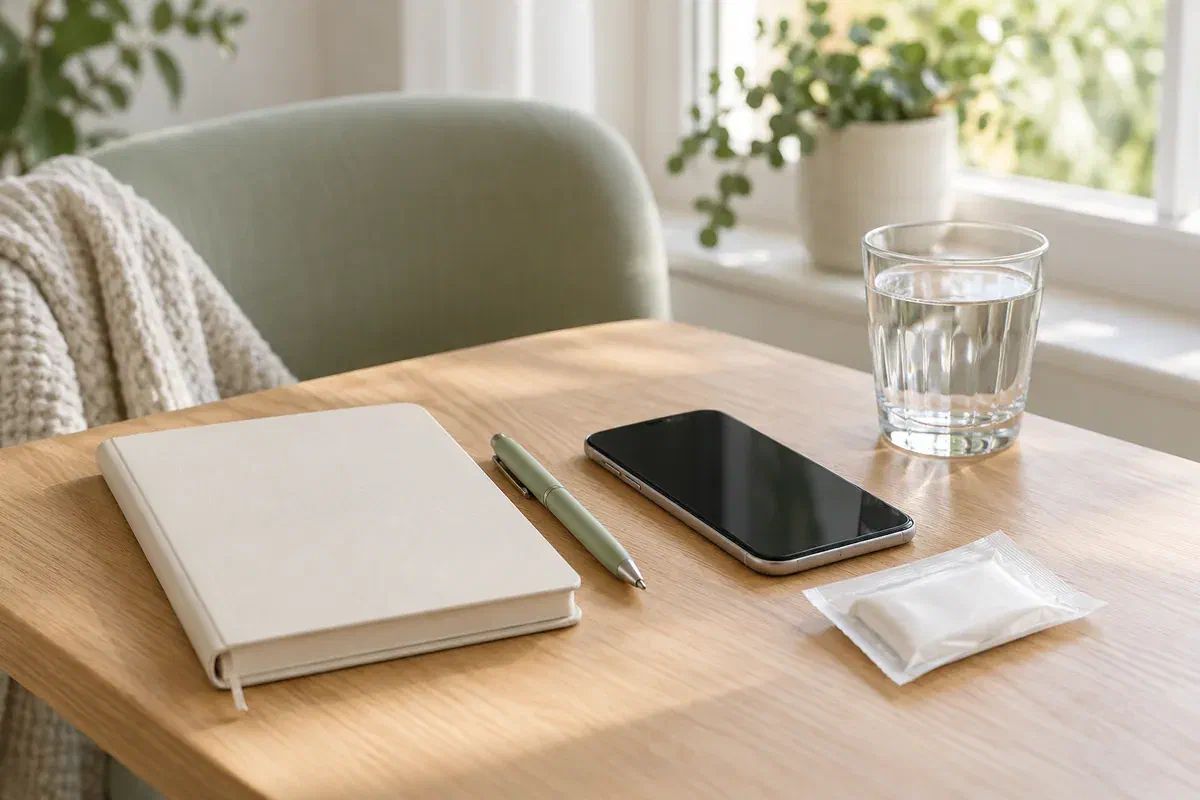
Illustrative follow-up notebook and phone beside water and packaged gauze
Signs worth a phone call

Not sure if it matters? Describe it anyway.

When something might need attention soon, a call works better than an online message. Put the most serious symptom first so whoever answers can think about urgency at once.

Growing pain, swelling, bleeding or a fever

Let us know if these are getting stronger, and whether opening wide is difficult or drinking has become a struggle. Fresh, steady bleeding needs to be told apart from saliva with a faint stain. Do not hang on for a booked appointment if things take a clear turn.

A thread, a gap or a changed feeling

Describe a loose or missing stitch, a dressing out of place, a sharp area, a gap in the wound, or numbness and tingling. Say when you noticed it and what you were told would be normal. Leave everything where it is; the clinician can decide on phone advice, an exam or a word with your surgeon.

Medicines that are confusing or disagreeing with you

Tell us every product you have taken and which direction is unclear. Report a rash, nausea, unusual drowsiness or any other suspected reaction. Changing doses, mixing medicines or borrowing a prescription while you wait can make the situation harder to judge.

Some symptoms are an emergency: bleeding that will not ease with pressure as instructed, swelling that spreads quickly, difficulty breathing or swallowing, a severe allergic reaction, or someone who cannot be woken normally after sedation. Call 911 for these instead of waiting on a dental callback.

What you gain from having it checked

A decision about the stitch, and about everything around it

A clinician can tell you whether a loose stitch or changed wound is part of ordinary healing, needs attention, or cannot be judged without more information. Ask what supports that conclusion and what remains uncertain. Where the original surgeon's records or input are needed, you should be told how they will be obtained and what to do until then.

One small worry often comes bundled with others. The stitches themselves, the cleaning routine, a prescription and a result from tissue sent to a lab may each have a separate follow-up. Knowing which provider looks after which piece keeps a settled-looking wound from distracting you from a result that still needs discussing or a later treatment stage.

An examination of the wound and its surroundings

The clinician looks at the site and weighs what you describe against the procedure. Ask whether the issue is limited to the stitch line or calls for a wider look. A photograph can help explain things, though it cannot answer everything an exam can.

Clarity on stitches and cleaning

Some stitches dissolve, others need removing, and cleaning advice changes with the procedure. Bring the written instructions and say where they seemed unclear. The treating team can confirm the intended routine for your operation.

Knowing when to call again

Ask what healing should look like over the next few days, what would warrant another call, and whether a visit is arranged. Note how to get help outside office hours. A specific threshold beats a general instruction to watch and wait.

Our steps after you call

Understand, prioritise, look closely, follow through

Nobody expects the formal name of the operation. Give the date, the provider and a clear description, and bring along any instructions or records.

  1. Learn about the operation and the change

    We ask which area was treated, whether bone, gum or implant work was involved and whether you had sedation. You explain when you noticed the change and how it has developed. We also cover health conditions, medicines and anything you have already done.

  2. Weigh how urgent it is

    The decision rests on severity and associated symptoms, not on how many days have passed. Follow the timing given and phone back if anything gets worse meanwhile. If serious warning signs appear, go for emergency care rather than waiting for a dental slot.

  3. Examine and explain the findings

    The clinician checks the wound, stitches and nearby tissue and may need records or other tests. Ask whether a specific problem has been found and what would treat it. Be clear on which steps ease discomfort and which deal with a confirmed cause.

  4. Set out the follow-up

    Confirm any change to your aftercare, any treatment and why the next visit is booked. If the original surgeon or a specialist should see you, agree on who will be in touch with them. A brief written note keeps it all straight.

Until someone has looked

Hands off. Notes on.

Your procedure's written instructions still apply unless a treating clinician changes them. If an instruction is unclear or hard to follow, call to ask rather than working around a fresh wound on your own.

Do not trim, tug or tuck in a loose stitch

Leave the thread, the dressing and any graft alone, and avoid stretching your cheek to look. Call and describe what you see. The significance depends on the surgery, so what is fine after a straightforward extraction may not apply elsewhere.

Ask before changing medicines or activity

Raise a suspected reaction or confusion over a prescription before altering the plan. After sedation, stick to the rules on travel and having someone with you. A clearer head does not by itself mean driving, working or looking after someone is appropriate yet.

Write down what you notice

A few lines on when things changed and what you took or did on the team's advice is plenty. Bring it to the review. There is no need to keep checking for bleeding or to disturb the site for a photo; ordinary descriptions are enough.

Patient information: Guy's and St Thomas' — procedure-specific gum-surgery recovery and review · Guy's and St Thomas' — protecting a gum graft during recovery

What might come next

Leave it, treat it, or send it back to the surgeon

Ask why a particular response suits what was found and what would change it. A calming answer and a prescription both need to be justified by the assessment, not assumed because surgery came first.

When the wound looks to be healing as expected

Leave it be, with clear guidance

The clinician may explain that a loose end is harmless in your case and answer questions about eating, cleaning, activity or remaining stitches. Ask what to watch and when to return. That kind of reassurance works best alongside practical instructions.

When something needs local care

Attend to what was found

Depending on the diagnosis, replacing a dressing, local treatment or another procedure may be suitable. Ask what the step is for and whether more care will follow. If a medicine is offered, it should fit the findings and your health rather than being routine.

When the procedure details or severity need someone else

Back to the surgical team, or urgent care

A graft, an implant, altered sensation that persists or another complex concern may need the surgeon who did the work. Serious symptoms may need immediate medical care. Get the urgency and referral route clear so you know exactly what happens next.

Halton Hills questions about stitches and wounds

Small threads, sensible questions

The right answer depends on what was done and what you are noticing. Follow your surgeon's written advice and phone about anything that is getting worse or that does not feel like it should wait.

(905) 876-4488
One of my stitches came out early. Do I need to come in?
Not necessarily, but call and describe it. Whether it matters depends on the procedure and on whether the wound looks open, is bleeding or is getting more painful. The clinician can tell you whether advice is enough or an exam is worthwhile.
Do dissolving stitches need to be removed if they're still there after a week or two?
Ask the team that placed them. Dissolving stitches break down at different rates and some are removed anyway. Avoid pulling at them yourself, and call if the area is sore, swollen or the thread is irritating.
The packing in my socket fell out. Is that a problem?
It depends on what it was and why it was placed. Call the treating team, explain when it came out and how the area feels now. Do not try to push anything back in.
Can a family member in Georgetown or Acton call to ask about my recovery for me?
With your agreement, yes. Have the procedure details and instructions with you or with them, and make sure they can describe your symptoms accurately. Serious warning signs need 911, not a dental call.
My wound looks white or yellowish. Should I be worried?
Healing tissue can look different from the surrounding gum, but colour alone is hard to judge without an exam. Mention it alongside any pain, swelling, bad taste or fever, and the team can decide if you should be seen.
How careful do I need to be brushing near the stitches?
Follow the instructions written for your procedure, since some sites need to be avoided for a period while others need gentle cleaning. If the advice is unclear, ask the treating team rather than guessing.
Post-surgery questions from across Halton Hills

Describe the stitch, the wound and how you feel.

You can reach our Bronte Street practice at (905) 876-4488 to talk about the change and ask about assessment times. Did another office do your surgery? Let them know as well and bring their instructions so follow-up reflects the original procedure.

What we suggest, and how soon, will depend on the procedure, your symptoms and your health background. Online forms are for non-urgent matters only and must never delay emergency care.

Visit Milton Dental Clinic
Unit 1, 342 Bronte St. S, Milton, ON L9T 5B7
Get directions Clinic hours
Monday–Thursday
11am–7pm
Friday–Sunday
By appointment only

Areas we serve

  • Milton
  • Oakville
  • Mississauga
  • Georgetown
  • Halton Hills
  • Acton
  • Campbellville
  • Brampton
  • Burlington
  • Puslinch
  • Rockwood
  • Erin
  • Caledon
  • Etobicoke
  • Old Milton
  • Bronte Meadows
  • Timberlea
  • Dorset Park
  • Dempsey
  • Clarke
  • Beaty
  • Coates
  • Harrison
  • Scott
  • Willmott
  • Ford
  • Bowes
  • Cobden
  • Walker
  • Mountain View
  • Milton Heights
  • Hawthorne Village
  • Valley View
  • Fallingbrook
  • Nassagaweya
  • Trafalgar
  • Esquesing
  • Nelson
  • Brookville
  • Moffat
  • Glen Williams
  • Norval
  • Limehouse
  • Stewarttown
  • Ashgrove
  • Hornby
  • Silver Creek
  • Speyside
  • Scotch Block
  • North Oakville
  • River Oaks
  • Glen Abbey
  • West Oak Trails
  • Palermo
  • Bronte Creek
  • College Park
  • Joshua Creek
  • Uptown Core
  • Preserve
  • Iroquois Ridge
  • Lisgar
  • Meadowvale
  • Meadowvale Village
  • Churchill Meadows
  • Erin Mills
  • Central Erin Mills
  • Streetsville
  • East Credit
  • Creditview
  • Heartland
  • Sheridan
  • Mount Pleasant
  • Credit Valley
  • Huttonville
  • Churchville
  • Springbrook
  • Northwest Brampton
  • Bram West
  • Fletcher's Meadow
  • Fletcher's Creek South
  • Alton Village
  • Orchard
  • Millcroft
  • Headon Forest
  • Tansley
  • Brant Hills
  • Tyandaga
  • Kilbride
  • Lowville
  • Aberfoyle
  • Morriston
  • Arkell
  • Hillsburgh
  • Freelton
  • Carlisle
  • Waterdown
  • Flamborough
  • Mountsberg

How can we help?

Milton Dental Clinic

Have a question about your smile? Choose the option that works best for you.

For urgent dental concerns, please call.
Messages are reviewed during clinic hours.