

Illustrative patient discussing a concern after dental surgery with a clinician
Specialized Care

Post-Operative Dental Concerns in Mississauga

The freezing should have worn off by now, yet part of your lip, chin or tongue still feels strange. From Mississauga, call and tell us which procedure you had and how the sensation has changed, so the next step can be discussed.

Altered feeling after surgery

When the numb patch outlasts the freezing

You notice it while sipping coffee or touching your chin: one area still feels muffled, prickly or oddly warm. Maybe you were told some numbness could happen, maybe not. Either way, it is reasonable to ask, and the sooner the clinician hears about it, the easier it is to decide what should happen next.

Sensation is only one of many things that can change as a surgical site heals. Pain, swelling, a loose stitch or a stubborn bad taste may show up too. Which procedure you had shapes how each is read, since an extraction, an implant placement, a graft and a biopsy involve different tissues. Say whether things are fading, stuck, or returning after a better spell, and never let the day count alone talk you out of reporting something severe.

Mississauga is east of Milton, so a quick phone conversation first can save an unnecessary trip or confirm that one is needed. If a surgeon or another office did the operation, call them as well and have their written aftercare handy. They may want to examine the area themselves.

Ask about numbness or another change
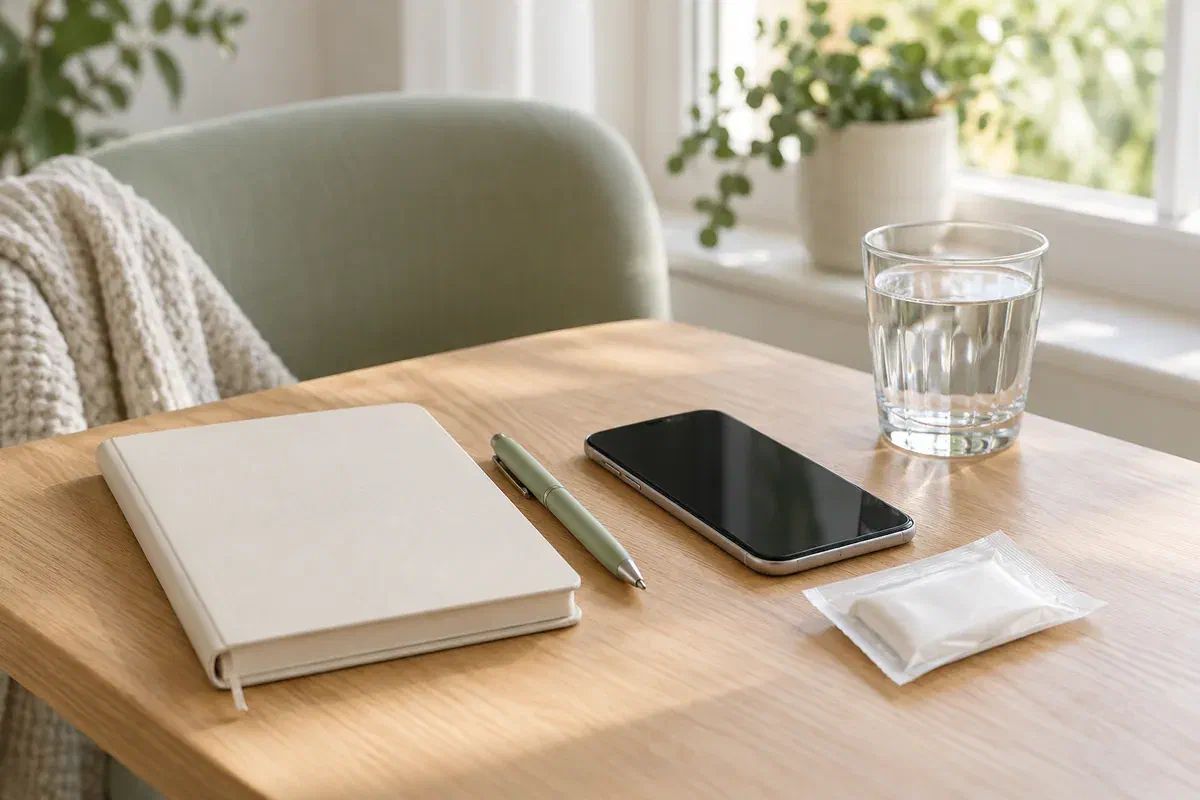
Illustrative follow-up notebook and phone beside water and packaged gauze
Putting the change into words

Where is it, when did it start, and is it moving?

Use the phone for anything that could need attention soon; a web form or email may not be read in time. If one of your symptoms is serious, open the call with it.

Pain, swelling, bleeding or a temperature

Report whether these are rising, and mention any fever, limited opening or difficulty keeping fluids down. Distinguish ongoing bleeding from a little pink in your saliva. A review that is already in the diary is no reason to wait if your condition alters significantly.

Numbness, tingling or a changed wound

Point to the exact area that feels different, say when you first noticed it and whether it has shrunk, spread or stayed the same. Mention a sharp spot or a wound that looks unexpected, and any stitch that has worked loose, without pulling on it. The clinician will decide whether to advise, examine or contact the surgeon.

Unclear directions or a reaction to a medicine

Tell the team which medicines you have used and which instruction is confusing. Mention nausea, a rash, unexpected sleepiness or anything else that might be a reaction. Avoid adjusting doses, mixing remedies or borrowing someone's prescription in the meantime.

Emergency medical help is needed for heavy bleeding that will not stop, quickly spreading swelling, any trouble breathing or swallowing, an intense allergic response, or someone who cannot be woken normally after sedation. In those cases call 911, not a dental office.

What a careful review offers

An honest account of what is known, and what is not

With altered sensation in particular, people want to know whether it will settle. A review can say whether the change appears to fit the expected recovery, whether it needs treatment or the surgeon's attention, or whether it simply cannot be judged yet. Ask what the findings suggest, how certain they are and what further information might help, including how and when the surgical team will be contacted.

Sensation questions often sit alongside others. Stitches may still need removing, a lab report may be pending, a prescription may need sorting. Each has its own follow-up. Clarify which provider is looking after which, so that focusing on one symptom does not let another item, such as a result discussion or a planned stage of treatment, drift.

A check of the area and the sensation

The clinician examines the site and can test how the area responds, relating what is found to the operation you had. Ask whether the change looks local or whether a broader assessment is sensible. Photos and descriptions help, but they are not a substitute when questions remain.

Instructions that make sense together

If you were told one thing about rinsing and read another about eating, bring both. Precautions differ between procedures, and the treating team can confirm which apply to you rather than leaving you to blend unrelated routines.

Milestones and a clear route back

Ask what change you should expect to notice and by roughly when, what would prompt another call, and whether a follow-up visit is booked. Confirm how to reach help after hours. Clear milestones are easier to act on than an open-ended wait.

What a call or visit involves

Listen, prioritise, examine, then plan together.

Technical vocabulary is not needed. Share when the surgery was, who did it and what you notice now. Records, instructions and medicine packaging are helpful if you have them.

  1. Understand the surgery and the symptom

    Tell us which tooth or area was treated, whether a graft or implant was placed and whether sedation was used. Explain when the change appeared and how it has behaved. We ask about health conditions, medicines and what you have already done to manage it.

  2. Agree on how soon to act

    Severity and accompanying signs carry more weight than the date on the calendar. Stick to the recommended timing and call again if things worsen. If medical warning signs appear, emergency services come before any dental appointment.

  3. Examine and explain clearly

    The clinician looks at the soft tissue, bone or treated area and may need imaging, records or other tests. Ask whether a cause has been found and what care would address it. You should know which steps manage discomfort and which treat the problem itself.

  4. Coordinate the next steps

    Go over any changes to aftercare, recommended treatment and the purpose of the next review. If your surgeon or a specialist should assess the sensation, confirm who will reach out to them. Ask for a written summary so the plan stays clear at home.

Taking care while you wait

Protect the numb area, especially at mealtimes.

Keep following your procedure's written aftercare unless a treating clinician changes it. Ask the team about anything unclear rather than adapting the routine on your own.

Avoid testing or disturbing the site

Do not poke the numb area, pull stitches, lift a dressing or stretch your cheek to look at a graft. A reduced sense of feeling can make it easier to bite your lip or cheek, so take care while eating. If a stitch or covering seems loose, call rather than fixing it, since what matters varies by procedure.

Check before altering medicine or activity

Ask about a suspected reaction or a confusing prescription before making changes. Follow sedation rules about transport and supervision. Feeling clear-headed does not automatically mean driving, going to work or caring for someone else is safe yet.

Track the sensation simply

Note the date and a few words when the numb area seems smaller, larger or different, plus anything you took or did on the team's advice. Bring the notes. There is no need to keep prodding the area or disturbing the wound to check.

Patient information: Guy's and St Thomas' — procedure-specific gum-surgery recovery and review · Guy's and St Thomas' — protecting a gum graft during recovery

How we might respond

From watchful follow-up to a specialist's assessment

Ask why one approach is being suggested over another and what would change the plan. Reassurance and medication each need a reason grounded in the assessment.

When the picture fits ongoing recovery

Monitoring with clear instructions

The clinician may explain what tends to change over the coming days and answer practical questions about eating, cleaning, activity or stitches. Ask what to watch for and when to return. Monitoring works best with specific checkpoints and an easy way to get back in touch.

When the exam reveals a treatable cause

Treatment for something identified locally

Local care, a dressing review or another procedure may be suitable depending on the diagnosis. Ask what each step is for and whether more is likely. Any medicine is chosen for the specific findings and your medical history.

When sensation, complexity or severity calls for it

The original surgeon or urgent specialist care

Persistent altered sensation, a graft, an implant or another complex issue may need the treating surgeon's review. Serious symptoms may need immediate medical attention. Clarify how quickly and through which route, so you leave with a concrete arrangement.

Mississauga questions about altered sensation and healing

What callers want to know when something still feels numb

Answers vary with the procedure and what you are experiencing. Keep to the treating provider's advice and phone about anything worsening or anything that does not feel like it can wait.

(905) 876-4488
How long is too long for my lip to feel numb after a tooth is removed?
There is no single cut-off that suits everyone, so call the clinician who treated you if it is lasting longer than you were told to expect. Describe the area and whether it is changing. They can tell you whether an earlier review would be sensible.
Is a tingling or pins-and-needles feeling better or worse than complete numbness?
It is not possible to judge that safely without knowing your procedure and examining the area. Both are worth reporting. Describe when each started and how it has changed, and let the clinician interpret it.
Can I eat normally while part of my mouth still feels numb?
Follow your written diet advice for the procedure, and take extra care not to bite your lip, cheek or tongue while feeling is reduced. Avoid very hot drinks you cannot gauge properly. Ask the team if you are unsure what is suitable.
Should I call from Mississauga before driving in about my concern?
Yes, phoning first is a good idea. The team can hear the details, advise on urgency and let you know about assessment times. For emergency warning signs, call 911 instead of setting out.
Will I need to see the surgeon again about ongoing numbness?
Possibly. Altered sensation after some procedures is best assessed by the surgeon who did the work, who knows the details. We can help you judge urgency and make sure the surgical team is aware.
Can stress or poor sleep make healing feel worse after surgery?
How you feel overall can affect how you notice discomfort, but that should not be assumed to explain a symptom. Describe the change itself. If it is increasing or comes with fever, swelling or bleeding, call promptly.
Help after surgery for Mississauga callers

Tell us what you feel, where, and since when.

The number for our Bronte Street practice is (905) 876-4488. Call to talk through numbness or another post-surgery change and ask about assessment times. If a different provider did the operation, contact them too and bring their instructions to any visit.

Advice and timing are shaped by the operation, your symptoms and your health history. Use online forms for non-urgent matters only; they must never delay emergency care.

Visit Milton Dental Clinic
Unit 1, 342 Bronte St. S, Milton, ON L9T 5B7
Get directions Clinic hours
Monday–Thursday
11am–7pm
Friday–Sunday
By appointment only

Areas we serve

  • Milton
  • Oakville
  • Mississauga
  • Georgetown
  • Halton Hills
  • Acton
  • Campbellville
  • Brampton
  • Burlington
  • Puslinch
  • Rockwood
  • Erin
  • Caledon
  • Etobicoke
  • Old Milton
  • Bronte Meadows
  • Timberlea
  • Dorset Park
  • Dempsey
  • Clarke
  • Beaty
  • Coates
  • Harrison
  • Scott
  • Willmott
  • Ford
  • Bowes
  • Cobden
  • Walker
  • Mountain View
  • Milton Heights
  • Hawthorne Village
  • Valley View
  • Fallingbrook
  • Nassagaweya
  • Trafalgar
  • Esquesing
  • Nelson
  • Brookville
  • Moffat
  • Glen Williams
  • Norval
  • Limehouse
  • Stewarttown
  • Ashgrove
  • Hornby
  • Silver Creek
  • Speyside
  • Scotch Block
  • North Oakville
  • River Oaks
  • Glen Abbey
  • West Oak Trails
  • Palermo
  • Bronte Creek
  • College Park
  • Joshua Creek
  • Uptown Core
  • Preserve
  • Iroquois Ridge
  • Lisgar
  • Meadowvale
  • Meadowvale Village
  • Churchill Meadows
  • Erin Mills
  • Central Erin Mills
  • Streetsville
  • East Credit
  • Creditview
  • Heartland
  • Sheridan
  • Mount Pleasant
  • Credit Valley
  • Huttonville
  • Churchville
  • Springbrook
  • Northwest Brampton
  • Bram West
  • Fletcher's Meadow
  • Fletcher's Creek South
  • Alton Village
  • Orchard
  • Millcroft
  • Headon Forest
  • Tansley
  • Brant Hills
  • Tyandaga
  • Kilbride
  • Lowville
  • Aberfoyle
  • Morriston
  • Arkell
  • Hillsburgh
  • Freelton
  • Carlisle
  • Waterdown
  • Flamborough
  • Mountsberg

How can we help?

Milton Dental Clinic

Have a question about your smile? Choose the option that works best for you.

For urgent dental concerns, please call.
Messages are reviewed during clinic hours.