

Illustrative patient discussing a concern after dental surgery with a clinician
Specialized Care

Post-Operative Dental Concerns in Oakville

You may have read a term online and wondered whether it fits. Skip the label. Call from Oakville, describe the procedure and the change in plain words, and our team will help work out how quickly it should be checked.

Questions after surgery, from Oakville

Describe the feeling. Leave the diagnosis to us.

It is tempting to type a symptom into a search bar and settle on the scariest match. Online articles cannot see your mouth or know whether you had a tooth removed, a gum graft, an implant placed or a small tissue sample taken. Those operations heal differently, and a throbbing ache can mean one thing after one and something else after another.

What helps far more is a clear account. When did the change start? Has it been easing, staying the same, or getting worse after a spell of improvement? How strong is it, and does anything else come with it, like a fever or trouble swallowing? Days since surgery are worth mentioning, but they are not a reason to dismiss a severe problem.

Call us with that information and ask what assessment times are available. If a surgeon or another office did the procedure, contact them as well and keep their written aftercare close by. Their notes may change the advice, or they may prefer to see you directly.

Describe your symptom to our team
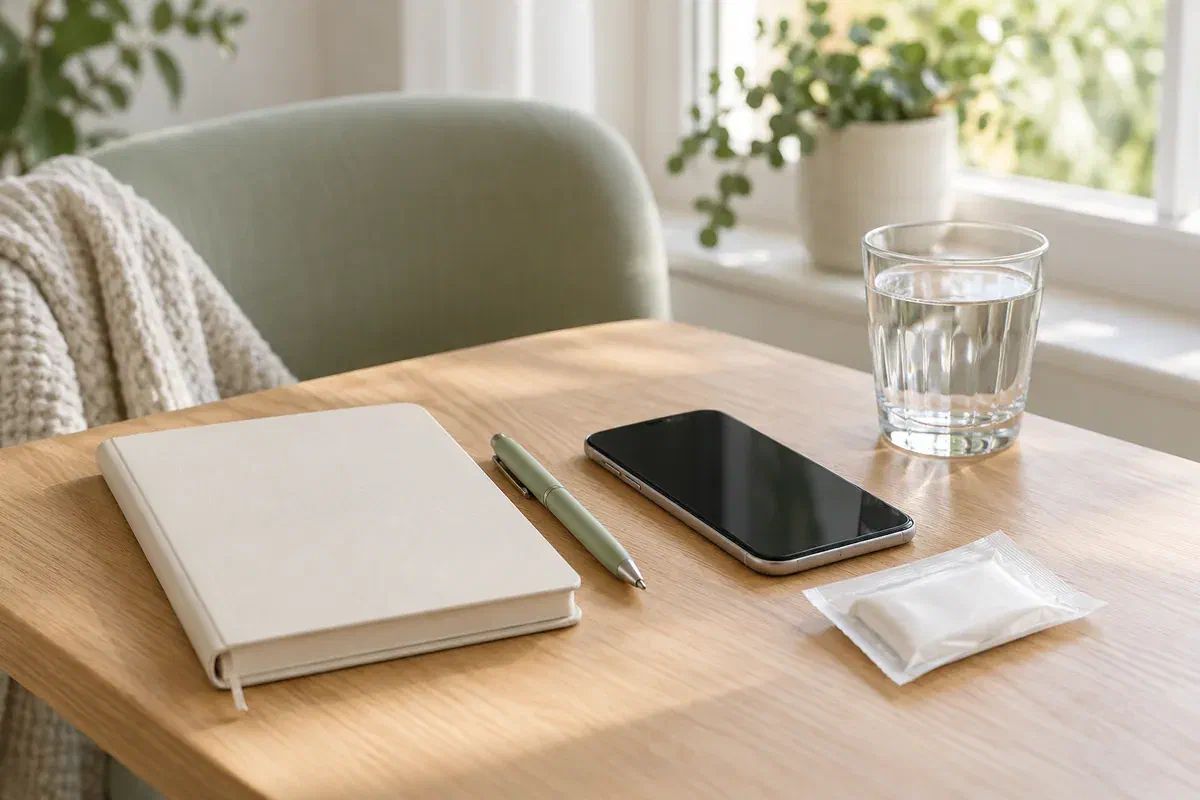
Illustrative follow-up notebook and phone beside water and packaged gauze
Plain-language prompts

Three groups of symptoms, and what to say about each

Phone us about anything that might need attention soon. Email and online forms are too slow for that. If something serious is going on, say it first so urgency can be judged right away.

Pain, swelling, bleeding or a general unwell feeling

Explain whether it is building, and mention fever, a jaw that will not open far, or struggling to drink. Steady bleeding and saliva with a pink tinge are not the same, so describe what you actually see. An upcoming appointment is not a reason to sit tight if things change sharply.

Changes in feeling or in the wound itself

Numbness, tingling, a hard sharp point or a wound that looks unexpected are all worth reporting. Say when each began and what you were told to expect. If a stitch or dressing has shifted, describe it rather than pulling on it, so the clinician can choose advice, an exam or a call to your surgeon.

Medicines and instructions that do not add up

Name everything you have taken and the direction that confuses you. A rash, feeling sick or being unusually drowsy may be a reaction and should be mentioned. Do not change doses, combine products or take a prescription meant for someone else while you sort it out.

Uncontrolled bleeding, swelling that spreads quickly, difficulty breathing or swallowing, hives with facial swelling or another sign of serious allergy, or someone who cannot wake normally after sedation is a medical emergency. Call 911 immediately rather than waiting for a dental office to return your call.

Why an assessment beats a guess

Real findings, tied to the surgery you actually had

An in-person review can tell you whether your symptom fits expected healing, points to something that needs treatment, or needs more information before anyone can say for sure. Ask what the clinician found that supports that view, and what is still uncertain. Where the surgeon's notes or opinion are needed, ask how they will be requested and what you should do in the meantime.

It also untangles questions that have run together. Caring for the wound, managing medicines, dealing with stitches and getting lab results back can each need a separate plan. Knowing who is responsible for each one keeps a comfortable site from lulling you into missing a result or a later stage of treatment.

An examination centred on your complaint

The clinician checks the area involved and relates what you describe to the procedure. Ask whether the issue seems limited to the wound or needs a wider look. A photo can help explain things, but when questions are serious it cannot do the job of an examination.

One routine instead of several conflicting ones

Cleaning methods and activity limits vary by procedure, and advice from different sources can clash. Bring the written instructions you were given and explain what seems contradictory. The treating team can confirm which routine fits your operation.

A plan for what happens if it changes

Find out what getting better should look like, when another call is warranted, and whether a follow-up visit is booked. Confirm how to reach help after hours. That is more workable than being told to simply keep watching.

Our approach, step by step

From your first description to an agreed follow-up

The formal name of the operation is not required. The date, the provider who treated you and a straightforward description are a good start. Bring any instructions or records you have on hand.

  1. Gather the basics

    Tell us where the surgery was, whether it involved a graft or implant, and whether you were sedated. Describe when symptoms started and how they have changed. We also review your medicines, health conditions and anything you have already tried, so the clinician has an accurate base to work from.

  2. Judge how quickly you should be seen

    The team weighs severity and related symptoms, not just how long ago the surgery was. Follow the urgency you are given and report any worsening while you wait. Severe warning signs call for emergency care rather than a routine dental appointment.

  3. Examine the site and share the findings

    The clinician assesses the tissues or treated area and may ask for records or further investigation. Ask whether a specific problem was found and what would treat it. The plan should make clear which steps relieve discomfort and which deal with a confirmed cause.

  4. Confirm aftercare and coordinate

    Check any change to your routine, any treatment recommended and the purpose of the next visit. If your surgeon or a specialist needs to be involved, agree on who will contact them. Keep a written summary so the different strands stay clear.

While you wait for a review

Gentle with the site, careful with the medicine cabinet

Stick with the instructions written for your procedure unless a treating clinician changes them. When something is unclear or hard to follow, ask rather than improvising around a fresh surgical area.

No pulling, snipping or prodding

Leave stitches in place, keep dressings where they are and avoid stretching your cheek to look at a graft. Ask what to do if something seems loose. How much it matters depends on the operation, so advice for a simple extraction should not be stretched to fit every wound.

Ask before you change a medicine or a restriction

Raise a suspected reaction or any doubt about a prescription before altering the plan. After sedation, follow the specific rules about getting home and having supervision. Feeling alert again does not on its own mean that driving, work or caring for others is safe.

Note the changes that matter

Record when symptoms shift and which medicines or care steps you used as directed. Bring those notes along. You do not need to disturb the wound to check if it bleeds or to get a better photo; describing what you notice is enough.

Patient information: Guy's and St Thomas' — procedure-specific gum-surgery recovery and review · Guy's and St Thomas' — protecting a gum graft during recovery

Where an assessment can lead

Three possible directions, chosen by what the exam shows

Ask why a particular response fits the findings and what would change it. Reassurance and prescriptions should both come from the assessment, not from the simple fact that dental surgery came first.

When healing looks on track

Practical guidance and a follow-up date

The clinician may explain which changes are expected and answer questions about eating, cleaning, activity or stitches. Ask what to keep an eye on and when to return. Reassurance is most helpful when it includes concrete steps and an easy way to report a change.

When the exam finds something to address

Treatment for a specific problem

Local care, a dressing review or another procedure may be suitable depending on the diagnosis. Ask what the treatment is meant to do and whether more care is likely. Medicines are chosen for the findings and your health, not prescribed by default for every sore recovery.

When details or severity point elsewhere

Referral back to the surgeon or to urgent care

Grafts, implants, numbness that persists and other complex concerns may need the original surgeon's assessment. Serious symptoms may need immediate medical care. Clarify the urgency and the referral steps so you leave with an arrangement, not just a recommendation.

What Oakville callers often ask

Straight answers to the questions people search for at night

Every answer depends on your procedure and on what you are feeling. Follow your treating provider's instructions, and call about anything that is getting worse or cannot wait for your planned review.

(905) 876-4488
I think I might have a dry socket. Should I say that when I call?
You can mention it, but describing what you feel is more useful than the label. Explain where the pain is, when it started, how strong it is and whether it eased before getting worse. The clinician will decide whether an examination is needed rather than relying on the term.
Is swelling that looks worse on day two or three something to call about?
Call if you are unsure. Describe how much it has changed, whether it is spreading and whether you have fever or trouble swallowing. Rapidly spreading swelling or any difficulty breathing needs emergency medical care, so call 911 in that case.
Can I rinse with salt water if I'm worried about the wound?
Only if your written instructions for this procedure include it, and in the way they describe. Rinsing advice differs between operations, especially after a graft. If you are unsure, ask the treating team before adding any rinse to your routine.
Do I have to go back to the surgeon who did my procedure, or can I call you from Oakville?
You can call us to discuss the concern and assessment availability. Contacting the original surgeon is still a good idea, since they know the details of the operation and may want to review it themselves. For an emergency, call 911.
Why does my jaw feel stiff and hard to open after surgery?
Several things can cause it, and the clinician needs to know your procedure and other symptoms to judge it. Mention how far you can open, whether it is getting better or worse and whether you have fever or swelling. Increasing stiffness with other symptoms is worth a prompt call.
Should I stop a prescribed medicine if I feel sick after taking it?
Do not stop or change it on your own. Call the prescriber or the treating team, describe the symptoms and ask what to do. A rash, swelling of the face or lips, or trouble breathing may be a serious reaction and needs emergency care.
Post-operative concerns for Oakville households

A plain description is all you need to start.

Call our Bronte Street practice at (905) 876-4488 to explain the change you have noticed and ask what assessment times are open. If a different provider performed your surgery, contact them too and bring their instructions so follow-up reflects the original procedure.

Our advice and the timing of any visit depend on the procedure, your symptoms and your medical history. Online forms are for non-urgent questions only and should never delay emergency care.

Visit Milton Dental Clinic
Unit 1, 342 Bronte St. S, Milton, ON L9T 5B7
Get directions Clinic hours
Monday–Thursday
11am–7pm
Friday–Sunday
By appointment only

Areas we serve

  • Milton
  • Oakville
  • Mississauga
  • Georgetown
  • Halton Hills
  • Acton
  • Campbellville
  • Brampton
  • Burlington
  • Puslinch
  • Rockwood
  • Erin
  • Caledon
  • Etobicoke
  • Old Milton
  • Bronte Meadows
  • Timberlea
  • Dorset Park
  • Dempsey
  • Clarke
  • Beaty
  • Coates
  • Harrison
  • Scott
  • Willmott
  • Ford
  • Bowes
  • Cobden
  • Walker
  • Mountain View
  • Milton Heights
  • Hawthorne Village
  • Valley View
  • Fallingbrook
  • Nassagaweya
  • Trafalgar
  • Esquesing
  • Nelson
  • Brookville
  • Moffat
  • Glen Williams
  • Norval
  • Limehouse
  • Stewarttown
  • Ashgrove
  • Hornby
  • Silver Creek
  • Speyside
  • Scotch Block
  • North Oakville
  • River Oaks
  • Glen Abbey
  • West Oak Trails
  • Palermo
  • Bronte Creek
  • College Park
  • Joshua Creek
  • Uptown Core
  • Preserve
  • Iroquois Ridge
  • Lisgar
  • Meadowvale
  • Meadowvale Village
  • Churchill Meadows
  • Erin Mills
  • Central Erin Mills
  • Streetsville
  • East Credit
  • Creditview
  • Heartland
  • Sheridan
  • Mount Pleasant
  • Credit Valley
  • Huttonville
  • Churchville
  • Springbrook
  • Northwest Brampton
  • Bram West
  • Fletcher's Meadow
  • Fletcher's Creek South
  • Alton Village
  • Orchard
  • Millcroft
  • Headon Forest
  • Tansley
  • Brant Hills
  • Tyandaga
  • Kilbride
  • Lowville
  • Aberfoyle
  • Morriston
  • Arkell
  • Hillsburgh
  • Freelton
  • Carlisle
  • Waterdown
  • Flamborough
  • Mountsberg

How can we help?

Milton Dental Clinic

Have a question about your smile? Choose the option that works best for you.

For urgent dental concerns, please call.
Messages are reviewed during clinic hours.