

Illustrative patient discussing a concern after dental surgery with a clinician
Specialized Care

Post-Operative Dental Concerns in Puslinch

The chores, the commute and the job do not pause for long after oral surgery. If you are in Puslinch and wondering whether a new ache means slowing down, or whether you are fit to drive and work yet, call us before deciding.

Busy days after surgery in Puslinch

Ready for work, or pushing it?

In rural households, there is often no one else to feed the animals, run the errands or make the drive to work. So the day after surgery, people get moving, and sometimes the mouth answers back with fresh throbbing, a little bleeding or extra swelling. That is a reasonable moment to stop and phone rather than push through.

How a clinician reads it depends on the operation. Lifting and bending may matter more after one kind of surgery than another, and an extraction, a graft, an implant and a biopsy each have their own limits. Describe whether the problem is fading, stuck, or flaring after you had been improving. The number of days since surgery helps, but it never excuses ignoring a serious symptom.

Call us to explain what changed and ask which assessment times are open. If another office did the surgery, contact that team too and keep their written aftercare to hand. They know the details of the procedure and may prefer to adjust the advice or examine you themselves.

Ask whether you are ready to get back to it
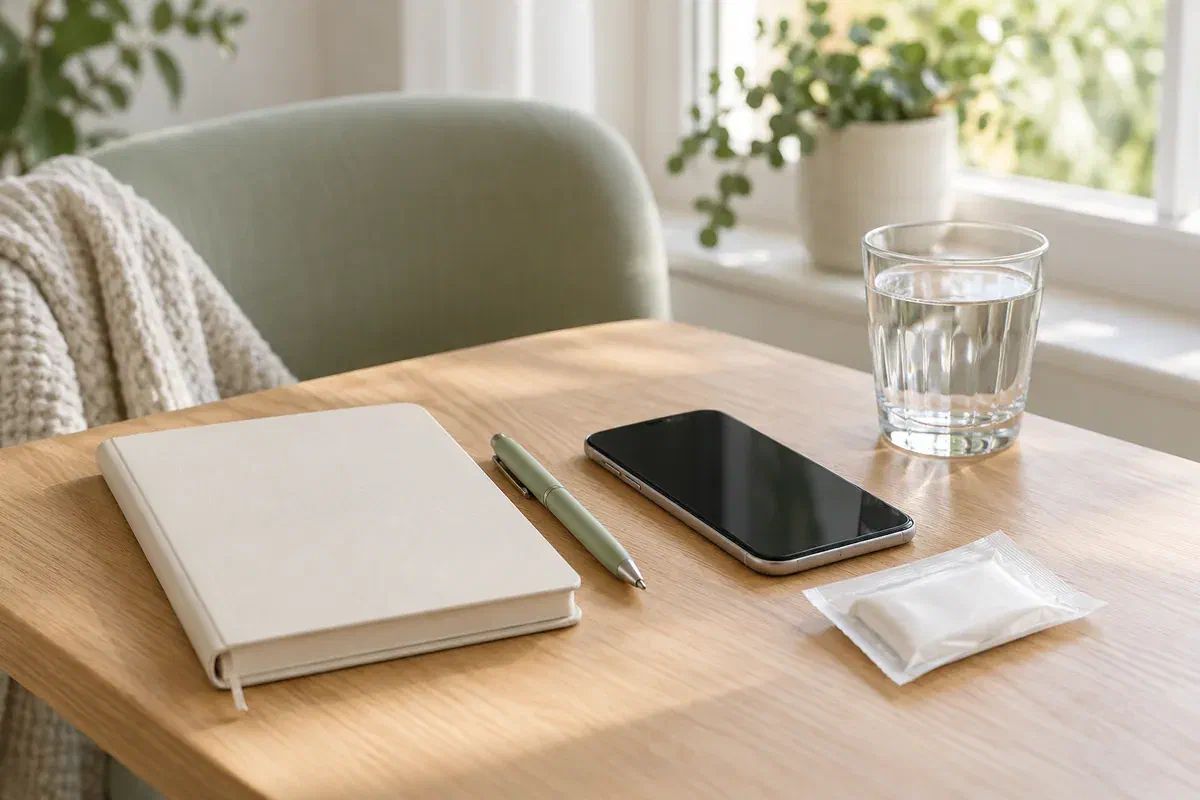
Illustrative follow-up notebook and phone beside water and packaged gauze
Signals to slow down and call

Your body's feedback, in three groups

If a change might need quick attention, call. Email and web forms can sit unread through a busy day. Mention the most serious symptom first.

Pain, swelling or bleeding after activity

Say what you were doing when it started, whether it is settling with rest and whether you have fever, limited opening or trouble drinking. Fresh bleeding is different from pink saliva, so be specific. A booked follow-up does not mean waiting if the situation changes substantially.

Changes in feeling or the wound

Report numbness, tingling, a sharp spot or a wound that looks different, plus when you noticed it and what you were told would be normal. If a stitch or dressing shifted during activity, leave it and mention it. The clinician can decide whether advice, an examination or a call to your surgeon fits.

Medicines, alertness and driving

List what you have taken and which instruction is unclear, especially around drowsiness and driving. Mention a rash, nausea or unusual sleepiness. Avoid changing doses, combining products or using someone else's prescription so that you can keep working.

Stop and call 911 for heavy bleeding that will not settle, swelling spreading quickly, any struggle to breathe or swallow, signs of severe allergy, or a person who cannot be roused normally after sedation. These go straight to emergency services, not to a dental voicemail.

Why it is worth a check

A realistic answer about what your recovery can handle

A review can tell you whether what you are feeling fits normal healing, needs treatment, or cannot be judged without more information. It can also give you specific guidance on activity. Ask what the clinician found, how confident they are, and what is uncertain. If the surgeon's notes or opinion matter, find out how they will be obtained and what to do until then.

Practical questions tend to cluster: when stitches come out, how to clean around the site at work, which medicines are safe before driving and when a lab result will be ready. Each may sit with a different provider. Sorting out who handles which keeps a site that feels fine from letting a result or a later treatment stage slip by.

An exam linked to what you have been doing

The clinician looks at the site and relates your symptoms to both the procedure and your recent activity. Ask whether the problem is local or needs wider assessment. A phone picture may help, but it cannot answer every question an exam can.

Activity advice that fits your operation

Limits on lifting, exertion and eating vary between procedures. Bring your written instructions and explain your daily demands. The treating team can confirm what is reasonable for you, rather than leaving you to guess from generic advice.

A clear line for when to stop and call

Ask what normal progress looks like, which signs mean resting and calling, and whether a visit is arranged. Note how to reach help after hours. A defined threshold is easier to apply in the middle of a working day.

Our approach when you get in touch

We ask about the surgery and about your day.

No technical terms required. The date, the provider and what you have noticed are enough to begin. Bring instructions, records and any medicine packaging.

  1. Hear what was done and what you have been doing

    We ask which area was treated, whether grafting or an implant was involved and whether you were sedated. You tell us when the change started and what you were doing at the time. Medicines, health conditions and steps already taken complete the picture.

  2. Set the urgency

    Severity and accompanying symptoms guide the decision, more than the date on the calendar. Follow the suggested timing and call again if things worsen. Medical warning signs mean emergency care first.

  3. Assess and explain

    The clinician examines the tissues and treated area and may need records or further tests. Ask whether a specific problem was found and what would deal with it. The plan should make clear which steps ease symptoms and which treat the cause.

  4. Agree on activity, aftercare and follow-up

    Confirm any change to aftercare, any activity limits, recommended treatment and the purpose of the next visit. If your surgeon should be involved, agree on who will reach them. Ask for the key points in writing.

While you wait to be seen

Ease off, and leave the wound in peace.

Stick to the written instructions from surgery day; only the team treating you should revise them. If an instruction is hard to manage around work or home, call and ask rather than improvising.

Keep hands and tools away from the site

Do not pull stitches, lift dressings or stretch your cheek to look at a graft. If something seems loose, call and describe it. Advice that fits a simple extraction may not suit every surgical wound, so ask about yours.

Hold off on driving and heavy work until it is clearly safe

Check a suspected medicine reaction or prescription question before changing anything. After sedation, follow the rules about transport and supervision exactly. Feeling more alert does not by itself mean driving, operating equipment or caring for others is appropriate yet.

Note what you did and how it felt

Write a line when symptoms change, including what activity came before and what you took or did on the team's advice. Bring it to the review. There is no need to disturb the wound to check bleeding or take photos.

Patient information: Guy's and St Thomas' — procedure-specific gum-surgery recovery and review · Guy's and St Thomas' — protecting a gum graft during recovery

What the assessment may lead to

Rest and guidance, targeted care, or a different team

Ask why a response fits and what would change it. Neither reassurance nor a prescription should be automatic simply because the problem followed surgery.

If the site is healing but needs a lighter load

Adjusted activity and a review

The clinician may explain what to expect and suggest how to pace work, eating and cleaning. Find out which signs to watch and when to come back. Practical limits and an easy way to report a change make reassurance far more useful.

If the exam finds something to treat

Care directed at a local problem

Local treatment, a dressing change or a further procedure might be appropriate, depending on the diagnosis. Check what it is for and whether more visits are likely, so you can plan time off. Medicines are chosen to fit the findings and your health.

If the details or severity call for it

The surgeon who did the work, or urgent care

Implants, grafts, persistent altered sensation and complex wounds may need the treating surgeon's assessment. Serious symptoms may need immediate medical help. Pin down how urgent it is and how the referral will happen.

Puslinch questions about getting back to normal

Work, driving and daily life after oral surgery

Every answer depends on the procedure and what you are experiencing. Follow your surgeon's written advice and phone about anything worsening or that cannot reasonably wait.

(905) 876-4488
When can I go back to physical work after oral surgery?
It depends on the procedure and how you are healing, so ask the treating team. Some operations call for a few days of lighter activity. If heavy work brings on bleeding, swelling or pain, stop and call.
Could lifting or bending have made my wound bleed again?
Exertion can sometimes affect a fresh surgical site. Rest, follow the bleeding instructions for your procedure and call if it does not settle. Uncontrolled bleeding needs 911.
Is it safe to drive to work while taking prescribed pain medicine?
Check the label and ask the prescriber or pharmacist. Some medicines cause drowsiness and are not compatible with driving. After sedation, follow the specific instructions about how long to wait.
What if I can't easily get to the clinic from Puslinch during working hours?
Call and explain your situation. The team can tell you what assessment times are available, including by-appointment days. Urgent problems should not be put off to suit a schedule.
Can I use a straw or smoke while my site is healing?
Follow your written instructions, which often advise against both for a period after some procedures. Ask the treating team how long the restriction applies to your operation.
Should I keep working if I feel feverish after surgery?
A fever after surgery is worth reporting promptly. Call and describe it along with any pain, swelling or trouble swallowing. Rest until you have advice, and seek emergency care for severe symptoms.
Post-surgery advice for Puslinch

A short call can save a hard day.

Our Bronte Street practice can be reached at (905) 876-4488. Describe the change, mention what you have been doing and ask about assessment times. If a different provider carried out the surgery, let them know as well and bring their instructions.

Our recommendations and timing are shaped by the procedure, how you are feeling and your health background. Online forms suit non-urgent questions only and should never stand between you and emergency care.

Visit Milton Dental Clinic
Unit 1, 342 Bronte St. S, Milton, ON L9T 5B7
Get directions Clinic hours
Monday–Thursday
11am–7pm
Friday–Sunday
By appointment only

Areas we serve

  • Milton
  • Oakville
  • Mississauga
  • Georgetown
  • Halton Hills
  • Acton
  • Campbellville
  • Brampton
  • Burlington
  • Puslinch
  • Rockwood
  • Erin
  • Caledon
  • Etobicoke
  • Old Milton
  • Bronte Meadows
  • Timberlea
  • Dorset Park
  • Dempsey
  • Clarke
  • Beaty
  • Coates
  • Harrison
  • Scott
  • Willmott
  • Ford
  • Bowes
  • Cobden
  • Walker
  • Mountain View
  • Milton Heights
  • Hawthorne Village
  • Valley View
  • Fallingbrook
  • Nassagaweya
  • Trafalgar
  • Esquesing
  • Nelson
  • Brookville
  • Moffat
  • Glen Williams
  • Norval
  • Limehouse
  • Stewarttown
  • Ashgrove
  • Hornby
  • Silver Creek
  • Speyside
  • Scotch Block
  • North Oakville
  • River Oaks
  • Glen Abbey
  • West Oak Trails
  • Palermo
  • Bronte Creek
  • College Park
  • Joshua Creek
  • Uptown Core
  • Preserve
  • Iroquois Ridge
  • Lisgar
  • Meadowvale
  • Meadowvale Village
  • Churchill Meadows
  • Erin Mills
  • Central Erin Mills
  • Streetsville
  • East Credit
  • Creditview
  • Heartland
  • Sheridan
  • Mount Pleasant
  • Credit Valley
  • Huttonville
  • Churchville
  • Springbrook
  • Northwest Brampton
  • Bram West
  • Fletcher's Meadow
  • Fletcher's Creek South
  • Alton Village
  • Orchard
  • Millcroft
  • Headon Forest
  • Tansley
  • Brant Hills
  • Tyandaga
  • Kilbride
  • Lowville
  • Aberfoyle
  • Morriston
  • Arkell
  • Hillsburgh
  • Freelton
  • Carlisle
  • Waterdown
  • Flamborough
  • Mountsberg

How can we help?

Milton Dental Clinic

Have a question about your smile? Choose the option that works best for you.

For urgent dental concerns, please call.
Messages are reviewed during clinic hours.