

Illustrative conversation about preparing the mouth for a dental prosthesis
Specialized Care

Pre-Prosthetic Oral Surgery in Brampton

The denture comes out halfway through dinner because one spot simply hurts too much. Coming from Brampton, you can find out what is causing it, whether the denture or the ridge underneath needs attention, and where surgery might fit.

Brampton · eating comfortably again

Why does it hurt every time you chew?

A denture often reveals its problems at the table. Pressure builds on one spot, a firm piece of food tips the appliance, or soreness lingers long after the meal is over. People in that situation frequently wonder whether something is wrong with the bone underneath, and sometimes they have already been told surgery could help.

There are several possible explanations, and most of them don’t involve an operation. The appliance may no longer match the ridge, the bite may be uneven, or the gum may be inflamed from pressure. Pre-prosthetic oral surgery is reserved for cases where a defined feature, such as a bony projection or excess tissue, stops a replacement from working as planned.

When you book, bring the denture, describe the foods and moments that cause trouble, and bring any plan you received from another provider. We can go over what the examination finds, explain how it relates to a new or adjusted appliance and talk about whether an oral surgeon, or the denturist building your appliance, ought to be part of the plan.

Arrange a look at your denture fit
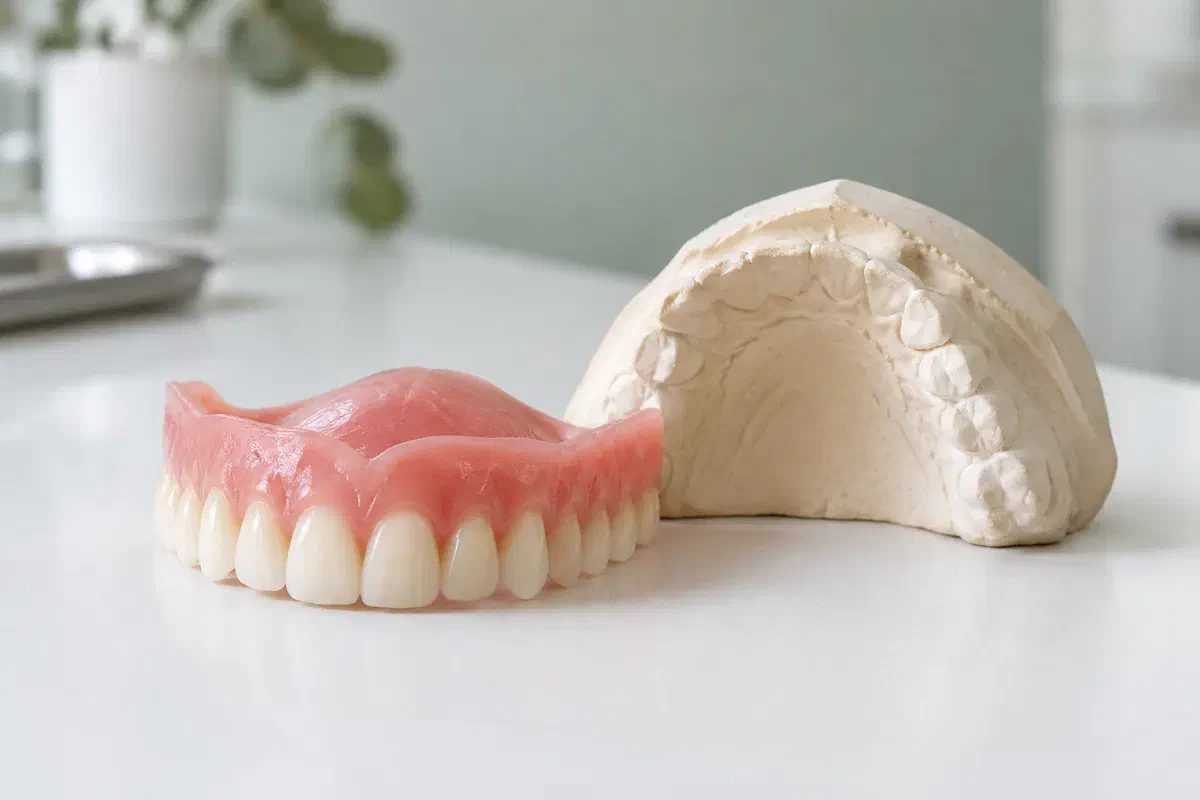
Illustrative denture and dental cast used to explain restorative planning
What you might be noticing

Pinpoint the moment it goes wrong.

Describe when the discomfort appears and what it feels like. Concrete details, like the side you chew on or the food that triggers it, help the examination answer your question rather than simply describing the ridge.

A pressure point that flares while chewing

Show where the pain starts and whether earlier adjustments eased it. A sharp or prominent area of bone may be involved, but so might the denture’s fit or the condition of the gum. Bring the appliance even if you’ve been leaving it out to eat.

Tissue that catches or gets pinched

Folds of gum, a tight attachment near the cheek or lip, or tissue changed by an old appliance can be pinched during chewing. Ask how the finding would affect the next design and whether it should be re-checked once soreness eases. Not all tissue changes need removing.

Surgery suggested before a new appliance

If you’ve been advised to have surgery first, bring that advice and ask what has to be shared between providers. The procedure should serve the replacement everyone has agreed on. Ask who will check the healed area before impressions are taken.

Some problems are not about the denture at all. A sore that persists, a lump that is growing or tissue that changes with no clear reason should be assessed separately before planning moves ahead.

What good planning delivers

A reason for each step, tied to how you eat

If surgery is recommended, it should be explained in terms of the appliance and the everyday function you want back. Ask what obstacle it removes, what improvement is realistic and what limitations will stay. Changing the tissues doesn’t, by itself, decide how the final prosthesis will fit, look or need cleaning.

Planning also helps with the in-between period, when meals can be the hardest part. Ask whether your current denture can be used, whether it will be altered and what happens if healing is slow. That lets you prepare softer food options, arrange work and expect a temporary arrangement if one is needed.

Patient information: AAOMS — preparation before fitting a dental prosthesis

Seeing what is causing the pain

Ask the clinician to identify the finding on examination, a model or an appropriate image. Learn whether bone, soft tissue or the appliance is the main factor, and whether more than one is playing a part. A clear view makes the options easier to compare and helps you decide which questions to bring to the next visit.

Shared aims between providers

The person who prepares the site and the person who makes the prosthesis should agree on the outcome before work begins. Ask who keeps records, design requirements and review appointments on track. That question matters most when a specialist is involved or when the denture is being made at a different practice.

Realistic expectations for chewing

Discuss comfort, stability, cleaning and later adjustments one by one. Preparation may resolve one problem while other challenges of a removable denture remain. Ask which improvements can be predicted and which you will only judge after using the new appliance at meals.

What happens at each stage

Understand the cause, then choose the cure.

Talk about the surgery and the denture together. If anything is unclear, ask before a procedure is scheduled or an appliance is started.

  1. Describe the problem and your goals

    Explain which teeth are replaced, the appliance you use, earlier adjustments and what you want to change, such as chewing comfort. Share your health conditions, medicines and any past oral surgery. Mention if attending many visits would be difficult.

  2. Examine the ridge, gums and denture fit

    The clinician checks how the appliance sits, how your bite meets and the condition of the tissues, and considers whether an image would answer a specific question. Ask which finding is driving the recommendation. Bring records from any earlier assessment.

  3. Weigh the options and review the procedure

    Consider adjustment, redesign, surgery or specialist assessment. If surgery is suggested, go over the intended change, the main risks, pain control, alternatives and expected recovery. Ask how the plan changes if findings during treatment are different from expected.

  4. Plan healing, meals and the next appointment

    Agree who will check the treated area and decide when it’s ready. Get clear guidance on denture use, cleaning, diet and contact details. Ask whether impressions or fitting will follow that check rather than a pre-set date.

During recovery

Soft foods, clear instructions, careful wear

Your aftercare depends on the procedure and on whether an appliance is worn while you heal. Follow the treating clinician’s written instructions rather than your normal denture routine.

Wear the appliance only as advised

Your current or temporary denture may need adjustment or a limited schedule. Ask before putting it over the treated area, and report any pressure. Avoid adjusting it at home, and don’t assume the old fit still suits healing tissue.

Plan meals around the healing site

Ask when you can chew normally, which foods to avoid and how to keep the surgical area clean. Tell the team if eating is becoming very difficult. Use the medicines and rinses recommended specifically for you.

Return for the review before new impressions

The follow-up may look at healing, how the appliance contacts the tissue and readiness for restorative work. Bring the denture and describe any places that feel different when you chew. If another clinician makes the replacement, ask what they need from this visit.

Routes to more comfortable meals

Simplest suitable answer first

Each option should connect what the examination found with what the replacement needs. Ask what it involves, its limitations and whether it changes the order or cost of treatment.

When the appliance is the source of the pain

Refitting or redesigning the denture

Often the fix is in the denture. Ask whether adjusting the fitting surface, balancing the bite, relining or remaking it would help. The choice depends on the condition of your mouth and appliance, not the denture’s age alone.

When a defined feature keeps causing trouble

Reshaping a specific ridge or tissue area

Selected cases involve smoothing a sharp ridge or reducing excess tissue. Ask what would be changed and why that extent is appropriate. The aim is to support the agreed replacement while preserving useful bone and explaining the risks.

When the anatomy needs wider planning

Specialist input or a different prosthesis

More complex situations may justify referral or another type of replacement. Ask whether a different design could better suit your needs and what further assessment it would need. Referral should clarify your choices rather than add unnecessary procedures.

Questions about comfort and surgery

Common questions when a denture hurts to eat with

Bring your denture and any written proposals to your visit. These answers are general; the right plan depends on examination and the replacement you choose.

(905) 876-4488
Why does my denture hurt only when I chew?
Chewing concentrates pressure on the ridge, so a poor fit, an uneven bite or a sharp area of bone shows up most at meals. Inflamed gum can also be more sensitive under load. An examination can help find which factor is involved.
Can a bite adjustment help a sore denture?
Sometimes. If the teeth on the denture meet unevenly, one area of the ridge may take too much force. Balancing the bite or adjusting the fitting surface can reduce soreness without any change to the tissue.
What foods are easier while a prepared ridge heals?
Soft, lukewarm foods that need little chewing are usually easier in the early days, such as soups that have cooled, eggs or yogurt. Your clinician will tell you when and how to return to firmer foods, depending on the procedure and whether you are wearing an appliance. Let the team know if you are struggling to eat enough.
Can I go without my denture while the tissues heal?
In some cases you may be asked to leave it out for periods, and in others a modified or temporary appliance is used. Ask what your plan involves so you can prepare for meals and social situations.
Is reshaping the ridge the same as a bone graft for implants?
No. Smoothing or contouring a ridge and adding bone serve different purposes. Ask which procedure is being proposed, what it would change and how it supports the specific replacement you are considering.
How can I keep trips from Brampton manageable during treatment?
Ask for the full sequence in writing and which visits depend on healing. Where possible, appointments can be grouped. Keep a contact number handy so a new concern can be discussed by phone before you decide whether to come in.
From Brampton to Bronte Street

Tell us when it hurts, and bring the denture.

Let us know what replacement you have in mind and whether surgery has been suggested. We can review findings, discuss what records help, and explain how each stage would be coordinated.

We advise on treatment and any referral once your mouth has been examined.

Visit Milton Dental Clinic
Unit 1, 342 Bronte St. S, Milton, ON L9T 5B7
Get directions Clinic hours
Monday–Thursday
11am–7pm
Friday–Sunday
By appointment only

Areas we serve

  • Milton
  • Oakville
  • Mississauga
  • Georgetown
  • Halton Hills
  • Acton
  • Campbellville
  • Brampton
  • Burlington
  • Puslinch
  • Rockwood
  • Erin
  • Caledon
  • Etobicoke
  • Old Milton
  • Bronte Meadows
  • Timberlea
  • Dorset Park
  • Dempsey
  • Clarke
  • Beaty
  • Coates
  • Harrison
  • Scott
  • Willmott
  • Ford
  • Bowes
  • Cobden
  • Walker
  • Mountain View
  • Milton Heights
  • Hawthorne Village
  • Valley View
  • Fallingbrook
  • Nassagaweya
  • Trafalgar
  • Esquesing
  • Nelson
  • Brookville
  • Moffat
  • Glen Williams
  • Norval
  • Limehouse
  • Stewarttown
  • Ashgrove
  • Hornby
  • Silver Creek
  • Speyside
  • Scotch Block
  • North Oakville
  • River Oaks
  • Glen Abbey
  • West Oak Trails
  • Palermo
  • Bronte Creek
  • College Park
  • Joshua Creek
  • Uptown Core
  • Preserve
  • Iroquois Ridge
  • Lisgar
  • Meadowvale
  • Meadowvale Village
  • Churchill Meadows
  • Erin Mills
  • Central Erin Mills
  • Streetsville
  • East Credit
  • Creditview
  • Heartland
  • Sheridan
  • Mount Pleasant
  • Credit Valley
  • Huttonville
  • Churchville
  • Springbrook
  • Northwest Brampton
  • Bram West
  • Fletcher's Meadow
  • Fletcher's Creek South
  • Alton Village
  • Orchard
  • Millcroft
  • Headon Forest
  • Tansley
  • Brant Hills
  • Tyandaga
  • Kilbride
  • Lowville
  • Aberfoyle
  • Morriston
  • Arkell
  • Hillsburgh
  • Freelton
  • Carlisle
  • Waterdown
  • Flamborough
  • Mountsberg

How can we help?

Milton Dental Clinic

Have a question about your smile? Choose the option that works best for you.

For urgent dental concerns, please call.
Messages are reviewed during clinic hours.