

Illustrative conversation about preparing the mouth for a dental prosthesis
Specialized Care

Pre-Prosthetic Oral Surgery in Mississauga

A surgeon, a dentist and a denturist may each have a role before your new teeth are ready. For adults coming from Mississauga, we help clarify who does what, why preparation surgery is or isn’t proposed, and how the hand-offs should work.

Coordinated care for Mississauga

Several hands, one replacement

Replacing teeth with a denture or another prosthesis sometimes involves more than one clinician. One may examine and plan, another may perform a procedure, and a third may make the appliance. When preparation surgery is suggested, the most common source of confusion is not the procedure itself but how the pieces are supposed to connect.

Pre-prosthetic oral surgery refers to targeted work on the bone or gum when a particular feature would prevent the planned replacement from fitting or functioning properly. It is not a standard step. A painful or loose denture can just as easily come from the appliance, the bite or inflamed tissue, and those are checked before surgery is considered.

Many people from Meadowvale, Churchill Meadows and other western neighbourhoods already have a dentist or denturist they trust. Bring your appliance and any written recommendations. We can review the findings, explain where each provider fits, and help you see what needs to happen, and in what order, before anything is booked.

Get help coordinating your plan
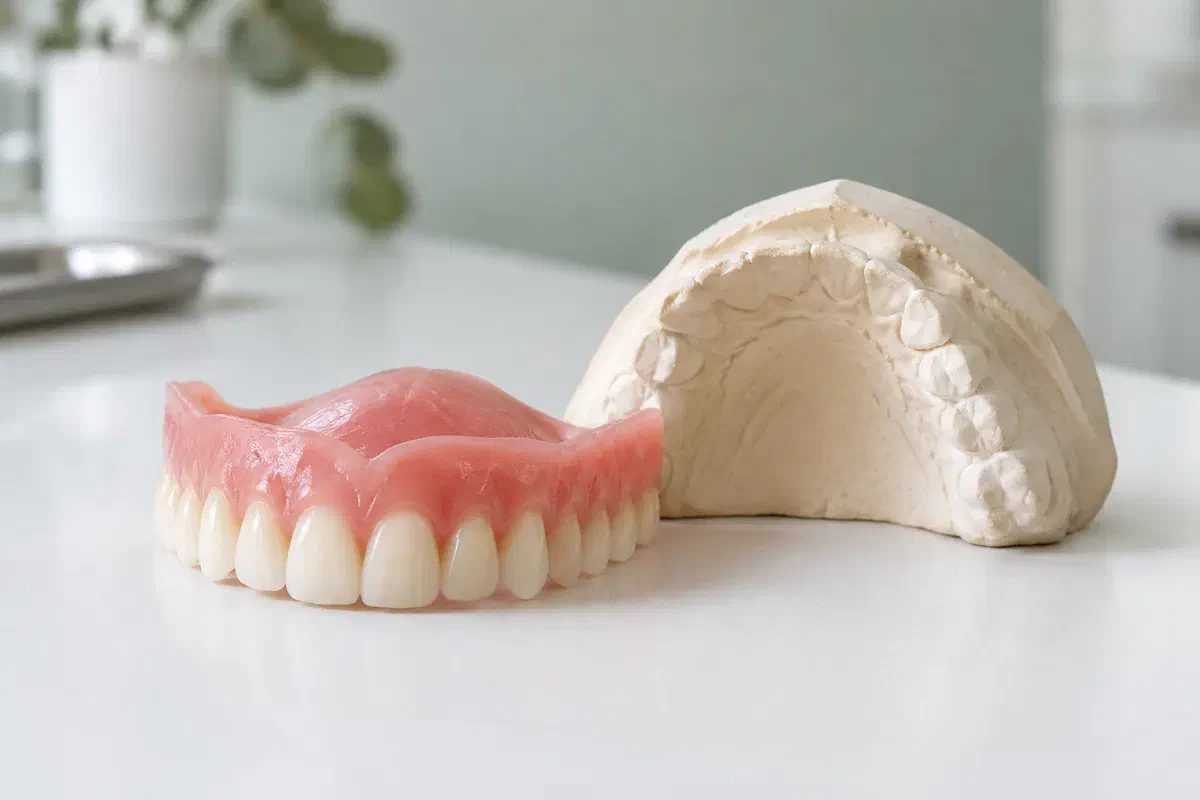
Illustrative denture and dental cast used to explain restorative planning
Situations that prompt a review

Different advice from different offices?

Explain what you have been told and by whom, along with what you are experiencing. That context helps the clinician link the examination to a shared goal instead of adding another opinion that floats free of the plan.

Ongoing soreness despite adjustments

Note where the appliance presses and which office has adjusted it. A bony or uneven ridge might contribute, but the denture and the overlying tissue also need evaluation. Bring the appliance, even if you have stopped wearing it, and any notes about previous changes.

A tissue finding someone wants to treat

If another provider has pointed out extra tissue, an attachment or irritation from an old appliance, ask how it would affect the new design. It may be worth re-examining after irritation has settled. A difference in tissue shape does not always mean it should be removed.

Unclear responsibility between providers

When surgery and the prosthesis are handled in different places, ask who is coordinating and what information each needs. The procedure should support an agreed replacement. Make sure one person is named to confirm that healing is complete before impressions.

An ulcer that won’t heal, a lump that is getting larger or an unexplained change in tissue should be checked in its own right. It needs attention whichever office you see first, and should not be dismissed as denture irritation.

Why coordination matters

When everyone knows the goal, the stages make sense.

If preparation is appropriate, the clinician proposing it should explain the benefit in terms of the prosthesis to come. Ask what precise obstacle it removes, what realistic gain it offers and what will remain unchanged. A procedure on the tissues doesn’t settle how the finished appliance will fit, look or need to be maintained.

Coordination also reduces surprises between appointments. Ask whether your present denture can be worn, whether someone will modify it, and who updates the schedule if healing runs long. With that clear, you can plan work, meals and any temporary arrangement with more confidence.

Patient information: AAOMS — preparation before fitting a dental prosthesis

One explanation everyone shares

Ask to see the finding on examination, a model or an image where appropriate, and confirm whether it concerns bone, soft tissue or something else. If two providers describe it differently, ask them to reconcile their views before you decide.

A named coordinator

The person preparing the site and the person making the replacement should share records and agree on the intended result. Ask who sends information, who books reviews and who you call with questions. This is especially useful when a specialist referral is part of the plan.

Expectations set together

Discuss stability, comfort, cleaning and the likelihood of later adjustments separately. Surgery can ease one limitation without removing all the challenges of a removable appliance. Ask which results can be judged ahead of time and which only after the prosthesis is in use.

Putting the plan together

Agree on the destination, then assign the steps.

Ask about surgery and the prosthesis in the same conversation, and include anyone else involved where you can. If something is uncertain, resolve it before a procedure is scheduled or an appliance is begun.

  1. Gather the history and the recommendations

    Share the teeth being replaced, appliances you have worn, earlier adjustments and what you would like to improve. Review medical conditions, medicines and previous oral surgery. Bring written advice from other offices, and mention any difficulty attending multiple visits.

  2. Examine and decide what records are needed

    The clinician assesses the supporting tissues and considers whether imaging or a further opinion would answer a specific question. Ask which finding matters for the replacement. If another office already has images, ask whether they can be shared to avoid repeating them.

  3. Compare routes and confirm who does what

    Discuss adjustment, redesign, surgery or referral. If surgery is proposed, review the intended change, significant risks, pain control, alternatives and expected recovery. Confirm which provider performs each step and how the plan changes if new findings appear.

  4. Set up the review and the restorative hand-off

    Agree who will examine the healed site and decide when it is ready, and how that decision reaches whoever makes the prosthesis. Get instructions for denture wear, cleaning, eating and contact. Ask whether impressions depend on that review rather than a calendar date.

Recovery and hand-off

Follow one set of instructions through healing.

Aftercare depends on the procedure and whether an appliance is worn. If you receive advice from more than one office, ask which instructions apply, and follow the treating clinician’s written guidance.

Confirm who manages the appliance during healing

Before anything goes back over the treated area, find out whether the denture must be relieved, relined or worn for shorter periods. Ask which office will make those changes, and check before placing it over the treated area. Report rubbing promptly, and don’t modify the appliance yourself.

Keep site care and diet instructions in one place

Write down which areas to brush, how to care for the surgical site and when regular eating can resume. Tell the team if pain or the temporary arrangement makes meals difficult. Use only the medicines and rinses prescribed for your procedure.

Make sure the review result is passed on

A follow-up may assess healing, appliance contact and readiness for the next stage. Bring the denture and mention anything that feels different. Ask that the outcome be shared with the provider making the replacement before their appointment.

Options to discuss

Match the effort to the problem.

Each choice should link an examination finding with a restorative need. Ask what each involves, what it can’t achieve and whether it changes the order, number of providers or cost of treatment.

When the prosthesis can solve it

Changes to the appliance

The answer may lie in the denture, not the tissue. Ask whether adjusting, relining, remaking or redesigning it would help, and which provider would do that work. This depends on the state of your mouth and the appliance, rather than the denture’s age alone, so a careful look at both comes first.

When a specific feature blocks the plan

Targeted tissue preparation

Some cases call for smoothing an irregular ridge or reducing excess tissue. Ask what will change, why that extent is suitable and who will perform it. The aim is to prepare for the agreed replacement while preserving useful support, with the surgical risks explained before you consent.

When the situation is more complex

Specialist planning or a new direction

More demanding tissue requirements may justify referral or rethinking the type of prosthesis. Ask whether another design would better meet your needs and what further assessment it would take. A specialist opinion should make the choices clearer, not suggest that every possible procedure is needed.

Coordination questions

Sorting out who handles each part

Bring your appliance and written recommendations to your visit. These answers cover common planning questions; your own plan depends on examination and the replacement agreed on.

(905) 876-4488
Can my own denturist make the prosthesis after surgery done elsewhere?
Often, yes. What matters is that the person preparing the site and the person making the appliance share information and agree on the goal. Ask who will send records and confirm readiness before your denturist takes impressions.
What records should be shared between my providers?
Typically examination findings, any relevant images, a description of the procedure done and notes on healing. Design requirements for the prosthesis may also be shared. Ask each office what they need and how they prefer to receive it.
Two offices gave me different advice. How do I decide?
Ask each to explain the specific finding and how their recommendation relates to the planned replacement. Sometimes the difference is about timing or design rather than diagnosis. A further assessment can help reconcile the views before you commit.
Who should I call if something goes wrong after surgery?
Contact the office that performed the procedure first, since they know what was done. If the appliance is causing injury, the provider who made or adjusted it may also need to know. For a serious emergency, seek emergency medical care.
Do I need the denture design finalized before preparation?
The planned replacement should guide the preparation, even if some details are still open. Ask which design choices are settled, which are provisional and whether the procedure depends on them. If the providers involved have not yet discussed the design, it is reasonable to ask that they do before a surgery date is set.
Is it practical to have part of my care in Milton when I live in Mississauga?
Many people do, as long as the stages are clear. Ask for an outline showing which visits are where and which depend on healing. Grouping reviews can reduce trips, and a clear contact for each provider helps between visits.
Visiting from Mississauga

Bring every recommendation you’ve been given.

Tell us what replacement you are planning, who else is involved and what has been proposed. We can review findings, discuss useful records and help clarify how the care should be coordinated.

Any treatment or referral is recommended only after we examine your mouth.

Visit Milton Dental Clinic
Unit 1, 342 Bronte St. S, Milton, ON L9T 5B7
Get directions Clinic hours
Monday–Thursday
11am–7pm
Friday–Sunday
By appointment only

Areas we serve

  • Milton
  • Oakville
  • Mississauga
  • Georgetown
  • Halton Hills
  • Acton
  • Campbellville
  • Brampton
  • Burlington
  • Puslinch
  • Rockwood
  • Erin
  • Caledon
  • Etobicoke
  • Old Milton
  • Bronte Meadows
  • Timberlea
  • Dorset Park
  • Dempsey
  • Clarke
  • Beaty
  • Coates
  • Harrison
  • Scott
  • Willmott
  • Ford
  • Bowes
  • Cobden
  • Walker
  • Mountain View
  • Milton Heights
  • Hawthorne Village
  • Valley View
  • Fallingbrook
  • Nassagaweya
  • Trafalgar
  • Esquesing
  • Nelson
  • Brookville
  • Moffat
  • Glen Williams
  • Norval
  • Limehouse
  • Stewarttown
  • Ashgrove
  • Hornby
  • Silver Creek
  • Speyside
  • Scotch Block
  • North Oakville
  • River Oaks
  • Glen Abbey
  • West Oak Trails
  • Palermo
  • Bronte Creek
  • College Park
  • Joshua Creek
  • Uptown Core
  • Preserve
  • Iroquois Ridge
  • Lisgar
  • Meadowvale
  • Meadowvale Village
  • Churchill Meadows
  • Erin Mills
  • Central Erin Mills
  • Streetsville
  • East Credit
  • Creditview
  • Heartland
  • Sheridan
  • Mount Pleasant
  • Credit Valley
  • Huttonville
  • Churchville
  • Springbrook
  • Northwest Brampton
  • Bram West
  • Fletcher's Meadow
  • Fletcher's Creek South
  • Alton Village
  • Orchard
  • Millcroft
  • Headon Forest
  • Tansley
  • Brant Hills
  • Tyandaga
  • Kilbride
  • Lowville
  • Aberfoyle
  • Morriston
  • Arkell
  • Hillsburgh
  • Freelton
  • Carlisle
  • Waterdown
  • Flamborough
  • Mountsberg

How can we help?

Milton Dental Clinic

Have a question about your smile? Choose the option that works best for you.

For urgent dental concerns, please call.
Messages are reviewed during clinic hours.