

Illustrative consultation about a changing gumline and tooth sensitivity
Specialized Care

Receding Gums Assessment in Brampton

The word graft came up, and you are not sure you are ready for that conversation. A receding gums assessment for people in Brampton steps back first: what has the gum done, why, and is surgery even the question to be asking yet?

Before anyone mentions surgery

Understand the gum first; the treatment decision comes after.

Grafting is one of several possible responses to recession, and it is rarely the first thing to settle. Recession itself just means the edge of the gum now sits further down the tooth, so more of the root is exposed. The visible change cannot tell anyone, on its own, why it happened or whether it is still going on.

A careful assessment pulls together the gum tissue, the bare root surface, your cleaning routine and your dental history. Several factors can contribute, and recession is not always tied to one underlying condition. An isolated area has to be seen alongside the rest of the mouth before anyone can say what it needs.

Many people who contact us from Brampton have heard about grafts from a friend or an earlier visit and want a calmer, fuller picture. Tell us how the subject came up and what concerns you. We will explain the findings, what may only need watching, and where a periodontal opinion would genuinely help the decision.

Talk through recession before deciding on treatment
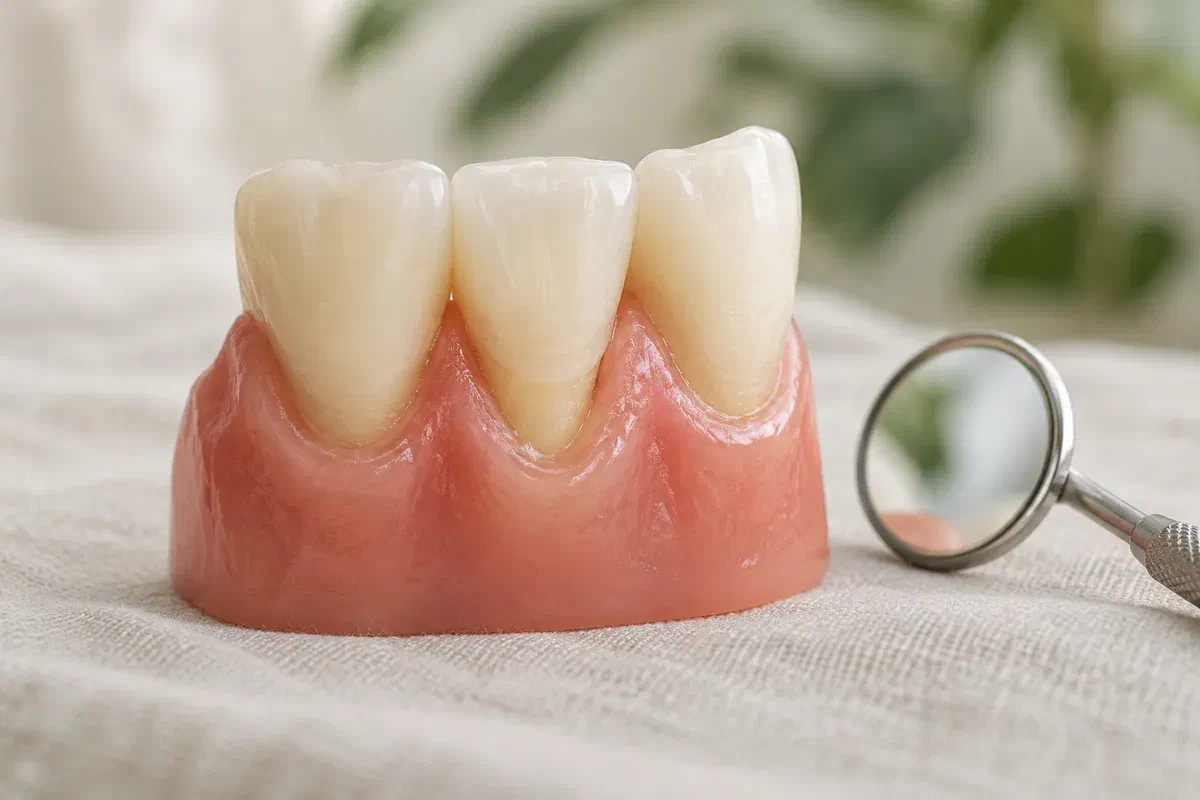
Illustrative teaching model showing an exposed tooth neck beside neighbouring teeth
What helps us help you

Context beats guesswork.

Nobody expects you to have measured anything. Share what you see and feel, what you were told, and any older records or photographs that might show when the change began.

The site that prompted talk of a graft

Point it out and mention any other teeth you have wondered about. Orthodontic history, fillings or crowns near the gum and previous periodontal care are useful to know. They help shape the examination but cannot, by themselves, establish a cause or prove the gum is still moving.

Root sensitivity, if you have it

Cold, sweet foods and brushing are typical triggers when a root is exposed. Say how long the feeling lasts and whether it is changing. Because other problems can mimic this, steady, unprovoked or worsening pain needs dental assessment rather than a quick label.

Spots you find hard to keep clean

Tell us if a brush hurts there, floss shreds, or you tend to avoid the area. Describe or bring your products. Sometimes improving how a site can be cleaned changes the discussion, so it is worth getting the routine right before deciding anything bigger.

Assessment is worthwhile even for a gumline that never hurts. Puffiness that comes on fast, a bad taste with discharge, pain that keeps you up, or a tooth that has begun to shift may point to a separate issue, so mention any of these when you contact the clinic.

What you gain by assessing first

A decision based on findings, not on a single photo or comment

Before grafting is weighed up, it helps to know the state of the gum around the site. Is it inflamed? Are there signs of periodontitis elsewhere? Has the position been recorded before, and if so, has it moved? Without past figures, the measurements from this appointment become the first reference point for future visits.

Different goals lead to different plans. If comfort is what you are after, sensitivity care might come first. If the main issue is recession that seems to be advancing, or a site that cannot be cleaned well, the conversation may turn toward specialist input. Ask which goal each suggestion is serving.

Patient information: Cambridge University Hospitals — recession factors and soft-tissue grafting

Evidence about change over time

A recorded baseline lets the clinician judge whether a site is stable or progressing at a later appointment. Ask which teeth are being tracked. That evidence can make a referral decision much clearer than looking at one tooth in a mirror.

Home-care changes worth trying

Talk about brushing pressure, the best interdental aids for your mouth and any irritation the clinician spots. A demonstration on your own teeth is often the most useful part. Some contributing factors, such as gum thickness and tooth position, cannot be altered by technique, and that is not a failing.

A defined question for the specialist

If a periodontist is suggested, ask what the referral is meant to answer, such as whether a site is suitable for a graft. A consultation does not commit you to surgery. It should cover likely benefits, limitations, alternatives and what recovery involves.

The assessment in order

What happens, and where your input fits

If you are anxious about the gum being examined, or one area is sore, please tell the clinician beforehand. The purpose is to understand, and no procedure is agreed during this visit before the options are clear.

  1. Start with your story

    Explain what you noticed, what you were told and when, and any previous treatment. The clinician may ask about tobacco use, health conditions and medicines. Say which outcome matters most to you, from comfortable brushing to appearance to a sense of whether things will progress.

  2. Examine the site and its surroundings

    The gum margin is assessed together with overall gum health, the tooth and other findings. Specific questions may call for measurements or imaging. Ask what today can establish, and whether older records could show if the recession has been present for years.

  3. Put the issues in order

    Active disease or local irritation usually comes first. Sensitivity care, monitoring or a specialist opinion can then be compared. Ask which findings point toward each option, so the plan reflects what was found rather than a general impression.

  4. Agree on next steps and timing

    Leave with instructions for the affected area, a review date and, if relevant, details of any referral. Check which changes should prompt an earlier call. When several stages are suggested, ask about the order and how progress after the first will be measured.

While you decide

Look after the root, and give the plan time to work.

Your home routine should match your findings. Ask the team to demonstrate it, and avoid changing several products and habits at once without guidance, since that makes it hard to tell what is helping.

Clean as demonstrated

A soft brush, light pressure and a suitable interdental aid are typical. Neglecting the area out of worry makes things harder, and vigorous brushing will not bring the gum back. Report any aid that is painful or difficult to use.

Follow the advice on sensitivity and protection

After checking the tooth, the clinician may recommend a desensitizing toothpaste or other preventive measures. Find out how long to try it before it is reviewed. Feeling better is not proof that the gum has improved, and pain that changes needs rechecking.

Return for the comparison visit

Keep the follow-up so findings can be compared and the plan adjusted. Report any new symptoms or cleaning problems. Avoid pulling on the lip or testing the area with cold drinks, which gives you little reliable information.

Where grafting sits among the options

Not every visible root needs surgery.

Ask what each option is aiming to do for the tooth. Treating active disease or improving daily care often comes first, with the case for further treatment looked at again afterwards.

When the site can reasonably be watched

Observation with targeted home care

A revised technique, removal of irritation and comparison at later visits may be enough. Ask why watching is reasonable for you and what would change that. A monitoring plan should have dates and a clear purpose.

When disease, decay or sensitivity is found

Treating the condition that is present

Gum disease, root decay or root sensitivity may need specific care. Ask which diagnosis the treatment targets and what it will not change. Addressing pain or repairing a surface does not move the gum edge, even though both problems may appear together.

When tissue condition calls for it

Specialist assessment for grafting

A graft may thicken tissue or cover part of a root where suitable. The likely result depends on the site and the technique. Ask about expected coverage, where donor tissue comes from, healing and limits; complete coverage and no further recession cannot be promised.

Patient information: American Academy of Periodontology — gum graft procedures

Brampton graft and recession questions

Before you agree to anything

General answers to common questions. The examination is what relates the gum’s condition to the tooth’s health, so raise appearance and comfort alike.

(905) 876-4488
What exactly is a gum graft?
It is a periodontal procedure that adds gum tissue to an area of recession, often using tissue from elsewhere in the mouth or another source. The aim may be thicker tissue, root coverage or easier cleaning. A specialist explains the details for a particular site.
Can I decide against a graft and just keep monitoring?
Often that is a reasonable choice, depending on the findings. Ask what monitoring would involve and what changes would lead the clinician to suggest reconsidering. The decision is yours once the options have been explained.
How long is recovery after gum grafting?
It varies with the procedure and the person. A periodontist can explain expected healing, diet changes and follow-up visits for your case. Ask during the consultation so you can plan time around it.
Will a graft stop my gums from ever receding again?
No procedure can promise that. A graft may improve tissue at a particular site, but the outcome depends on the tissues, tooth position and ongoing care. The specialist should explain realistic expectations for each area.
Is a periodontist the same as a regular dentist?
A periodontist is a dentist with additional specialist training in the gums and supporting structures. A referral may be suggested when a site is complex or a graft is being considered.
My gum has receded but there is no sensitivity. Is assessment still useful?
Yes. A recorded baseline and a check of gum health are worthwhile even without symptoms. The absence of pain does not show the cause or whether the gum is stable, and the clinician can explain what follow-up suits you.
Visiting from Brampton

Get the full picture first.

Call Milton Dental Clinic about receding gums, an exposed root, or a graft that has been suggested. Bring any previous advice or records, and we will discuss assessment and a practical next step for the area.

Treatment recommendations and referral needs depend on the findings at your examination.

Visit Milton Dental Clinic
Unit 1, 342 Bronte St. S, Milton, ON L9T 5B7
Get directions Clinic hours
Monday–Thursday
11am–7pm
Friday–Sunday
By appointment only

Areas we serve

  • Milton
  • Oakville
  • Mississauga
  • Georgetown
  • Halton Hills
  • Acton
  • Campbellville
  • Brampton
  • Burlington
  • Puslinch
  • Rockwood
  • Erin
  • Caledon
  • Etobicoke
  • Old Milton
  • Bronte Meadows
  • Timberlea
  • Dorset Park
  • Dempsey
  • Clarke
  • Beaty
  • Coates
  • Harrison
  • Scott
  • Willmott
  • Ford
  • Bowes
  • Cobden
  • Walker
  • Mountain View
  • Milton Heights
  • Hawthorne Village
  • Valley View
  • Fallingbrook
  • Nassagaweya
  • Trafalgar
  • Esquesing
  • Nelson
  • Brookville
  • Moffat
  • Glen Williams
  • Norval
  • Limehouse
  • Stewarttown
  • Ashgrove
  • Hornby
  • Silver Creek
  • Speyside
  • Scotch Block
  • North Oakville
  • River Oaks
  • Glen Abbey
  • West Oak Trails
  • Palermo
  • Bronte Creek
  • College Park
  • Joshua Creek
  • Uptown Core
  • Preserve
  • Iroquois Ridge
  • Lisgar
  • Meadowvale
  • Meadowvale Village
  • Churchill Meadows
  • Erin Mills
  • Central Erin Mills
  • Streetsville
  • East Credit
  • Creditview
  • Heartland
  • Sheridan
  • Mount Pleasant
  • Credit Valley
  • Huttonville
  • Churchville
  • Springbrook
  • Northwest Brampton
  • Bram West
  • Fletcher's Meadow
  • Fletcher's Creek South
  • Alton Village
  • Orchard
  • Millcroft
  • Headon Forest
  • Tansley
  • Brant Hills
  • Tyandaga
  • Kilbride
  • Lowville
  • Aberfoyle
  • Morriston
  • Arkell
  • Hillsburgh
  • Freelton
  • Carlisle
  • Waterdown
  • Flamborough
  • Mountsberg

How can we help?

Milton Dental Clinic

Have a question about your smile? Choose the option that works best for you.

For urgent dental concerns, please call.
Messages are reviewed during clinic hours.