

Illustrative consultation about a changing gumline and tooth sensitivity
Specialized Care

Receding Gums Assessment in Burlington

Told at a cleaning that you brush too hard? Seen frayed bristles after a month? A receding gums assessment for Burlington residents looks at the gumline, the habits around it, and the other factors that brushing alone does not explain.

Brushing, pressure and the gumline

Scrubbing harder rarely makes teeth cleaner, but it can wear on the gum.

A worn-out toothbrush with splayed bristles after a few weeks is a familiar sight for people who press firmly. Heavy brushing is one possible contributor to recession, where the gum edge sits lower on the tooth and more root shows. It is rarely the whole story, though, and looking at the gum cannot reveal how much each factor has played a part.

Gum thickness, the position of a tooth in the jaw, past orthodontic movement, gum disease and local irritation can all be involved. An assessment weighs these together with the root surface, your routine and your dental history. A dip beside one canine, for example, still has to be read alongside the rest of the mouth.

Coming in from Burlington, bring the brush you use, along with any floss or interdental aids. Tell us what worries you most, from sensitivity to the look of your smile or the chance of further change. We will go over what the examination shows, what is worth watching, and whether treatment or a periodontal opinion makes sense.

Have your brushing and gumline checked
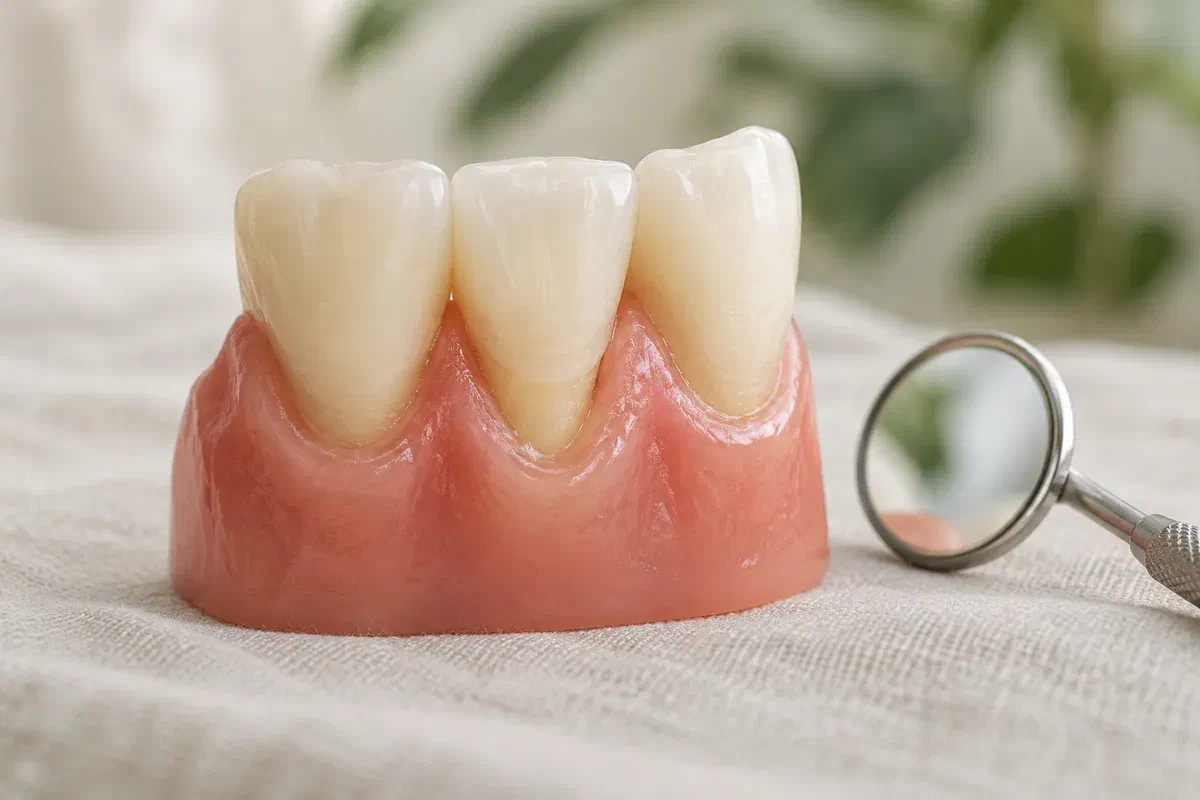
Illustrative teaching model showing an exposed tooth neck beside neighbouring teeth
What to tell the team

Describe your habits honestly; nobody is grading you.

You do not need to estimate how much gum has gone. Tell us what looks and feels different, and if you have older dental records or photographs that show when you first noticed it, bring them.

Recession on the teeth you reach most easily

Note whether the change is on one side, on the outer surfaces, or spread across several teeth. Mention braces, nearby restorations or previous gum treatment. Patterns like these help frame the examination without proving a cause or showing whether the gum is still receding.

A tender or sensitive spot after brushing

Explain whether the brush itself, cold drinks or sweet foods set it off, and how long the feeling lasts. Exposed roots are often sensitive, yet other problems can feel the same. Pain that persists, starts on its own, or is getting worse should be assessed rather than blamed on brushing.

Uncertainty about how to clean now

Some people swing from brushing too hard to barely touching the area. Tell us where you have ended up. The team can help you find a technique that removes plaque while being kind to the tissue, rather than leaving you to guess.

A receding gum deserves a look even without pain. If you have sudden swelling, pus, severe discomfort, or a tooth that has begun to feel loose, mention it promptly when you get in touch, since another problem may be involved.

Beyond the brush

Learn which factors are in play, and which are within your control.

Brushing force is only one thread. The clinician will also be looking for redness or puffiness in the gum, any evidence of periodontitis, and clues about whether the recession is old or recent. If nobody has measured the area before, this visit sets the first marker, so that next time there is something firm to compare with instead of a guess.

Your goals matter as well. Someone mostly bothered by sensitivity may need a different first step from a person whose recession seems to be increasing or whose gum is hard to keep clean. Ask what each recommendation is targeting and which concern, if any, would be left to watch separately.

Patient information: Cambridge University Hospitals — recession factors and soft-tissue grafting

A recorded starting point

Measurements taken now allow the clinician to judge any movement at future visits. Ask which teeth are being followed and what will be compared. That is more reliable than checking the mirror every morning after you brush.

A hands-on technique demonstration

Ask the team to show you angle, pressure and brush type on the exact teeth involved. If you use an electric brush, bring it. Advice should suit your mouth and your grip, while accepting that tissue thickness and tooth position are not about willpower.

A plain explanation if referral is raised

A periodontist can assess a more complex site and talk about grafting or alternatives. Ask what the referral would answer. A consultation is not a commitment to surgery, and it should set out the expected benefits, limits, other options and recovery.

Step by step

Talk, examine, prioritize, practise.

Let the clinician know if a spot is tender or if dental visits make you tense. This is a chance to understand your gums, and nothing is decided before you have heard the options.

  1. Share your routine and history

    Describe how often and how firmly you brush, which products you use, when you noticed the change and any earlier advice. The clinician may ask about tobacco, health conditions and medicines. Say what result would matter most, such as comfort, appearance or knowing whether it will progress.

  2. Look closely at the gum and the tooth

    Recession is assessed together with gum health, tooth wear near the gumline and other findings. Measurements or imaging may help with particular questions. Ask what can be determined today and whether older records could show how long the change has been there.

  3. Work out what needs attention first

    Active disease or local irritation takes priority, followed by sensitivity care, monitoring or specialist input. Ask which findings support each suggestion. The plan should flow from your examination, not just from the fact that some root has become visible.

  4. Practise the new routine and book a recheck

    Try the recommended technique before you leave, so it feels familiar at home. Confirm when the area will be looked at again, which changes mean calling earlier, and whether a referral is planned. If there are several steps, ask about the order.

Retraining your brushing

Light pressure, soft bristles, every day.

What you do at home should match the findings in your mouth. Ask for a routine you can repeat without strain, and resist swapping brush, paste and floss all at once on your own.

Hold the brush the way you were shown

A soft brush and gentle, short strokes are commonly advised, along with the right aid for between the teeth. Some people find a lighter grip helps. Do not avoid the area, and do not try to scrub the gum back into place.

Use any sensitivity care consistently

Once the tooth itself has been ruled in or out as a source of pain, a desensitizing paste or another preventive step might be recommended. Check the directions with the team and agree on a point to judge whether it is working. A calmer tooth does not mean the gum has returned, and changing pain should be rechecked.

Let the review track progress

Keep the follow-up and report new symptoms or problems with cleaning. The clinician will compare the findings and refine the plan. Pulling the lip back to inspect, or testing the tooth with cold water, will not give a reliable answer.

What happens next

Retrain, treat, or refer

Ask what each option is intended to accomplish for the affected tooth. The sensible first step often deals with technique, active disease or daily care, and further treatment is reviewed after that.

When observation and local care suit the findings

Technique changes and planned monitoring

Adjusting brushing, addressing irritation and comparing the site at future visits may be enough for now. Ask why monitoring is suitable and what would change that view. Observation should come with a defined review, not an open question.

When another finding needs treatment

Care for gum disease, wear or a tender root

Gum disease, decay, wear at the neck of the tooth or a sensitive root may need its own care. Ask which problem is being treated and what will not change. Restoring a worn surface or easing sensitivity does not move the gum margin.

When the tissue needs further discussion

Referral to discuss grafting or other specialist care

A graft may be suggested to add tissue or cover part of a root in a suitable case. Results depend on the site and procedure. Ask about likely coverage, donor tissue, healing and limitations; complete coverage and no future recession cannot be guaranteed.

Patient information: American Academy of Periodontology — gum graft procedures

Burlington brushing questions

What people ask about brushing and receding gums

This is general information. The examination is what ties the condition of your gum to the health of the tooth beneath it, so raise any comfort or appearance concern.

(905) 876-4488
Is a medium or hard toothbrush ever the right choice?
Soft bristles are commonly recommended, especially near receding gums. Firmer brushes can be harder on gum tissue and the root surface. Bring your brush and the team can suggest a suitable replacement for your situation.
How do I know if I am pressing too hard?
Bristles that flatten or splay quickly are one sign. Some electric brushes warn you with a light or a change in motor sound. The team can watch you brush and suggest how to lighten your grip.
Was hard brushing definitely what caused my recession?
Not necessarily. It may be a factor, but gum thickness, tooth position, gum disease and other influences can also contribute. The clinician looks at the whole picture before suggesting what has likely been involved.
Can grinding or clenching affect the gums near a tooth?
Grinding is mainly associated with tooth wear, and its link to recession is debated. Mention it if you clench or grind, since it can affect teeth near the gumline. The clinician will consider it as part of the wider examination.
Should I avoid brushing the receded area until my appointment?
No. Keep cleaning it with a soft brush and light pressure. Skipping the area lets plaque build up. If brushing is painful, mention it when you book so the cause can be checked.
My gum looks fine but cold still hurts. Do I still need an assessment?
Yes. Sensitivity can come from several sources, and a gumline that looks fine to you may still benefit from measurement. A baseline also helps judge future change, even when you cannot see anything wrong yourself.
Booking from Burlington

Bring your toothbrush and your questions.

Reach out to Milton Dental Clinic about receding gums, exposed roots, or sensitivity near the gumline. Earlier records and advice are useful, and we will talk through assessment and a practical next step.

Treatment and referral recommendations depend on your examination findings.

Visit Milton Dental Clinic
Unit 1, 342 Bronte St. S, Milton, ON L9T 5B7
Get directions Clinic hours
Monday–Thursday
11am–7pm
Friday–Sunday
By appointment only

Areas we serve

  • Milton
  • Oakville
  • Mississauga
  • Georgetown
  • Halton Hills
  • Acton
  • Campbellville
  • Brampton
  • Burlington
  • Puslinch
  • Rockwood
  • Erin
  • Caledon
  • Etobicoke
  • Old Milton
  • Bronte Meadows
  • Timberlea
  • Dorset Park
  • Dempsey
  • Clarke
  • Beaty
  • Coates
  • Harrison
  • Scott
  • Willmott
  • Ford
  • Bowes
  • Cobden
  • Walker
  • Mountain View
  • Milton Heights
  • Hawthorne Village
  • Valley View
  • Fallingbrook
  • Nassagaweya
  • Trafalgar
  • Esquesing
  • Nelson
  • Brookville
  • Moffat
  • Glen Williams
  • Norval
  • Limehouse
  • Stewarttown
  • Ashgrove
  • Hornby
  • Silver Creek
  • Speyside
  • Scotch Block
  • North Oakville
  • River Oaks
  • Glen Abbey
  • West Oak Trails
  • Palermo
  • Bronte Creek
  • College Park
  • Joshua Creek
  • Uptown Core
  • Preserve
  • Iroquois Ridge
  • Lisgar
  • Meadowvale
  • Meadowvale Village
  • Churchill Meadows
  • Erin Mills
  • Central Erin Mills
  • Streetsville
  • East Credit
  • Creditview
  • Heartland
  • Sheridan
  • Mount Pleasant
  • Credit Valley
  • Huttonville
  • Churchville
  • Springbrook
  • Northwest Brampton
  • Bram West
  • Fletcher's Meadow
  • Fletcher's Creek South
  • Alton Village
  • Orchard
  • Millcroft
  • Headon Forest
  • Tansley
  • Brant Hills
  • Tyandaga
  • Kilbride
  • Lowville
  • Aberfoyle
  • Morriston
  • Arkell
  • Hillsburgh
  • Freelton
  • Carlisle
  • Waterdown
  • Flamborough
  • Mountsberg

How can we help?

Milton Dental Clinic

Have a question about your smile? Choose the option that works best for you.

For urgent dental concerns, please call.
Messages are reviewed during clinic hours.