

Illustrative consultation about a changing gumline and tooth sensitivity
Specialized Care

Receding Gums Assessment in Caledon

Gums do not exist in isolation. Smoking, medicines, health conditions and daily habits can all shape what happens at the gumline. When you book from Caledon, our receding gums assessment takes that wider picture into account before suggesting how to respond.

Your health, your habits, your gums

Part of the answer may lie outside your mouth.

A tooth that suddenly seems longer is usually the visible part of the story. Recession means the gum edge now sits lower than it did, uncovering some of the root. The reasons behind it can be local, such as brushing force or tooth position, or connected to wider influences like tobacco use, gum disease or a health condition. Looking at the tooth alone will not sort these out.

That is why the assessment includes a conversation as well as an examination. The clinician reviews the gum tissue, the exposed root, your cleaning routine, your dental history and, where relevant, your general health and medicines. There is rarely a single cause, and two people with similar-looking recession may have quite different reasons for it. Each site is weighed against the whole mouth.

Households in Caledon are often juggling busy schedules and longer drives, so it helps to bring a medicine list and any earlier dental records to the first visit. Tell us when you noticed the change and what concerns you. You will leave knowing what was found, what to watch, and whether treatment, a periodontal opinion or a word with your physician might help.

Book an assessment that looks at the bigger picture
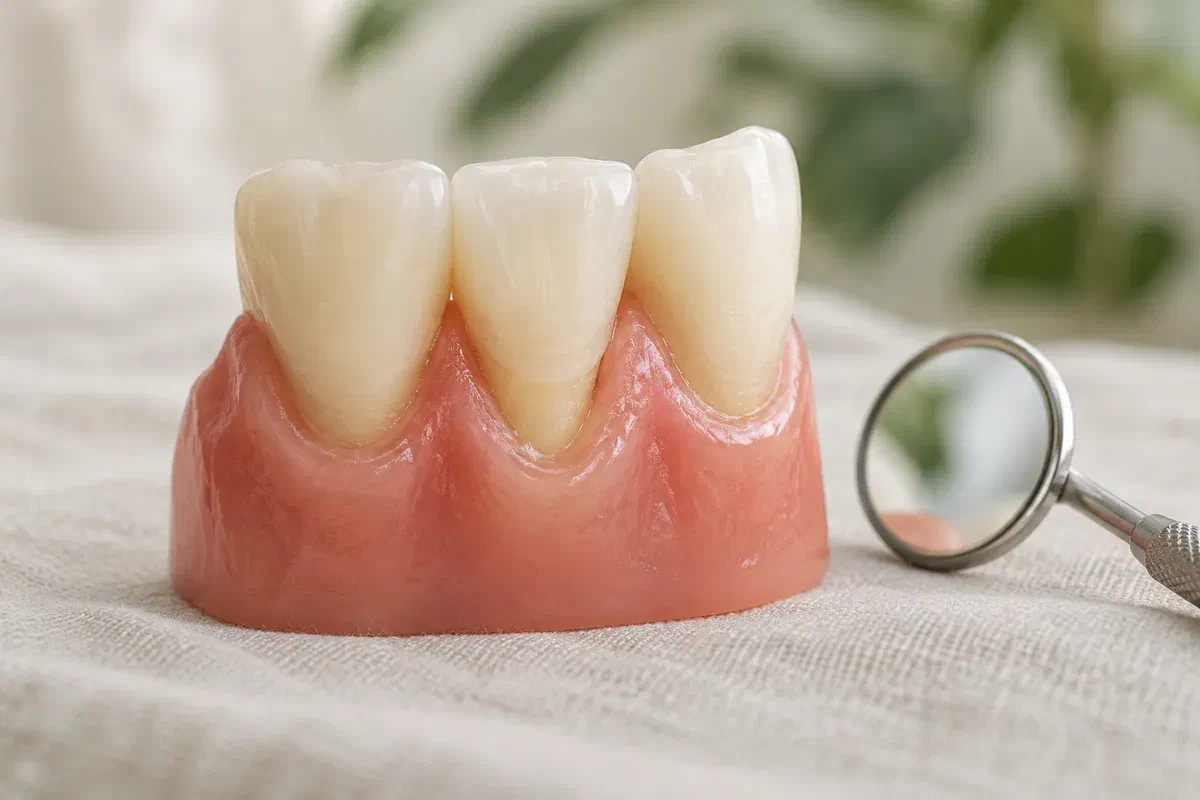
Illustrative teaching model showing an exposed tooth neck beside neighbouring teeth
Useful to have on hand

A medicine list, a rough timeline and your questions

Nothing needs measuring at home. Note what you have noticed and roughly when, list your medications and health conditions, and bring earlier dental records or photographs if you have them.

Teeth that look longer or uneven

Mention which teeth, and whether you have had braces, gumline fillings or crowns, or gum treatment. These details guide the examination, though by themselves they cannot settle why the gum has changed or whether it is still on the move.

Sensitivity or a dry, uncomfortable mouth

Describe what triggers any twinges and how long they last, and mention if your mouth often feels dry, as some medicines can cause this. Other tooth problems can mimic root sensitivity, so persistent, spontaneous or intensifying pain should be examined rather than assumed.

Habits that affect your gums

Be open about smoking, vaping or chewing tobacco, as well as brushing force and the aids you use. Nobody is judging. This information helps the team give advice that is realistic for you, rather than simply telling you to brush harder or less.

Recession deserves attention even without pain. A swelling that appears overnight, a discharge with a bad taste, pain strong enough to disturb sleep, or a noticeably mobile tooth can signal a separate problem; describe it when you call so we can advise you promptly.

What the assessment pulls together

Local findings, health factors and a sense of direction

The visible root is the starting point. Beyond it, the clinician checks whether the gum is inflamed, whether there is evidence of periodontitis, and how factors from your history might fit. If the gum position has never been recorded, measurements taken now provide the reference against which later change can be judged.

Your priorities shape what comes first. Someone troubled by sensitivity may begin differently from a person whose gum seems to be receding further, or who finds the area hard to clean. Ask which goal each recommendation serves, and whether any health factor needs to be managed alongside it.

Patient information: Cambridge University Hospitals — recession factors and soft-tissue grafting

A baseline that accounts for your history

Measurements recorded now allow later visits to show whether the gum has moved. Find out which sites are on the list and the planned interval. A planned recheck is more reliable than looking in the mirror, especially if health or habits are changing.

Advice that fits your life

Talk through brushing pressure, suitable aids, dry-mouth care and any irritation found. If you are thinking of quitting tobacco, ask about support. Some contributors, like gum thickness or tooth position, are anatomical and have nothing to do with effort.

Coordination when it would help

A periodontist may be suggested for a complex site or to discuss grafting, and sometimes a conversation with your physician is useful. Ask what each referral is meant to answer. Agreeing to see a specialist is not the same as agreeing to an operation; that visit should cover benefits, limits, alternatives and recovery.

How the appointment flows

Conversation, examination, then a joined-up plan

Mention any tender areas, or any nervousness about gum examinations, before we begin. The appointment exists to help you understand; no procedure is decided before you have heard the findings and had time to think.

  1. Review dental and general health history

    We will talk about what you noticed, when, and any earlier advice. Your medicines, health conditions and tobacco use will be discussed, as these can affect gum health. Tell us what you would most like from the visit: comfort, appearance, or a clearer sense of risk.

  2. Examine the gumline and supporting tissue

    Recession is assessed alongside gum health, the condition of the teeth and other findings. Imaging or measurements are added where they help with a specific question. Ask what can be confirmed today, and whether earlier records might show the change is longstanding.

  3. Connect the findings and set priorities

    Active disease or irritation is addressed first, and any health factor that may be contributing is discussed. Then the choice between monitoring, sensitivity management and specialist input can be made. Ask which findings point to each recommendation.

  4. Agree on home care, review and any coordination

    You should leave with instructions for the affected area, a review date and, where relevant, a plan for referral or for speaking with your physician. Check which changes warrant an earlier call. If several steps are proposed, ask about their order.

After your visit

Small adjustments, steadily kept

Home care should match your findings and your health. Ask the team to demonstrate the routine, and avoid changing many products at once without advice, so it is clear what is making a difference.

Clean gently, every day

Soft bristles, gentle pressure and an interdental aid that fits are the usual starting point. Skipping the area lets plaque collect, and forceful brushing will not restore the gum. If an aid causes pain, let us know rather than abandoning it.

Protect the root and manage dryness

After checking the tooth, the clinician may recommend a sensitivity product, fluoride care or advice for a dry mouth. Ask how to use what is suggested and when it will be reviewed. Comfort improving does not mean the gum position has changed.

Bring updates to your review

Attend the follow-up and mention any new symptoms, changes in medicines or health, or trouble cleaning. Measurements will be compared and the plan adjusted. Repeatedly inspecting the gum or testing it with cold drinks will not give a useful reading.

Shaping the response

Three approaches, each with its own purpose

Ask what each option is designed to achieve. Often, active disease, daily care and relevant health factors are addressed first, with further treatment reconsidered once you see how the gum responds.

When the site can reasonably be observed

Monitoring with tailored home care

Adjusted cleaning, attention to irritation or dryness, and repeat measurements at set intervals may be all that is needed. Ask what would prompt a change of plan. A monitoring plan should come with dates and clear criteria.

When disease, decay or sensitivity needs care

Treatment for an associated condition

Periodontitis, a cavity on the root or a tender surface might each call for specific care, sometimes alongside help with a contributing habit. Check what each step is meant to fix and what it leaves untouched. Repairing a tooth surface does not relocate the gum.

When the tissue warrants specialist input

Periodontal consultation on grafting

At a suitable site, a periodontist may discuss a graft to thicken gum tissue or cover some of the root. Health factors such as smoking can influence healing. Ask about realistic coverage, recovery and limits; complete coverage and lasting stability are not assured.

Patient information: American Academy of Periodontology — gum graft procedures

Caledon health and gum questions

How the rest of your health connects to your gumline

General information only. Your examination considers the gum, the tooth and your wider health together, so share anything you think may be relevant.

(905) 876-4488
Can medicines that dry my mouth affect exposed roots?
A dry mouth reduces saliva, which normally helps protect teeth. Exposed root surfaces may then be more vulnerable to decay. Mention any medicines and dry-mouth symptoms so the clinician can suggest suitable preventive care.
Will quitting smoking help my gums?
Stopping tobacco use is generally good for gum health and healing. It will not reverse recession that has already happened, but it may support the health of the tissues. Ask about support if you would like help.
Should my family doctor know about my receding gums?
It is not always necessary, but if a health condition or medicine may be relevant, the clinician may suggest mentioning it. Sharing information between dental and medical care can help in some situations.
Is gum measuring safe if I take a blood thinner?
Gum measurement is a routine part of dental examinations. Tell the team about any blood thinner or other medicines before the visit so they can take it into account.
Can teenagers develop receding gums?
Yes, recession can occur in younger people, sometimes linked to tooth position, thin tissue or orthodontic treatment. If you notice it in a teenager, an assessment can record the site and guide care.
Could a medical condition explain why my gums are changing?
Some conditions, such as diabetes, are associated with gum disease, which can be one contributor to recession. The clinician can take your health history into account, but a diagnosis of any medical condition belongs with your physician.
Planning a visit from Caledon

Bring your history, and we will fit the pieces together.

Contact Milton Dental Clinic about receding gums, a root that has become visible, or sensitivity at the gumline. Bring a list of your medicines and any earlier records, and we will discuss assessment and a sensible next step.

Recommendations, including any referral, follow from the findings of your examination.

Visit Milton Dental Clinic
Unit 1, 342 Bronte St. S, Milton, ON L9T 5B7
Get directions Clinic hours
Monday–Thursday
11am–7pm
Friday–Sunday
By appointment only

Areas we serve

  • Milton
  • Oakville
  • Mississauga
  • Georgetown
  • Halton Hills
  • Acton
  • Campbellville
  • Brampton
  • Burlington
  • Puslinch
  • Rockwood
  • Erin
  • Caledon
  • Etobicoke
  • Old Milton
  • Bronte Meadows
  • Timberlea
  • Dorset Park
  • Dempsey
  • Clarke
  • Beaty
  • Coates
  • Harrison
  • Scott
  • Willmott
  • Ford
  • Bowes
  • Cobden
  • Walker
  • Mountain View
  • Milton Heights
  • Hawthorne Village
  • Valley View
  • Fallingbrook
  • Nassagaweya
  • Trafalgar
  • Esquesing
  • Nelson
  • Brookville
  • Moffat
  • Glen Williams
  • Norval
  • Limehouse
  • Stewarttown
  • Ashgrove
  • Hornby
  • Silver Creek
  • Speyside
  • Scotch Block
  • North Oakville
  • River Oaks
  • Glen Abbey
  • West Oak Trails
  • Palermo
  • Bronte Creek
  • College Park
  • Joshua Creek
  • Uptown Core
  • Preserve
  • Iroquois Ridge
  • Lisgar
  • Meadowvale
  • Meadowvale Village
  • Churchill Meadows
  • Erin Mills
  • Central Erin Mills
  • Streetsville
  • East Credit
  • Creditview
  • Heartland
  • Sheridan
  • Mount Pleasant
  • Credit Valley
  • Huttonville
  • Churchville
  • Springbrook
  • Northwest Brampton
  • Bram West
  • Fletcher's Meadow
  • Fletcher's Creek South
  • Alton Village
  • Orchard
  • Millcroft
  • Headon Forest
  • Tansley
  • Brant Hills
  • Tyandaga
  • Kilbride
  • Lowville
  • Aberfoyle
  • Morriston
  • Arkell
  • Hillsburgh
  • Freelton
  • Carlisle
  • Waterdown
  • Flamborough
  • Mountsberg

How can we help?

Milton Dental Clinic

Have a question about your smile? Choose the option that works best for you.

For urgent dental concerns, please call.
Messages are reviewed during clinic hours.