

Illustrative consultation about a changing gumline and tooth sensitivity
Specialized Care

Receding Gums Assessment in Campbellville

“We’ll keep an eye on it” is common advice for recession, but what does keeping an eye on it involve? For households in Campbellville, our assessment sets out what is being watched, how often, and what would change the plan, so visits can be planned sensibly.

What “watching it” really means

Monitoring is a plan, not a shrug.

Recession, in simple terms, is gum that has moved down the tooth and left part of the root uncovered. For many sites, the sensible response is to observe it. Observation only works, though, if someone has recorded where the gum started, knows what to measure next time, and has agreed with you what would count as a meaningful change.

That record begins with a careful assessment. The clinician checks the gum tissue, the exposed root, how you look after the area and what dental care you have had before. More than one factor can lie behind recession, and it does not always reflect the same condition. One tooth’s change is read against the whole of your mouth.

Out in Campbellville, where a dental trip often gets folded into other errands, it helps to know in advance how often reviews are needed. Tell us what you have noticed and what concerns you, whether comfort, appearance or further change. We will explain the findings, set out a realistic review schedule, and flag anything that should not wait.

Set up a gumline monitoring plan
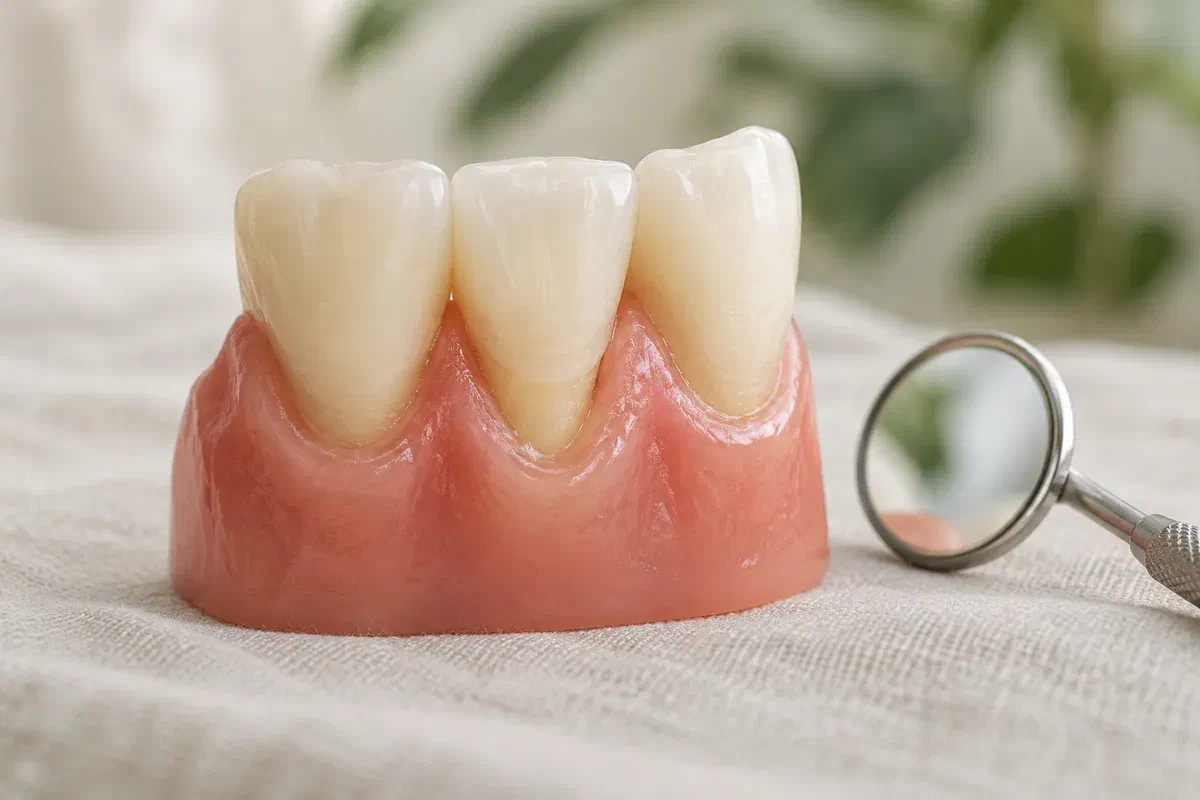
Illustrative teaching model showing an exposed tooth neck beside neighbouring teeth
Information that shapes the plan

Three things the clinician will want to hear about

Measuring the gum is our part of the job. Yours is to describe what you have noticed, roughly when, and to bring older dental records or photographs if they show the area at an earlier point.

Where you have seen the gum move

One tooth or several? Upper or lower? Mention orthodontic treatment, fillings at the gumline and any past periodontal care. Those details point the examination in the right direction, though none of them can confirm a cause or prove ongoing movement.

Whether the area is sensitive

Describe triggers like cold water, sugary snacks or the toothbrush, and how long any twinge lasts. Bare roots are often tender, but so are cracked or decayed teeth. If pain lingers, appears unprovoked or keeps escalating, it needs to be examined in its own right.

How cleaning the area feels

If you hesitate there, or an aid catches, say so, and bring the products you use. A monitoring plan depends on the site staying clean, so the team will help you settle on a gentle method rather than suggesting more force or less attention.

Being on a monitoring plan never means ignoring new problems. A gum that suddenly swells, oozes, throbs badly, or a tooth that has become mobile calls for a phone call straight away, not a wait for the next review.

What a good monitoring plan gives you

Clear markers, clear timing, clear triggers

The first job is to make sure there is nothing active. Is the tissue inflamed? Is there any evidence of periodontitis? Has anyone measured this tooth before? With those answers, the clinician can decide whether observation is appropriate. Where no earlier figures exist, this visit supplies them, which is what makes later comparisons possible.

Next, your priorities. A family member mainly troubled by sensitivity may need a different first step from someone whose recession appears to be advancing or who struggles to reach the area. It is fair to ask what each suggestion is aiming at, and which questions the review visits are meant to answer.

Patient information: Cambridge University Hospitals — recession factors and soft-tissue grafting

Recorded measurements

These give each future visit a concrete comparison. Ask which teeth are being followed and what size of change would prompt a rethink. That is the difference between real monitoring and occasionally peering in the mirror.

Realistic home-care changes

Go over brushing pressure, interdental tools and any local irritation the examination turns up, and ask for a demonstration. Advice should match your mouth and daily life. Gum thickness and tooth position are part of your build, not a measure of diligence.

A known route to specialist care

If monitoring shows change, or the site is complex from the start, a periodontist may be suggested. Ask what that consultation would answer. It does not commit you to grafting; you should hear about likely benefits, limitations, other options and healing.

Building the plan

Baseline today, comparisons after

Say if an area is sore or if gum examinations make you nervous. The appointment exists to explain what is happening and to agree on a plan with you, not to schedule a procedure on the spot.

  1. Gather the background

    We will go over your symptoms, when they began, any earlier advice, and habits that affect the gums, such as smoking. Medical conditions and medicines can matter too. Tell us what you most want: easier brushing, a better look, or a sense of the odds of further change.

  2. Take baseline measurements

    The clinician records the gum position along with gum health, the tooth’s condition and related findings, adding imaging only if a question calls for it. Ask what is being measured, and whether records from a previous dentist might show the change is not new.

  3. Decide whether monitoring is suitable

    If there is active disease or irritation, that is treated first. If not, the options are usually monitoring with home care, sensitivity management or a specialist opinion. Ask what in the examination makes monitoring reasonable for you.

  4. Agree on the review schedule

    Leave knowing when the next check is due, what will be compared and which signs mean calling sooner. Ask whether reviews can line up with routine cleanings, or with appointments for others in your household, to keep trips manageable.

Your part between reviews

Keep it clean, keep it comfortable, keep the date.

The routine you follow should reflect the findings. Ask for a clear demonstration, then stick with it rather than trying several new products in a row, so that any change at the next review is easier to interpret.

Follow the cleaning routine you were shown

Usually that means a soft-bristled brush, a gentle touch and a correctly sized interdental aid. Avoiding the site lets plaque build up, and heavy scrubbing will not regrow tissue. Call if an aid hurts or feels unsafe.

Note any sensitivity and how it responds

If a desensitizing paste or other preventive care was recommended after the tooth was checked, use it as directed and note how the tooth responds. Relief is welcome but says nothing about the gum’s position, and changing pain deserves a recheck.

Let the next visit do the comparing

Bring any new symptoms or cleaning problems to the review, where measurements are repeated against the baseline. Pulling your lip down to stare at the gum, or sipping ice water to test it, will not give a reliable answer.

When the plan might change

Watching is one option among three.

Every option has a purpose, and you are entitled to know it. Daily care and treatment of anything active usually come first, and further steps are considered only if monitoring shows the need.

When the site appears stable

Structured monitoring and home care

Gentler cleaning, attention to irritation and repeat measurements at set intervals may be all that is required. Ask what would move you off this path. A monitoring plan without dates or criteria is not really a plan.

When disease, decay or sensitivity is present

Treatment for an active finding

Gum disease, root decay or a sensitive surface may need care of its own, separate from the recession. Ask what each treatment is for and what it leaves unchanged. Fixing a surface or calming a nerve does not shift the gum margin.

When tissue condition or change warrants it

Referral for grafting or other specialist care

If measurements show the gum is still moving, or the tissue is very thin, a periodontist may talk about grafting to reinforce the area or cover some of the root. Outcomes vary between sites and techniques. Ask what coverage is realistic, what healing involves and what the limits are; complete coverage and future stability cannot be guaranteed.

Patient information: American Academy of Periodontology — gum graft procedures

Campbellville monitoring FAQs

Living with a gum that is being watched

These are general answers. The examination is where the condition of your gum and the health of the tooth are weighed up together, so raise anything that concerns you.

(905) 876-4488
What counts as a meaningful change at a review?
The clinician compares measurements with your baseline and looks at gum health and symptoms. Small differences can occur between readings, so they consider the overall pattern. Ask what kind of change would lead them to suggest a different approach.
Can several family members be assessed in the same trip?
Often, yes, depending on availability. Ask when booking whether appointments for others in your household can be scheduled back to back or on the same afternoon. Grouping visits this way can cut down on travel, especially when a review is due for more than one person.
What if I miss a planned review?
Rebook when you can. A missed review does not undo the baseline, but the comparison will be less useful the longer it is delayed. Call sooner if you notice any new symptoms in the meantime.
Does monitoring mean nothing is being done?
No. Monitoring usually includes cleaning advice, management of any irritation and measured comparisons over time. It is an active plan, chosen when the findings suggest more treatment is not needed yet.
Could my gum recession be linked to a health condition?
Some health conditions and medicines can affect gum health. Mention your medical history during the visit so the clinician can take it into account and, where appropriate, suggest discussing it with your physician.
Is home photography useful for tracking my gums?
Photos can remind you when you first noticed something, but differences in lighting, camera angle and lip position make them unreliable for measuring change. Feel free to bring them as a memory aid; clinical measurements taken the same way each time are the better guide.
Campbellville to our Bronte Street practice

Start the record that makes monitoring meaningful.

Phone Milton Dental Clinic if a gum has slipped, a root is showing, or one tooth has turned touchy at its neck. Bring earlier records if you have them, and mention any other household appointments you would like to line up on the same day, so the trip covers as much as possible.

Review intervals and any treatment or referral depend on your examination findings.

Visit Milton Dental Clinic
Unit 1, 342 Bronte St. S, Milton, ON L9T 5B7
Get directions Clinic hours
Monday–Thursday
11am–7pm
Friday–Sunday
By appointment only

Areas we serve

  • Milton
  • Oakville
  • Mississauga
  • Georgetown
  • Halton Hills
  • Acton
  • Campbellville
  • Brampton
  • Burlington
  • Puslinch
  • Rockwood
  • Erin
  • Caledon
  • Etobicoke
  • Old Milton
  • Bronte Meadows
  • Timberlea
  • Dorset Park
  • Dempsey
  • Clarke
  • Beaty
  • Coates
  • Harrison
  • Scott
  • Willmott
  • Ford
  • Bowes
  • Cobden
  • Walker
  • Mountain View
  • Milton Heights
  • Hawthorne Village
  • Valley View
  • Fallingbrook
  • Nassagaweya
  • Trafalgar
  • Esquesing
  • Nelson
  • Brookville
  • Moffat
  • Glen Williams
  • Norval
  • Limehouse
  • Stewarttown
  • Ashgrove
  • Hornby
  • Silver Creek
  • Speyside
  • Scotch Block
  • North Oakville
  • River Oaks
  • Glen Abbey
  • West Oak Trails
  • Palermo
  • Bronte Creek
  • College Park
  • Joshua Creek
  • Uptown Core
  • Preserve
  • Iroquois Ridge
  • Lisgar
  • Meadowvale
  • Meadowvale Village
  • Churchill Meadows
  • Erin Mills
  • Central Erin Mills
  • Streetsville
  • East Credit
  • Creditview
  • Heartland
  • Sheridan
  • Mount Pleasant
  • Credit Valley
  • Huttonville
  • Churchville
  • Springbrook
  • Northwest Brampton
  • Bram West
  • Fletcher's Meadow
  • Fletcher's Creek South
  • Alton Village
  • Orchard
  • Millcroft
  • Headon Forest
  • Tansley
  • Brant Hills
  • Tyandaga
  • Kilbride
  • Lowville
  • Aberfoyle
  • Morriston
  • Arkell
  • Hillsburgh
  • Freelton
  • Carlisle
  • Waterdown
  • Flamborough
  • Mountsberg

How can we help?

Milton Dental Clinic

Have a question about your smile? Choose the option that works best for you.

For urgent dental concerns, please call.
Messages are reviewed during clinic hours.