

Illustrative consultation about a changing gumline and tooth sensitivity
Specialized Care

Receding Gums Assessment in Georgetown

Food keeps catching in one spot, floss snags, and the gum there looks lower than it used to. From Georgetown, a receding gums assessment works out what has changed around that tooth and how to keep it clean without making things worse.

The spot that is hard to keep clean

A gap that traps food is often the first nudge.

Plenty of people do not notice recession by looking. They notice it with a toothpick after dinner, or when floss that used to slide through now shreds on one tooth. When the gum margin pulls back, the shape of the space around the tooth changes, and more root is exposed. That explains the new nuisance, not the reason the gum moved.

Several things can contribute: gum thickness, the angle of a tooth, past orthodontic movement, gum disease, plaque, brushing force or a rough edge on a filling. An assessment weighs these against the root surface, your routine and your dental history. The awkward spot is one piece, and it is read alongside every other tooth.

Folks from Georgetown often arrive with a story about one stubborn tooth. Tell us when it started catching food, what you have tried and what concerns you, whether that is comfort, appearance or further change. We will explain the findings, suggest cleaning methods that fit the space, and say plainly if monitoring, treatment or a specialist would help.

Get help with a hard-to-clean gumline
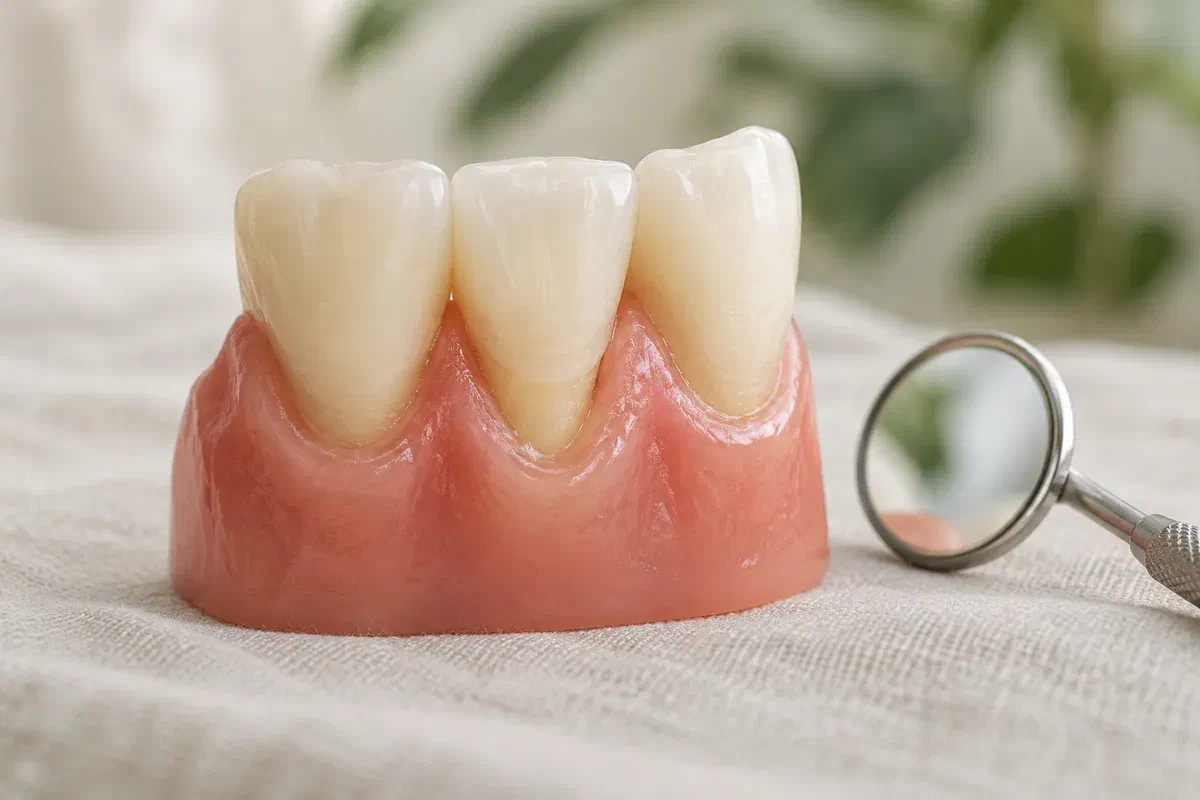
Illustrative teaching model showing an exposed tooth neck beside neighbouring teeth
Worth describing at the visit

Where, what catches, and what you use now

You do not need to measure anything. Point to the spot, explain what happens when you clean it, and bring any earlier dental records or photos that hint at when the change began.

A gum edge that has dropped near the trouble spot

Say whether it is one tooth or several, and mention braces, fillings, crowns or gum treatment in the past. These details help focus the examination, but they do not establish the cause or tell anyone whether the gum is continuing to recede.

Tenderness when you floss or brush there

Explain whether cleaning, cold or sweet food sets it off, and how long the feeling lingers. An exposed root can be sensitive, yet decay or a cracked tooth can produce similar symptoms. Pain that persists, begins on its own or keeps building should be checked rather than chalked up to recession.

The tools you have been using

Bring your floss, picks or interdental brushes, or describe them. A tool that is the wrong size for the new space can catch, tear or irritate. The team can help you find something that fits, so the area gets cleaned gently rather than scrubbed or skipped.

Check the area even if it is only a nuisance. A gum that swells quickly, any pus, strong pain, or a tooth that starts to wobble may mean a separate problem is developing; tell us about it right away when you call.

What you will understand afterwards

Why the spot is awkward, and whether it is changing.

Getting to the bottom of a hard-to-clean area means checking more than the amount of root. The clinician looks for gum inflammation, signs of periodontitis and any irritation from restorations, then considers what is known about change. If earlier measurements are not available, the current findings become a reference for future visits.

Not everyone wants the same outcome. Some simply want food to stop catching, others want comfort, and others are worried about the recession progressing. Ask which goal each recommendation is meant to meet, and what would still be watched or handled as a separate matter.

Patient information: Cambridge University Hospitals — recession factors and soft-tissue grafting

A baseline for the gum and the space

Measurements recorded now make it possible to judge any movement at later visits. Ask which teeth are being followed. A planned comparison tells you far more than poking at the gap and wondering whether it looks bigger.

Interdental cleaning that fits

Ask for a demonstration of the right size of brush or the best way to floss the site, and discuss brushing pressure too. Recommendations should work for your hands and mouth. The thickness of your gum and the position of the tooth are not things effort can change.

Clear reasoning if a periodontist is suggested

A specialist may look at a complicated site or talk about grafting and other choices. Ask what the referral is supposed to clarify. Meeting a periodontist is not the same as booking surgery, and you should hear about benefits, limits, alternatives and recovery.

How it unfolds

Listen, look, decide, demonstrate.

Tell the clinician if the spot is sore or if gum checks make you uneasy. The appointment is for understanding the area, and no procedure is agreed on before the choices have been explained.

  1. Hear the history of the trouble spot

    Describe when food first began to trap, how cleaning feels and any earlier advice. The clinician may also ask about tobacco, health conditions and medicines. Mention what you most want, whether that is easier cleaning, comfort, appearance or a sense of what might happen next.

  2. Examine the gum, the tooth and nearby restorations

    Recession is assessed together with gum health, the tooth’s condition, the contact with its neighbour and any filling edges. Measurements or imaging may help answer specific questions. Ask what can be confirmed today and whether old records could show how long the change has existed.

  3. Decide what to tackle first

    Active disease, a rough restoration or local irritation is usually addressed before anything else. Then the clinician can compare sensitivity care, monitoring and specialist input. Ask which findings support each suggestion, so the plan matches your examination.

  4. Practise cleaning the spot before you leave

    Try the recommended aid with guidance, then confirm when the area will be reviewed. Ask which signs mean you should phone before the review and who arranges any specialist appointment. When several steps are planned, check the order.

Daily care for an awkward gap

The right-sized tool, used gently

Your routine should match what the examination found. Ask the team to show you each step, and avoid switching to several new products at once without advice, so you can tell what is working.

Clean the space with the aid you were fitted for

An interdental brush of the right size, or floss used with a gentle curve, often works better than force. Do not leave the spot uncleaned, and do not try to scrub the gum back up. Let us know if a recommended aid causes pain.

Manage any sensitivity as advised

If the root is tender, the clinician may recommend a desensitizing paste or other preventive care after checking the tooth. Confirm the directions and when it will be reviewed. A tooth that feels better has not regained gum, so keep to the plan.

Bring changes to the follow-up

Attend the review and describe any new catching, bleeding or discomfort. The clinician compares the findings and fine-tunes the plan. Picking at the gap with a toothpick or testing it with cold water will not show whether the gum has changed.

Next steps for the site

Clean, treat or refer, depending on what is found.

Ask what each option is designed to do. Often the first step is better cleaning or treatment of active disease, and anything further is reconsidered once you see how the area responds.

When the area can be watched

Improved cleaning and scheduled monitoring

A new interdental aid, gentler brushing and smoothing of any irritation may be enough, with comparison at later visits. Ask why monitoring makes sense and what would change that. The plan should include a review date.

When disease, decay or a rough edge needs care

Treatment for a separate problem

Gum disease, root decay or an overhanging filling may need its own treatment. Ask which issue is being fixed and what will remain. Repairing a restoration or easing sensitivity does not reposition the gum margin.

When tissue condition needs further discussion

Specialist opinion on grafting or similar care

In some cases a periodontist may suggest a graft to add tissue or improve root coverage. How well that works varies from tooth to tooth. Before deciding, find out how much coverage is realistic, where the tissue would come from, what healing involves and what the limits are; complete coverage and an end to recession cannot be promised.

Patient information: American Academy of Periodontology — gum graft procedures

Georgetown cleaning questions

Keeping a receded area clean

General guidance only. During your examination, the clinician can connect the state of the gum with the condition of the tooth and the space beside it.

(905) 876-4488
Why does food suddenly get stuck where it never used to?
When gum tissue recedes, the space between teeth can change shape, creating room for food to collect. A loose contact between teeth or a worn filling can also be involved. The clinician can check which applies.
Are interdental brushes better than floss for receded gums?
It depends on the size of the space. Interdental brushes often suit larger gaps, while floss may work better where teeth are close. The team can fit the right size and show you how to use it gently.
Is a water flosser enough on its own?
Water flossers can help some people, but they may not remove plaque as thoroughly as mechanical cleaning in every case. Ask whether one suits your situation as an addition to other cleaning.
Can an old filling make my gum recede?
A rough or overhanging filling edge can trap plaque and irritate the gum nearby. It is one possible factor among several. The clinician can check the restoration and suggest whether it needs smoothing or replacement.
My gum bleeds when I clean the receded spot. Should I stop?
Bleeding often signals inflammation, which usually needs gentle, consistent cleaning rather than less. Mention it at your visit so the cause can be checked, and call sooner if it is heavy or comes with swelling.
Is it worth coming in if the only problem is food getting stuck?
Yes. Food trapping can lead to irritation or decay over time, and an assessment can also record the gum position. The absence of pain does not show what has caused the change.
Book from Georgetown

Show us the spot that keeps catching.

Get in touch with Milton Dental Clinic about a receding gum, an exposed root, or a hard-to-clean space. Bring your cleaning tools and any earlier records, and we can work out a manageable next step together.

Recommendations, including any specialist referral, depend on what we find.

Visit Milton Dental Clinic
Unit 1, 342 Bronte St. S, Milton, ON L9T 5B7
Get directions Clinic hours
Monday–Thursday
11am–7pm
Friday–Sunday
By appointment only

Areas we serve

  • Milton
  • Oakville
  • Mississauga
  • Georgetown
  • Halton Hills
  • Acton
  • Campbellville
  • Brampton
  • Burlington
  • Puslinch
  • Rockwood
  • Erin
  • Caledon
  • Etobicoke
  • Old Milton
  • Bronte Meadows
  • Timberlea
  • Dorset Park
  • Dempsey
  • Clarke
  • Beaty
  • Coates
  • Harrison
  • Scott
  • Willmott
  • Ford
  • Bowes
  • Cobden
  • Walker
  • Mountain View
  • Milton Heights
  • Hawthorne Village
  • Valley View
  • Fallingbrook
  • Nassagaweya
  • Trafalgar
  • Esquesing
  • Nelson
  • Brookville
  • Moffat
  • Glen Williams
  • Norval
  • Limehouse
  • Stewarttown
  • Ashgrove
  • Hornby
  • Silver Creek
  • Speyside
  • Scotch Block
  • North Oakville
  • River Oaks
  • Glen Abbey
  • West Oak Trails
  • Palermo
  • Bronte Creek
  • College Park
  • Joshua Creek
  • Uptown Core
  • Preserve
  • Iroquois Ridge
  • Lisgar
  • Meadowvale
  • Meadowvale Village
  • Churchill Meadows
  • Erin Mills
  • Central Erin Mills
  • Streetsville
  • East Credit
  • Creditview
  • Heartland
  • Sheridan
  • Mount Pleasant
  • Credit Valley
  • Huttonville
  • Churchville
  • Springbrook
  • Northwest Brampton
  • Bram West
  • Fletcher's Meadow
  • Fletcher's Creek South
  • Alton Village
  • Orchard
  • Millcroft
  • Headon Forest
  • Tansley
  • Brant Hills
  • Tyandaga
  • Kilbride
  • Lowville
  • Aberfoyle
  • Morriston
  • Arkell
  • Hillsburgh
  • Freelton
  • Carlisle
  • Waterdown
  • Flamborough
  • Mountsberg

How can we help?

Milton Dental Clinic

Have a question about your smile? Choose the option that works best for you.

For urgent dental concerns, please call.
Messages are reviewed during clinic hours.