

Illustrative consultation about a changing gumline and tooth sensitivity
Specialized Care

Receding Gums Assessment in Oakville

A sharp twinge from iced water, right where tooth meets gum, is often the first clue. For people coming from Oakville, a receding gums assessment looks at whether an exposed root is the reason, what else could be involved, and how to respond.

When the gumline starts to sting

Sensitivity is a symptom. The gum position is a separate finding.

You take a sip of something cold and feel it at the neck of a tooth. Look closely and the gum there may sit a little lower than on the teeth beside it. When gum tissue recedes, part of the root can be uncovered, and roots often react to temperature and touch. Even so, a twinge is not a diagnosis.

Other problems can produce very similar sensations, including decay, a worn or leaking filling, or a cracked tooth. An assessment therefore looks at the gum tissue, the root surface, the tooth itself, your cleaning routine and your history. Recession can have more than one cause, and one sensitive spot still needs to be read in the context of the whole mouth.

Many people from Oakville book once the sensitivity has become annoying rather than occasional. Tell us which triggers you have noticed and how long the feeling lasts. We will explain what is producing it if we can, whether the gum itself needs watching, and when a periodontal opinion would be helpful.

Book a check for gumline sensitivity
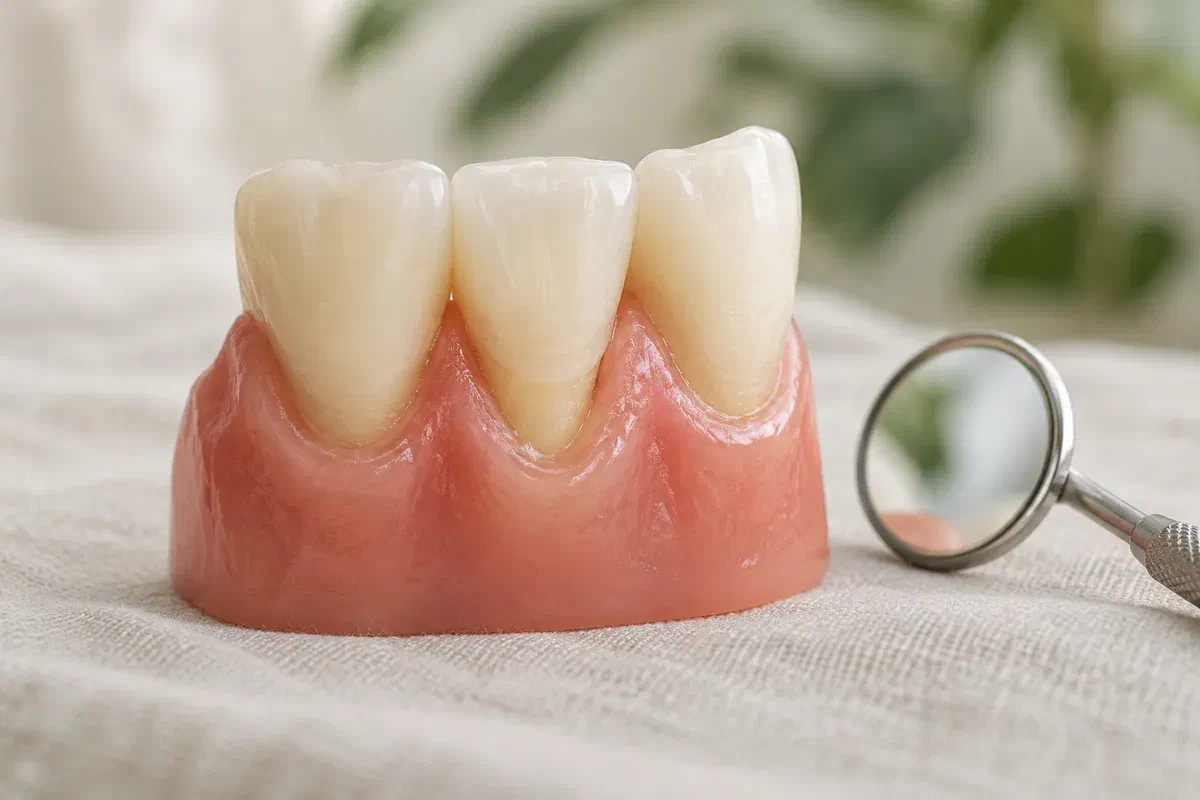
Illustrative teaching model showing an exposed tooth neck beside neighbouring teeth
Helpful things to note

A short symptom diary is more useful than a measurement.

For a week or so before the visit, jot down what sets the tooth off and how long it lasts. Earlier records or photos are welcome but optional; nobody expects you to measure your gums.

Where the gum looks lower or uneven

Point out the tooth or teeth involved, and mention past orthodontic treatment, fillings near the gum or earlier gum care. These details shape the examination, though on their own they cannot show what caused the change or whether the gum is still drifting.

The pattern of the sensitivity

Cold, sweet, air on the tooth, or the brush itself are common triggers for an exposed root. A sensation that fades within seconds is different from an ache that lingers or wakes you. Spontaneous, persistent or increasing pain needs to be examined, not assumed to be recession.

Brushing that you have started to rush

If you flinch and skip the area, plaque can build there and irritate the gum further. Tell the team what you use and how. The aim is a gentle technique you can keep up, rather than scrubbing through the discomfort or abandoning that side.

Even when the tooth is only mildly sensitive, a changing gumline is worth checking. Sudden swelling, pus, severe pain, or a tooth that has become loose may point to another problem; please say so when you contact us.

Two questions, two answers

Why does it hurt, and is the gum still changing?

Relief from sensitivity and the long-term behaviour of the gum are not the same issue. The assessment can show whether the gum looks inflamed, whether there are signs of periodontal disease, and what is known about change so far. Without earlier measurements, the current findings act as a baseline to compare against.

If comfort is your main goal, the first step may be quite different from the one suggested for recession that seems to be progressing or a spot that is hard to clean. Ask what each recommendation is meant to fix, and what would still need monitoring once the sensitivity is under control.

Patient information: Cambridge University Hospitals — recession factors and soft-tissue grafting

A baseline for the gum, separate from the symptom

Recording the gum position means a future visit can show whether it has moved, even if the tooth feels fine by then. Ask which sites are being followed. A planned recheck gives a clearer answer than judging the gum by how much a cold drink stings.

Cleaning advice that takes the sting into account

Ask about brush softness, pressure, toothpaste choice and the interdental aid that suits the spot. A demonstration helps. Recommendations should be realistic for you, recognising that gum thickness and tooth position are not a matter of trying harder.

Clarity on when a specialist might help

A periodontist can assess more complex recession and discuss grafting or other options. Ask what a referral would be trying to answer. Going to a consultation does not commit you to surgery, and it should cover benefits, limits, alternatives and recovery.

What the appointment covers

Pinpoint the cause, then plan around it.

If a tooth is too sensitive for the air syringe or a cold test, tell the clinician before they begin. You are there to understand what is happening; no procedure is decided before the choices have been explained.

  1. Describe the triggers and your history

    Explain what sets off the sensitivity, when it began, and any past advice or treatment. Expect questions about cleaning habits, tobacco, health conditions and medicines. Share whether your priority is comfortable eating, easier brushing, appearance, or understanding the chance of further change.

  2. Examine the gum, root and tooth together

    The clinician checks the recession alongside gum health, the state of the tooth and any restorations, and other findings. Measurements or imaging may help with particular questions. Ask what today’s examination can confirm and whether older records could show how long the change has been present.

  3. Rank the problems and compare approaches

    Active gum disease, decay or irritation is dealt with first where present. Then sensitivity care, monitoring or a specialist opinion can be weighed. Ask which findings support the plan, so that it reflects the examination rather than the fact that a root shows.

  4. Agree on home care and when to review

    You should leave knowing how to care for the sensitive area and when it will be checked again. Confirm which symptoms should bring you back sooner and whether a referral is being arranged. With several steps, ask about their order and how the first will be judged.

Between visits

Calm the tooth without neglecting the gum

Your aftercare should reflect what the examination found. Ask the team to show you one routine you can follow comfortably, instead of trying several new products at the same time on your own.

Brush and clean between teeth gently

A soft brush with light pressure and a suitable interdental aid are usually recommended. Steering clear of the sensitive spot lets plaque settle, but hard brushing will not restore the gum. Mention any aid that hurts or that you cannot use safely.

Give sensitivity care time, then review it

The clinician may suggest a desensitizing product or other preventive measures after checking the tooth. Ask how to use it and when to judge the result. A tooth that feels better has not regrown gum, and pain that persists or changes character needs another look.

Avoid testing the tooth yourself

Attend the planned follow-up and report new symptoms or cleaning trouble. The clinician compares the findings and updates the plan. Repeatedly sipping ice water or prodding the gum to see whether it still hurts tends to tell you very little.

Possible routes forward

Different options solve different problems.

Ask what each choice is designed to achieve. Often the sensible first move handles active disease or daily care, and any further treatment is reconsidered once the response is clear.

When observation fits the findings

Monitoring with adjusted home care

This may mean a gentler technique, addressing a source of irritation and comparing the site at later visits. Ask why watching is appropriate and what would change the plan. Observation should come with a set review date, not leave you wondering.

When the tooth or gum needs its own care

Treatment for disease, decay or root sensitivity

Gum disease, a cavity or a sensitive root may each need specific treatment. Ask which condition is being treated and what will stay the same. Easing sensitivity or repairing a surface does not change where the gum sits, even when both problems exist together.

When the gum tissue needs a closer look

Specialist assessment for a graft or other care

A graft may be considered to add tissue or cover part of an exposed root where suitable. Results depend on the site and technique. Ask about realistic coverage, donor tissue, recovery and limits; complete coverage and an end to further recession cannot be promised.

Patient information: American Academy of Periodontology — gum graft procedures

Sensitivity and recession FAQs

Straight answers about sore, exposed roots

General information only. Your examination connects the state of the gum with the health of the tooth, so bring up both comfort and appearance.

(905) 876-4488
How can I tell whether my sensitivity is from recession or a cavity?
You usually cannot tell at home. An exposed root and a cavity can both react to cold or sweets. The clinician examines the tooth, the gum and any restorations, and may use imaging, to work out which applies, or whether both do.
Is it worth switching to a sensitivity toothpaste before my visit?
You can ask the team about it, but mention what you have been using when you come in, as it may change how the tooth responds. Using it does not mean the gum has stopped receding, so the assessment is still worthwhile.
Can whitening products make exposed roots more sensitive?
Some people notice extra sensitivity with whitening, and root surfaces may react more. Mention any whitening use. The clinician can advise whether to pause it while the gumline and sensitivity are being assessed.
Breathing in cold winter air makes one tooth ache. Is that recession?
Exposed root surfaces can respond to temperature changes, including cold air. That pattern is common with recession, but other causes are possible. If it is new, worsening, or comes with swelling, mention it when you book.
Does a sensitive receded tooth mean I need a gum graft?
Not necessarily. Sensitivity is often managed with home care and preventive treatment. Grafting may be discussed when the tissue condition, recession pattern or other findings suggest a specialist view would help, and that decision follows a proper assessment.
Coming from Oakville, can I get the cause and a plan in one appointment?
Often the assessment gives a clear explanation and first steps on the same day, though some findings need a follow-up or a referral. Bring your symptom notes and any records so the visit can cover as much as possible.
Oakville to Bronte Street

Find out what is behind the twinge.

Contact Milton Dental Clinic about sensitivity near the gumline, an exposed root, or a gum that seems lower than before. Earlier advice or records are welcome, and we will talk through assessment and a practical next step.

Any treatment or referral depends on what your examination shows.

Visit Milton Dental Clinic
Unit 1, 342 Bronte St. S, Milton, ON L9T 5B7
Get directions Clinic hours
Monday–Thursday
11am–7pm
Friday–Sunday
By appointment only

Areas we serve

  • Milton
  • Oakville
  • Mississauga
  • Georgetown
  • Halton Hills
  • Acton
  • Campbellville
  • Brampton
  • Burlington
  • Puslinch
  • Rockwood
  • Erin
  • Caledon
  • Etobicoke
  • Old Milton
  • Bronte Meadows
  • Timberlea
  • Dorset Park
  • Dempsey
  • Clarke
  • Beaty
  • Coates
  • Harrison
  • Scott
  • Willmott
  • Ford
  • Bowes
  • Cobden
  • Walker
  • Mountain View
  • Milton Heights
  • Hawthorne Village
  • Valley View
  • Fallingbrook
  • Nassagaweya
  • Trafalgar
  • Esquesing
  • Nelson
  • Brookville
  • Moffat
  • Glen Williams
  • Norval
  • Limehouse
  • Stewarttown
  • Ashgrove
  • Hornby
  • Silver Creek
  • Speyside
  • Scotch Block
  • North Oakville
  • River Oaks
  • Glen Abbey
  • West Oak Trails
  • Palermo
  • Bronte Creek
  • College Park
  • Joshua Creek
  • Uptown Core
  • Preserve
  • Iroquois Ridge
  • Lisgar
  • Meadowvale
  • Meadowvale Village
  • Churchill Meadows
  • Erin Mills
  • Central Erin Mills
  • Streetsville
  • East Credit
  • Creditview
  • Heartland
  • Sheridan
  • Mount Pleasant
  • Credit Valley
  • Huttonville
  • Churchville
  • Springbrook
  • Northwest Brampton
  • Bram West
  • Fletcher's Meadow
  • Fletcher's Creek South
  • Alton Village
  • Orchard
  • Millcroft
  • Headon Forest
  • Tansley
  • Brant Hills
  • Tyandaga
  • Kilbride
  • Lowville
  • Aberfoyle
  • Morriston
  • Arkell
  • Hillsburgh
  • Freelton
  • Carlisle
  • Waterdown
  • Flamborough
  • Mountsberg

How can we help?

Milton Dental Clinic

Have a question about your smile? Choose the option that works best for you.

For urgent dental concerns, please call.
Messages are reviewed during clinic hours.