

Illustrative patient and clinician discussing assessment of a retained tooth root
Specialized Care

Retained Root Removal

A tooth root left below the gum needs a decision based on its condition and position. Discuss retained root removal in Milton, including the reason for treatment, nearby structures, alternatives, and whether specialist assessment is appropriate.

A closer look at retained tooth roots

Understand what remains, where it sits, and whether removal is the right step.

A retained root is part of a tooth that remains after the crown has broken down or after an extraction. It may be visible at the gumline or covered by tissue. Some roots cause pain or infection; others are found on an image taken for another reason. The circumstances matter when deciding what should happen next.

Removal is not determined by the word retained alone. The clinician considers symptoms, signs of disease, the root's location, and the risks of an operation. A small fragment near a nerve or another important structure may require a different discussion from an exposed, decayed root that is causing repeated problems.

At Milton Dental Clinic, tell us how you learned about the root and whether there was a previous extraction or surgical plan. Bring any available images or records. We can discuss assessment, the reasons for a recommendation, and whether the location or complexity makes an oral surgery referral appropriate.

Discuss a retained root assessment
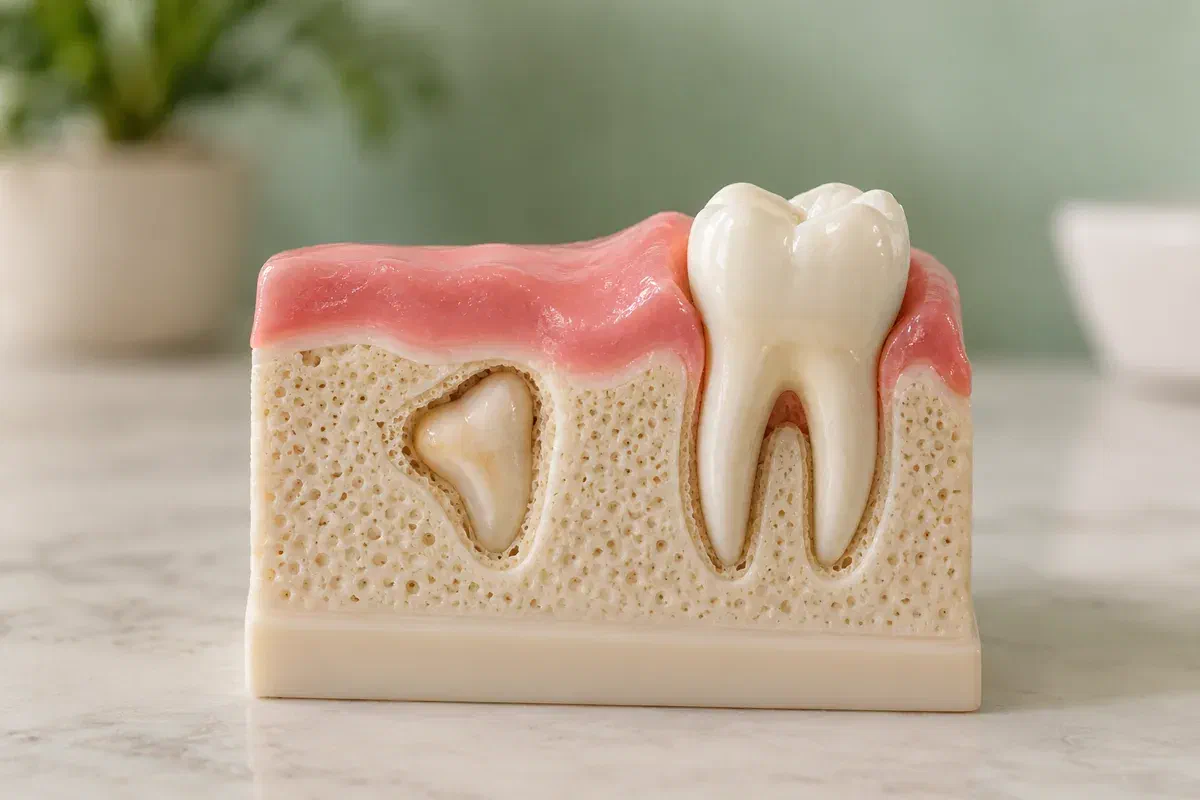
Illustrative cutaway teaching model showing a buried root fragment beside an intact tooth
Why a retained root may need review

Connect the finding with symptoms, history, and future treatment.

You do not need to decide whether a root is infected before asking for help. Describe what you have noticed and any previous explanation so the clinician can assess the area with the right context.

Pain, swelling, or repeated discharge

Report symptoms near the suspected root, including whether they have returned after earlier treatment. Tell the team about fever or spreading swelling when you call. An examination is needed to identify the source; discomfort in the area does not prove that every symptom comes from the retained fragment.

A hard or sharp area at the gumline

A sharp feeling may come from different tissues or materials, especially after an extraction. Do not pull at it or try to remove it with tweezers. Explain when it appeared and whether it is rubbing the tongue, affecting an appliance, or making normal cleaning difficult.

A root discovered during replacement planning

A planned denture, bridge, or implant may prompt closer review of an old site. Ask whether the root affects that particular plan and what information is needed before deciding. Its presence should be assessed with the proposed restoration rather than treated as an automatic reason for surgery.

Difficulty breathing or swallowing, rapidly spreading swelling, or heavy uncontrolled bleeding requires emergency medical care. Call 911 for an immediate emergency. For an urgent dental concern without these signs, call the clinic about assessment availability.

What a careful assessment can establish

Make the reason for intervention as clear as the reason for caution.

A retained-root consultation should explain the balance between leaving the root and removing it. Ask what problem treatment is intended to address, what may happen without it, and which risks come from the procedure itself. The recommendation should be based on your findings rather than an assumption that all fragments behave the same way.

It can also help separate the surgical decision from the longer-term tooth replacement plan. Removing a root may resolve one issue without completing the care for that space. Discuss whether healing, reassessment, or further restorative work is needed and who will coordinate the next stage after the immediate concern has been addressed.

Patient information: York and Scarborough Teaching Hospitals — retained fragments and surgical risks

A clearer understanding of the root's position

Appropriate images may help show the root and its relationship to nearby structures. Ask the clinician to explain the finding in plain language and whether additional imaging would change the plan. More imaging is not automatically better; it should answer a relevant clinical question.

An explanation of the suitable treatment setting

Accessibility, anatomy, medical history, and the proposed procedure influence who should provide care. Ask why treatment can be considered in a particular setting or why referral is advised. A referral should include the reason for review and the information already available from the assessment.

A practical plan if the root is monitored

If removal is not recommended now, ask what follow-up is appropriate and which symptoms should trigger contact. Keep a record of the decision for future providers. Monitoring is an active plan based on the assessment, not a reason to disregard a new swelling or other change.

From a retained-root finding to a plan

Review the history, assess the site, and discuss the safest appropriate approach.

Tell the team if the earlier extraction was difficult or if the thought of further treatment worries you. Understanding that experience helps the clinician explain the next steps and plan support for the visit.

  1. Review symptoms, previous treatment, and health information

    Explain when the tooth broke or was removed and what you were told at the time. Review medicines and medical conditions, including relevant bone-related treatment or earlier jaw radiotherapy. Do not stop a prescribed medicine yourself; any change needs direction from the appropriate treating clinician.

  2. Examine the area and assess relevant images

    The clinician checks the tissues, nearby teeth, and available records before explaining the likely source of the concern. Imaging is considered where it informs the decision. Ask whether the root is accessible, whether surrounding structures affect removal, and whether a specialist opinion would help.

  3. Compare removal, monitoring, and referral

    Discuss the indication, expected benefit, alternatives, and material risks. If removal is proposed, ask whether a surgical approach is anticipated and what pain-control arrangements are appropriate. Confirm what is agreed before treatment and how unexpected findings would be handled or communicated.

  4. Provide treatment instructions and arrange review

    When removal is undertaken, the approach depends on the root's position and may involve accessing it through the gum. Ask what was done and whether stitches or further follow-up are required. Obtain written aftercare and clarify the next stage if a tooth replacement is also planned.

After a root-removal procedure

Follow the instructions for your surgical site and report meaningful changes.

Recovery advice depends on the access required, the location of the root, and any additional treatment. The written instructions from the treating team take priority over a general routine from a previous extraction.

Protect the area without inspecting it repeatedly

Avoid picking at the site, pulling a stitch, or using a tool to check whether anything remains. Follow the specified cleaning, eating, and activity advice. If you feel a new sharp area, describe it to the team instead of attempting to remove it yourself.

Use prescribed care as directed and ask about uncertainty

Confirm medicine instructions and mention any suspected reaction or difficulty following the plan. Do not add leftover antibiotics or alter prescribed blood-thinning treatment independently. If the procedure involved sedation, follow its separate transport, supervision, and activity restrictions even if the mouth feels comfortable.

Attend review and report symptoms that are worsening

Ask whether the site needs a planned check and when the replacement plan can be revisited. Contact the provider about increasing pain, swelling, persistent bleeding, or altered sensation that is not improving as expected. A routine review date is not a reason to wait through deterioration.

Choosing how to manage the retained root

Removal is one possible decision, with a reason that should be explained.

The appropriate response depends on the root and the person receiving care. Ask how the expected benefit compares with the risks and what information would change the recommendation.

When symptoms, disease, or the treatment plan support intervention

Removal of a root that needs treatment

The clinician may recommend removal after assessing the site and alternatives. The approach may be straightforward or require surgical access. Ask what problem it should address, whether further care remains afterwards, and what complications are relevant to this particular root rather than to extractions in general.

When leaving a fragment offers the better balance

Documented observation with appropriate follow-up

Selected fragments may be left when the risks of removal outweigh the expected benefit. This requires an individual assessment, not a decision based solely on absent pain. Ask what is known about the fragment, how it should be reviewed, and which changes should prompt reassessment.

When anatomy, medical history, or access adds complexity

An oral surgery opinion before a final decision

A specialist may help assess a deeply placed root or a site near important structures. Ask what question the referral should resolve and whether existing records can be shared. Until the review, follow the interim advice and report a change in symptoms or general health.

Questions about a root left behind

The explanation should account for how the fragment came to be there.

An old treatment record can be valuable, but missing records do not prevent you from asking for assessment. Tell the clinician what you remember and which part of the decision you would like clarified.

(905) 876-4488
Does a retained root always mean the previous extraction was done incorrectly?
No. Roots can fracture, and in selected circumstances leaving a small fragment may avoid a greater surgical risk. The earlier records may explain what happened and why. A current assessment considers the root’s condition and position rather than drawing conclusions from its presence alone.
Is every retained root the same as a planned coronectomy?
No. Coronectomy intentionally leaves selected wisdom-tooth roots as part of a planned procedure. A root can also remain after a tooth breaks down or during another extraction. Tell the clinician which situation applies, if known, because the original reason and follow-up plan may be different.
Can a painless root fragment still need an assessment before an implant?
Yes. The clinician needs to understand the site in relation to the proposed implant and surrounding tissues. Lack of pain does not settle that planning question. Ask whether the fragment affects the intended position or requires further investigation before deciding on removal or another approach.
Can I pull out a visible root tip with tweezers if it feels loose?
No. You cannot reliably identify the structure or its attachments at home, and pulling may cause injury or bleeding. Avoid manipulating it and arrange assessment. Tell the team if it is painful, sharp, or interfering with eating so the appropriate urgency can be discussed.
Will antibiotics remove the problem caused by a retained root?
Antibiotics do not physically remove a root and are not automatically needed for every retained fragment. The clinician assesses the cause of symptoms and whether local treatment or another approach is required. Do not use leftover antibiotics or allow temporary symptom improvement to replace the recommended review.
What should I keep in my records if a root fragment is left under observation?
Ask for an explanation of its location, the reason for monitoring, and the follow-up plan. Relevant images or a clinical summary can help future providers. Report new symptoms, and mention the fragment when planning treatment in the same area so the decision can be reconsidered if circumstances change.
Discuss retained-root care in Milton

Bring the history you have. We will help clarify the next decision.

Contact Milton Dental Clinic about a suspected or previously identified retained root. Tell us about current symptoms, previous surgery, and any planned tooth replacement so we can discuss the appropriate assessment and records.

Call for urgent symptoms. Treatment and referral recommendations follow assessment of the site.

Visit Milton Dental Clinic
Unit 1, 342 Bronte St. S, Milton, ON L9T 5B7
Get directions Clinic hours
Monday–Thursday
11am–7pm
Friday–Sunday
By appointment only

How can we help?

Milton Dental Clinic

Have a question about your smile? Choose the option that works best for you.

For urgent dental concerns, please call.
Messages are reviewed during clinic hours.