

Illustrative patient and clinician discussing assessment of a retained tooth root
Specialized Care

Retained Root Removal in Erin

Noticed something hard while brushing near an old gap? From Erin, it is worth knowing what you can safely do at home, what to leave alone, and when a retained root should be examined for removal, monitoring or a specialist opinion.

Noticed during your daily routine

The toothbrush found it first.

Many retained roots are discovered in an ordinary moment: the brush catches on something, floss shreds in one spot, or the tongue keeps returning to a rough patch. The cause may be part of a tooth left in the jaw after the crown broke down, or a tip that remained after an extraction. It may also be bone or old filling material.

Whatever it turns out to be, the next step depends on details only an examination can give: whether there is pain or infection, where exactly the fragment sits, what condition it is in, and what reaching it would involve. A shallow, decayed root that keeps getting sore is not the same as a small tip lying deep beside a nerve.

For households in Erin and Hillsburgh, it often makes sense to call first and describe what you have found. Mention when you noticed it, any past extraction or broken tooth in that spot, and whether it is sore. Bring records if you have them. At the visit we can explain the finding and whether an oral surgery referral is worth considering.

Book a look at the hard spot
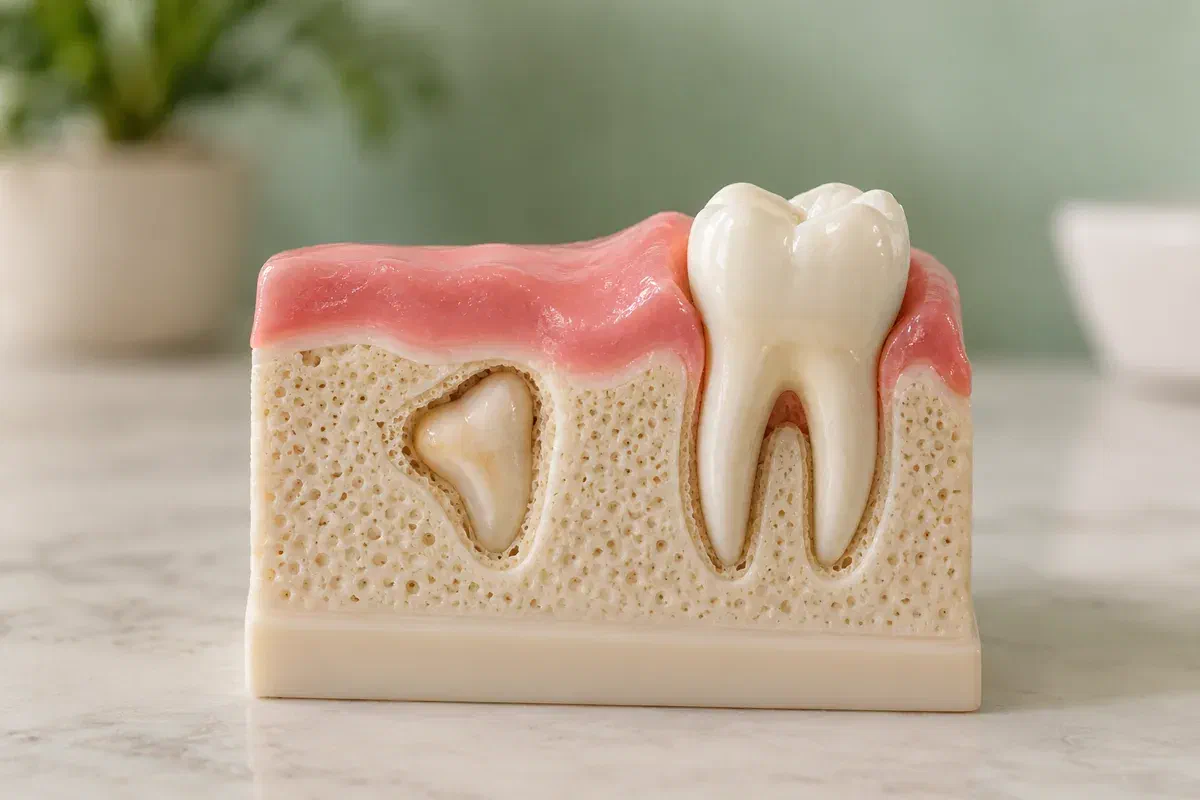
Illustrative cutaway teaching model showing a buried root fragment beside an intact tooth
What to watch for at home

Three things worth reporting

You are not expected to figure out what the hard area is. Keep cleaning gently, note what you observe, and pass that on along with anything a previous dentist told you.

Soreness, swelling or a discharge

If the spot becomes tender, puffy or starts to leak, tell us, and mention whether it has happened before. Call promptly about a fever or swelling that seems to be spreading. The source still needs to be confirmed, since gum problems or a nearby tooth can cause similar symptoms.

A rough point that catches the brush or floss

Keep brushing gently around it, but do not scrape, dig or try to pull it out. Jot down roughly when it appeared and whether it cuts your tongue, catches a denture or makes cleaning that area awkward. Those details help the clinician decide what to look for.

Plans to replace a missing tooth

If you are thinking about a bridge, denture or implant, the hard spot may or may not matter to that plan. Ask what would need to be known before deciding. A fragment noticed during planning should be assessed, not removed automatically.

Some symptoms need emergency medical help rather than a dental visit: trouble breathing or swallowing, swelling that grows quickly, or heavy bleeding that keeps going. Call 911 for these. For urgent dental problems without them, phone the clinic about assessment.

What the appointment can tell you

What it is, whether it matters, and what to do about it

An assessment should leave you understanding the case for removing the fragment and the case for leaving it. You should hear what treatment would aim to resolve, what is likely if nothing is done, and the risks of the procedure itself. The advice should fit what is found in your mouth, not a general rule about roots.

It also separates the immediate question from any longer-term plan. Removing a fragment may make brushing comfortable again while the gap still needs a decision. Talk about healing, whether the area will be rechecked, any restorative work, and who will look after each step.

Patient information: York and Scarborough Teaching Hospitals — retained fragments and surgical risks

An answer about what you have been feeling

Examination, and imaging where useful, can show whether the hard area is root, bone or something else and how it relates to nearby structures. Ask for a plain explanation and whether more imaging would change the plan. Each image should have a clear purpose.

A reason for the treatment setting

Access, anatomy, your medical history and the procedure involved all influence who should provide care. Ask why it can be done here or why a referral is suggested, and what information would be passed along. A good referral explains its purpose clearly.

A home routine and a review plan

If the root is to be left for now, ask how to clean around it, how often to have it looked at, and which symptoms mean picking up the phone. Record the decision somewhere safe. Monitoring is active, and new soreness or swelling still needs attention.

From the first call to the plan

Describe it, have it examined, and decide together.

If a previous extraction was difficult or the thought of treatment makes you uneasy, mention it. That helps the clinician explain each step and arrange support for the visit.

  1. Tell us what you have noticed

    Describe the hard spot, when it appeared and any history with that tooth, including past extractions. The clinician reviews medicines and health conditions, such as bone-related treatment or previous radiation to the jaw. Prescribed medicines should continue unless the clinician who manages them recommends a change.

  2. A careful examination

    The gum, neighbouring teeth and any records are checked before the likely cause is explained. Imaging is used when it would help the decision. Ask what the hard area is, whether it can be reached easily, and whether a specialist should look at it.

  3. Talk through the options

    Discuss the reason for any treatment, the benefit expected, the alternatives and the risks that matter in your case. Should removal be advised, ask whether the gum will need to be opened and what will keep you comfortable. Agree on the plan in advance and how anything unexpected would be explained.

  4. Instructions for home

    Should the fragment be removed, the approach depends on where it lies and may mean making a small opening in the gum. You will be told what was done, whether there are stitches, and whether to come back. Take written aftercare home, including how to clean the area while it heals.

Back to your routine

Gentle cleaning, patience, and a call if things change

What recovery looks like depends on how much access was needed, the fragment’s location and any other treatment that day. Your written instructions, including how to brush and rinse, take priority over general habits.

Clean gently and leave the site alone

Follow the instructions on brushing near the area and when to resume flossing. Avoid probing the site, pulling stitches or checking for leftover pieces with anything sharp. If a new hard edge appears, let the team know about it instead of handling it.

Medicines as prescribed

Know how to take anything prescribed and report any suspected reaction. Do not use leftover antibiotics or change blood-thinning treatment on your own. After sedation, follow the separate instructions on getting home, supervision and activity, even if your mouth feels comfortable.

Call if things get worse

Ask if a follow-up is on the calendar and when replacing the tooth can be discussed. Get in touch about rising pain or swelling, bleeding that will not settle, or numbness that lingers. Do not wait for a scheduled visit if the area is getting worse.

Next steps for the fragment

Leave it, take it out, or get another opinion

The best path depends on the fragment and your health. Weigh each option’s benefits against its risks, and find out which findings could alter the advice.

When pain, infection or the treatment plan support it

Removal of the fragment

After assessment, the clinician may recommend removing it. Some fragments come out simply; others need surgical access. It is worth asking what removal should fix, whether further care is needed, and what could go wrong with this particular fragment.

When leaving it carries less risk than removal

Observation with a written plan

A fragment may be left when removing it would do more harm than good. That depends on an individual assessment, not just whether it hurts. Find out what has been found, how often to have it checked, and which changes mean coming back sooner.

When position, anatomy or medical history adds complexity

Specialist input

An oral surgeon may be better placed to assess a deep root or one near important structures. Ask what the referral should clarify and whether your records will be shared. Until then, follow interim advice and report any change in symptoms.

Home-care questions from Erin

What you can do now, and what to leave for the clinician

Old records are useful, but not necessary to book. Let us know what you have noticed and what you would like to understand, and we will go from there.

(905) 876-4488
Can I keep brushing and flossing around the hard spot?
Yes, gently. Keeping the area clean helps the surrounding gum. Use a soft brush and avoid forcing floss against the rough edge. If cleaning causes pain or bleeding that does not settle, mention it when you call.
Is a salt-water rinse helpful while I wait?
Some people find a warm salt-water rinse soothing, but it does not treat the cause of the problem and is not a substitute for an assessment. If swelling, pain or discharge develops, call rather than relying on rinses.
What should I avoid doing to the area before my appointment?
Avoid picking, scraping or trying to pull anything out, and do not use tools such as tweezers or pins. Do not take leftover antibiotics. Keep cleaning gently and note any changes, so you can describe them at the visit.
Do I need to book right away if the spot does not hurt?
Not usually as an emergency, but it is worth arranging an assessment rather than waiting indefinitely. If it starts to hurt, swell or bleed, call sooner. Mention it when you book so enough time is set aside to examine it.
Will removing a fragment make it harder to clean that area at first?
For a short time, you may need to adjust how you clean near the site while it heals. Your aftercare instructions will explain how and when to brush and rinse. Once the area has healed, normal cleaning usually resumes, and the clinician can show you what to do.
What if a dentist mentioned a root years ago and nothing was done?
That is common. It may have been a deliberate decision to monitor, or it may simply not have been revisited. Tell the clinician what you remember. A current assessment can confirm whether leaving it is still reasonable or whether something should change.
From Erin and Hillsburgh

Found something while brushing? Let us take a look.

Contact us about a hard spot near an old gap, a suspected retained root, or one already found. Share your symptoms, any earlier surgery and plans for replacement, and we can talk about an assessment and which records would help.

Call about urgent symptoms. Recommendations on treatment or referral follow an examination.

Visit Milton Dental Clinic
Unit 1, 342 Bronte St. S, Milton, ON L9T 5B7
Get directions Clinic hours
Monday–Thursday
11am–7pm
Friday–Sunday
By appointment only

Areas we serve

  • Milton
  • Oakville
  • Mississauga
  • Georgetown
  • Halton Hills
  • Acton
  • Campbellville
  • Brampton
  • Burlington
  • Puslinch
  • Rockwood
  • Erin
  • Caledon
  • Etobicoke
  • Old Milton
  • Bronte Meadows
  • Timberlea
  • Dorset Park
  • Dempsey
  • Clarke
  • Beaty
  • Coates
  • Harrison
  • Scott
  • Willmott
  • Ford
  • Bowes
  • Cobden
  • Walker
  • Mountain View
  • Milton Heights
  • Hawthorne Village
  • Valley View
  • Fallingbrook
  • Nassagaweya
  • Trafalgar
  • Esquesing
  • Nelson
  • Brookville
  • Moffat
  • Glen Williams
  • Norval
  • Limehouse
  • Stewarttown
  • Ashgrove
  • Hornby
  • Silver Creek
  • Speyside
  • Scotch Block
  • North Oakville
  • River Oaks
  • Glen Abbey
  • West Oak Trails
  • Palermo
  • Bronte Creek
  • College Park
  • Joshua Creek
  • Uptown Core
  • Preserve
  • Iroquois Ridge
  • Lisgar
  • Meadowvale
  • Meadowvale Village
  • Churchill Meadows
  • Erin Mills
  • Central Erin Mills
  • Streetsville
  • East Credit
  • Creditview
  • Heartland
  • Sheridan
  • Mount Pleasant
  • Credit Valley
  • Huttonville
  • Churchville
  • Springbrook
  • Northwest Brampton
  • Bram West
  • Fletcher's Meadow
  • Fletcher's Creek South
  • Alton Village
  • Orchard
  • Millcroft
  • Headon Forest
  • Tansley
  • Brant Hills
  • Tyandaga
  • Kilbride
  • Lowville
  • Aberfoyle
  • Morriston
  • Arkell
  • Hillsburgh
  • Freelton
  • Carlisle
  • Waterdown
  • Flamborough
  • Mountsberg

How can we help?

Milton Dental Clinic

Have a question about your smile? Choose the option that works best for you.

For urgent dental concerns, please call.
Messages are reviewed during clinic hours.