

Illustrative patient and clinician discussing assessment of a retained tooth root
Specialized Care

Retained Root Removal in Puslinch

Your medical history can shape what happens to a retained root as much as the root itself. From Puslinch, bring your medication list and health details, and we can explain how they affect removal, monitoring or the case for a specialist opinion.

Where health and dental care meet

Medicines, conditions and a root left behind

A retained root is the part of a tooth that remains in the jaw after the crown breaks down or an extraction leaves a tip behind. On its own that may be harmless or troublesome. What changes the conversation for many adults is everything else going on: medicines that affect bleeding or bone, past cancer treatment, or a condition that slows healing.

The clinician has to weigh those factors alongside the usual ones, such as symptoms, signs of infection, where the root sits and how hard it would be to reach. For some people, a medical history tips the balance toward leaving a quiet fragment alone. For others, it means planning removal carefully, sometimes with a specialist or the physician involved.

Rural households around Puslinch often prefer to sort out several questions in one trip. Before your visit, gather an up-to-date list of medicines, the names of your doctors, and any dental records about the root. Tell us how it was found and what you were told. We can then review the assessment and discuss whether an oral surgery referral fits.

Review your root and your health history
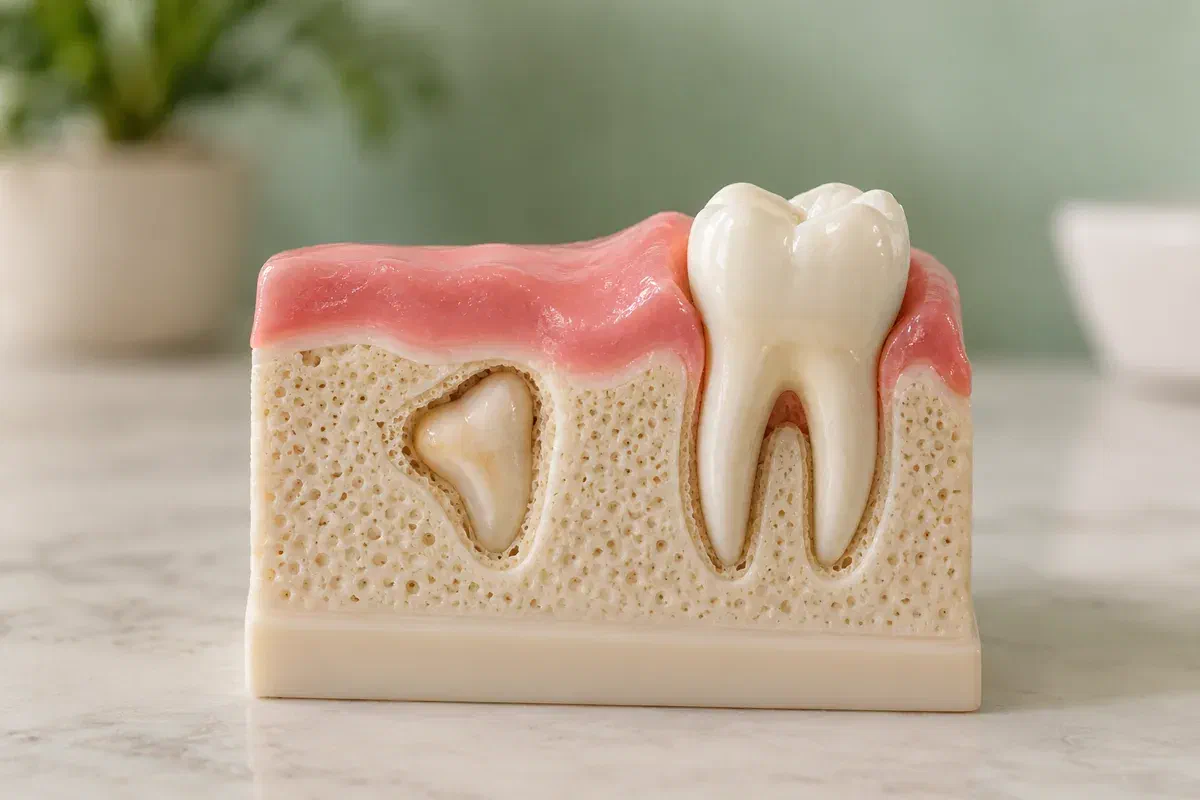
Illustrative cutaway teaching model showing a buried root fragment beside an intact tooth
Reasons to book an assessment

What prompts a review, and what to mention when you call

It is not up to you to decide whether the fragment is a problem. Mention your symptoms, the history of the tooth and any medical conditions or medicines, so the clinician can plan the right kind of visit.

Pain, swelling or a draining spot

Describe what you feel and whether it has come back after earlier treatment. A fever or spreading swelling should be raised on the phone, especially if you have a condition or take a medicine that affects immunity or healing. The cause still needs to be confirmed by examination.

A sharp or hard area at the gum

Avoid picking at it or trying to pull it out, particularly if you take a medicine that affects bleeding. It might be root, bone or a restorative material. Tell us when you noticed it and whether it irritates your tongue, an appliance or your cleaning routine.

A fragment found during replacement planning

If a bridge, denture or implant is under discussion, the root and your medical history both feed into that plan. Ask how the fragment affects the specific option and what else is needed. A root’s presence is not, by itself, an automatic reason for surgery.

Call 911 for trouble breathing or swallowing, quickly spreading swelling, or heavy bleeding that will not stop, especially if you take a blood thinner. For an urgent dental concern without these signs, call the clinic to discuss how soon the area can be assessed.

What the assessment should clarify

How your health changes the balance of risk

Every recommendation about a retained root comes down to weighing benefit against risk. You should hear what removal would address, what could happen if the root stays, and which risks belong to the procedure. Where your medical history matters, the clinician should explain how it shifts that balance and why.

The assessment also separates the root from the bigger restorative picture. Removing it may resolve a problem while the space still needs planning, and some medical conditions affect which replacement options are suitable. Talk about healing, reassessment and who will coordinate between the dental team, any specialist and your physician.

Patient information: York and Scarborough Teaching Hospitals — retained fragments and surgical risks

A clear picture of the fragment

Appropriate imaging can show where the root lies and what surrounds it. Ask for the findings in plain terms and whether additional images would change the plan. Imaging should answer a question that matters for your care, not simply be taken because it can be.

The right setting for your care

Health conditions, the root’s accessibility, your anatomy and the procedure needed all affect who should provide treatment. Ask why care can happen here or why a specialist referral is better. A referral should explain the question and include relevant medical and dental information.

A monitoring plan that accounts for your health

If leaving the root is advised, find out how often it should be checked and which symptoms mean you should phone. Keep a record of the decision, and share it with other providers when appropriate. Monitoring is active and still responds to any change.

How we plan around your health

A full medical picture, then a careful dental one

If an earlier extraction was difficult or you are anxious about treatment, let us know. Together with your health history, that helps the clinician plan the visit and any support you need.

  1. Review medicines and medical history in detail

    Bring a current list of medicines, including blood thinners and any treatment for bone conditions, and mention past radiation to the head or neck. Say roughly when the tooth fractured or was taken out. Never stop a prescribed medicine yourself; any change must be directed by the clinician who manages it.

  2. Examine the site and relevant records

    The clinician assesses the gum, nearby teeth and any images, then explains what is likely happening. New imaging is considered when it helps. This is the time to raise how reachable the root is, what nearby anatomy matters, and whether a specialist would be better placed to treat it.

  3. Weigh the options with your health in mind

    The reasons for treatment, the expected benefit, alternatives and important risks are discussed, including any linked to your medical history. If removal is advised, ask whether surgical access is likely and what pain-control and bleeding measures are planned. Confirm the plan beforehand and how surprises would be handled.

  4. Aftercare and coordination

    Should the root be removed, the technique depends on where it sits and may involve working through the gum. Ask for a short summary of the procedure, including any stitches, and when a follow-up is due. Take written aftercare home and note whether your physician should be updated.

Recovery with medical conditions in mind

Your instructions may differ from someone else’s.

Healing is shaped by the kind of access the clinician needed, the root’s location and your general health. The written advice from the treating team takes priority over general routines or what a friend was told.

Protect the healing area

Avoid prodding the site, pulling stitches or checking for leftover fragments with any tool. Keep to the advice in your instructions about cleaning, food and how active to be. If a new sharp spot appears, call and describe it rather than trying to deal with it yourself.

Medicines exactly as directed

Confirm how to take anything new and how it fits with your regular medicines. Do not take leftover antibiotics, and do not change blood-thinning or bone-related treatment without guidance from the prescriber. If sedation was used, follow its transport and supervision rules even if you feel well.

Watch for changes and call early

Check whether a review is planned and when replacement can be discussed. Call about increasing pain or swelling, bleeding that continues, or numbness that is not improving. If you have a condition that affects healing, mention it when you call so the team can judge urgency.

Managing the root safely

Removal, monitoring and referral, each weighed against your health

The right approach depends on the root, your medical history and your goals. Ask how the expected benefit compares with the risks for you specifically.

When symptoms, disease or your restorative plan support it

Planned removal

After assessing the site, your health and the alternatives, the clinician may advise removal. It may be simple or need surgical access, and some medical conditions require extra planning. Ask what removal should achieve, what care follows, and which complications are most relevant to you.

When your health makes surgery the bigger risk

Careful observation

For some people, especially those with certain medical histories, leaving a stable fragment carries less risk than removing it. That judgement requires an individual assessment, not just the absence of pain. Agree on review timing and the changes that mean calling sooner.

When anatomy, access or medical history adds complexity

Oral surgery or medical input first

A specialist may be the right person to assess a deep root, one near important structures, or a case where medical factors need close management. Ask what the referral is meant to settle and whether medical details will be shared. Follow interim advice until then.

Health and medication questions in Puslinch

How your medical history fits into the decision

An up-to-date medicine list is one of the most useful things you can bring. Old dental records help too, but you can book without them.

(905) 876-4488
I take a blood thinner. Can a retained root still be removed?
Often, yes, but it needs planning. The clinician will ask about the medicine and may liaise with the prescriber. Do not stop or adjust it yourself, as that can carry its own risks. The plan will explain how bleeding will be managed for your situation.
Does bone medication or past radiation change the advice?
It can. Certain bone-related medicines and previous radiation to the jaw may affect healing after surgery. The clinician will consider this when weighing removal against monitoring, and may suggest a specialist assessment. Tell the team about these treatments even if they were some time ago.
Should my family doctor know about the retained root?
If your medical history affects the dental plan, sharing information with your physician can help. The clinician can explain when that is useful. Keep a copy of the dental decision, and mention the fragment to any provider treating you in the same area.
Do I need antibiotics before having a root removed?
Not routinely. Some people with particular medical conditions may be advised to take them, but that depends on current guidance and your individual history. The clinician will advise you. Do not use leftover antibiotics, and tell the team about any allergies.
Can diabetes affect how a site heals after root removal?
Diabetes, especially when it is not well controlled, can affect healing and infection risk. Mention it, along with recent readings if you track them. The clinician may plan aftercare with that in mind and will explain which symptoms should prompt you to call.
Is leaving a fragment in place safer for someone with health problems?
Sometimes, but not always. For some people, removal carries higher risks than monitoring a stable fragment. For others, a root that is causing infection needs treatment despite those risks. The decision depends on your examination and history, and may involve a specialist.
Booking from Puslinch

Bring your medicine list. We will take it from there.

Get in touch about a suspected or known retained root. Tell us about symptoms, any earlier surgery, your medical history and plans for replacing the tooth, so we can discuss the right assessment and what information to gather.

Call about urgent symptoms. Treatment and referral advice follows an examination.

Visit Milton Dental Clinic
Unit 1, 342 Bronte St. S, Milton, ON L9T 5B7
Get directions Clinic hours
Monday–Thursday
11am–7pm
Friday–Sunday
By appointment only

Areas we serve

  • Milton
  • Oakville
  • Mississauga
  • Georgetown
  • Halton Hills
  • Acton
  • Campbellville
  • Brampton
  • Burlington
  • Puslinch
  • Rockwood
  • Erin
  • Caledon
  • Etobicoke
  • Old Milton
  • Bronte Meadows
  • Timberlea
  • Dorset Park
  • Dempsey
  • Clarke
  • Beaty
  • Coates
  • Harrison
  • Scott
  • Willmott
  • Ford
  • Bowes
  • Cobden
  • Walker
  • Mountain View
  • Milton Heights
  • Hawthorne Village
  • Valley View
  • Fallingbrook
  • Nassagaweya
  • Trafalgar
  • Esquesing
  • Nelson
  • Brookville
  • Moffat
  • Glen Williams
  • Norval
  • Limehouse
  • Stewarttown
  • Ashgrove
  • Hornby
  • Silver Creek
  • Speyside
  • Scotch Block
  • North Oakville
  • River Oaks
  • Glen Abbey
  • West Oak Trails
  • Palermo
  • Bronte Creek
  • College Park
  • Joshua Creek
  • Uptown Core
  • Preserve
  • Iroquois Ridge
  • Lisgar
  • Meadowvale
  • Meadowvale Village
  • Churchill Meadows
  • Erin Mills
  • Central Erin Mills
  • Streetsville
  • East Credit
  • Creditview
  • Heartland
  • Sheridan
  • Mount Pleasant
  • Credit Valley
  • Huttonville
  • Churchville
  • Springbrook
  • Northwest Brampton
  • Bram West
  • Fletcher's Meadow
  • Fletcher's Creek South
  • Alton Village
  • Orchard
  • Millcroft
  • Headon Forest
  • Tansley
  • Brant Hills
  • Tyandaga
  • Kilbride
  • Lowville
  • Aberfoyle
  • Morriston
  • Arkell
  • Hillsburgh
  • Freelton
  • Carlisle
  • Waterdown
  • Flamborough
  • Mountsberg

How can we help?

Milton Dental Clinic

Have a question about your smile? Choose the option that works best for you.

For urgent dental concerns, please call.
Messages are reviewed during clinic hours.