

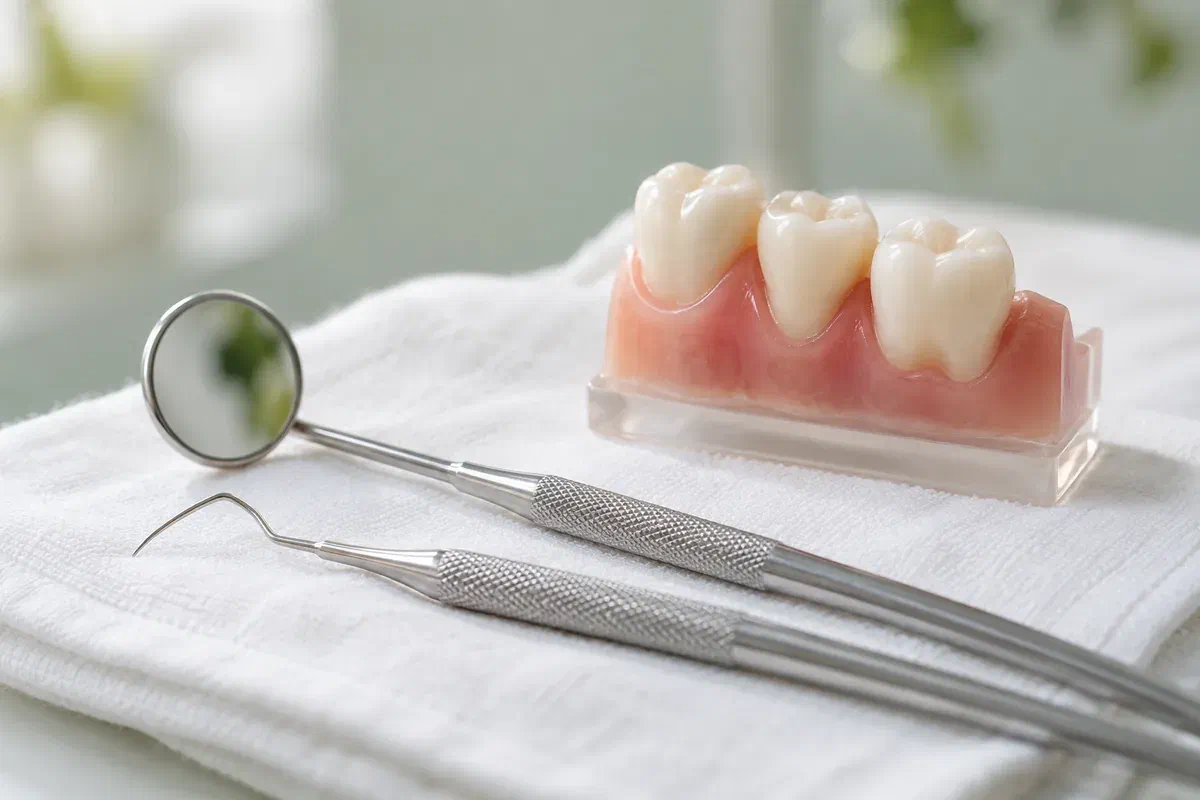
Illustrative discussion of gum treatment using a dental teaching model
Specialized Care

Scaling and Root Planing

Scaling and root planing addresses deposits on tooth surfaces where periodontal treatment is needed. Discuss your gum findings in Milton, the areas recommended for care, comfort during treatment, and how the response will be reassessed.

A closer look at scaling and root planing

Treat the affected surfaces. Then check how the gums respond.

Scaling and root planing is a term often used for professional cleaning of affected tooth and root surfaces as part of periodontal treatment. The clinician works on deposits that cannot be adequately managed by brushing alone, including areas below the gumline when indicated. The recommendation should follow an assessment of the gums and supporting tissues.

This is more than choosing a longer version of a routine cleaning appointment. The diagnosis, locations needing care, and intended follow-up should be explained. Ask which findings support the recommendation and how the proposed treatment fits with your daily cleaning, other dental needs, and any previous periodontal care.

At Milton Dental Clinic, bring questions about the process, sensitivity, or a recommendation you received elsewhere. We can discuss the examination findings, the scope of treatment, and ways to make the visit manageable. You should leave understanding both the initial work and why review after treatment matters.

Discuss your periodontal cleaning plan
Illustrative periodontal cleaning instrument, mirror, and supported tooth model
Understanding why treatment is proposed

Look at the whole periodontal assessment, not one number or symptom.

The clinician considers gum measurements alongside other findings. Tell the team about changes you have noticed, but remember that the absence of pain does not establish that the supporting tissues are healthy.

Bleeding, inflammation, or deposits around teeth

Explain where the gums bleed and whether cleaning has become uncomfortable. Professional assessment can distinguish care for superficial inflammation from treatment needed for deeper periodontal involvement. Ask how the deposits and tissue findings relate to the recommended procedure rather than assuming all bleeding needs the same treatment.

A history of deeper pockets or supporting-bone changes

Bring previous gum charts, images, or a specialist summary if available. These may help explain the condition over time. Ask which sites need active treatment now and whether any areas are being monitored, rather than treating the entire mouth as if every tooth has identical needs.

Difficulty maintaining the areas between visits

Tell the team if hand mobility, sensitive teeth, crowded spaces, or uncertainty about technique makes cleaning difficult. Treatment planning should include practical support for those barriers. The aim is a routine you can manage, not blame for deposits or a demand to use an aid that does not fit.

Painful swelling, pus, fever, or a sudden change around a tooth needs prompt contact. Do not wait for a planned cleaning visit if an acute problem develops; the team may need to reassess the urgency and type of care.

What this stage of treatment is intended to do

Support healthier tissues while building a plan for ongoing care.

The goal is to address deposits and inflammation as part of managing periodontal disease. Ask what improvement the clinician hopes to see at the treated sites and what limitations apply. Cleaning does not guarantee that all lost support will return or that every tooth will have the same long-term outlook.

Treatment also creates a useful point for reassessment. The next decision depends on the response, the remaining findings, and your ability to keep the areas clean. Some sites may be ready for supportive maintenance, while others may need further treatment or a specialist opinion. The review should explain that distinction.

Professional attention to the affected surfaces

The clinician can work on areas where deposits require professional instruments and access. Ask which teeth or regions will be treated and why. Knowing the extent of the planned work helps you understand the appointment sequence without interpreting a longer visit as a measure of personal failure.

A home-care routine matched to the spaces in your mouth

Ask for a demonstration of cleaning around the treated teeth and between them. Different spaces may need different aids or techniques. Explain what you can comfortably use so the advice can be adjusted, and ask how to respond if sensitivity makes the routine harder initially.

A defined point for reviewing progress

The clinician can compare relevant findings after an appropriate healing interval. Ask what will be checked and how the result affects future care. A follow-up should be more informative than simply asking whether the mouth feels cleaner, because comfort and periodontal stability are not the same measure.

How the treatment visit is organized

Know the areas being treated and how to ask for a pause.

Tell us about earlier difficult cleaning visits, sensitive roots, or concerns about injections. Discuss comfort measures before treatment begins and agree on a signal if you need the clinician to stop.

  1. Review the findings and the planned scope of care

    The clinician explains the diagnosis, affected areas, and proposed appointment sequence. Review relevant health information, medicines, and previous treatment. Ask how any urgent or restorative needs fit with the periodontal plan so different parts of your dental care are coordinated rather than considered separately.

  2. Agree on comfort measures and begin the planned cleaning

    Local anaesthetic may be appropriate for the areas being treated. Ask what sensations to expect and tell the clinician if you feel pain. The cleaning method and instruments are selected for the clinical need; a particular device or marketing name is not by itself the treatment goal.

  3. Review care for the treated sites before leaving

    Ask how to clean and eat while the gums settle, and what symptoms should prompt contact. If local anaesthetic was used, follow advice while numb. Confirm any product or medicine instructions rather than adding a rinse, antibiotic, or home instrument because it seems like extra protection.

  4. Reassess and decide on maintenance or further treatment

    Attend the agreed review so the clinician can compare the gum findings and discuss the response. Ask whether active treatment is complete and which sites still need attention. The next interval or referral should reflect those findings and your risk factors rather than a universal schedule.

Caring for the gums after treatment

Support healing with a consistent routine and clear follow-up.

Your instructions should explain what to expect at the areas treated. Ask the team if discomfort, a change in appearance, or uncertainty about a product makes it difficult to follow the plan.

Continue the cleaning method recommended for you

Use the demonstrated technique and suitable aids, with adjustments advised by the clinician if the tissues are tender. Do not scrape below the gums with a home scaling tool. If bleeding or discomfort discourages you from cleaning, contact the team rather than abandoning care or increasing pressure.

Ask about sensitivity or a different-looking gumline

As inflammation settles, exposed areas or spaces may become more noticeable, and some teeth may feel sensitive. Discuss the changes and any suitable comfort measures. Severe, increasing, or persistent symptoms need review rather than an assumption that every change is an expected part of healing.

Keep the reassessment and ongoing maintenance visits

A cleaner-feeling mouth does not replace the clinical review. Bring questions about sites you cannot reach or products you have found difficult to use. Future appointments should support continuing periodontal care, with intervals reconsidered as the findings, health history, and daily care needs change.

Choosing care for the current periodontal findings

Different stages of gum care have different purposes.

Ask whether the recommendation is for initial active treatment, ongoing maintenance, or further assessment of a site that has not responded as hoped. The distinction helps explain why a plan may change over time.

When the examination supports a different level of care

Routine preventive care or localized inflammation management

Some patients need professional cleaning and practical plaque-control support without the same treatment plan as established periodontitis. Ask which diagnosis applies to you. A procedure should be justified by the current findings rather than chosen simply because it sounds more thorough or is covered by a benefit plan.

When affected root surfaces need active care

Nonsurgical periodontal treatment and reassessment

Scaling and root planing may form part of the initial treatment, together with personalized daily care and attention to risk factors. Ask how progress will be evaluated. The response helps guide the next stage instead of assuming that one round of cleaning completes all future periodontal needs.

When remaining findings need another approach

Further treatment or a periodontal referral

Some areas require additional assessment or treatment after the initial phase. A specialist may help discuss options for more complex disease. Ask why referral is recommended and what question it should answer; surgery, antibiotics, and adjunctive devices are not automatic additions for every patient.

Questions about scaling and root planing

Understand the recommendation and how its result will be checked.

Bring your treatment proposal or previous periodontal records if you have them. These answers explain common planning issues, while the appropriate care for your gums depends on the clinical assessment.

(905) 876-4488
Is scaling and root planing simply a more intensive polishing appointment?
No. It is directed at affected tooth and root surfaces as part of periodontal care, based on the examination. Polishing alone does not describe that purpose. Ask which sites need treatment, what diagnosis supports it, and how the gums will be reviewed afterwards.
Does one deeper gum measurement mean my whole mouth needs root planing?
Not by itself. Measurements are interpreted with the wider periodontal findings, history, and relevant images. The clinician should explain which areas require active care and why. Different teeth or regions may have different needs, even when they are assessed during the same appointment.
Can scaling and root planing be divided into appointments for comfort?
The appointment sequence depends on the extent of treatment, clinical needs, and practical considerations. Discuss sensitivity, anxiety, and how long you can comfortably manage a visit. Ask what can be accommodated without assuming that a particular number of appointments is necessary for everyone.
Why might spaces between my teeth look more visible after periodontal cleaning?
Inflamed tissues can change shape as they settle, making spaces or root areas more apparent. The clinician can explain what was expected for your sites and check any concern. A new appearance should be discussed rather than used alone to judge whether treatment succeeded or caused a problem.
If my gums stop bleeding after root planing, can I skip reassessment?
No. Reduced bleeding is useful information, but the clinician still needs to review the treated sites and other periodontal findings. Keep the planned visit so the next stage can be decided. Feeling better does not establish that every pocket is stable or that maintenance is no longer needed.
Can a home scaler substitute for professional treatment below the gums?
No. Do not attempt to instrument under the gumline yourself. Professional treatment requires assessment, appropriate access, and suitable technique. Ask for home-care tools that remove daily plaque safely, and use them as demonstrated alongside the professional care recommended for your condition.
Discuss gum treatment in Milton

Bring the recommendation. Leave with a clearer understanding of the plan.

Contact Milton Dental Clinic to discuss scaling and root planing, previous periodontal findings, or concerns about comfort during care. We can review the affected areas and explain how initial treatment and follow-up fit together.

Treatment scope and review intervals are based on individual periodontal findings.

Visit Milton Dental Clinic
Unit 1, 342 Bronte St. S, Milton, ON L9T 5B7
Get directions Clinic hours
Monday–Thursday
11am–7pm
Friday–Sunday
By appointment only

How can we help?

Milton Dental Clinic

Have a question about your smile? Choose the option that works best for you.

For urgent dental concerns, please call.
Messages are reviewed during clinic hours.