

Illustrative discussion of gum treatment using a dental teaching model
Specialized Care

Scaling and Root Planing in Brampton

When you organize everyone else’s appointments, your own gum treatment is easy to push back. We explain what the findings show, which teeth need root planing, how to make the visits comfortable and workable, and when results are reviewed.

Making room for your own care in Brampton

Who books the appointment for the person who books everyone else’s?

Children’s checkups, a parent’s specialist visit, school forms, work. In busy households, a recommendation for gum treatment often gets filed under later. Yet periodontal disease tends to move quietly, and the sites that needed attention last spring do not usually improve on their own while you wait.

Scaling and root planing is the professional cleaning of tartar and bacterial deposits from root surfaces that gum disease has affected, frequently beneath the gumline. It belongs to periodontal treatment rather than routine hygiene, so the advice should come with a diagnosis, a clear list of teeth, and a plan for checking how the gums respond.

Many households in Brampton juggle several schedules at once, so we try to make the plan concrete. At our Bronte Street office, we go through the chart with you, talk about comfort, and help set up treatment and review dates you can realistically keep.

Set up your gum treatment visits
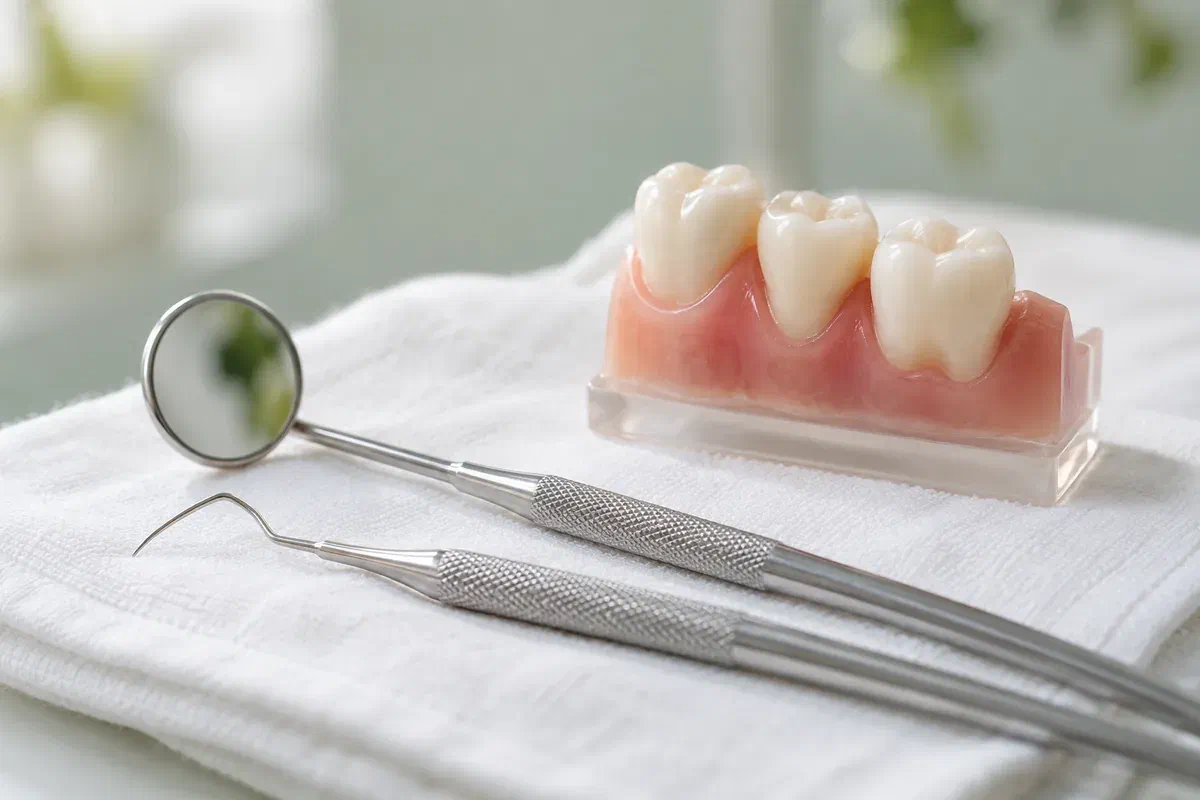
Illustrative periodontal cleaning instrument, mirror, and supported tooth model
What led to the recommendation

Signs that are easy to live with, and easy to miss

Gum findings are assessed together, not one at a time. Your observations help, but many people with significant periodontal disease feel no pain, which is one reason treatment gets put off.

Gums that bleed, look swollen, or hold tartar

Maybe you have noticed bleeding for months and assumed it was normal. Tell the team where and when it happens. The exam sorts superficial gum inflammation from deeper involvement, and it should be clear how the readings at each site connect to what is being proposed.

Pocket readings or bone changes on record

If you were told about deeper pockets at a past visit but never followed up, bring whatever records you have. Comparing then and now shows whether anything has progressed. Ask which teeth need treatment now and which are simply being kept under observation.

Too little time, or the wrong tools, for home care

Rushed mornings, sensitive teeth, or never having been shown how to clean between certain teeth can all leave deposits behind. Say what gets in the way. Advice should fit a real household routine, not an ideal one, and nobody should feel blamed.

Do not let a painful swelling, pus, a temperature, or a tooth that suddenly looks or feels different sit until a quieter week. Call us promptly, because an acute problem may need a different kind of visit.

Why the time is worth setting aside

Treatment today gives you clear answers tomorrow

Clearing deposits from affected roots is meant to reduce inflammation and help bring periodontal disease under control. Ask what change the clinician expects at each treated tooth, and also what treatment cannot promise. Bone and gum attachment already lost may not return, and outcomes vary from tooth to tooth.

Once the gums have healed, the same sites are measured again. That review tells you whether you can move into routine maintenance, whether some areas need more care, or whether a periodontist should be involved. Knowing which is which makes future scheduling far simpler.

Professional cleaning below the gum

Root surfaces under the gum collect calculus that no toothbrush removes. Ask which teeth are being treated and why. Understanding the scope explains how many visits are needed, and a longer appointment is about the condition, never a measure of how good a parent or partner you are.

A routine short enough to keep

Ask for a demonstration that takes your real mornings and evenings into account. Different spaces may need small brushes, floss, or a water flosser. Choose what you will genuinely use, and ask how to manage if tender gums make cleaning slower at first.

A review that shows what changed

After a healing interval, new measurements are compared with the old ones. Ask what will be looked at and how the result shapes the next step. A mouth that feels better is encouraging, but stability is confirmed by examination.

On treatment day

Clear steps, comfort planned, and a way to pause

If a past cleaning was hard to get through, if your roots are sensitive, or if injections worry you, tell us. We go over comfort first and agree on a signal you can use whenever you need a break.

  1. Walk through the chart and the plan

    You will hear the diagnosis, which teeth are included, and whether the work will be split. Mention any health conditions, medicines, or pregnancy, and any previous gum care. If another problem also needs fixing, ask how it will be scheduled alongside.

  2. Freeze the area if needed, then start

    Local anaesthetic may be used for the sections being treated. Ask what you will feel, and signal if anything hurts. The clinician chooses manual or ultrasonic instruments to suit the sites; the brand of equipment is not what makes treatment effective.

  3. Find out what the next few days look like

    Ask how to keep the treated teeth clean, what to eat, and which signs should prompt a call. While numb, avoid hot drinks and chewing on that side. Check with the team before adding a mouthwash, antibiotic, or gadget.

  4. Book and attend the reassessment

    Setting the review date before you leave makes it easier to protect. At that visit, measurements are repeated and compared. Ask whether active treatment is finished and which areas still need watching, and how often maintenance should follow.

Healing at home

Five minutes a day, and one date to keep

You should know what is expected at the treated areas before you go. If tenderness, a change in how the gums look, or confusion about products makes things harder, ring us.

Stick with the cleaning you practised

Keep using the technique and aids you were shown, gently at first if advised. Do not reach under the gums with a pick or home scaler. If soreness or bleeding makes you avoid an area, ask what to change instead of leaving it alone.

Notice sensitivity or a changed gumline

Once swelling eases, a little more root may show and cold may cause a twinge. Bring it up and ask what comfort options suit you. Severe pain, or discomfort that grows or lasts, should be looked at rather than assumed to be normal.

Protect the review in your calendar

Feeling fresher is not a substitute for the follow-up exam. Mention spots you still cannot reach or tools that have not worked. Ongoing maintenance helps keep the gums stable, and intervals can change with your findings and health.

Where you are in gum care

Prevention, treatment, or a specialist’s view

Ask whether the advice is for first-phase treatment, ongoing maintenance, or a closer look at an area that has not settled. Each stage carries different time demands, which helps when planning around a family.

When the exam supports a lighter plan

Preventive cleaning or care for gum inflammation

Some gums need a professional cleaning and improved plaque control, without root planing. Ask which diagnosis applies. Treatment should be chosen because the findings call for it, not because it sounds more complete or your benefits happen to include it.

When affected root surfaces need active care

Root planing as part of nonsurgical therapy

This phase usually combines root planing with home care suited to you and a frank look at things like smoking or blood sugar that affect gums. Find out how the response will be measured. The review guides what follows, since a single round seldom answers every future gum question.

When a few teeth have not settled after the first phase

Further treatment or referral to a periodontist

Certain areas may need more assessment or care once initial treatment has healed, and a specialist can advise on more complex disease. Ask what the referral should clarify and whether it means extra travel or time off. Surgery, antibiotics, and adjunct products are decided individually, never handed out as standard extras.

Practical questions from Brampton

Fitting gum treatment into family life

Bring any estimate or earlier records you have. These answers address planning questions we hear often, while the right care for you depends on an examination.

(905) 876-4488
Does gum disease run in families?
Genetics can influence how susceptible a person is, alongside factors such as smoking, diabetes, and daily cleaning. Family history does not decide your outcome, but it is worth mentioning. Relatives with concerns should have their own gums assessed rather than assume they share your diagnosis.
Can my partner and I book gum visits on the same day?
Ask when you call. Back-to-back appointments may be possible, depending on the treatment each person needs and availability. Each plan is still based on that person’s own examination.
I’m pregnant. Should I postpone root planing?
Tell the team you are pregnant and how far along you are. Gum inflammation can change during pregnancy, and treatment timing and comfort can be discussed with you, with input from your prenatal care provider if needed. Do not simply skip care without asking.
What if I need to cancel one session in the series?
Call as soon as you know so it can be rebooked. A short gap is usually manageable, but long delays can leave some sites untreated while others heal. Keep up your home care in the meantime.
How do I stop my own treatment from being postponed again?
Book all the sessions and the review before you leave, at times that suit your household. Set reminders, and tell us about recurring commitments so we can work around them where possible.
Can root planing happen at my regular checkup?
Sometimes part of it can, depending on the findings and the time available, but it often needs dedicated visits. Ask whether combining is realistic for your sites, or whether separate sessions would be more comfortable and thorough.
Planning visits from Brampton

Put your own gums on the calendar

Call Milton Dental Clinic to talk about scaling and root planing, records from a previous office, or comfort during treatment. We can review the teeth involved and help you schedule treatment and the follow-up review.

How much treatment you need and when it is reviewed depend on your own periodontal findings.

Visit Milton Dental Clinic
Unit 1, 342 Bronte St. S, Milton, ON L9T 5B7
Get directions Clinic hours
Monday–Thursday
11am–7pm
Friday–Sunday
By appointment only

Areas we serve

  • Milton
  • Oakville
  • Mississauga
  • Georgetown
  • Halton Hills
  • Acton
  • Campbellville
  • Brampton
  • Burlington
  • Puslinch
  • Rockwood
  • Erin
  • Caledon
  • Etobicoke
  • Old Milton
  • Bronte Meadows
  • Timberlea
  • Dorset Park
  • Dempsey
  • Clarke
  • Beaty
  • Coates
  • Harrison
  • Scott
  • Willmott
  • Ford
  • Bowes
  • Cobden
  • Walker
  • Mountain View
  • Milton Heights
  • Hawthorne Village
  • Valley View
  • Fallingbrook
  • Nassagaweya
  • Trafalgar
  • Esquesing
  • Nelson
  • Brookville
  • Moffat
  • Glen Williams
  • Norval
  • Limehouse
  • Stewarttown
  • Ashgrove
  • Hornby
  • Silver Creek
  • Speyside
  • Scotch Block
  • North Oakville
  • River Oaks
  • Glen Abbey
  • West Oak Trails
  • Palermo
  • Bronte Creek
  • College Park
  • Joshua Creek
  • Uptown Core
  • Preserve
  • Iroquois Ridge
  • Lisgar
  • Meadowvale
  • Meadowvale Village
  • Churchill Meadows
  • Erin Mills
  • Central Erin Mills
  • Streetsville
  • East Credit
  • Creditview
  • Heartland
  • Sheridan
  • Mount Pleasant
  • Credit Valley
  • Huttonville
  • Churchville
  • Springbrook
  • Northwest Brampton
  • Bram West
  • Fletcher's Meadow
  • Fletcher's Creek South
  • Alton Village
  • Orchard
  • Millcroft
  • Headon Forest
  • Tansley
  • Brant Hills
  • Tyandaga
  • Kilbride
  • Lowville
  • Aberfoyle
  • Morriston
  • Arkell
  • Hillsburgh
  • Freelton
  • Carlisle
  • Waterdown
  • Flamborough
  • Mountsberg

How can we help?

Milton Dental Clinic

Have a question about your smile? Choose the option that works best for you.

For urgent dental concerns, please call.
Messages are reviewed during clinic hours.