

Illustrative discussion of gum treatment using a dental teaching model
Specialized Care

Scaling and Root Planing in Burlington

Pink in the sink every time you brush can be a small sign of a bigger gum question. We assess what is going on, explain whether scaling and root planing is needed and where, plan for comfort, and set a date to recheck the results.

From the bathroom sink to the dental chair

Bleeding gums are a signal, not a diagnosis

You spit after brushing and see a streak of red. It happens again the next day, and floss makes it worse. Gums that bleed easily are often inflamed, and that inflammation may be limited to the gum edge or may extend to the tissues holding the tooth in place. Only an examination can tell which.

When the deeper supporting tissues are involved, scaling and root planing may be recommended. It removes hardened tartar and bacterial deposits from root surfaces that brushing cannot reach, frequently below the gumline. That is different from a routine polish, and it comes with a diagnosis, a defined list of teeth, and a planned follow-up.

For anyone coming from Burlington with this kind of question, we start by looking and measuring before suggesting anything. Our Bronte Street team can explain what the bleeding means in your case, whether root planing is warranted, and how the treated areas would be reviewed.

Get your bleeding gums assessed
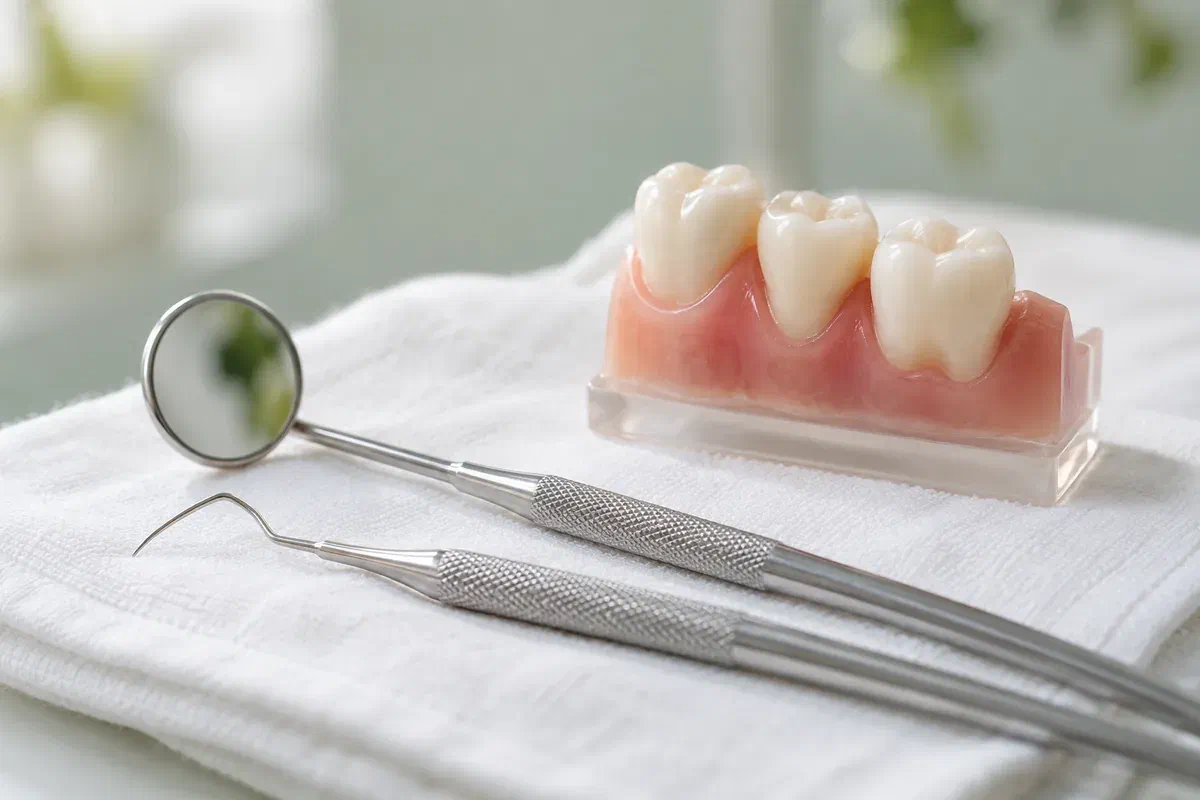
Illustrative periodontal cleaning instrument, mirror, and supported tooth model
Sorting out the cause

Where the bleeding comes from, and how deep it goes

Bleeding is one clue among several. Gum measurements, X-rays, and your history complete the picture, and remember that serious gum disease can be present even when nothing hurts.

Red, puffy gums or tartar you can see or feel

Note which teeth bleed and when, such as during flossing or only with a hard brush. Inflammation of the gum edge alone, often called gingivitis, may need a different plan from periodontitis. The clinician can show how the buildup and readings at each site lead to their advice.

Pockets or bone changes found at an earlier visit

If another office mentioned deep pockets or bone loss, bring any records you can. They help show whether a problem is new or longstanding. Ask which teeth need active care now, which are being watched, and why the plan may not treat every tooth the same way.

Reasons it is hard to keep certain spots clean

Worry about making the bleeding worse, sensitive teeth, crowding, or unsure technique can lead people to avoid an area altogether. Mention it. The plan should include advice you can follow comfortably, not a lecture or an aid that does not suit you.

Bleeding together with painful swelling, pus, fever, or a tooth that suddenly feels different should prompt an immediate call. Do not wait for a cleaning appointment when something acute is going on.

What treatment is meant to change

Less inflammation, and a fair test of how the gums respond

By clearing deposits from involved root surfaces, the treatment aims to calm inflammation and help control periodontal disease. Bleeding often reduces as a result, but ask what the clinician expects at your particular sites. Support that has already been lost may not regrow, and teeth can respond differently.

The other value is information. After a healing period, the same areas are checked again and compared. Some will be ready for regular maintenance, some may need more treatment, and a few might warrant a periodontist’s opinion. You should be told which applies to each area.

Cleaning beneath the gum where the problem sits

Tartar under the gum feeds ongoing inflammation and cannot be brushed away. Ask which teeth are included and why. Understanding the scope explains the visit length and number, and a longer appointment reflects the condition rather than anything you did wrong.

A gentler, more effective home routine

Many people brush too hard once they see blood. Ask to be shown the right pressure and the aids that suit each gap. Explain what you will actually use and how to cope if tender gums make cleaning uncomfortable for the first while.

Proof of progress at the review

The follow-up compares fresh measurements with the earlier ones. Ask what is being checked and how it shapes the next stage. Less bleeding is encouraging, though it is not, by itself, confirmation that the deeper tissues are stable.

The appointment, step by step, for Burlington visitors

Know what is planned, and how to call a pause

If previous cleanings felt rough, your teeth are sensitive, or injections make you nervous, let us know first. Comfort is part of the plan, and you can agree on a signal to stop at any moment.

  1. Hear the diagnosis and which areas are involved

    The clinician explains what was found, which teeth will be treated, and whether visits will be split. Go over your medical history, medications, and earlier dental work. Ask how any other urgent repairs will be coordinated with the gum care.

  2. Decide on comfort measures and begin

    Local anaesthetic may be offered for deeper areas. Ask what sensations to expect and signal if you feel pain. Hand or ultrasonic instruments are chosen for the sites involved; the clinical purpose matters more than the name of a device.

  3. Leave with instructions for the treated sites

    Expect some tenderness, and maybe a little bleeding, for a short while. Get clear guidance on brushing pressure, flossing, and soft food choices for that stretch, plus the symptoms that should prompt a call. If you were numbed, avoid hot drinks and careless chewing until sensation returns. Confirm with us before adding a rinse, medicine, or home tool.

  4. Return so the response can be measured

    The review repeats key measurements and compares them with the baseline. Ask whether active treatment is complete and which teeth still need attention. Your next interval or any referral should follow from those results and your risk factors.

After the appointment

Keep cleaning, gently, and keep the follow-up

Your aftercare advice should explain what is expected around the treated teeth. If soreness, a change in the gumline, or uncertainty about a product makes things difficult, contact us.

Do not stop cleaning because of a little blood

Some bleeding may continue at first. Keep using the technique you were shown, easing pressure if advised. Never try to scrape under the gums at home. If bleeding or tenderness is putting you off cleaning, ask the team what to adjust.

Talk about sensitivity or a lower-looking gumline

As inflammation settles, the gums may shrink slightly and reveal more root, and cold may sting. Mention these changes and ask about comfort options. Pain that is severe, growing, or slow to fade deserves a check.

Treat the review as part of treatment

A fresher feeling does not replace the follow-up measurements. Bring up sites you cannot reach or aids that are not working. Maintenance visits support your gums over time, and their spacing can change with your findings and health.

Different gums, different plans

Not every bleeding gum needs root planing

Ask whether the proposal is first-phase treatment, ongoing maintenance, or further assessment of a site that has not settled. The answer explains why one person’s plan can look very different from another’s.

When bleeding is limited to the gum edge

Professional cleaning and better plaque control

Gingivitis often improves with a routine cleaning and a better home routine, without root planing. Ask which diagnosis you have. A more involved procedure should only be chosen when the findings support it, not because it sounds more thorough or appears on a benefit plan.

When deeper root surfaces are involved

Nonsurgical periodontal treatment and a recheck

Root planing is usually part of this phase, together with a home routine suited to you and attention to risk factors. Ask how improvement will be measured, because that response determines the next step.

When certain areas need another approach

Additional care or a specialist referral

Some sites may need closer assessment or more treatment after the first phase, and a periodontist can advise on complex disease. Ask what the referral should answer. Surgery, antibiotics, and adjunct devices are chosen on individual findings, not added routinely.

Bleeding gums, answered

What people from Burlington ask us most

If you have charts or a treatment estimate, bring them. These answers cover common questions; what your gums need depends on an examination.

(905) 876-4488
My gums bleed when I floss. Should I stop flossing?
Usually not. Bleeding often reflects inflammation that cleaning helps reduce. Use gentle technique and get your gums examined so you know whether the cause is surface inflammation or something deeper. Stop and call if bleeding is heavy or comes with swelling or pain.
Do bleeding gums always mean I need root planing?
No. Gingivitis can cause bleeding without deeper damage and may settle with routine care and better cleaning. Root planing is advised when measurements and X-rays show involvement of the supporting tissues. Ask which situation the findings point to.
Could bad breath be connected to gum disease?
It can be one factor, along with other causes such as dry mouth or the tongue. Deposits below the gum may contribute. An exam can help tell whether gum treatment is likely to help, and whether anything else should be considered.
Will an electric toothbrush help after treatment?
Some people find a powered brush easier to use well, especially with limited dexterity. Others do fine with a manual brush. Ask the team to check your technique with whichever you prefer, and to suggest an interdental aid for the gaps a brush misses.
Is it normal for my gums to bleed a little after root planing?
Some light bleeding and tenderness can occur at first. It should gradually ease. Call if bleeding is heavy, does not settle, or comes with swelling, pus, or fever, so the team can decide whether you need to be seen.
Once the bleeding stops, do I still need the review?
Yes. Bleeding less is a useful sign, but the deeper tissues can only be judged by measuring them again. The review decides whether you move on to maintenance or need more care, so keep the appointment.
From Burlington to Bronte Street

Find out what the bleeding means

Get in touch with Milton Dental Clinic to have bleeding gums assessed, to discuss scaling and root planing, or to raise concerns about comfort. We can show you the areas involved and explain how treatment and review connect.

Whether treatment is needed, and when it is reviewed, depends on your own periodontal findings.

Visit Milton Dental Clinic
Unit 1, 342 Bronte St. S, Milton, ON L9T 5B7
Get directions Clinic hours
Monday–Thursday
11am–7pm
Friday–Sunday
By appointment only

Areas we serve

  • Milton
  • Oakville
  • Mississauga
  • Georgetown
  • Halton Hills
  • Acton
  • Campbellville
  • Brampton
  • Burlington
  • Puslinch
  • Rockwood
  • Erin
  • Caledon
  • Etobicoke
  • Old Milton
  • Bronte Meadows
  • Timberlea
  • Dorset Park
  • Dempsey
  • Clarke
  • Beaty
  • Coates
  • Harrison
  • Scott
  • Willmott
  • Ford
  • Bowes
  • Cobden
  • Walker
  • Mountain View
  • Milton Heights
  • Hawthorne Village
  • Valley View
  • Fallingbrook
  • Nassagaweya
  • Trafalgar
  • Esquesing
  • Nelson
  • Brookville
  • Moffat
  • Glen Williams
  • Norval
  • Limehouse
  • Stewarttown
  • Ashgrove
  • Hornby
  • Silver Creek
  • Speyside
  • Scotch Block
  • North Oakville
  • River Oaks
  • Glen Abbey
  • West Oak Trails
  • Palermo
  • Bronte Creek
  • College Park
  • Joshua Creek
  • Uptown Core
  • Preserve
  • Iroquois Ridge
  • Lisgar
  • Meadowvale
  • Meadowvale Village
  • Churchill Meadows
  • Erin Mills
  • Central Erin Mills
  • Streetsville
  • East Credit
  • Creditview
  • Heartland
  • Sheridan
  • Mount Pleasant
  • Credit Valley
  • Huttonville
  • Churchville
  • Springbrook
  • Northwest Brampton
  • Bram West
  • Fletcher's Meadow
  • Fletcher's Creek South
  • Alton Village
  • Orchard
  • Millcroft
  • Headon Forest
  • Tansley
  • Brant Hills
  • Tyandaga
  • Kilbride
  • Lowville
  • Aberfoyle
  • Morriston
  • Arkell
  • Hillsburgh
  • Freelton
  • Carlisle
  • Waterdown
  • Flamborough
  • Mountsberg

How can we help?

Milton Dental Clinic

Have a question about your smile? Choose the option that works best for you.

For urgent dental concerns, please call.
Messages are reviewed during clinic hours.