

Illustrative discussion of gum treatment using a dental teaching model
Specialized Care

Scaling and Root Planing in Caledon

How do you know root planing worked? Not by feel alone. We explain the gum findings before treatment, which teeth are included, how comfort is managed, and exactly what the reassessment compares, so the results make sense to you.

Measuring results, for Caledon households

What does success actually look like?

People often judge gum treatment by how their mouth feels afterwards: less bleeding, fresher breath, a cleaner sensation along the gumline. Those changes are encouraging, but they are not how a clinician decides whether periodontal treatment has done its job. That decision is made by measuring the same sites again and comparing them with the starting point.

Scaling and root planing is the treatment being measured. It removes calculus and the bacterial film from tooth and root surfaces involved in gum disease, often below the gum, after an assessment shows it is needed. Before it starts, you should know which teeth are included and what improvement the clinician hopes to see, so the later comparison is meaningful to you, not just to the chart.

For people travelling from Bolton and the villages of Caledon, understanding the results helps make each follow-up worth the trip. At our Bronte Street practice we explain the readings before and after, talk through comfort, and set out what different outcomes would mean for the next step.

Understand how your results are measured
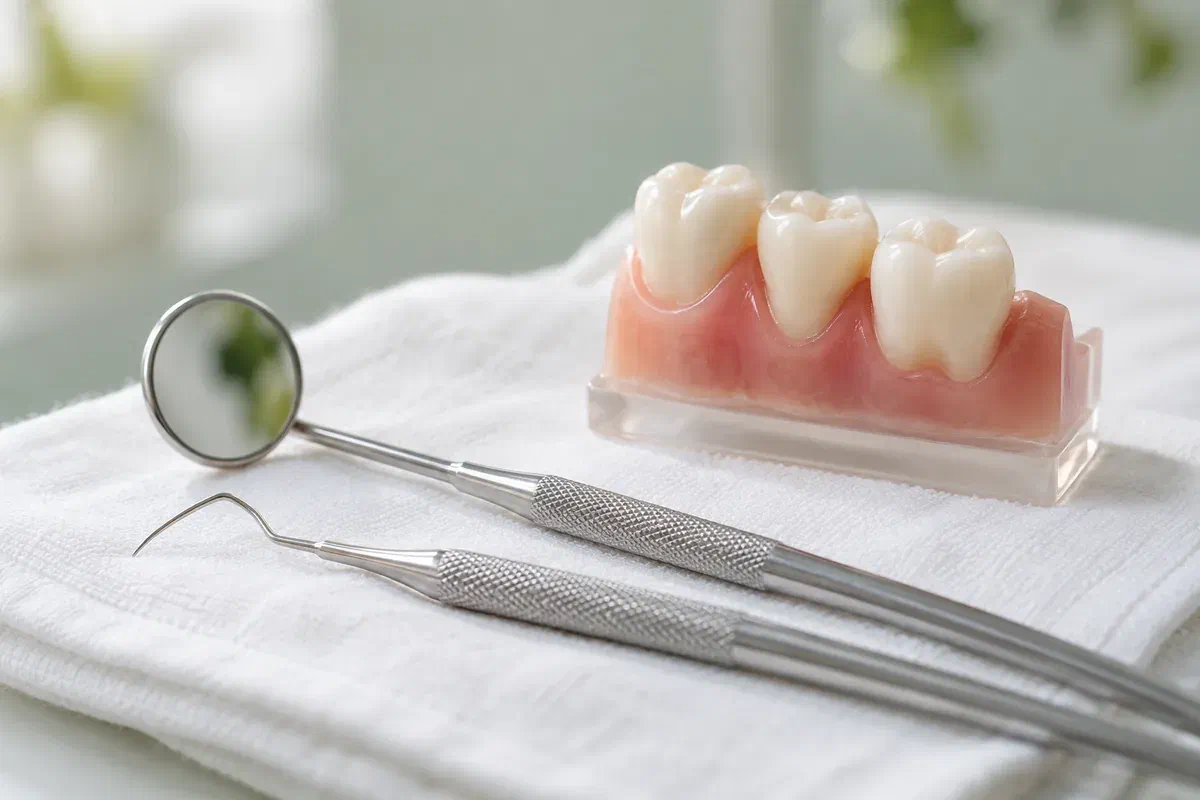
Illustrative periodontal cleaning instrument, mirror, and supported tooth model
The starting measurements

A baseline built from several findings

Before treatment, the clinician records pocket depths, bleeding on probing, gum position, and bone levels on X-rays. Your observations help explain the picture, though pain is a poor guide to periodontal disease.

Bleeding points, swelling, and visible tartar

Sites that bleed when gently probed are recorded, as are areas of swelling or buildup. Describe what you see at home as well. Ask how these baseline findings relate to the treatment plan, because they will be compared directly at the review.

Pocket depths and bone levels

Each tooth is measured at several points, and X-rays show the bone level. Earlier charts help reveal whether loss is recent or longstanding. Ask which readings concern the clinician most, and which teeth are being treated versus monitored.

Factors that could affect the result

Difficult-to-clean areas, smoking, diabetes, sensitive roots, or limited dexterity can all influence how gums respond. Mention what applies to you. The plan should address these honestly, without blame, so the result reflects what is realistically achievable.

If a tender swelling, pus, a fever, or an abrupt change around a tooth appears at any point, call promptly. These signs need assessment sooner than the planned review, and they may change the type of care required.

What improvement can mean

Shallower pockets, fewer bleeding sites, clearer decisions

Clearing deposits from involved roots aims to reduce inflammation, which often shows up as less bleeding on probing and, at many sites, shallower pocket readings. Ask the clinician what change they are hoping for at each treated tooth. Not every site will improve equally, and bone that has been lost is not expected to regrow from cleaning alone.

The reassessment turns those numbers into a decision. Sites that have settled can usually move into maintenance. Sites that remain deep or still bleed may need further treatment or a periodontist’s opinion. You should leave the review knowing which group each area falls into, and why.

Treatment focused where readings are worst

Specialized instruments reach root deposits below the gum. Ask which teeth are being treated, what their starting readings were, and why they were chosen. Knowing the scope explains the length of visits, which reflects the condition rather than any failing on your part.

A routine that supports good numbers

Your home care between treatment and review affects the result. Ask for a demonstration around the treated teeth and between them, with aids suited to each gap. Say what you can keep up, and how to adapt if tenderness makes cleaning harder at first.

A side-by-side comparison

At the review, new readings sit next to the baseline. Ask to see the comparison and what each change means. Feeling better is welcome, but improvements, or areas of concern, are only confirmed by measurement.

From baseline to review

Four steps, one comparison at the end

Tell us about past cleanings that were difficult, sensitive roots, or worries about freezing. Comfort is discussed before treatment begins, and a raised hand or another sign of your choosing will stop the work whenever you need a moment.

  1. Record the baseline and agree on scope

    The clinician explains the diagnosis, the readings that matter most, and which teeth are included. Share your health history, medications, and previous gum care. If other dental needs exist, ask how they will be timed with treatment and review.

  2. Arrange comfort and carry out the cleaning

    Local anaesthetic may be used for the deeper areas. Ask about the sensations you are likely to notice and signal if anything hurts. Instruments are selected for the clinical need, and no brand of device is a goal in itself.

  3. Support healing between treatment and review

    Get clear guidance on cleaning the treated teeth, food while tender, and which symptoms mean you should phone. Avoid hot drinks and chewing until any numbness passes. Ask before adding rinses or products, since the review measures your usual routine.

  4. Compare the results and decide what follows

    The reassessment repeats the key readings once the tissues have had time to heal. Ask which sites improved, which did not, whether active treatment is complete, and what maintenance interval or referral the comparison supports. If anything is unclear, ask for the chart to be explained again; it is your result.

Between treatment and the review

What you do now shows up in the numbers later

The weeks before your review are when the gums do most of their settling. Your instructions should describe what is expected around the treated teeth; call the team if soreness, a gumline that looks different, or uncertainty about a product is making the routine hard to follow.

Clean the treated teeth consistently

Stick with the brushing and between-teeth cleaning you practised in the chair, adjusting pressure if the clinician suggested it. Do not try to reach below the gums with a home scaler. If bleeding or soreness discourages you, ask what to change rather than avoiding the area, since plaque left there will show up in the readings later.

Note sensitivity and changes in the gumline

As inflammation settles, gums may tighten and sit lower, exposing more root, and cold may feel sharp. These are worth mentioning at the review. Pain that is severe, growing, or slow to settle should be checked sooner.

Attend the review, then the maintenance visits

The comparison only happens if you come back, so book the review before you leave and plan the trip in advance. After that, maintenance appointments keep tracking the same measurements over time, which turns one snapshot into a trend. Intervals can change as your results, health, and routine change.

What the results can lead to

Three paths after the comparison

Depending on the findings, the next step may be routine upkeep, more active therapy, or a closer look by a specialist. Ask which path your results point to and why.

If readings show surface inflammation only

Routine prevention for mild inflammation

Some people never need root planing; gingivitis may settle with a regular cleaning and better daily plaque removal. Ask which diagnosis fits. A more involved procedure should depend on measured findings rather than on sounding thorough or appearing on a benefits plan.

If treated sites have responded well

Nonsurgical treatment and maintenance

When the treated sites have settled, root planing combined with a tailored routine and attention to risk factors such as smoking usually leads into regular maintenance. Ask how the comparison will be tracked at future visits, and what kind of change would prompt the clinician to look more closely again.

If certain sites remain deep or bleeding

Further care or a periodontist

Persistent sites may need more treatment or specialist assessment. Ask what question a referral would answer and what options might be discussed. Surgery, antibiotics, and adjunct devices are individual decisions, not automatic next steps.

Results questions from Caledon

Reading your before-and-after chart

Bring older charts or estimates if you have them. These answers explain common questions about results; what your own readings mean depends on your examination.

(905) 876-4488
Which measurements are compared at the reassessment?
Usually pocket depths, bleeding on probing, gum position, and sometimes tooth mobility or plaque levels. These are compared with your baseline, site by site. Ask the clinician to walk you through any changes, including the ones that look small on paper but matter for a particular tooth.
What does it mean if a pocket is still deep after healing?
It may mean that site has not fully responded and could need further treatment, closer monitoring, or a specialist’s opinion. Ask what the reading means for that tooth and what options exist.
Why do some teeth improve more than others?
Back teeth with several roots, deeper starting pockets, and areas that are hard to clean often respond less predictably. Health factors play a part too. The clinician can explain the likely reasons for your sites.
Can I have a copy of my gum chart?
Ask the team. Having your own record can help you follow progress and share information if you see another provider, such as a periodontist. It also makes it easier to ask specific questions at the review, because you can point to the numbers that changed and the ones that did not.
Is bleeding on probing still important if my pockets got shallower?
Yes. Ongoing bleeding can signal remaining inflammation even where depths improved. Both measures are considered together when deciding the next step, along with your home care and any health factors. A site that is shallower but still bleeding may simply need closer attention at maintenance visits.
My results were good. Can I stretch out maintenance visits?
Good results are encouraging, but intervals are based on your history and risk, not one review alone. The clinician may lengthen the interval over time if your gums stay stable.
From Caledon to Bronte Street

Know what you are aiming for before you start

Get in touch with Milton Dental Clinic to talk about a root planing recommendation, earlier periodontal charts, or comfort during care. We will explain your baseline readings and how the review will show what treatment achieved.

Treatment extent and reassessment timing depend on your own periodontal findings.

Visit Milton Dental Clinic
Unit 1, 342 Bronte St. S, Milton, ON L9T 5B7
Get directions Clinic hours
Monday–Thursday
11am–7pm
Friday–Sunday
By appointment only

Areas we serve

  • Milton
  • Oakville
  • Mississauga
  • Georgetown
  • Halton Hills
  • Acton
  • Campbellville
  • Brampton
  • Burlington
  • Puslinch
  • Rockwood
  • Erin
  • Caledon
  • Etobicoke
  • Old Milton
  • Bronte Meadows
  • Timberlea
  • Dorset Park
  • Dempsey
  • Clarke
  • Beaty
  • Coates
  • Harrison
  • Scott
  • Willmott
  • Ford
  • Bowes
  • Cobden
  • Walker
  • Mountain View
  • Milton Heights
  • Hawthorne Village
  • Valley View
  • Fallingbrook
  • Nassagaweya
  • Trafalgar
  • Esquesing
  • Nelson
  • Brookville
  • Moffat
  • Glen Williams
  • Norval
  • Limehouse
  • Stewarttown
  • Ashgrove
  • Hornby
  • Silver Creek
  • Speyside
  • Scotch Block
  • North Oakville
  • River Oaks
  • Glen Abbey
  • West Oak Trails
  • Palermo
  • Bronte Creek
  • College Park
  • Joshua Creek
  • Uptown Core
  • Preserve
  • Iroquois Ridge
  • Lisgar
  • Meadowvale
  • Meadowvale Village
  • Churchill Meadows
  • Erin Mills
  • Central Erin Mills
  • Streetsville
  • East Credit
  • Creditview
  • Heartland
  • Sheridan
  • Mount Pleasant
  • Credit Valley
  • Huttonville
  • Churchville
  • Springbrook
  • Northwest Brampton
  • Bram West
  • Fletcher's Meadow
  • Fletcher's Creek South
  • Alton Village
  • Orchard
  • Millcroft
  • Headon Forest
  • Tansley
  • Brant Hills
  • Tyandaga
  • Kilbride
  • Lowville
  • Aberfoyle
  • Morriston
  • Arkell
  • Hillsburgh
  • Freelton
  • Carlisle
  • Waterdown
  • Flamborough
  • Mountsberg

How can we help?

Milton Dental Clinic

Have a question about your smile? Choose the option that works best for you.

For urgent dental concerns, please call.
Messages are reviewed during clinic hours.