

Illustrative discussion of gum treatment using a dental teaching model
Specialized Care

Scaling and Root Planing in Campbellville

Need a crown, a filling, or an implant as well as gum treatment? The order matters. We explain the periodontal findings, where scaling and root planing fits among your other dental work, how comfort is handled, and when results will be measured.

Putting the plan in order, Campbellville

Foundations before finishes

A treatment plan can look like a list of separate jobs: two fillings, a crown, a cleaning, maybe an implant down the road. In reality those items depend on each other. When the gums and bone around the teeth are inflamed or losing support, that usually needs attention early, because it affects how other work fits, seals, and lasts.

Scaling and root planing is often that first step. The clinician removes calculus and bacterial film from root surfaces affected by periodontal disease, frequently beneath the gum, once an assessment confirms the need. It is not a cosmetic extra or a longer polish; it is part of treating the condition, and it should come with a clear diagnosis, a list of teeth, and a planned review.

Households around Campbellville often prefer to plan visits in groups rather than make many short trips. At our Bronte Street office, we can lay out the whole sequence, explain why gum care may come first, and arrange appointments so the work and the reassessment flow sensibly.

Map out your full treatment sequence
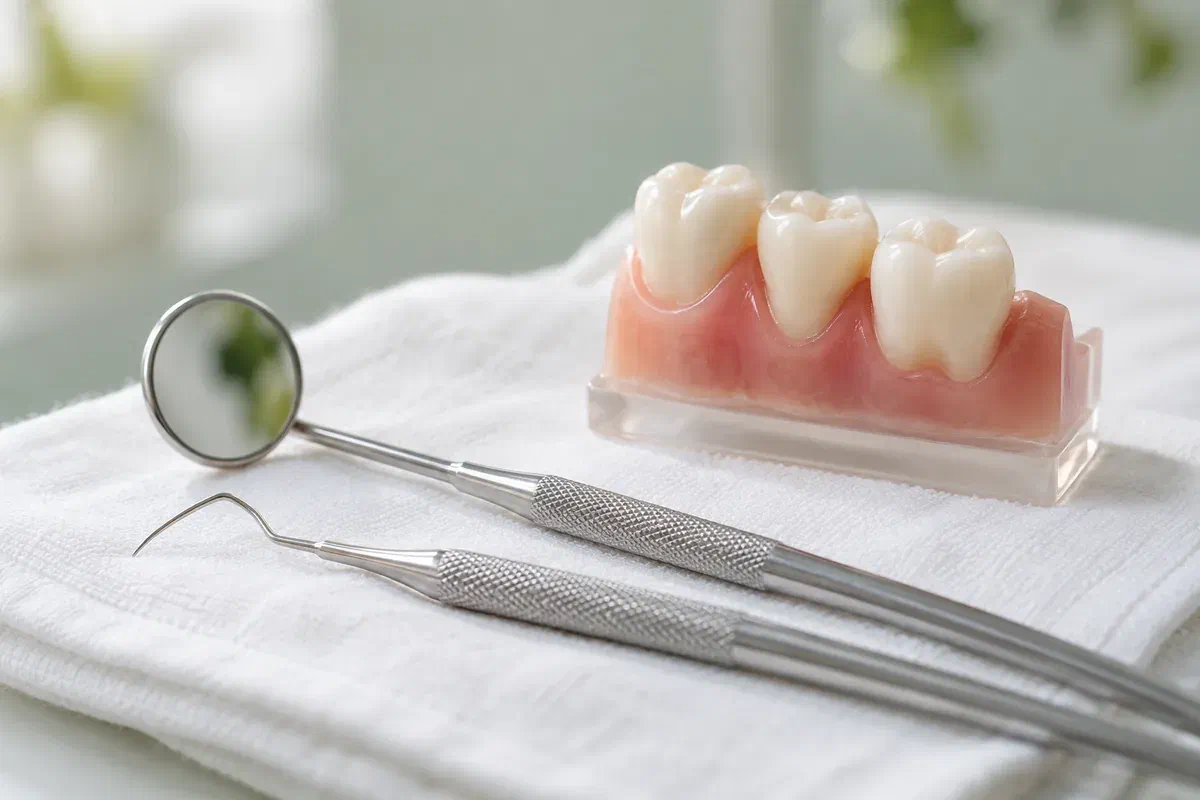
Illustrative periodontal cleaning instrument, mirror, and supported tooth model
Why the gums come up first

Findings that affect everything else

The clinician reads pocket depths, bleeding, gum position, and bone levels together. Your own observations add context, though comfortable gums are not proof of healthy support underneath.

Gums that bleed or swell around existing work

Bleeding around an old crown or filling edge is common and worth mentioning. The exam can show whether this is local irritation, a restoration that traps plaque, or deeper periodontal involvement. Ask how each of those possibilities would change the order of treatment.

Pockets or bone changes near teeth needing repair

If a tooth that needs a crown also has reduced bone support, the long-term plan may change. Bring earlier charts and X-rays if you have them. Ask which teeth need gum treatment now, which are being watched, and how that affects the restorative options.

Restorations or gaps that make cleaning awkward

Bridges, partial dentures, crowded teeth, and sensitive roots can all trap plaque. Say which areas you find hard. A good plan includes aids that suit your mouth and your hands, and it may also flag a restoration that needs to be reshaped or replaced.

An abscess-like swelling, pus, a temperature, or a tooth that changes without warning takes priority over any planned sequence. Call promptly rather than waiting for your next scheduled visit; the order of treatment can be rearranged around an acute problem, and the rest of the plan picked up afterwards.

Why sequencing helps

Stable gums make the rest of the plan clearer

Clearing deposits from involved roots aims to reduce inflammation and help control periodontal disease. That calmer tissue gives a more reliable picture of where gum margins will sit, which can matter for crowns and other restorations. Ask what improvement the clinician expects and where the limits lie, since lost bone may not return.

The reassessment after healing then becomes a planning point for the whole mouth. Some sites will be ready for maintenance and restorative work can proceed; others may need more gum care or a periodontist’s view first. Ask how the results will shape the order of everything that follows.

Root surfaces cleaned before other work

Specialized instruments reach deposits below the gum that brushing cannot. Ask which teeth are included and whether any restorative work will wait until healing is complete. A longer appointment reflects the condition, not a judgement about your care at home.

Home care built around your restorations

Ask for a demonstration of cleaning under bridges, around crowns, and between teeth with different gap sizes. Floss threaders, small brushes, or a water flosser may help. Say what you will actually use, and how to adjust while the gums are tender.

A review that informs the next phase

After healing, the clinician compares new readings with the old. Ask what is being measured and what result would let other treatment go ahead. Feeling comfortable is good news, but it does not show on its own that the tissues are ready.

Working through the sequence

Gum care, healing, review, then the next step

Let us know about earlier difficult cleanings, sensitive roots, or worry about freezing. Comfort is planned before treatment starts, and you can agree on a signal to pause whenever you need.

  1. Lay out the whole plan, not just the gums

    The clinician explains the periodontal diagnosis, the teeth involved, and how gum treatment fits with fillings, crowns, or extractions. Share your health history and medicines. If something is urgent, such as a painful cracked tooth, ask how it will be handled first.

  2. Comfort measures, then the cleaning

    Local anaesthetic may be used where deeper work is needed. Ask what you will feel and signal if anything hurts. Instruments, manual or ultrasonic, are selected for the sites; a brand name says little about the quality of care.

  3. Aftercare for the treated teeth

    Find out how to clean around the treated areas and any restorations, what to eat while tender, and which symptoms need a call. While numb, avoid hot drinks and chewing. Check before adding any rinse, medicine, or home device.

  4. Reassess, then decide what comes next

    At the review, measurements are repeated and compared. Ask whether active gum treatment is finished, which sites still need attention, and whether restorative work can now be scheduled. Maintenance intervals should reflect the findings and your risk factors.

While you wait for the next phase

Healing time is not idle time

Aftercare advice should explain what is normal at the treated sites. If tenderness, a changed gumline, or a confusing product makes the routine harder, call the team.

Clean consistently around teeth and dental work

Use the technique and aids you were shown, more gently at first if advised. Do not scrape under the gum yourself. If a bridge or crown makes cleaning hard while the gums are sore, ask how to adapt rather than skipping it.

Notice how the gumline changes

As swelling settles, gums may sit lower, revealing more root or a crown edge, and cold can feel sharp. This is useful information for later restorative planning, so mention it. Pain that is severe, worsening, or persistent needs a check.

Keep the review before booking other work

Feeling better does not replace the follow-up exam, and the results may change what comes next. Bring questions about hard-to-reach places. Maintenance intervals can be revised as your findings, health, and dental work change.

Where gum care sits in the plan

Three possibilities for the first step

Your gums may need an initial round of active therapy, simple upkeep, or more investigation of a stubborn area. Find out which applies, because the answer sets the pace for any restorative work and explains why a crown or implant may be scheduled later than you expected.

If inflammation is mild and local

A standard cleaning and better plaque control

Gingivitis may settle with a regular hygiene visit and improved daily cleaning, after which other work can often proceed. Ask which diagnosis you have. Root planing should be chosen because findings support it, not because it seems more complete or is listed on a plan.

If periodontitis needs active treatment

Root planing before restorative work

This phase usually combines root planing with a home routine designed for you and attention to factors like smoking or diabetes. Ask how the result will be judged, since it may determine when crowns or implants can be planned.

If certain teeth have an uncertain outlook

Specialist advice for complex areas

Some teeth need a periodontist’s assessment before major restorative decisions, particularly when a tooth with reduced support is being considered for a crown or as a bridge anchor. Ask what the referral should answer and how its findings will feed back into your overall plan. Surgery, antibiotics, and adjuncts are decided case by case, never routinely.

Sequencing questions from Campbellville

How gum treatment fits with other work

Bring your treatment estimates, X-rays, or records if you have them. These answers address planning questions we hear often; your own sequence depends on an examination.

(905) 876-4488
Should gum treatment come before a new crown?
Often, yes. Healthier gums give a more stable margin for the crown and a clearer picture of the tooth’s support. The order depends on your findings, though, and an urgent problem may need handling first. Ask why a particular sequence is recommended.
Can a broken filling be fixed during a root planing visit?
Sometimes small repairs can be coordinated, depending on time and clinical needs. Other times they are better on separate visits. Mention any broken or sore teeth when booking so they can be planned.
Why would an implant be postponed until my gums are treated?
Active gum disease is an important factor when planning implants. Clinicians generally want periodontal inflammation under control first. Ask what findings would need to change before implant planning moves ahead.
Does tartar on my partial denture matter?
Yes. Deposits on a denture can contribute to plaque around the teeth it rests on. Bring the denture to your visit, and ask how to clean both it and the teeth that support it.
Will whitening have to wait until after gum treatment?
Cosmetic treatments are usually discussed once the gums are healthier and active disease is controlled. Ask the clinician when it would be reasonable to consider whitening for your situation.
What happens to my usual cleaning schedule during active treatment?
Routine hygiene visits may be replaced by treatment sessions and the review for a while. After that, a maintenance interval is set based on the findings, and it may be shorter than the schedule you are used to. Ask how your calendar will change, and why, so you can plan trips in from Campbellville ahead of time.
Planning visits from Campbellville

One plan for your whole mouth

Call Milton Dental Clinic to discuss scaling and root planing alongside crowns, fillings, or implants you may need. We will go through the order of treatment and how gum care and its review set up the next steps.

The order of care, and when your gums are rechecked, is set by what your own examination shows.

Visit Milton Dental Clinic
Unit 1, 342 Bronte St. S, Milton, ON L9T 5B7
Get directions Clinic hours
Monday–Thursday
11am–7pm
Friday–Sunday
By appointment only

Areas we serve

  • Milton
  • Oakville
  • Mississauga
  • Georgetown
  • Halton Hills
  • Acton
  • Campbellville
  • Brampton
  • Burlington
  • Puslinch
  • Rockwood
  • Erin
  • Caledon
  • Etobicoke
  • Old Milton
  • Bronte Meadows
  • Timberlea
  • Dorset Park
  • Dempsey
  • Clarke
  • Beaty
  • Coates
  • Harrison
  • Scott
  • Willmott
  • Ford
  • Bowes
  • Cobden
  • Walker
  • Mountain View
  • Milton Heights
  • Hawthorne Village
  • Valley View
  • Fallingbrook
  • Nassagaweya
  • Trafalgar
  • Esquesing
  • Nelson
  • Brookville
  • Moffat
  • Glen Williams
  • Norval
  • Limehouse
  • Stewarttown
  • Ashgrove
  • Hornby
  • Silver Creek
  • Speyside
  • Scotch Block
  • North Oakville
  • River Oaks
  • Glen Abbey
  • West Oak Trails
  • Palermo
  • Bronte Creek
  • College Park
  • Joshua Creek
  • Uptown Core
  • Preserve
  • Iroquois Ridge
  • Lisgar
  • Meadowvale
  • Meadowvale Village
  • Churchill Meadows
  • Erin Mills
  • Central Erin Mills
  • Streetsville
  • East Credit
  • Creditview
  • Heartland
  • Sheridan
  • Mount Pleasant
  • Credit Valley
  • Huttonville
  • Churchville
  • Springbrook
  • Northwest Brampton
  • Bram West
  • Fletcher's Meadow
  • Fletcher's Creek South
  • Alton Village
  • Orchard
  • Millcroft
  • Headon Forest
  • Tansley
  • Brant Hills
  • Tyandaga
  • Kilbride
  • Lowville
  • Aberfoyle
  • Morriston
  • Arkell
  • Hillsburgh
  • Freelton
  • Carlisle
  • Waterdown
  • Flamborough
  • Mountsberg

How can we help?

Milton Dental Clinic

Have a question about your smile? Choose the option that works best for you.

For urgent dental concerns, please call.
Messages are reviewed during clinic hours.