

Illustrative discussion of gum treatment using a dental teaching model
Specialized Care

Scaling and Root Planing in Old Milton

Years of routine cleanings, and now the advice has changed. Bring your history and we will explain what the gum readings show, which teeth need root surface treatment, how the visit can stay comfortable, and when progress gets checked.

For long-time patients in Old Milton

Why would a familiar cleaning suddenly become something else?

Gums change gradually. Someone who has had straightforward hygiene appointments for decades can reach a point where certain sites show deeper pockets, bleeding on probing, or bone changes on X-rays. When that happens, scaling and root planing may be suggested to clean tartar and bacterial deposits off the affected roots, sometimes well beneath the gum.

That is a shift in purpose, not just a longer visit. Routine cleaning keeps healthy tissue healthy; this treatment is part of managing periodontal disease that is already present. A clear explanation should cover the diagnosis, the specific teeth, and how follow-up will work, and it should take account of crowns, bridges, or past gum care you have had.

Our practice on Bronte Street sits close to Milton’s historic downtown, and plenty of the people we see from Old Milton bring a long dental story with them. Share it. We can read older records alongside today’s findings, discuss sensitivity, and explain why the work is followed by a measured review.

Ask about your gum findings
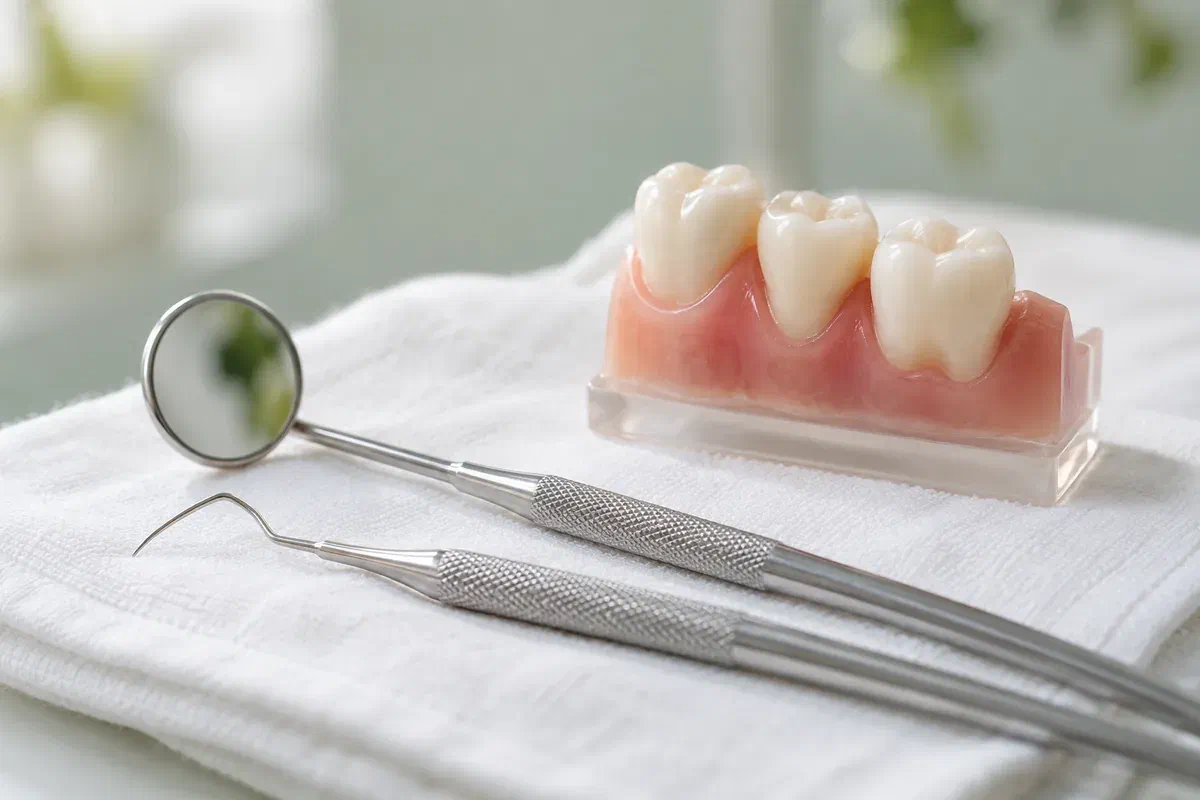
Illustrative periodontal cleaning instrument, mirror, and supported tooth model
Reading the change over time

The trend matters as much as today’s chart.

A single visit captures one moment. The clinician weighs measurements, bleeding, X-rays, and your history together, and keep in mind that periodontal disease frequently progresses without pain.

New bleeding, puffiness, or tartar along the gums

Perhaps the floss now comes away pink, or one corner of the mouth feels tender. Describe what you have noticed and when it began. An exam can separate gum irritation at the surface from involvement of the deeper supporting tissues, and those two situations are usually handled quite differently.

Records showing pockets or bone loss in the past

Charts from earlier years, older radiographs, or a note from a specialist can reveal whether things are stable, slowly changing, or flaring in one area. That comparison helps the team decide which teeth need active treatment and which can simply be monitored at future visits.

Older dental work or hands that tire more easily

Bridges, crown margins, and stiff fingers can all make plaque harder to clear. Mention any of these without embarrassment. Planning should include aids and techniques you can genuinely manage, because a recommendation you cannot carry out at home does little for the gums.

A painful swelling, pus, fever, or a tooth that has changed suddenly should be reported straight away. Please do not hold on until a scheduled cleaning, since the type and urgency of care may need rethinking.

The purpose of active treatment

Settle the inflammation, then decide the long-term rhythm

Clearing deposits from involved root surfaces aims to reduce gum inflammation and slow the disease process. Ask the clinician which sites they expect to improve and by how much they think that is realistic. Support that has already been lost is not guaranteed to come back, and neighbouring teeth may have different prospects.

The treatment also marks a baseline. After healing, the same sites are measured again so the response can be judged. Many areas move into supportive maintenance at that point; a few may need more work or a periodontist’s opinion. Expect a clear explanation of where each part of your mouth stands.

Thorough cleaning of the roots involved

Specialized instruments reach deposits on root surfaces that floss and brushes slide past. Find out which teeth are included and why each was chosen. A clear scope helps the appointment plan make sense, and a long visit says nothing about whether you have been careful at home.

Home care that respects your existing dental work

Request a hands-on demonstration around the treated teeth, including under bridges or near crown edges. Different spaces may need floss threaders, small brushes, or a water flosser. Tell the team what you find awkward so the routine can be simplified, especially if the gums are tender at first.

Measured follow-up rather than guesswork

Once the tissues have settled, the clinician compares new readings with the old. Ask which numbers and signs will be looked at and what they mean for future visits. A mouth that feels clean is encouraging, yet periodontal stability can only be judged with an examination.

How the day unfolds

Plan the comfort first, then the cleaning

If earlier cleanings were uncomfortable, your roots are sensitive, or needles make you uneasy, mention it early. We can talk through options beforehand and agree on a way for you to pause the work at any moment.

  1. Compare the findings with your history

    The clinician sets out the diagnosis, the teeth involved, and how many sessions are likely. Review your medical conditions, current medicines, and previous dental care together. If a filling, crown, or other repair also needs attention, ask how it will be sequenced with the gum treatment.

  2. Choose freezing or other comfort steps

    Local anaesthetic is commonly offered for the sections being cleaned. Ask what pressure or vibration you may notice, and raise a hand if something hurts. Instruments are picked to suit the sites; whether a tool is ultrasonic or manual is a clinical choice rather than the goal itself.

  3. Get instructions for the treated teeth

    Before leaving, ask how to brush and floss those areas, what to eat while they are tender, and which signs warrant a call. While numb, be careful with hot liquids and chewing. Check with the team before starting a mouthwash, antibiotic, or home device.

  4. Return for reassessment

    The review repeats the key gum measurements so they can be compared with the starting point. Ask whether the active phase is complete and which areas still need watching. Your maintenance interval, or any referral, should follow from those results and your health history.

Looking after the gums at home

Small daily steps, and a review you do not skip

Your aftercare advice should describe what to expect where the gums were treated. If soreness, an altered gumline, or doubt about a product makes the routine harder, call and ask.

Keep using the technique you were taught

Brush and clean between the teeth as demonstrated, easing pressure if the clinician advised it while things heal. Do not try to clean under the gum with a pick or scaler. If tenderness tempts you to leave an area alone, phone the team so the routine can be adjusted instead.

Report sensitivity or a changed gumline

When swelling goes down, the gums can sit a little lower, showing more root or wider spaces, and cold may feel sharper. Discuss what you see and ask about comfort options. Pain that builds, is intense, or does not ease should be checked rather than assumed to be normal.

Treat maintenance visits as part of the plan

A smoother-feeling mouth cannot replace the clinical review. Point out places you still struggle to reach or products that have not suited you. Later appointments help keep periodontal care on track, and their spacing may be revised as your findings and circumstances change.

Which stage fits your gums now

Prevention, active treatment, or a further step?

Clarify whether today’s advice is first-phase treatment, ongoing maintenance, or extra assessment of an area that has not responded. That label explains why a plan from five years ago may differ from the one you are offered today.

When findings support a lighter level of care

Preventive cleaning or care for mild inflammation

Not every bleeding gum means periodontitis. Some people need a professional cleaning and better plaque-control habits rather than root planing. Ask which diagnosis applies. The procedure should be chosen because of today’s findings, not because it sounds more complete or your coverage happens to include it.

When involved roots need direct cleaning

Nonsurgical periodontal treatment with a recheck

Root planing often forms the core of this phase, combined with daily care suited to you and a look at risk factors. Ask how the result will be measured. That response shapes what follows, since a single round of treatment does not settle every periodontal question for good.

When certain sites need another approach

Additional treatment or a gum specialist

Some teeth need closer assessment or more care after the first phase, and a periodontist can advise on more complex cases. Ask what the referral is meant to clarify. Surgery, antibiotics, and adjunct products are decided on individual findings rather than offered to everyone.

Questions we hear in Old Milton

Your history, your gums, your questions

Older charts, X-rays, or a written proposal are welcome at the visit. These answers address frequent planning questions; the right care for you still depends on a clinical examination.

(905) 876-4488
My cleanings were always routine. Why is root planing coming up now?
Periodontal disease can develop slowly and without pain, so a change may show up only on measurements or X-rays. Age, health conditions, medications, and harder-to-clean dental work can all play a part. Ask the clinician to point out which findings have changed compared with earlier records.
Can I have root planing around a crown or bridge?
Yes, the roots beside and beneath dental work can be cleaned, and those areas often collect deposits. Tell the team which teeth have restorations. If a crown edge or bridge makes cleaning difficult, ask whether that restoration itself needs review as part of the overall plan.
Should I bring X-rays from a previous dentist?
If you can, yes. Earlier images and gum charts help show whether bone levels or pocket depths have changed over time. Ask your former office for copies before the appointment. They do not replace a current exam, but they can make the comparison more meaningful.
Do my blood thinners affect this treatment?
They may affect how much the gums bleed, so mention every medicine you take, including over-the-counter ones. Do not stop or change a prescription on your own. If coordination is needed, the team can discuss it with you and, where appropriate, your physician.
Is it normal for my teeth to look longer once healing has settled?
As swollen tissue shrinks, the gumline can sit lower and more root may show. That is a common effect of inflammation calming down, but any change that worries you should be raised. The clinician can tell you whether it matches what was expected for those sites.
What happens if a few areas don’t improve?
The reassessment will identify them. Options may include further cleaning, a closer look at contributing factors, or a referral to a periodontist. Ask what the remaining findings mean and what each option is intended to achieve before deciding on the next step.
Visit us from Old Milton

Bring the old records and the new questions

Phone Milton Dental Clinic to discuss scaling and root planing, gum history from other offices, or concerns about comfort. We can go over the affected teeth and explain how treatment and review fit into your longer-term care.

How much treatment is needed and when it is reviewed depend on your individual periodontal findings.

Visit Milton Dental Clinic
Unit 1, 342 Bronte St. S, Milton, ON L9T 5B7
Get directions Clinic hours
Monday–Thursday
11am–7pm
Friday–Sunday
By appointment only

Areas we serve

  • Milton
  • Oakville
  • Mississauga
  • Georgetown
  • Halton Hills
  • Acton
  • Campbellville
  • Brampton
  • Burlington
  • Puslinch
  • Rockwood
  • Erin
  • Caledon
  • Etobicoke
  • Old Milton
  • Bronte Meadows
  • Timberlea
  • Dorset Park
  • Dempsey
  • Clarke
  • Beaty
  • Coates
  • Harrison
  • Scott
  • Willmott
  • Ford
  • Bowes
  • Cobden
  • Walker
  • Mountain View
  • Milton Heights
  • Hawthorne Village
  • Valley View
  • Fallingbrook
  • Nassagaweya
  • Trafalgar
  • Esquesing
  • Nelson
  • Brookville
  • Moffat
  • Glen Williams
  • Norval
  • Limehouse
  • Stewarttown
  • Ashgrove
  • Hornby
  • Silver Creek
  • Speyside
  • Scotch Block
  • North Oakville
  • River Oaks
  • Glen Abbey
  • West Oak Trails
  • Palermo
  • Bronte Creek
  • College Park
  • Joshua Creek
  • Uptown Core
  • Preserve
  • Iroquois Ridge
  • Lisgar
  • Meadowvale
  • Meadowvale Village
  • Churchill Meadows
  • Erin Mills
  • Central Erin Mills
  • Streetsville
  • East Credit
  • Creditview
  • Heartland
  • Sheridan
  • Mount Pleasant
  • Credit Valley
  • Huttonville
  • Churchville
  • Springbrook
  • Northwest Brampton
  • Bram West
  • Fletcher's Meadow
  • Fletcher's Creek South
  • Alton Village
  • Orchard
  • Millcroft
  • Headon Forest
  • Tansley
  • Brant Hills
  • Tyandaga
  • Kilbride
  • Lowville
  • Aberfoyle
  • Morriston
  • Arkell
  • Hillsburgh
  • Freelton
  • Carlisle
  • Waterdown
  • Flamborough
  • Mountsberg

How can we help?

Milton Dental Clinic

Have a question about your smile? Choose the option that works best for you.

For urgent dental concerns, please call.
Messages are reviewed during clinic hours.