

Illustrative discussion of gum treatment using a dental teaching model
Specialized Care

Scaling and Root Planing in Rockwood

Professional treatment cleans what is under the gum; your routine has to keep it that way. We explain the findings behind scaling and root planing, which teeth need it, how comfort is handled, and which home-care tools actually suit your mouth.

Treatment and toolkit, for Rockwood

Half of gum treatment happens at your bathroom mirror

Stand in the oral-care aisle of any pharmacy and the choice is overwhelming: tape floss, picks, tiny brushes in a dozen sizes, water flossers, powered toothbrushes. After a recommendation for scaling and root planing, many people wonder which of these they actually need. The honest answer is that it depends on your teeth, your gaps, and your hands.

The professional part of the work is specific. A clinician removes calculus and bacterial biofilm from root surfaces affected by periodontal disease, often below the gumline, once an exam of pockets, bleeding, and bone levels shows the need. That clears the ground. Keeping the gums healthy afterwards relies on daily plaque removal you can do yourself, which is why home care is part of the plan rather than an afterthought.

When people from Rockwood come to our Bronte Street practice, we go beyond handing over a sample bag. We explain the findings and treatment, then show you which tools fit which spaces, watch you try them, and adjust the advice until it feels manageable.

Get your home-care routine fitted
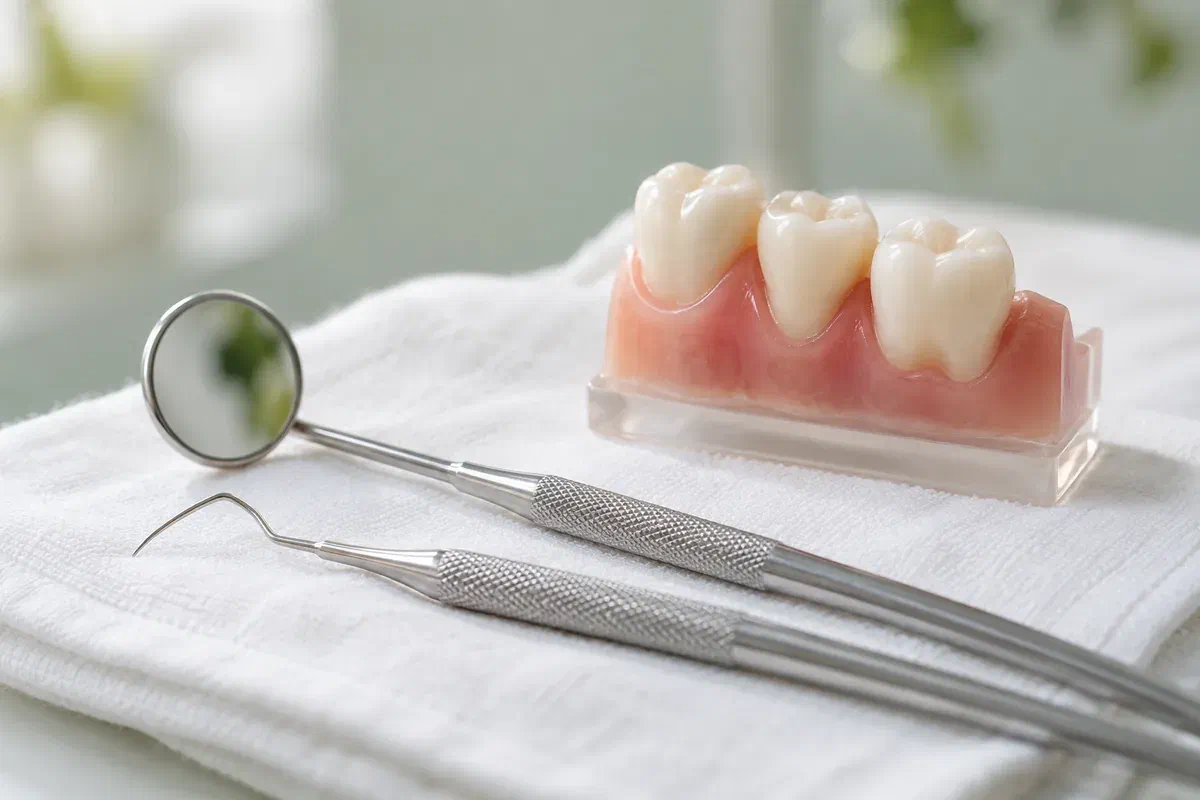
Illustrative periodontal cleaning instrument, mirror, and supported tooth model
What the assessment looks for

Deposits, pockets, and the places brushing misses

A treatment recommendation draws on several findings at once. Your daily experience adds useful detail, but gum support can be lost with no discomfort, so feeling fine does not settle the question.

Bleeding gums, puffy margins, or tartar

Note where the brush or floss draws blood and which areas feel tender. The exam separates inflammation at the gum edge from involvement of the deeper attachment, and the clinician can show how the buildup at each site connects to the recommended care. Those same sites usually guide which tools you need most.

Earlier charts showing pockets or bone loss

Previous records, radiographs, or a periodontist’s summary help reveal how things have progressed. Bring them if you have them. Ask which teeth need active treatment now and which are being watched, so your home-care effort can focus where it matters.

Spaces your current routine does not reach

Wide gaps where gums have receded, tight contacts, crowding, bridges, and sensitive roots each call for a different approach. Arthritis or a weak grip can also limit what is practical. Say what you find awkward; the right aid is the one you will use, not the most expensive one.

A sore swollen area, pus, feeling feverish, or a tooth that changes overnight is not something to manage with home tools. Call promptly, because an acute problem may need a different kind of visit.

Professional care plus daily care

Two halves of the same treatment

Root planing is intended to remove deposits that keep gums inflamed, helping bring periodontal disease under control. Ask the clinician what improvement they expect at each treated site, and where the limits lie. Lost bone and attachment may not return, and teeth can respond differently, often depending on how well each area is kept clean afterwards.

After a healing interval, the same sites are measured again. That review reflects both the treatment and your routine since. Some areas may be ready for maintenance; others may need more care, a change of tool, or a periodontist’s view. You should hear which is which.

Deposits removed below the gumline

Specialized instruments reach calculus on root surfaces that no brush, floss, or water jet can remove. Ask which teeth are included and the reason for each. Understanding the scope explains the length of visits, and a longer session reflects the condition, not your effort.

Tools matched to each gap in your mouth

Ask the team to size interdental brushes for your spaces, show you floss technique where contacts are tight, and explain whether a water flosser or powered brush would help. Practise in front of them so they can correct the angle and pressure. Mention what feels uncomfortable while the gums are tender.

A review that tests the routine too

The reassessment compares new readings with the old, and can show where plaque is still being missed. Ask what is being measured and how it will shape your next visits. A clean feeling helps motivation, but stability is judged by the exam.

What a treatment visit includes

Cleaning, coaching, and a plan to check back

Let us know about past cleanings that were hard to sit through, sensitive roots, or concerns about freezing. We agree on comfort measures and a pause signal before starting, and leave time for home-care coaching.

  1. Go over the findings and the teeth involved

    The clinician explains the diagnosis, which teeth will be treated, and how the work may be split across visits. Share your health history and medicines. If another repair is also needed, ask how it will be scheduled alongside.

  2. Arrange comfort and clean the planned areas

    Freezing is often used for deeper sections. Find out which sensations are typical, and use your signal if anything hurts. Manual or ultrasonic instruments are chosen for the sites, and the choice of device is a clinical one.

  3. Practise your home-care tools before leaving

    Ask to try each recommended aid while the team watches, and to be told how to use them gently while the gums heal. Find out what to eat while tender, which symptoms need a call, and whether any rinse is advised; do not add products on your own.

  4. Return to measure the response

    At the review, key readings are repeated and compared with the baseline. Ask if active treatment is complete, which sites still concern the clinician, and whether any tool should change. The maintenance interval or a referral should follow from the findings.

Your daily routine after treatment

The right tool, used gently, every day

You should leave knowing what is normal at the treated areas and how to use each aid. If tenderness, a changed gumline, or confusion about a product is getting in the way, call the team.

Use the aids you were shown, softly at first

Tender gums may need lighter pressure for a while. Keep cleaning between the teeth even if there is a little bleeding at first. Never try to scrape below the gum with a home scaler or sharp pick; that can damage tissue and is not a substitute for professional care.

Expect gap sizes to change as gums settle

As swelling goes down, spaces may open up and more root may show, so an interdental brush that fit before may now be too small. Cold may also feel sharp. Ask for a re-sizing and comfort advice. Severe or worsening pain needs a check.

Bring your tools to the review

Bringing the aids you use lets the team check they still suit your mouth. A fresher feeling does not replace the clinical review. Maintenance intervals support long-term gum health and can change as your findings and routine evolve.

Which stage of gum care applies

Home care looks different at each stage

Find out whether you are being offered an initial round of active treatment, regular upkeep, or more investigation of a site that has not settled. The stage affects both the professional care and the routine expected of you.

For inflammation limited to the gum edge

Hygiene visit plus a better daily routine

Gingivitis often responds to a regular cleaning and improved plaque removal at home. Ask which diagnosis applies. Root planing belongs in the plan only when measurements and X-rays point to it; a fuller-sounding procedure, or one a benefit plan includes, is not automatically the better fit.

For root surfaces that need active cleaning

Root planing as part of first-phase therapy

This phase combines root planing with a home routine designed for your mouth and attention to factors like smoking. Ask how the response will be measured; the results, and how well the routine has worked, guide the next step.

For sites that stay active despite good care

More treatment or a periodontist’s opinion

Some areas do not settle even with careful cleaning and may need further assessment or a specialist. Find out what question the specialist would be answering. Surgery, antibiotics, and adjunct devices are decided individually, never by default.

Home-care questions from Rockwood

Choosing and using the right tools

Bring the aids you currently use, along with any earlier records or estimates. These answers address common home-care questions; the best routine for you depends on your own examination.

(905) 876-4488
Are interdental brushes better than floss?
It depends on the spaces between your teeth. Interdental brushes often suit wider gaps, while floss may work better where teeth are tightly packed. Many people use both. Ask the team to check which fits each area.
Is a water flosser enough on its own?
A water flosser can help some people, particularly around bridges or when dexterity is limited. Whether it is enough by itself depends on your mouth. Ask whether it should be used alongside another aid.
How do I know what size interdental brush to use?
The clinician can test sizes in your gaps. A brush should fit snugly without forcing. You may need more than one size, and sizes may change as the gums heal.
Does tartar-control toothpaste remove the tartar I already have?
No. It may help slow new buildup, but hardened deposits, especially below the gum, need professional removal. Daily plaque removal is what prevents new tartar from forming in the first place.
How often should I replace my toothbrush or brush heads?
A common guideline is every few months, or sooner if the bristles are splayed. Worn bristles clean less effectively. Interdental brushes wear faster and should be replaced when the wire bends or bristles flatten.
Can I use a rubber-tip gum stimulator or wooden picks?
Some people find these helpful, but they need to be used correctly. Bring them to your appointment and ask the team to check your technique and whether they suit your treated areas.
Visiting from Rockwood

Bring your toothbrush, and your questions

Milton Dental Clinic is glad to explain a root planing recommendation, review records from another office, or simply help you choose home-care tools that suit your mouth. We will look at the treated areas with you and explain how professional care, daily cleaning, and review work together.

Treatment scope, home-care advice, and review timing depend on your own periodontal findings.

Visit Milton Dental Clinic
Unit 1, 342 Bronte St. S, Milton, ON L9T 5B7
Get directions Clinic hours
Monday–Thursday
11am–7pm
Friday–Sunday
By appointment only

Areas we serve

  • Milton
  • Oakville
  • Mississauga
  • Georgetown
  • Halton Hills
  • Acton
  • Campbellville
  • Brampton
  • Burlington
  • Puslinch
  • Rockwood
  • Erin
  • Caledon
  • Etobicoke
  • Old Milton
  • Bronte Meadows
  • Timberlea
  • Dorset Park
  • Dempsey
  • Clarke
  • Beaty
  • Coates
  • Harrison
  • Scott
  • Willmott
  • Ford
  • Bowes
  • Cobden
  • Walker
  • Mountain View
  • Milton Heights
  • Hawthorne Village
  • Valley View
  • Fallingbrook
  • Nassagaweya
  • Trafalgar
  • Esquesing
  • Nelson
  • Brookville
  • Moffat
  • Glen Williams
  • Norval
  • Limehouse
  • Stewarttown
  • Ashgrove
  • Hornby
  • Silver Creek
  • Speyside
  • Scotch Block
  • North Oakville
  • River Oaks
  • Glen Abbey
  • West Oak Trails
  • Palermo
  • Bronte Creek
  • College Park
  • Joshua Creek
  • Uptown Core
  • Preserve
  • Iroquois Ridge
  • Lisgar
  • Meadowvale
  • Meadowvale Village
  • Churchill Meadows
  • Erin Mills
  • Central Erin Mills
  • Streetsville
  • East Credit
  • Creditview
  • Heartland
  • Sheridan
  • Mount Pleasant
  • Credit Valley
  • Huttonville
  • Churchville
  • Springbrook
  • Northwest Brampton
  • Bram West
  • Fletcher's Meadow
  • Fletcher's Creek South
  • Alton Village
  • Orchard
  • Millcroft
  • Headon Forest
  • Tansley
  • Brant Hills
  • Tyandaga
  • Kilbride
  • Lowville
  • Aberfoyle
  • Morriston
  • Arkell
  • Hillsburgh
  • Freelton
  • Carlisle
  • Waterdown
  • Flamborough
  • Mountsberg

How can we help?

Milton Dental Clinic

Have a question about your smile? Choose the option that works best for you.

For urgent dental concerns, please call.
Messages are reviewed during clinic hours.