

Illustrative patient describing a painful dental concern to a clinician
Specialized Care

Severe Dental Pain Treatment in Brampton

When someone you care for is in serious tooth pain, you may be the one making the call. Phone (905) 876-4488 to describe what you are seeing and ask about timing. Breathing or swallowing trouble, swelling that spreads, or signs of serious illness need emergency care first.

Brampton · speaking up for someone else

They’re hurting. You’re the one on the phone.

In a busy household the person with the toothache is not always the person who books the appointment. A teenager may play it down, an older parent may not want to be a bother, and a partner may be too sore to talk for long. What you have seen matters: skipped meals, a swollen cheek, a restless night, a hand pressed to the jaw.

Severe pain can come from a broken or decayed tooth, an inflamed or infected nerve, the gums, healing after dental work, or a source beyond the teeth. You cannot tell which from the outside, and neither can the dentist until they examine. That is why the visit starts with finding the cause, not with an assumption that the tooth must come out or that tablets will sort it.

For a family member coming from Brampton, phone (905) 876-4488 before anyone gets in the car. Timing depends on the symptoms and on openings in the schedule. If we cannot be reached and the situation needs dental attention now, try another emergency dental provider. Urgent requests should not go through email or the online form.

Book a follow-up that isn’t urgent
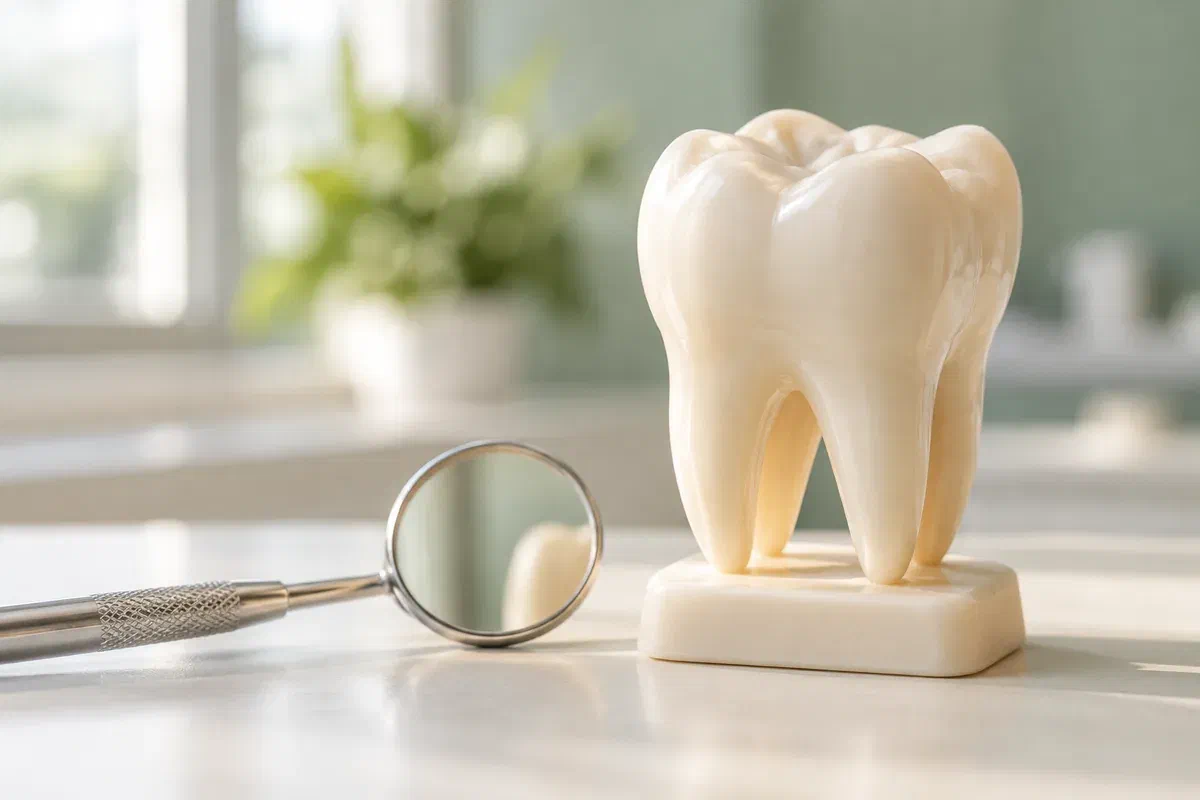
Illustrative molar teaching model and mirror representing a dental assessment
What you might notice

Signs worth passing on

Neither of you needs to know the diagnosis. Share the most worrying thing first, then how long it has been going on, how it has changed and whether there was recent dental treatment or an injury.

Not eating, not sleeping, or constant discomfort

Ask them whether pain comes on its own or with chewing, cold or hot food, and how long it lasts. Has it been getting worse? Note any medicine they have taken and whether it helped. Encourage them to stop testing the tooth by biting on it. If they find it hard to describe, notice for yourself when they wince, what they avoid eating and whether nights are worse.

A swollen face, fever, or trouble opening the mouth

Report these as soon as the call starts, and say whether the swelling is spreading or they seem unwell. These details can change the urgency and where care should happen. Don’t be reassured if the toothache eases while the swelling keeps increasing.

Pain following a fall, sport, a filling or an extraction

Give the date and what happened, and whether they were improving before it got worse. Bring any written instructions and the name of the dentist or clinic involved. That helps the team tell expected recovery from a problem needing review.

Call 911 if they are struggling to breathe or swallow, swelling is spreading fast toward the throat or eyes, or bleeding won’t stop. Jaw pain with chest discomfort, shortness of breath, sweating, nausea or faintness may be a heart attack, particularly in an older relative, and must be treated as an emergency.

Helping them decide

Two sets of ears in the room can help

A person in pain often agrees to the first suggestion just to make it stop. If you come along, you can help ask what the dentist found, what supports that conclusion, and whether more tests or another opinion make sense. That matters because treating the wrong tooth leaves the pain where it was.

You can also help keep track of what is happening today versus what is planned for later. A first visit might settle the problem while the full treatment follows, or a lasting procedure may be possible at once. Note what was done, what remains, and what to watch for if things don’t improve.

An explanation everyone can follow

The dentist combines the history, the exam and appropriate tests. Mention if the pain seems to move or involves several teeth. If the cause is still uncertain, it should be said clearly, with a plan to investigate further.

Options talked through together

Ask what each choice involves, how it deals with the problem and what it cannot do. Discuss keeping the tooth where that is reasonable, and the effects of removing it. Being in pain doesn’t take away anyone’s right to ask questions before consenting.

Instructions someone else can keep

Find out how recovery should go, any short-term limits, and who to phone if symptoms change or a new problem appears. Ask whether another visit is already arranged or a specialist will be involved. A written copy is useful for whoever is helping at home, especially if different family members share the job of checking in.

What the visit involves

Safety, then diagnosis, then a decision

Bring a list of their health conditions, allergies, any pregnancy and every medicine, including vitamins and pharmacy products. It helps the dentist assess safely and give suitable pain advice.

  1. First, a conversation about warning signs

    You or the patient describe how it started, what triggers it and what else is happening. The team considers whether a dental appointment fits or medical care is needed first. If they get worse before the visit, call back rather than waiting.

  2. Next, a careful examination

    The dentist may test teeth and take suitable images to locate the source. Mention recent dental work and any pain in the face, ear or head. Ask what the results show, and what they don’t, before settling on one tooth as the culprit.

  3. Then, the treatment conversation

    Recommendations depend on the diagnosis, the tooth’s condition and overall health. Ask about the aim, the main risks and what can be done at this appointment. If medicine is suggested, ask how it fits with addressing the cause.

  4. Finally, a plan for follow-up

    Check whether treatment is finished or continues, and get instructions for any temporary repair. Clarify how medicines should be taken. Know who to call if pain becomes hard to manage, swelling develops or symptoms change worryingly.

Caring for them at home

Keep them comfortable, and keep watching

What to do next depends on the diagnosis and any treatment given. If they are still waiting to be seen, a pharmacist or dentist can suggest short-term relief that suits their health and medicines.

Help manage medicines carefully

Follow the label or the dentist’s directions, and check before combining products, as two may contain the same ingredient. Avoid extra doses, never share a prescription between family members, and don’t place aspirin against a tooth or gum.

Discourage home fixes

Nobody should pierce a swelling, file a tooth or try to drain an infection at home. Offer foods and cleaning methods in line with the advice given, and gently discourage repeated biting to test it. Call if eating or drinking has become difficult.

Make sure the follow-up happens

Let the dentist know how symptoms have changed, and help keep the next appointment. Less pain does not mean decay, a damaged tooth or another cause has gone. Check with the team before cancelling care because they feel better.

Treatment choices

Severe pain is a reason to investigate, not a verdict on the tooth

Ask why a particular option suits the diagnosis and how it affects that tooth over the long term. The choice depends on its condition, the alternatives and what care may follow.

If restorative care fits the findings

Repairing or adjusting a specific problem

A broken filling or another treatable fault might be fixed with a repair or bite adjustment. Ask whether the result is temporary or permanent and how to protect the tooth. A visible break should still be considered against the full pain history.

If the nerve or remaining tooth decides it

Root canal treatment or taking the tooth out

Either may be discussed depending on the diagnosis. Ask whether the tooth can be rebuilt, what that would involve and the consequences of each route. Intense pain doesn’t mean the tooth is unsaveable, nor that a particular treatment is automatic.

If the source needs more investigation

Further testing or a specialist

Pain that is hard to place or doesn’t match what is seen may need more evaluation. A referral can address a specific question or complex treatment. Ask what the interim plan is, and avoid permanent work on a tooth without a clear reason.

Patient information: American Dental Association — treating dental causes rather than routinely prescribing antibiotics

Brampton questions from caregivers

Questions to ask on their behalf

Call about severe or worsening pain so urgency and availability can be discussed. These answers are general; any treatment depends on examining the person and the findings.

(905) 876-4488
Can I call to book an urgent visit for my adult parent?
Yes, you can call and describe what you have noticed. The dentist will speak with your parent directly about their symptoms and consent to treatment, so it helps if they come with you or can join the conversation.
My teenager says it’s fine but won’t chew on one side. Should I worry?
Avoiding one side, waking at night or swelling are worth taking seriously even if they downplay it. Call to describe what you are seeing. The dentist can examine the area and talk through what they find.
Does an older relative’s jaw pain always mean a dental problem?
No. Jaw pain can have several causes, and with chest discomfort, breathlessness, sweating or nausea it may signal a heart attack. Call 911 in that case. Not every heart attack causes chest pain, so take other symptoms seriously.
Their pain went away. Do they still need to be examined?
Usually it is worth discussing first. Pain can fade while the underlying problem continues. Mention any other change, such as swelling or how they feel generally, and keep the planned visit unless the dentist says otherwise.
Can I give them extra pain medicine if they’re really struggling?
No. Stay within the label or the clinician’s directions. Extra doses can be dangerous, especially alongside other medicines. Ask a pharmacist for advice, and contact an urgent dental provider if pain remains severe.
Will they automatically be prescribed antibiotics?
Not automatically. Many painful dental problems are treated by addressing the tooth or gums directly. An antibiotic may be appropriate in some cases, depending on the diagnosis, spread of infection and their health.
Bringing someone from Brampton

Let’s talk before you set out

Please call (905) 876-4488 before travelling to Milton Dental Clinic, and tell us about the pain, any swelling and any recent treatment or injury. Should we be unavailable when care is needed right away, look for another emergency dental provider.

The online form and email are only for non-urgent matters. For a medical emergency, phone 911.

Visit Milton Dental Clinic
Unit 1, 342 Bronte St. S, Milton, ON L9T 5B7
Get directions Clinic hours
Monday–Thursday
11am–7pm
Friday–Sunday
By appointment only

Areas we serve

  • Milton
  • Oakville
  • Mississauga
  • Georgetown
  • Halton Hills
  • Acton
  • Campbellville
  • Brampton
  • Burlington
  • Puslinch
  • Rockwood
  • Erin
  • Caledon
  • Etobicoke
  • Old Milton
  • Bronte Meadows
  • Timberlea
  • Dorset Park
  • Dempsey
  • Clarke
  • Beaty
  • Coates
  • Harrison
  • Scott
  • Willmott
  • Ford
  • Bowes
  • Cobden
  • Walker
  • Mountain View
  • Milton Heights
  • Hawthorne Village
  • Valley View
  • Fallingbrook
  • Nassagaweya
  • Trafalgar
  • Esquesing
  • Nelson
  • Brookville
  • Moffat
  • Glen Williams
  • Norval
  • Limehouse
  • Stewarttown
  • Ashgrove
  • Hornby
  • Silver Creek
  • Speyside
  • Scotch Block
  • North Oakville
  • River Oaks
  • Glen Abbey
  • West Oak Trails
  • Palermo
  • Bronte Creek
  • College Park
  • Joshua Creek
  • Uptown Core
  • Preserve
  • Iroquois Ridge
  • Lisgar
  • Meadowvale
  • Meadowvale Village
  • Churchill Meadows
  • Erin Mills
  • Central Erin Mills
  • Streetsville
  • East Credit
  • Creditview
  • Heartland
  • Sheridan
  • Mount Pleasant
  • Credit Valley
  • Huttonville
  • Churchville
  • Springbrook
  • Northwest Brampton
  • Bram West
  • Fletcher's Meadow
  • Fletcher's Creek South
  • Alton Village
  • Orchard
  • Millcroft
  • Headon Forest
  • Tansley
  • Brant Hills
  • Tyandaga
  • Kilbride
  • Lowville
  • Aberfoyle
  • Morriston
  • Arkell
  • Hillsburgh
  • Freelton
  • Carlisle
  • Waterdown
  • Flamborough
  • Mountsberg

How can we help?

Milton Dental Clinic

Have a question about your smile? Choose the option that works best for you.

For urgent dental concerns, please call.
Messages are reviewed during clinic hours.