

Illustrative patient describing a painful dental concern to a clinician
Specialized Care

Severe Dental Pain Treatment in Etobicoke

Severe tooth pain and a long drive are a poor mix, so a phone call comes before the trip. Ring (905) 876-4488 to describe what is happening and talk about timing. Spreading swelling, difficulty breathing or swallowing, or feeling very unwell needs the nearest emergency care.

Etobicoke · deciding where to go

Closer care, or the dentist you know?

From the west end of Toronto, getting to us is a real trip. When a tooth is throbbing, that changes the decision. Some problems are fine to bring to a familiar dentist later the same day or the next; others should be seen wherever help is available soonest. Sorting out which is which is the first job, and it starts with a conversation, not the car keys.

The pain itself can come from a cracked tooth, deep decay, an inflamed or infected nerve, a gum infection, a slow recovery after recent work, or a source outside the mouth. None of that can be confirmed over the phone. What a call can do is flag warning signs and help you weigh the journey against the urgency, so you don’t drive a long way only to need different care.

Phone (905) 876-4488 before leaving Etobicoke and describe what you are feeling. Appointment timing depends on your symptoms and on what is open. If we cannot be reached, or the issue cannot wait for the journey, go to another available emergency dental provider closer to home. Email and online requests are not suitable for urgent care.

Plan a non-urgent follow-up visit
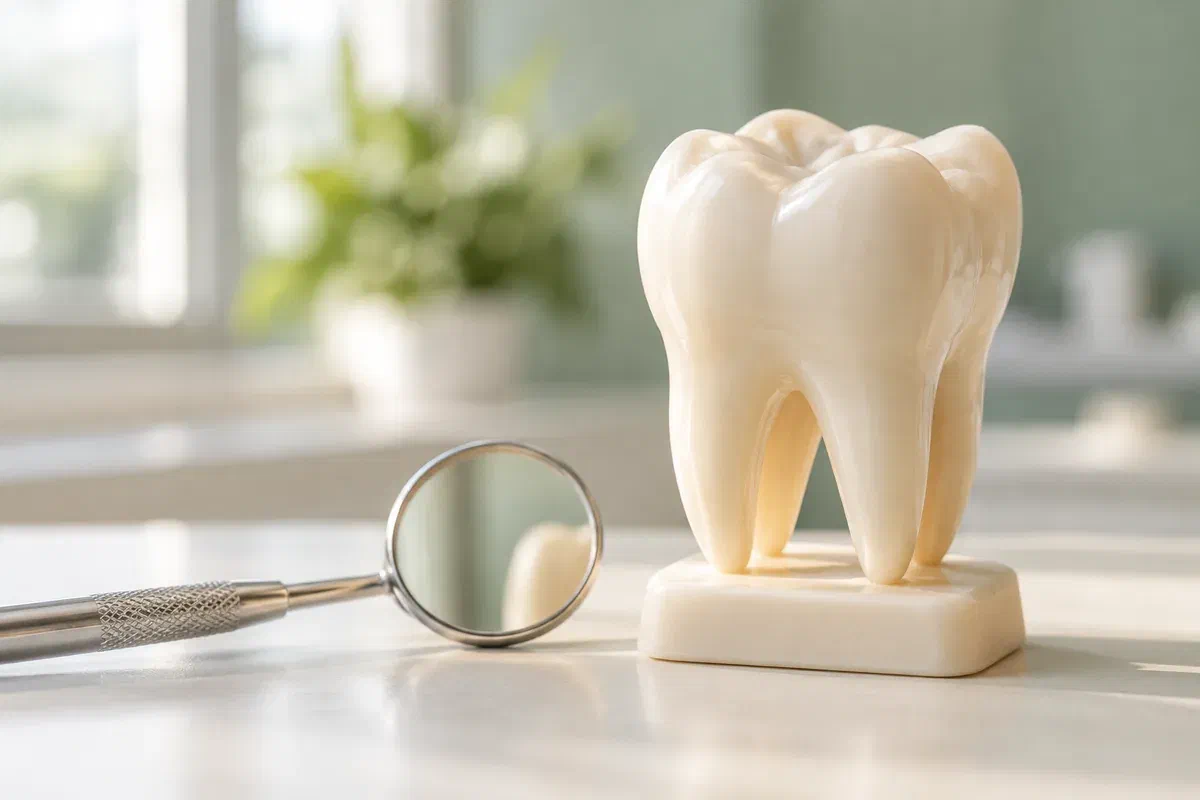
Illustrative molar teaching model and mirror representing a dental assessment
What decides the urgency

The details that shape where you should be seen

We won’t ask you to name the tooth. Tell us the symptom that concerns you most, then how and when it started, how it has developed and whether there has been recent dental work or an injury.

Relentless pain, sleepless nights, or no way to eat

Describe whether the pain starts unprompted or after biting, cold or heat, and how long it lasts each time. Has the pattern changed over hours or days? Let us know what you have used for relief and whether it made a difference. Avoid repeatedly pressing on the tooth to test it, especially before a long drive.

Swelling, fever, or a jaw that won’t open fully

Say so straight away, and tell us whether the swelling is spreading or you feel ill. These signs can mean you should be seen sooner and possibly somewhere nearer to you. Pain easing while swelling grows is a warning, not a good sign, and it is worth calling about before setting out.

A problem after recent treatment or an accident

Share the date and type of procedure or injury and whether you were improving before this started. Bring written aftercare notes and the name of whoever treated you, particularly if it was a different clinic. That helps decide between expected healing and a complication.

Call 911 or go to the nearest emergency department for trouble breathing or swallowing, swelling spreading quickly toward the throat or eyes, or bleeding that won’t stop. Jaw pain that comes with chest pressure, breathlessness, sweating, nausea or light-headedness may be a heart attack and should never wait for a dental appointment across town.

Making the trip count

Leave with a diagnosis and a plan, not just a pocketful of painkillers

When you travel for care, you want each appointment to move things forward. Ask the dentist what the examination shows, which findings support it, and whether further tests or another opinion are needed. Clarity here saves trips, because treating a tooth that isn’t the source won’t solve the pain and may mean coming back.

Ask, too, how much can be done in this visit and what will need another. Sometimes the first appointment settles things and the definitive work follows; sometimes a suitable long-term treatment can be completed at once. Knowing that lets you plan time off, arrange a driver if needed and group future visits sensibly.

A source you understand

Your history, the examination and appropriate tests are considered together. Tell the dentist if the pain wanders or several teeth hurt. If they cannot be sure yet, they should tell you plainly and explain what comes next, rather than recommending something that doesn’t fit.

Options, with the travel factored in

For each realistic path, ask what it involves, how many visits it is likely to need and what it can’t do. Discuss keeping the tooth where reasonable, and what removing it would mean. Pain and a long drive home shouldn’t rush you past your questions.

A plan for when you’re back home

Know what recovery should look like, any temporary limits and who to reach if symptoms shift. Ask whether follow-up is booked and whether a specialist might be closer to you. Take written instructions, since a long journey after treatment can blur the details.

From the phone call to the drive home

Urgency is judged first; treatment follows the evidence

Tell us about health conditions, pregnancy, allergies and all your medicines, including pharmacy and supplement products. These details matter for the assessment and for safe pain advice.

  1. A call to screen for urgent signs

    You describe the onset, triggers, severity and anything else you have noticed. The team considers whether a dental appointment here makes sense, or whether you need medical care or a closer urgent provider. If things worsen on the way or while waiting, stop and seek help rather than pressing on.

  2. An examination of the area and the history

    The dentist may run tests and take appropriate X-rays to locate the source. Mention recent treatment elsewhere and any pain in the face, ear or head. Ask what the results reveal and what is uncertain before concluding one tooth is the whole explanation.

  3. A discussion of first treatment and other routes

    Recommendations depend on the diagnosis, the condition of the tooth and your health. Talk through the expected benefit, the main risks and what can be done today. If medicine plays a part, its role should be explained beside the treatment of the dental cause.

  4. A follow-up plan that suits the distance

    Ask whether treatment is complete or more is planned, and get instructions for any temporary filling or new procedure. Confirm how medicines should be taken. Before leaving, know who to call, and where to go nearby, if pain becomes difficult, swelling develops or symptoms change.

Back in the west end

Know who to call, and when nearer help is the better choice

Next steps depend on the diagnosis and anything already done. If you are still waiting to be assessed, a local pharmacist or dentist can advise on short-term relief that suits your health and medicines.

Follow medicine directions closely

Use pain relievers only as labelled or advised, and check before combining two products that may share an ingredient. Severe pain doesn’t justify extra doses, someone else’s prescription, or aspirin placed against the gum.

Leave the tooth and swelling alone

Don’t lance a swelling, file a rough tooth or try to drain anything. Eat and clean as you were advised, and stop testing your bite. Let us know if eating, drinking or keeping your mouth clean has become a struggle.

Keep the planned visit, even if pain eases

Tell the dentist how things have changed and attend the follow-up. Feeling better doesn’t mean decay, a crack or another cause has resolved. Ask before cancelling further care, even if the drive is the reason you are tempted.

Once the dentist knows the cause

Pain level alone won’t tell you whether a tooth can stay

Ask why the proposed option suits your diagnosis, how many visits it may take and how the tooth is likely to do down the road. The decision should weigh its condition, the alternatives and any further care.

If a local, fixable fault is found

A repair or adjustment

A cracked filling, a high spot or another treatable issue might be managed with a repair or bite adjustment. Ask whether the result is temporary or permanent, and what protection the tooth needs. Even a clear defect should be checked against your symptoms before it is blamed.

If the nerve or remaining structure guides it

Root canal treatment or extraction

Depending on findings, either may be raised. Ask whether the tooth is restorable, what further visits would be needed and the implications of each choice. Severe pain doesn’t automatically rule out saving a tooth, and it doesn’t make either procedure mandatory.

If the source is unclear or care is complex

Further investigation or referral

Pain that won’t localize, or that doesn’t match the findings, may need more assessment. A specialist can answer a particular question or provide complex treatment, possibly nearer to you. Ask about the interim plan, and avoid irreversible work without a clear reason.

Patient information: American Dental Association — treating dental causes rather than routinely prescribing antibiotics

Questions about travelling with tooth pain

Practical answers before a long drive

Call about severe or worsening symptoms so we can talk through urgency and availability. These answers are an overview; your treatment depends on an examination and its findings.

(905) 876-4488
Should I drive out from Etobicoke or find someone closer for urgent pain?
It depends on your symptoms and on when you can be seen. Call first and describe what is happening. If you have significant swelling, fever or symptoms that cannot wait, seeing an available emergency dental provider nearer to you may be the better choice.
Is it safe to drive myself while in severe dental pain?
Pain, tiredness and some medicines can affect your concentration. If you are unsure, arrange for someone else to drive. Ask the dentist whether any treatment or medicine given at the visit affects driving home.
Can several problems be dealt with in one longer visit?
Sometimes more can be done at once, depending on the diagnosis, your comfort and the time available. Ask what is realistic at the first visit and how later appointments could be grouped to reduce trips.
Does intense pain mean I will definitely need an extraction?
No. Pain level does not decide whether a tooth can be kept. The dentist assesses the cause and the condition of the tooth, and may discuss repair, root canal treatment or removal depending on what is found.
What if my symptoms get worse after I get home?
Call the team or, if we are unavailable and it can’t wait, contact an urgent dental provider near you. Trouble breathing or swallowing, or swelling spreading toward the eye or throat, needs 911 or the nearest emergency department.
Can I ask for antibiotics over the phone to avoid the trip?
Antibiotics are not a substitute for an assessment, and many painful dental problems need treatment of the tooth or gums instead. Whether an antibiotic is appropriate depends on the diagnosis, spread of infection and your health, which requires an examination.
Travelling from Etobicoke

One phone call can save a long, uncomfortable drive

Please call (905) 876-4488 before heading to Milton Dental Clinic, and describe the pain, any swelling and recent treatment or injury. If we can’t be reached and you need dental help now, choose another emergency dental provider, ideally one closer to you.

Our online form and email aren’t monitored for urgent care. In a medical emergency, call 911.

Visit Milton Dental Clinic
Unit 1, 342 Bronte St. S, Milton, ON L9T 5B7
Get directions Clinic hours
Monday–Thursday
11am–7pm
Friday–Sunday
By appointment only

Areas we serve

  • Milton
  • Oakville
  • Mississauga
  • Georgetown
  • Halton Hills
  • Acton
  • Campbellville
  • Brampton
  • Burlington
  • Puslinch
  • Rockwood
  • Erin
  • Caledon
  • Etobicoke
  • Old Milton
  • Bronte Meadows
  • Timberlea
  • Dorset Park
  • Dempsey
  • Clarke
  • Beaty
  • Coates
  • Harrison
  • Scott
  • Willmott
  • Ford
  • Bowes
  • Cobden
  • Walker
  • Mountain View
  • Milton Heights
  • Hawthorne Village
  • Valley View
  • Fallingbrook
  • Nassagaweya
  • Trafalgar
  • Esquesing
  • Nelson
  • Brookville
  • Moffat
  • Glen Williams
  • Norval
  • Limehouse
  • Stewarttown
  • Ashgrove
  • Hornby
  • Silver Creek
  • Speyside
  • Scotch Block
  • North Oakville
  • River Oaks
  • Glen Abbey
  • West Oak Trails
  • Palermo
  • Bronte Creek
  • College Park
  • Joshua Creek
  • Uptown Core
  • Preserve
  • Iroquois Ridge
  • Lisgar
  • Meadowvale
  • Meadowvale Village
  • Churchill Meadows
  • Erin Mills
  • Central Erin Mills
  • Streetsville
  • East Credit
  • Creditview
  • Heartland
  • Sheridan
  • Mount Pleasant
  • Credit Valley
  • Huttonville
  • Churchville
  • Springbrook
  • Northwest Brampton
  • Bram West
  • Fletcher's Meadow
  • Fletcher's Creek South
  • Alton Village
  • Orchard
  • Millcroft
  • Headon Forest
  • Tansley
  • Brant Hills
  • Tyandaga
  • Kilbride
  • Lowville
  • Aberfoyle
  • Morriston
  • Arkell
  • Hillsburgh
  • Freelton
  • Carlisle
  • Waterdown
  • Flamborough
  • Mountsberg

How can we help?

Milton Dental Clinic

Have a question about your smile? Choose the option that works best for you.

For urgent dental concerns, please call.
Messages are reviewed during clinic hours.