

Illustrative patient describing a painful dental concern to a clinician
Specialized Care

Severe Dental Pain Treatment in Milton

Tooth pain that kept you up all night needs a proper look at what is causing it. Phone (905) 876-4488 to talk through your symptoms and timing. Trouble breathing or swallowing, swelling that is spreading, or feeling very unwell calls for emergency care right away.

After a long night with a sore tooth

When the ache wins out over sleep

Plenty of people in Milton first realize a tooth is serious at 3 a.m., when lying down makes the throbbing louder and nothing seems to settle it. By morning you may be tired, hungry and unsure what to do next. How the pain felt overnight is useful information, yet it cannot tell anyone on its own which tooth is at fault or which treatment fits.

A cracked tooth, irritated or infected nerve tissue, a gum problem, or healing after recent work can all hurt intensely. Sometimes the source sits outside the teeth altogether. That is why the dentist examines first and recommends second, instead of treating the sorest spot as an automatic case for an extraction or a prescription.

Before you head over, call Milton Dental Clinic at (905) 876-4488 and explain how the night went. How soon you are seen depends on what you describe and on what times are open. If you cannot reach us and the tooth will not wait, look for another emergency dental provider. Please don’t use email or the online form to ask for an urgent spot.

Ask for a non-urgent follow-up appointment
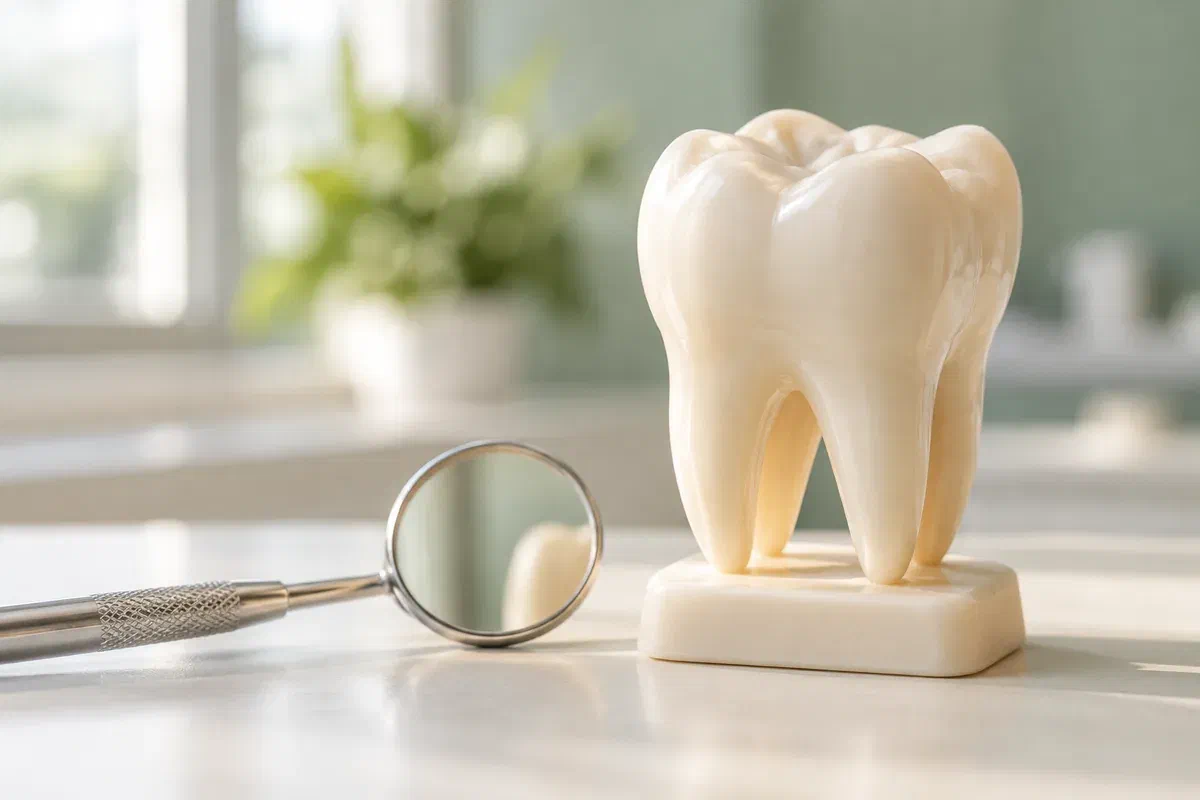
Illustrative molar teaching model and mirror representing a dental assessment
What to tell us on the phone

Three things the dentist will want to know

There is no need to name the tooth or guess the diagnosis. Lead with whatever worries you most, then fill in when it began and whether you have had dental work or a knock to the mouth lately.

Throbbing that wakes you, lasts, or stops you chewing

Say whether the pain arrives by itself or only with biting, cold or heat, and how long each episode lasts. Note any change since it began. It also helps to mention what relief you tried and how well it worked. There is no need to keep tapping or chewing on the tooth to see if it still hurts.

A puffy face, a temperature, or a jaw that will not open

Bring these up at the very start of the call, and say whether the swelling is getting bigger or you feel generally sick. They can change how quickly you need care and where. Be cautious if the toothache eases while the swelling grows; that combination can mean things are getting worse.

Pain following a filling, a pulled tooth, or a fall

Share roughly when the treatment or accident happened and whether you were improving before this flare. Bring any aftercare sheet you were given and the name of whoever did the work. The dentist has to tell ordinary healing apart from something that needs another look.

Call 911 straight away for breathing or swallowing difficulty, swelling that is spreading quickly toward the throat or eyes, or bleeding you cannot control. Jaw pain that comes with chest pressure, shortness of breath, sweating, nausea or dizziness can be a heart emergency, not a toothache.

What you should leave knowing

A clear reason for the care you agree to

When you are exhausted and sore, it is tempting to say yes to anything that promises relief. Ask the dentist what the exam points to, which findings back that up, and whether more testing or a second opinion would help. Getting the diagnosis right matters, since treating or removing a tooth may not stop pain coming from elsewhere.

It is also worth separating today’s relief from finished treatment. One appointment might calm things down for now; another might complete a suitable long-term fix. Before you go, ask what was done, what is still outstanding, and what happens if the pain does not settle the way it should.

A better sense of where the pain starts

Your history, the exam and appropriate tests are considered together. Mention it if the ache seems to wander or more than one tooth feels involved. When the source is not yet certain, a good dentist says so and keeps investigating instead of offering a treatment that does not match the evidence.

Options laid out before you decide

For each realistic choice, ask what is involved, how it deals with the problem and where it falls short. Talk about whether keeping the tooth is possible and what removing it would mean. Being in pain does not take away your right to ask questions first.

Clear next steps once the urgent part is done

Find out what recovery should look like, any short-term limits, and how to reach the team if things change. Ask whether a follow-up is booked or a specialist is needed. Having the advice in writing helps when you are worn out and the details blur.

From first call to follow-up

Urgency comes first. Treatment follows the findings.

Let us know about health conditions, pregnancy, allergies and any medicines you take, including ones bought off the shelf. It shapes the assessment and any advice about managing pain.

  1. Talk through the symptoms and screen for red flags

    You describe when it started, what sets it off, how bad it is and what else is going on. The team weighs up whether a dental visit is right or whether you need medical help first. If you get worse while waiting, reach out again instead of holding on for the booked time.

  2. Look closely at the teeth, gums and past dental work

    The dentist may use tests and suitable X-rays to find the source. Mention recent treatment and any pain in the face, ear or head that seems linked. Ask what the results show, and what is still unclear, before accepting that one tooth explains everything.

  3. Weigh the first treatment against the alternatives

    What is suggested depends on the diagnosis, how sound the tooth is and your general health. Go over the expected benefit, the main risks and what can be done today. Medicine may play a part, but its role should be explained alongside care for the dental cause.

  4. Agree on follow-up and the signs that mean call sooner

    Check whether treatment is finished or more is planned. Get instructions for any temporary filling or fresh procedure, and be clear on medicines. Before leaving, know who to phone if the pain stays hard to manage, swelling appears or anything shifts in a worrying way.

The days in between

Use the advice you were given, and notice if things slip

What comes next depends on the diagnosis and anything already done. If you are still waiting to be seen, a dentist or pharmacist can suggest suitable short-term relief that fits your health and medicines.

Read labels and stick to the dose

Take pain relievers only as the package or your dentist directs, and ask before mixing them. Different brands can hide the same ingredient. Never add extra doses because the pain is bad, borrow someone’s prescription, or hold an aspirin against the gum.

Leave the sore spot alone

Do not poke at a swelling, file a rough edge or try to drain anything at home. Eat and clean in the way you were advised, and resist biting down to test the tooth. Phone the team if eating, drinking or brushing has become a struggle.

Finish the plan once you feel better

Tell the dentist how things have changed and keep your follow-up. Feeling better does not mean decay, a cracked tooth or another underlying issue has gone away. Check with the team before cancelling the rest of your care because the ache has faded.

Once the cause is known

How much it hurts doesn’t settle whether the tooth can be saved

Ask why a particular option suits the diagnosis and how it should serve the tooth over the coming years. The decision weighs the tooth’s condition, the alternatives and any care still to come.

When the exam points to a repair

Fixing or adjusting a local problem

A broken filling or another treatable issue might be handled with a repair or an adjustment to the bite. Ask whether the work is temporary or final and how the tooth should be protected afterward. Even an obvious chip needs to be checked against your symptoms before anyone decides it is the whole story.

When the nerve or remaining tooth guides the choice

Root canal treatment or extraction where appropriate

Depending on what is found, the dentist may talk about a root canal or removing the tooth. Ask whether it can be restored, what would be needed afterward and what each path means for you. Severe pain on its own does not prove a tooth is lost, or that either treatment is required.

When the source is unclear or the case is complex

More testing or a referral

Pain that is hard to pin down, or that does not match anything seen, may need further assessment. A specialist can answer a particular question or take on complex treatment. Ask what the plan is until then, and avoid permanent work on a tooth without a clear reason.

Patient information: American Dental Association — treating dental causes rather than routinely prescribing antibiotics

Milton questions about urgent tooth pain

Ask us anything, even before you know what is wrong

Phone about severe or worsening pain so we can talk about urgency and timing. These answers give a general picture; your own treatment depends on an examination and what it shows.

(905) 876-4488
Why does my toothache feel worse when I lie down at night?
Many people notice that throbbing increases when they lie flat, and there are fewer distractions at night. A change like this is worth reporting, but it does not identify the cause on its own. Describe the pattern when you call, along with any swelling or fever.
Is it worth calling first thing in the morning, or should I wait a few days?
Severe pain is a good reason to call promptly rather than wait to see whether it passes. Phoning lets the team ask about warning signs and talk about how soon you should be seen. If symptoms that affect breathing or swallowing appear, call 911 instead.
Could a sinus or jaw problem be causing what feels like tooth pain?
It can. Pain is sometimes felt in a tooth when the trouble lies nearby, which is why the dentist examines and tests before treating. Mention congestion, a recent cold, jaw clenching or ear pain so they can be considered alongside the teeth.
If the pain disappears overnight, can I skip my appointment?
Check with the dentist first. Pain can come and go while the underlying problem remains. Mention whether anything else has changed, such as swelling or how you feel overall, and keep the planned visit unless the team suggests otherwise.
Will I be given antibiotics for a bad toothache?
Not necessarily. Many painful dental problems are managed by treating the tooth or gums directly, and antibiotics are not routinely needed. Whether one is appropriate depends on the diagnosis, any spreading infection and your health. Ask what the proposed treatment is meant to fix.
Is it safe to keep taking painkillers until I can be seen?
Only within the label directions or your clinician’s advice. Taking more than recommended can be harmful and will not fix the cause. Ask a pharmacist about what suits your health and other medicines, and if pain stays severe, contact an urgent dental provider.
Severe tooth pain in Milton

Tell us how it is now, and we will talk about what comes next

Call (905) 876-4488 before coming in to Milton Dental Clinic. Let us know about the pain, any swelling and recent treatment or injuries. If we are unavailable and you need dental care right away, contact another emergency dental provider.

Use the online form and email only for non-urgent questions. For a medical emergency, call 911.

Visit Milton Dental Clinic
Unit 1, 342 Bronte St. S, Milton, ON L9T 5B7
Get directions Clinic hours
Monday–Thursday
11am–7pm
Friday–Sunday
By appointment only

Areas we serve

  • Milton
  • Oakville
  • Mississauga
  • Georgetown
  • Halton Hills
  • Acton
  • Campbellville
  • Brampton
  • Burlington
  • Puslinch
  • Rockwood
  • Erin
  • Caledon
  • Etobicoke
  • Old Milton
  • Bronte Meadows
  • Timberlea
  • Dorset Park
  • Dempsey
  • Clarke
  • Beaty
  • Coates
  • Harrison
  • Scott
  • Willmott
  • Ford
  • Bowes
  • Cobden
  • Walker
  • Mountain View
  • Milton Heights
  • Hawthorne Village
  • Valley View
  • Fallingbrook
  • Nassagaweya
  • Trafalgar
  • Esquesing
  • Nelson
  • Brookville
  • Moffat
  • Glen Williams
  • Norval
  • Limehouse
  • Stewarttown
  • Ashgrove
  • Hornby
  • Silver Creek
  • Speyside
  • Scotch Block
  • North Oakville
  • River Oaks
  • Glen Abbey
  • West Oak Trails
  • Palermo
  • Bronte Creek
  • College Park
  • Joshua Creek
  • Uptown Core
  • Preserve
  • Iroquois Ridge
  • Lisgar
  • Meadowvale
  • Meadowvale Village
  • Churchill Meadows
  • Erin Mills
  • Central Erin Mills
  • Streetsville
  • East Credit
  • Creditview
  • Heartland
  • Sheridan
  • Mount Pleasant
  • Credit Valley
  • Huttonville
  • Churchville
  • Springbrook
  • Northwest Brampton
  • Bram West
  • Fletcher's Meadow
  • Fletcher's Creek South
  • Alton Village
  • Orchard
  • Millcroft
  • Headon Forest
  • Tansley
  • Brant Hills
  • Tyandaga
  • Kilbride
  • Lowville
  • Aberfoyle
  • Morriston
  • Arkell
  • Hillsburgh
  • Freelton
  • Carlisle
  • Waterdown
  • Flamborough
  • Mountsberg

How can we help?

Milton Dental Clinic

Have a question about your smile? Choose the option that works best for you.

For urgent dental concerns, please call.
Messages are reviewed during clinic hours.