

Illustrative patient describing a painful dental concern to a clinician
Specialized Care

Severe Dental Pain Treatment in Oakville

Intense pain around the teeth is sometimes hard to place, and finding its source comes before any treatment. Phone (905) 876-4488 to describe it and ask about timing. Swelling that spreads, trouble swallowing or breathing, or feeling very ill needs emergency help immediately.

Oakville · pain you can’t quite point to

Is it a tooth, your ear, or something else?

Some of the worst dental pain is also the vaguest. It radiates along the upper jaw, settles behind the eye, or seems to come from three teeth at once. You might hold a cold drink against one side to find the culprit and only confuse yourself further. That uncertainty is common, and it is exactly why an examination matters more than guesswork.

Inflamed or infected nerve tissue, a fractured tooth, gum infection, food packed between teeth, a sinus flare-up, jaw muscle strain, or healing after recent dental work can all feel like an unbearable toothache. Pain also travels, so the spot that hurts is not always where the problem lives. Treating the most tender tooth by default, with removal or a prescription, can miss the real cause.

If you are coming from Oakville, phone (905) 876-4488 before setting out so the team can ask about your symptoms. When you can be seen depends on what you report and the appointments available. If no one answers and the pain truly cannot wait, find another emergency dental provider. Please do not rely on email or online booking for anything urgent.

Arrange a non-urgent follow-up
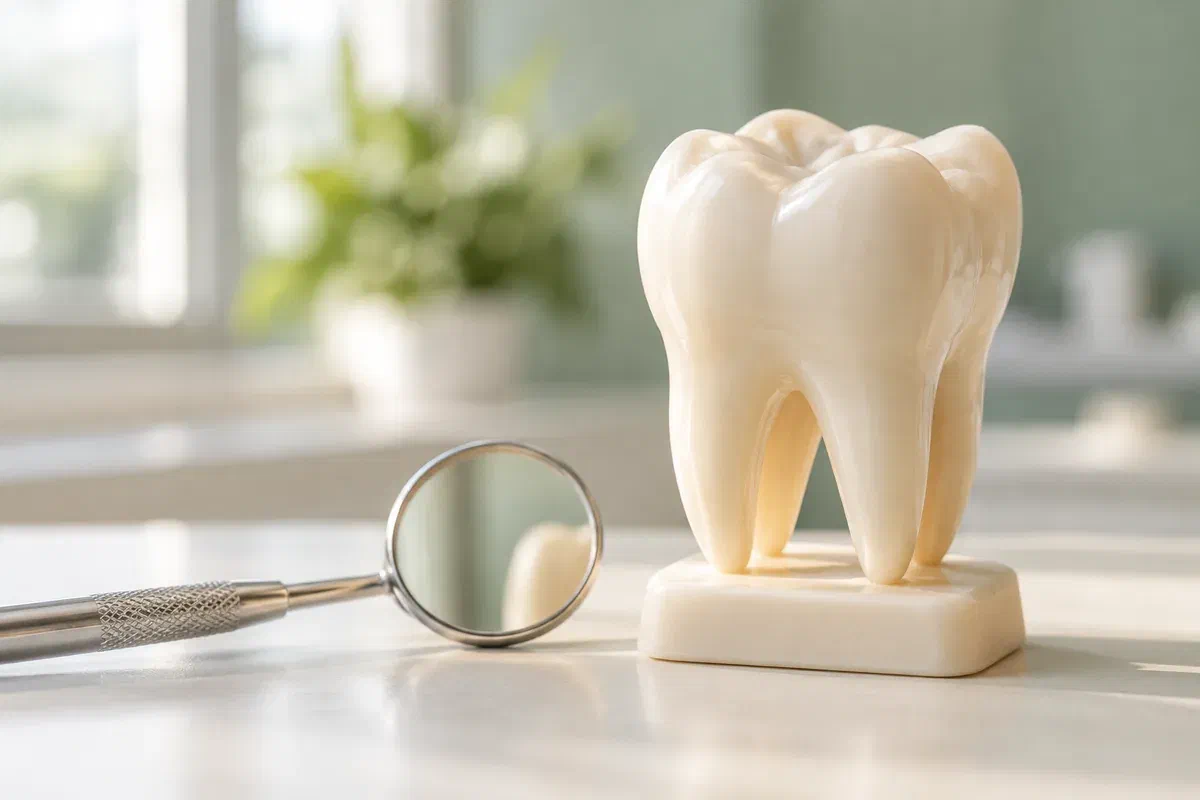
Illustrative molar teaching model and mirror representing a dental assessment
Describing pain that moves

Where, when and what else

Nobody expects you to name the tooth. Begin with the symptom that frightens you most, then describe how it started, what seems to set it off, and any recent dental work or blow to the face.

Constant, night-time or chewing-related pain

Does it start on its own, or only when you bite, sip something cold or drink something hot? How long does each wave last, and is it spreading or shifting? Mention any medicine you took and how much it helped. Please don’t keep prodding the area to work out which tooth it is.

Facial swelling, fever, or a jaw that won’t open

Raise these first, and say whether the swelling is getting larger or you feel unwell overall. They can change both how soon you need care and where it should happen. If the toothache fades while your face keeps puffing up, take that seriously rather than feeling relieved.

Pain since an injury, a filling or an extraction

Give the date and what was done, and say whether you were getting better before it took a turn. Bring the instructions you were given and the name of the clinic involved. That helps separate expected healing from a complication that needs attention.

Call 911 for trouble breathing or swallowing, rapidly spreading swelling that reaches toward the eye or neck, or bleeding that won’t stop with pressure. Jaw or face pain that comes with chest discomfort, shortness of breath, sweating, nausea or faintness may be a heart emergency rather than a dental one.

The value of a careful assessment

Knowing the source changes what treatment makes sense

Diffuse pain invites quick fixes, and a quick fix aimed at the wrong tooth can leave you worse off: a healthy tooth treated, the real problem untouched. So ask the dentist which findings point where, how confident they are, and whether another test or a second opinion could narrow it down.

Once the source is clearer, there is a difference between calming the pain now and finishing the job. You may have a first step today and the definitive treatment later, or the two may happen together. Ask what has been done, what is left, and what the plan is if things don’t ease as expected.

An honest account of what is known

Your description, the examination and suitable tests are put side by side. Tell the dentist if the pain jumps between teeth or seems to come from the jaw or ear. If the source is still uncertain, you should hear that plainly, along with how it will be investigated.

Options you understand before saying yes

For each reasonable path, ask what it involves, how it targets the cause and what its limits are. Talk about whether the tooth can stay and what losing it would change. Pain should not rush you past the questions that matter.

Direction for the days that follow

Ask how recovery normally goes, whether there are temporary restrictions, and who to call if symptoms shift. Check whether a follow-up is booked or a referral is coming. Written instructions are worth having when a sore, tired mind struggles to hold on to details.

How the visit unfolds

Four steps from first call to a plan

Mention your health conditions, any pregnancy, allergies and everything you take, including pharmacy products bought without a prescription. Those details affect the assessment and what pain advice is safe.

  1. Screening the symptoms for anything urgent

    The team asks when it started, what triggers it, how severe it is and what else you are experiencing. They consider whether a dental visit is appropriate or whether medical care needs to come first. If you deteriorate before your appointment, call back instead of waiting.

  2. Testing teeth, gums and nearby structures

    The dentist may check several teeth, not just the sore one, and take appropriate X-rays. Describe any ear, sinus or jaw symptoms and recent dental work. Ask what the results show and what they don’t, especially if the pain has been hard to locate.

  3. Discussing a first treatment and the alternatives

    Any recommendation follows from the diagnosis, the state of the tooth and your general health. Review its purpose, the key risks and what can be accomplished today. Where medicine helps, its role should be explained alongside treating the underlying dental problem.

  4. Agreeing on follow-up and when to call early

    Find out whether treatment is complete or ongoing, and get instructions for any temporary filling or new procedure. Confirm how to use any medicines. Leave knowing who to contact if the pain becomes difficult again, swelling appears or something feels off.

While you wait or recover

Stay comfortable without hiding a warning sign

Your next steps depend on what was found and what has already been done. If you have not yet been assessed, a dentist or pharmacist can suggest short-term relief that suits your health and current medicines.

Know what each medicine contains

Follow the label or your dentist’s instructions, and check before using two products together, as they may share an ingredient. Don’t go beyond the stated dose because the pain is fierce, take another person’s prescription, or rest aspirin on the gum.

No home remedies on the tooth itself

Never lance a swelling, sand down a sharp edge or attempt to drain an infection. Choose foods and cleaning methods that match the advice you received, and stop chewing on the tooth to test it. Call if eating, drinking or brushing has become hard.

Return for the rest of the plan

Let the dentist know how the pain has changed and attend the planned review. Feeling better does not show that decay, a fracture or another underlying problem is gone. Check with the team before cancelling the next step because the ache has quietened.

Matching treatment to the diagnosis

Treatment depends on the cause, not on how loud the pain is

Ask why a particular option fits what was found and what the tooth’s outlook is afterward. The choice should reflect the tooth’s condition, the realistic alternatives and any care still to come.

When a specific local fault is found

A repair or bite adjustment

A cracked filling, a high spot on the bite or another treatable issue may respond to a repair or adjustment. Ask whether it is a temporary step or a lasting one, and what the tooth needs to stay protected. Even a clear defect should be checked against your pain history.

When the nerve or remaining tooth is the deciding factor

Root canal treatment or removal

Depending on the findings, a root canal or extraction may be discussed. Ask whether the tooth can be restored, what further work would follow and what each option means for you. A very painful tooth is not automatically a lost one, and neither treatment is a given.

When the source remains unclear

Further assessment or a specialist

Pain that will not localize, or that doesn’t fit the dental findings, may need more investigation, sometimes with a referral. Ask what the interim plan is and how urgent the next step is. Avoid irreversible work on a tooth that has no clear reason to be treated.

Patient information: American Dental Association — treating dental causes rather than routinely prescribing antibiotics

Questions we hear from Oakville callers

Unsure what’s wrong? That’s a fine place to start.

Call about severe or worsening symptoms so we can discuss urgency and timing. These answers are an introduction; your own care depends on an examination and its findings.

(905) 876-4488
Can a sinus infection make my upper teeth ache?
It can. The roots of upper back teeth sit close to the sinuses, so congestion can be felt as tooth pain. A dental problem can feel similar, though. Mention any cold, congestion or pressure when you call, and the dentist will examine the teeth to help tell them apart.
My ear hurts along with my tooth. Which one should I get checked?
Pain can be shared between the ear, jaw and teeth, so it is reasonable to start with whichever symptoms are strongest. Describe both when you call. If the dentist finds no dental cause, they may suggest seeing your doctor.
How do you work out which tooth is actually the problem?
The dentist combines your description with an examination, tests on the teeth and appropriate X-rays. Several teeth may be checked. If the source remains uncertain, it is better to investigate further than to treat a tooth without a clear reason.
Is a sudden drop in pain a sign the tooth has healed?
Not by itself. Pain can ease while the cause remains. Tell the dentist about the change and whether swelling or how you feel has shifted. Keep your appointment unless the team advises otherwise.
Why isn’t an antibiotic always the first step for a painful tooth?
Many causes of dental pain need treatment of the tooth or gums, and antibiotics alone do not fix them. They may be appropriate in some situations, depending on the diagnosis, spread of infection and your health. Ask what the proposed care is meant to address.
Should I go to hospital if my face is swelling quickly?
Swelling that spreads rapidly, especially toward the eye or neck, or that comes with trouble breathing or swallowing, needs emergency care. Call 911 or go to the nearest emergency department rather than waiting for a dental appointment.
Coming from Oakville

Call first, so we can talk through what you are feeling

Phone (905) 876-4488 before you make the trip to Milton Dental Clinic. Let us know where it hurts, whether there is swelling and any recent dental work or injury. If we cannot be reached and you need immediate dental care, contact another emergency dental provider.

Email and online forms are for non-urgent matters only. For a medical emergency, call 911.

Visit Milton Dental Clinic
Unit 1, 342 Bronte St. S, Milton, ON L9T 5B7
Get directions Clinic hours
Monday–Thursday
11am–7pm
Friday–Sunday
By appointment only

Areas we serve

  • Milton
  • Oakville
  • Mississauga
  • Georgetown
  • Halton Hills
  • Acton
  • Campbellville
  • Brampton
  • Burlington
  • Puslinch
  • Rockwood
  • Erin
  • Caledon
  • Etobicoke
  • Old Milton
  • Bronte Meadows
  • Timberlea
  • Dorset Park
  • Dempsey
  • Clarke
  • Beaty
  • Coates
  • Harrison
  • Scott
  • Willmott
  • Ford
  • Bowes
  • Cobden
  • Walker
  • Mountain View
  • Milton Heights
  • Hawthorne Village
  • Valley View
  • Fallingbrook
  • Nassagaweya
  • Trafalgar
  • Esquesing
  • Nelson
  • Brookville
  • Moffat
  • Glen Williams
  • Norval
  • Limehouse
  • Stewarttown
  • Ashgrove
  • Hornby
  • Silver Creek
  • Speyside
  • Scotch Block
  • North Oakville
  • River Oaks
  • Glen Abbey
  • West Oak Trails
  • Palermo
  • Bronte Creek
  • College Park
  • Joshua Creek
  • Uptown Core
  • Preserve
  • Iroquois Ridge
  • Lisgar
  • Meadowvale
  • Meadowvale Village
  • Churchill Meadows
  • Erin Mills
  • Central Erin Mills
  • Streetsville
  • East Credit
  • Creditview
  • Heartland
  • Sheridan
  • Mount Pleasant
  • Credit Valley
  • Huttonville
  • Churchville
  • Springbrook
  • Northwest Brampton
  • Bram West
  • Fletcher's Meadow
  • Fletcher's Creek South
  • Alton Village
  • Orchard
  • Millcroft
  • Headon Forest
  • Tansley
  • Brant Hills
  • Tyandaga
  • Kilbride
  • Lowville
  • Aberfoyle
  • Morriston
  • Arkell
  • Hillsburgh
  • Freelton
  • Carlisle
  • Waterdown
  • Flamborough
  • Mountsberg

How can we help?

Milton Dental Clinic

Have a question about your smile? Choose the option that works best for you.

For urgent dental concerns, please call.
Messages are reviewed during clinic hours.