
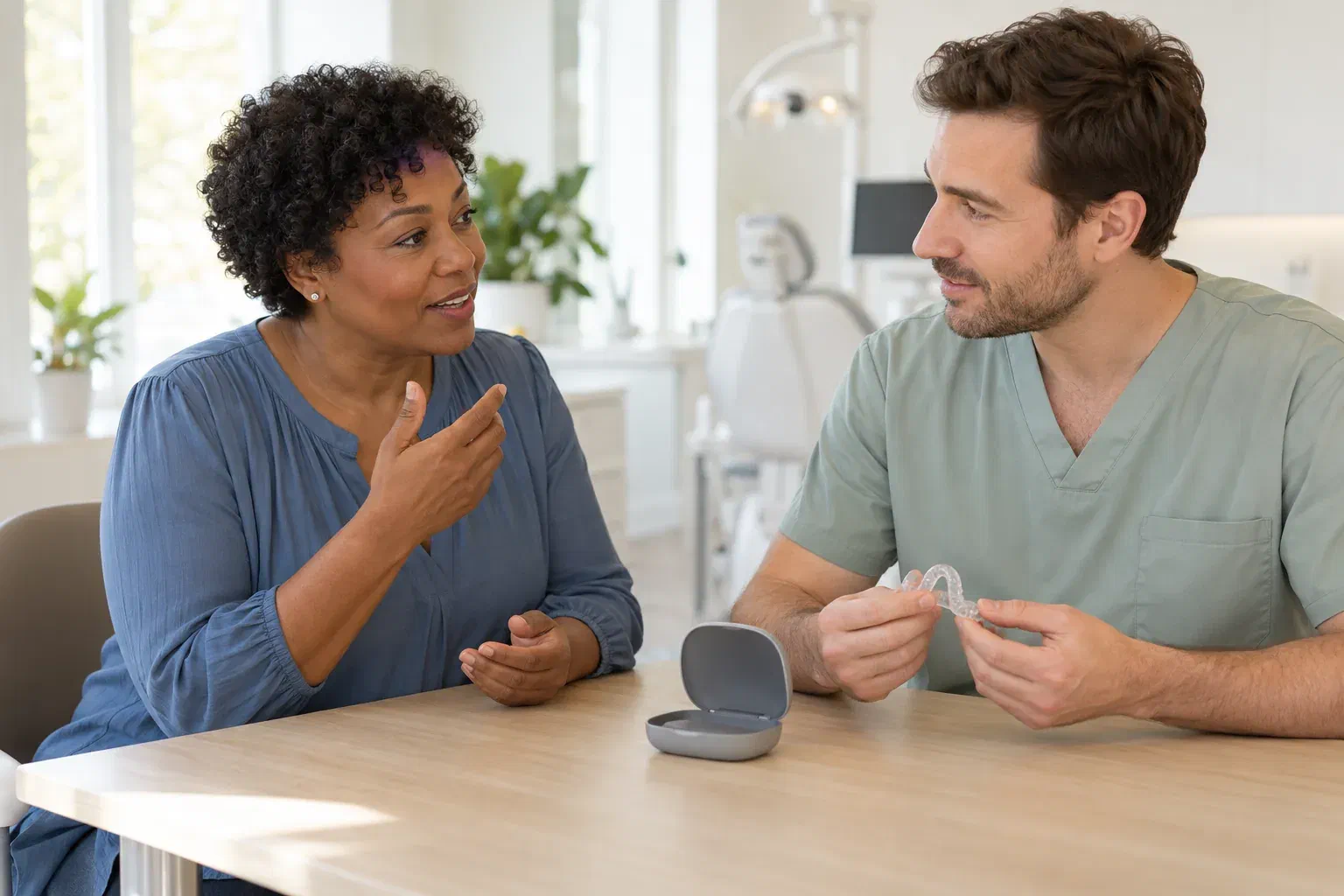
Illustrative discussion about sleep-appliance comfort and fit
Specialized Care

Sleep Appliance Adjustments in Brampton

If discomfort has you skipping nights with your sleep appliance, the device is not doing its job sitting in a drawer. From Brampton, book a review of fit, jaw comfort, and settings, and leave with a plan for any change and the follow-up it needs.

Getting back to regular wear, for Brampton households

The appliance in the bedside drawer

It starts with one night off because a spot feels raw. Then two. Soon the device lives in the nightstand more often than in your mouth. That pattern is worth taking seriously, since an appliance can only help on the nights it is worn. The useful question is why wearing it became unpleasant: an issue with how it sits, an edge rubbing your gums, or the jaw position it was set to hold.

Fixing comfort does not mean backing off treatment, and it does not mean pushing ahead either. A further-forward jaw is not automatically more effective, and a tighter appliance is not a stronger one. The setting is a balance between what your sleep physician is aiming for and what your teeth, gums, and jaw can live with. Getting comfortable again is the goal, though comfort alone will not show whether sleep apnea is controlled.

Pack the device in its case and any written instructions or adjustment notes you have. Let us know who supplied it, how often you have managed to wear it lately, and what makes it hard. From there we can talk about an assessment and whether the original provider or another qualified clinician should be part of any decision to alter the appliance.

Talk to us about wearing your appliance comfortably
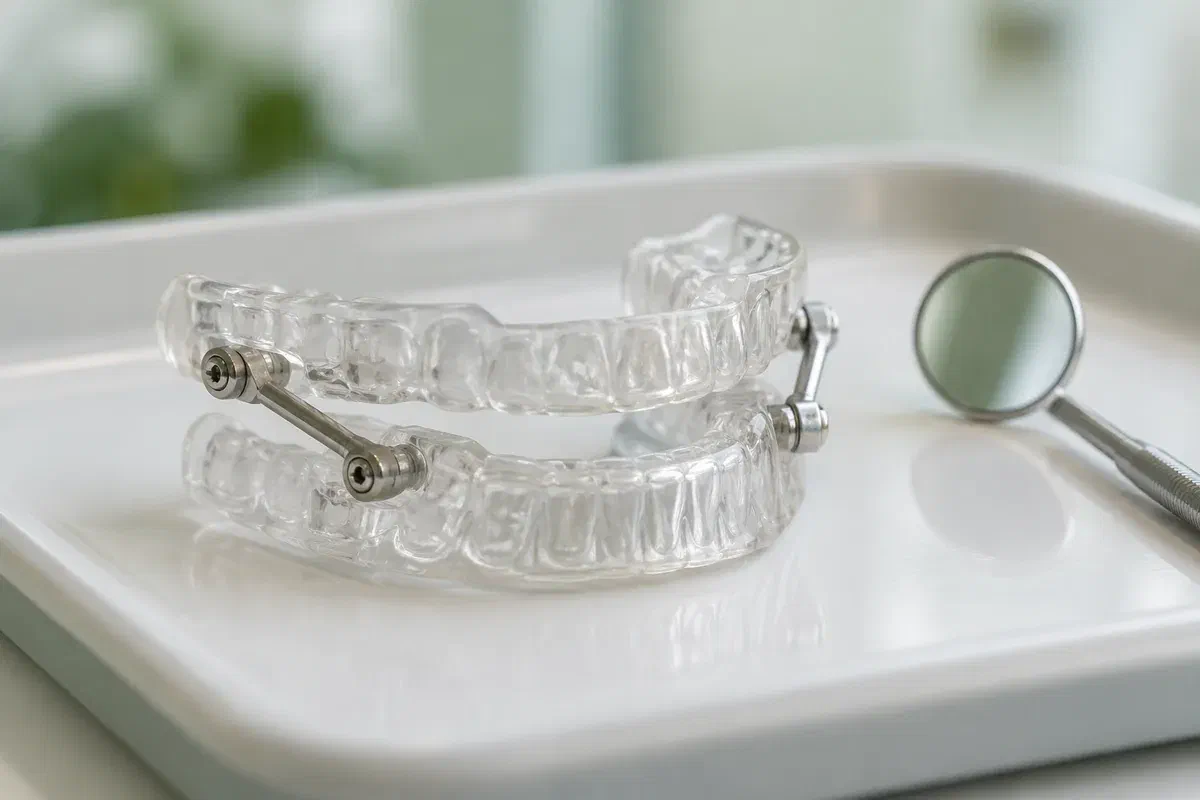
Illustrative connected oral sleep appliance beside a dental mirror
Reasons people stop wearing it

Name the thing that keeps you from putting it in.

Tell us when the trouble began and about any dental work or device changes since. It is fine to arrive without wearing it the night before; please do not force it in to show us the problem.

A raw or tender patch inside the mouth

Show where it presses and say whether the area stays sore once the device is out. New dental work nearby is important to mention. Both the contact and the tissue or tooth involved are assessed, because trimming the appliance is just one option.

Waking with an aching jaw or an odd bite

Describe whether the ache is overnight, at waking, or hangs around into the afternoon, and whether your teeth find their normal contact again. Lasting pain, locking, or a bite that will not settle should be reviewed. Advancing the device to power through discomfort is not advised.

Uncertainty about the setting after weeks off

After a break, many people are unsure where things stand. Bring your log if you kept one, and be honest about how often the appliance has been worn and how you have been sleeping. Your physician may want to know too, especially if symptoms have returned.

An appliance that is broken, has loose parts, causes significant pain, or will not seat safely should not be worn. Contact the provider promptly and ask your sleep physician what to do for treatment in the meantime.

What a review can change

A specific fix gives you a reason to wear it again.

The goal is to find the obstacle before touching the device. Is the trouble the fit, a point where it meets your gums, the jaw position, wear, or a tooth that needs its own care? Once that is clear, any adjustment has a job to do, and you can tell at follow-up whether it worked.

It is a good chance to simplify the routine as well. If part of it felt awkward or confusing, say so. Ask the clinician to show you how the mechanism works and to write down any approved change, so you have something to check against on a tired evening.

Patient information: AADSM — identifying an appropriate therapeutic appliance position

A reference point from your fitting

The clinician can look at available records and how the settings have moved since the device was made. If it came from another office, ask what is still needed. That reference point shows whether the problem is new or has been present from the start.

A remedy for the actual barrier

A sore patch, a loose device, and a stiff jaw are separate problems. Ask how the exam leads to the suggested approach. If the tooth or jaw is the real issue, dental assessment may be needed before the appliance changes.

Follow-up that tracks your nights

Ask what you should notice in the coming weeks, what warrants a call, and when you will be seen again. Comfort is one part; consistent wear and ongoing sleep care are the others. A change that feels good in the chair needs testing at home.

During the appointment

Talk it through, check it over, agree on a change, write it down

Bring every part of the appliance and the instructions you use. If you have altered or repaired anything already, describe exactly what was done.

  1. Share what has made wearing it difficult

    Explain the symptoms, how many nights you have worn it recently, and when the trouble started. The clinician asks about dental treatment, your sleep physician’s plan, and the supplier’s instructions. Ask whether the records available are enough to proceed.

  2. Assess the device alongside your mouth

    The appliance is inspected, and the related teeth, gums, bite, and jaw are examined. Ask whether wear or damage limits the choices. A mechanism that still moves does not confirm the device is intact or suitable for more adjustment.

  3. Make an authorized change if it is appropriate

    When an adjustment suits the findings, you hear its purpose and what to do afterwards. Some designs must go back to the original provider or a lab. Check whether the therapeutic setting moved or only a contact or fit problem was dealt with.

  4. Set out the next steps clearly

    Take home instructions on wear, any planned progression, and when to call. Confirm the next dental check and whether your physician should be updated. Confirming that treatment controls sleep apnea is separate from confirming comfort.

Easing back into nightly wear

Wear it as directed, and change nothing yourself.

Aftercare instructions are written for your appliance. If something is unclear, ask before turning a mechanism, replacing parts, or going beyond your prescribed setting.

Track the setting and the nights worn

Note the approved setting and the date, along with how many nights you wore the device and anything that stood out. Skip repeated testing. A brief record helps the team understand how the change is working.

Speak up early about pain or bite changes

Tell the provider if soreness continues, chewing feels different, or you cannot keep the appliance in as advised. Do not force it or advance through pain. If you need a break from wear, ask for an interim plan that includes your physician.

Keep dental and medical reviews on the calendar

Sleeping better is welcome news, but it is not the only measure. Dental visits check effects on your teeth and jaw, and your physician decides how the sleep benefit is confirmed. Tell both about significant changes.

Routes back to comfortable wear

What comes after the review depends on the finding.

Ask which option suits the exam results and what still needs checking. The aim is appropriate care within your plan, not adjusting until the device just feels different.

When the device and tissues support it

A localized comfort adjustment

A pressure spot or specific fit problem can sometimes be eased by a qualified clinician. Ask what is being modified and whether the treatment position is affected. A recheck should follow, and you should know how to report irritation that does not settle.

When advancement is already prescribed

A guided change in jaw position

Some designs permit gradual changes directed by a professional, with a pace suited to you. Ask how the response will be assessed and when to pause. Changing the setting yourself is no replacement for reviewing persistent symptoms.

When adjusting will not fix it

Repair, replacement, or a different approach

Damage, dental changes, or ongoing intolerance may call for another plan. Ask whether the manufacturer, a qualified dental provider, or your sleep team should be involved. If the appliance cannot be worn, clarify how your sleep condition will be managed meanwhile.

Patient information: AADSM — professional management of oral-appliance side effects

Brampton questions about appliance comfort

Honest answers for reluctant wearers

Bring the device and your instructions. The right step depends on the design, the exam, and the medical plan it supports.

(905) 876-4488
Is it a problem if I have been skipping nights with my appliance?
An appliance can only help when it is worn, so tell your dentist and sleep physician if you have been missing nights. Explaining why helps the team look for a solution rather than leaving you to push through.
Can my appliance be made more comfortable without making it less effective?
Often a comfort concern can be addressed without changing the treatment position, but it depends on the cause and the design. Ask whether a proposed change affects the setting, and how effectiveness will be checked afterwards.
My cheeks or tongue get sore. Is that the appliance?
It may be, especially if an edge sits close to soft tissue. Show the clinician where it hurts and whether the soreness lingers. The device and the tissue will both be assessed before anything is changed.
Should I restart at the same setting after a break?
Ask the provider before restarting, especially after a long break or if the device feels different. Do not guess or try several positions. The clinician can check the appliance and advise you.
Is it all right to keep advancing if my jaw aches?
No. Stop advancing and contact the provider about the pain. Significant pain or an unsafe fit may mean pausing wear until review, and your sleep physician can advise on interim treatment.
If I wear it comfortably every night, do I still need follow-up with my physician?
Yes. Comfort and regular wear are important, but your physician decides how sleep apnea control is assessed. Ask whether any adjustment should be reported to them.
Book from Brampton

Let us help you put it back in.

Reach Milton Dental Clinic to discuss a sleep appliance that has become hard to wear. Tell us the type of device, who provided it, and what bothers you, and we can plan an assessment, gather the right records, and coordinate where needed.

Changes to the appliance should fit within the dental and medical plan you have agreed on.

Visit Milton Dental Clinic
Unit 1, 342 Bronte St. S, Milton, ON L9T 5B7
Get directions Clinic hours
Monday–Thursday
11am–7pm
Friday–Sunday
By appointment only

Areas we serve

  • Milton
  • Oakville
  • Mississauga
  • Georgetown
  • Halton Hills
  • Acton
  • Campbellville
  • Brampton
  • Burlington
  • Puslinch
  • Rockwood
  • Erin
  • Caledon
  • Etobicoke
  • Old Milton
  • Bronte Meadows
  • Timberlea
  • Dorset Park
  • Dempsey
  • Clarke
  • Beaty
  • Coates
  • Harrison
  • Scott
  • Willmott
  • Ford
  • Bowes
  • Cobden
  • Walker
  • Mountain View
  • Milton Heights
  • Hawthorne Village
  • Valley View
  • Fallingbrook
  • Nassagaweya
  • Trafalgar
  • Esquesing
  • Nelson
  • Brookville
  • Moffat
  • Glen Williams
  • Norval
  • Limehouse
  • Stewarttown
  • Ashgrove
  • Hornby
  • Silver Creek
  • Speyside
  • Scotch Block
  • North Oakville
  • River Oaks
  • Glen Abbey
  • West Oak Trails
  • Palermo
  • Bronte Creek
  • College Park
  • Joshua Creek
  • Uptown Core
  • Preserve
  • Iroquois Ridge
  • Lisgar
  • Meadowvale
  • Meadowvale Village
  • Churchill Meadows
  • Erin Mills
  • Central Erin Mills
  • Streetsville
  • East Credit
  • Creditview
  • Heartland
  • Sheridan
  • Mount Pleasant
  • Credit Valley
  • Huttonville
  • Churchville
  • Springbrook
  • Northwest Brampton
  • Bram West
  • Fletcher's Meadow
  • Fletcher's Creek South
  • Alton Village
  • Orchard
  • Millcroft
  • Headon Forest
  • Tansley
  • Brant Hills
  • Tyandaga
  • Kilbride
  • Lowville
  • Aberfoyle
  • Morriston
  • Arkell
  • Hillsburgh
  • Freelton
  • Carlisle
  • Waterdown
  • Flamborough
  • Mountsberg

How can we help?

Milton Dental Clinic

Have a question about your smile? Choose the option that works best for you.

For urgent dental concerns, please call.
Messages are reviewed during clinic hours.