
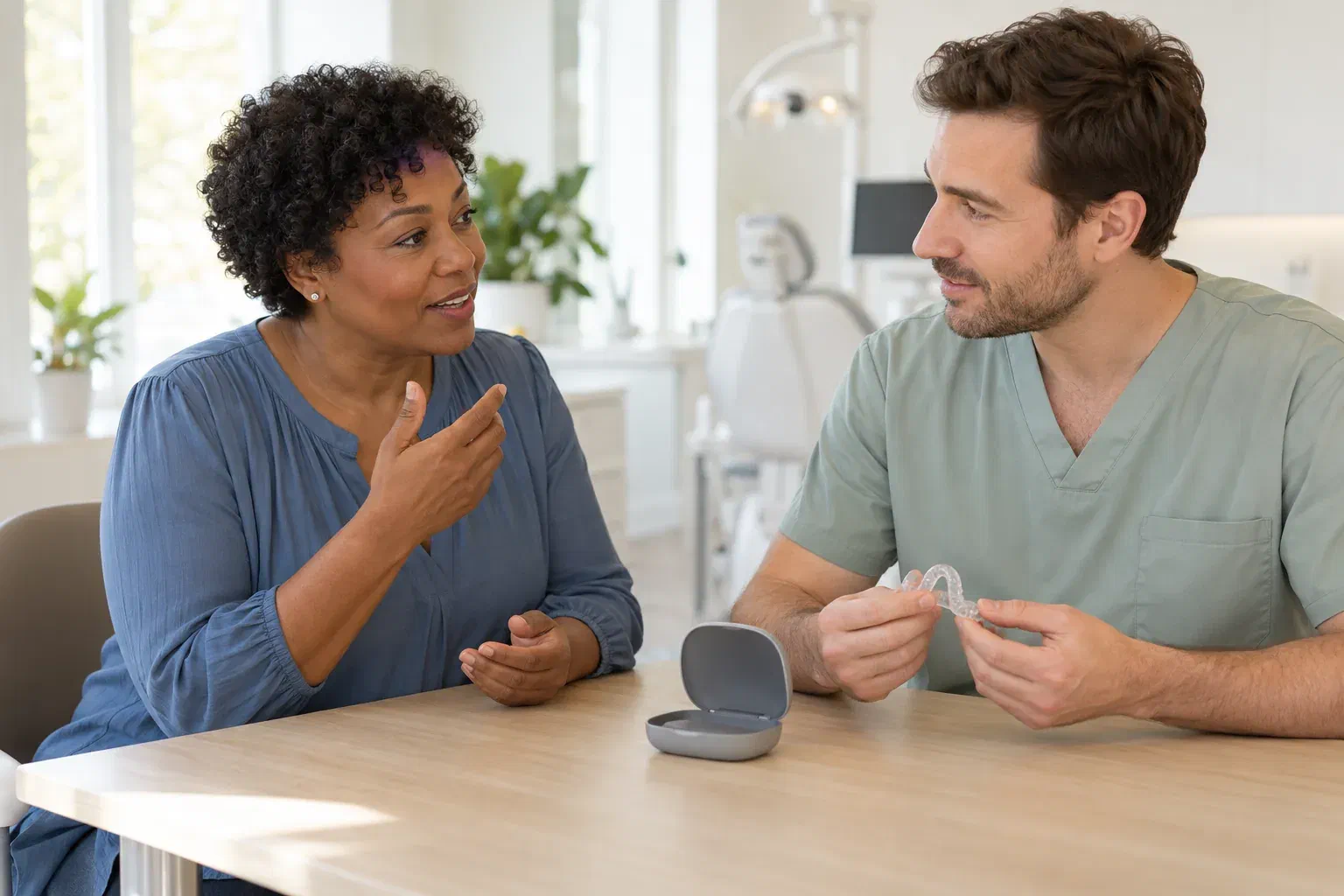
Illustrative discussion about sleep-appliance comfort and fit
Specialized Care

Sleep Appliance Adjustments in Burlington

Your sleep appliance came from another office, and now it needs attention. From Burlington, you can have the device and your mouth reviewed, and work out together who should make any change, what it is for, and how it will be followed up.

An appliance from elsewhere, reviewed for Burlington wearers

Different office. Same need for a careful look.

People move, change dentists, or lose touch with the office that first fitted their sleep appliance. Then the device starts to rub or the jaw begins to ache, and it is not obvious who to call. A review is a sensible first move. It can separate a problem with how the appliance sits from a contact point irritating the gums or a jaw position that was set long ago, and each of those leads somewhere different.

One thing worth knowing up front: no clinician should simply crank the device forward or tighten it on request. Greater advancement can add side effects without adding benefit, and a firmer fit says nothing reliable about results. The position has to suit both the medical goal and your teeth, gums, and jaw. An appliance that sits comfortably may still leave sleep apnea under-treated, which is a question for your physician.

Before booking, gather what you can: the appliance and case, any instruction sheet, and the name of the provider or lab that made it. Tell us what has felt different since your last check. That background helps us discuss an assessment and decide whether the original provider, or another qualified clinician, needs to be consulted first.

Book a review of an appliance made elsewhere
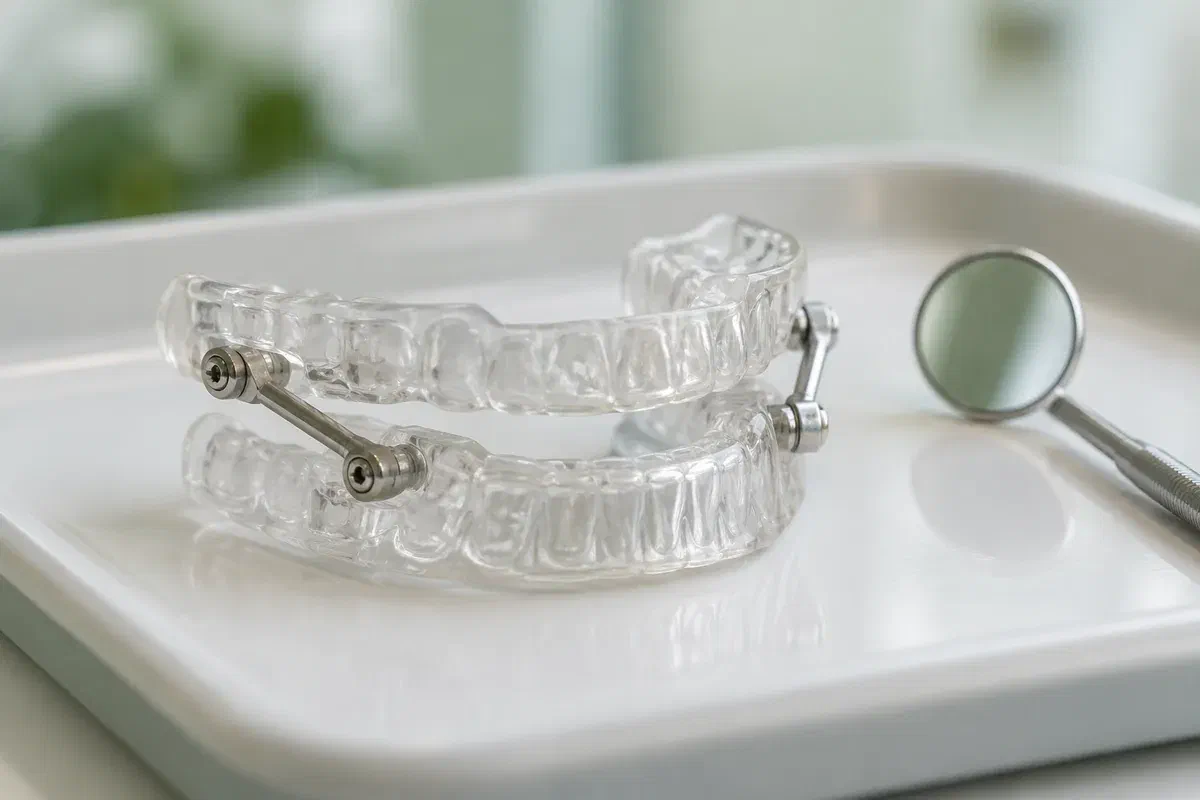
Illustrative connected oral sleep appliance beside a dental mirror
Problems worth putting into words

Where it hurts, when it hurts, and how you are sleeping

Mention when things changed and any dental treatment or device work since the appliance was made. Please avoid wearing it through pain or pushing it into position to show us the issue.

Irritation where the device meets your mouth

Note the exact location and whether tenderness stays after removal. Any new restoration on a nearby tooth is worth flagging. The clinician will look at the contact and the tissue or tooth beneath it, because adjusting the appliance is not the only possible response.

Jaw aching, clicking, or a bite that feels off

Describe when it shows up: while wearing, at waking, or later. Say whether your teeth return to their normal meeting point. Ongoing pain, locking, or a bite that stays changed calls for review, and advancing the device further to override it is not recommended.

Sleep symptoms creeping back

Share any return of snoring or daytime fatigue, and bring whatever records came with the device. Unknown settings are common with appliances from another office, so tell us rather than guessing. Your physician may need to look at whether effectiveness should be checked again.

A cracked appliance, a loose component, significant pain, or a device that will not seat safely are all reasons to stop wearing it for now. Contact a provider promptly and ask your sleep physician about temporary treatment while it is out of use.

Why records and reasons matter

Start from the history, then decide on the change.

When the appliance came from somewhere else, the first task is reconstructing the story: the design, the original setting, and what has happened since. Only then can the clinician say whether the trouble is fit, tissue contact, jaw position, wear, or a tooth needing its own care. A change built on that understanding can be fairly judged later.

A review is also your opportunity to get instructions you actually understand. If the original guidance was thin or has been lost, say so. You can ask to have the mechanism demonstrated and to leave with written notes on any approved change, instead of trying to remember it once you are home.

Patient information: AADSM — identifying an appropriate therapeutic appliance position

A picture of where treatment began

With whatever records exist, the clinician can compare the current setting with the original plan. If information is missing, ask what would help and whether the first provider can share it. That history separates a fresh problem from one that has quietly been there all along.

Care that matches the finding

A rubbing edge, a loosened fit, and jaw pain may need entirely separate approaches. Ask how what was found connects to what is being suggested. A tooth or jaw problem may need more dental assessment before the device is changed at all.

A clear way to judge the outcome

Ask what to notice in the following nights, what should make you call, and when the result will be reviewed. Comfort and ongoing sleep care both belong in the plan. A tweak that feels right during the appointment still has to prove itself in your own bed.

How the review is organised

From history to hands-on check to a written next step

Bring every part of the device and any instructions you still have. If you or someone else has already changed or repaired it, describe what was done so its current state is clear.

  1. Collect the history and the treatment plan

    You explain the symptoms, how regularly you wear it, and when things changed. The clinician asks about dental work, your sleep physician’s involvement, and where the device came from. Together you decide whether the original provider’s records are needed first.

  2. Examine the appliance and the relevant oral structures

    The device is inspected, and the teeth, gums, bite, and jaw involved are assessed. Ask whether wear or damage rules anything out. A mechanism that still moves does not prove the appliance is sound, well positioned, or suitable for further change.

  3. Decide who should make any change, then proceed

    If an adjustment is appropriate here, you hear its purpose and the aftercare. Some designs must go back to the original provider or a dental lab. Confirm whether the treatment setting was changed or only a contact or fit concern was addressed.

  4. Record the plan and share what is needed

    Leave with written guidance on wear, any planned steps, and when to call. Confirm the next dental review and whether your sleep physician should receive an update. Checking sleep apnea control is a separate process from confirming the appliance feels right.

After your appointment

One change at a time, and only the one agreed

Your aftercare reflects your device and circumstances. Ask before altering a mechanism, replacing a part, or moving beyond the setting you were given.

Keep a note of the setting and date

Record the change or instruction and when it was made. Add a line on symptoms that matter, without repeatedly testing the device. Bringing that note to review is far more useful than trying to recall several positions.

Report lasting pain or a bite that has changed

Tell the provider if soreness continues, chewing feels different, or wear is not possible as advised. Do not force the appliance or keep advancing. If you must stop wearing it, ask for an interim plan that involves your sleep physician.

Keep up both kinds of follow-up

Fewer complaints about snoring are encouraging, yet they are not the full measure of treatment. Dental visits look at oral effects, and your physician decides how sleep benefit is confirmed. Keep both informed about major changes.

Options after the review

Adjustment is one route among several.

Ask which choice fits the findings and what will still need checking. The goal is suitable care inside your prescribed plan, not moving the device until it simply feels different.

When a localized change is supported

A specific comfort or fit adjustment

A pressure point or similar fit problem can sometimes be eased by a qualified clinician. Ask what is being altered and whether the therapeutic position is affected. The device should be checked again afterwards, and you should know how to report continued irritation.

When advancement is already prescribed

A directed change in treatment position

Some designs allow gradual changes under professional guidance, with individual pace and limits. Ask how the response will be judged and when to pause and call. Raising the setting on your own is no substitute for reviewing symptoms or effectiveness.

When an adjustment cannot solve it

Repair, replacement, or another treatment

Damage, dental changes, or intolerance may point elsewhere. Ask whether the manufacturer, the original provider, or your sleep team should be involved. If wear stops, clarify how your sleep condition will be handled in the meantime.

Patient information: AADSM — professional management of oral-appliance side effects

Burlington wearers often ask

Clearing up who adjusts what, and why

Have the appliance and any instructions with you. The suitable action depends on the design, what the exam finds, and the medical plan behind the device.

(905) 876-4488
Can a different dental office adjust an appliance it did not make?
Sometimes, depending on the design, the available records, and what the exam shows. In other cases the original provider or lab is better placed to make changes. The clinician can review it and explain which route makes sense.
Do I need a referral or a letter from my sleep physician?
Bring any paperwork you have from your physician, including a diagnosis or prescription for the appliance. Call ahead and we can discuss which records would be most useful for your review.
What if I cannot reach the office that made my appliance?
Bring the device and whatever details you have, such as the brand or lab name. The clinician can inspect it and discuss options, which may include another qualified provider or a conversation with your sleep physician.
My appliance is tighter since I had a filling replaced. Is that related?
A change in a tooth’s shape can affect fit, but it should be assessed rather than assumed. Mention the filling, bring the device, and avoid forcing it in or reshaping it yourself.
Is it all right to increase the setting if my snoring returns?
No. Book a review instead. Extra advancement can cause new problems without helping, and snoring alone does not show whether sleep apnea is controlled. Let your sleep physician know as well.
Does feeling comfortable in the device mean treatment is working?
Not on its own. Comfort shows the appliance is wearable, while your physician decides how treatment effect is measured. Ask whether any change should be communicated to your sleep provider.
Coming from Burlington

Tell us the device’s story, and we will start there.

Contact Milton Dental Clinic about a sleep appliance that needs a fit or comfort review. Share the type of device, who supplied it, and what you are experiencing, so we can talk about assessment, useful records, and coordination.

Device changes belong within an agreed dental and medical treatment plan.

Visit Milton Dental Clinic
Unit 1, 342 Bronte St. S, Milton, ON L9T 5B7
Get directions Clinic hours
Monday–Thursday
11am–7pm
Friday–Sunday
By appointment only

Areas we serve

  • Milton
  • Oakville
  • Mississauga
  • Georgetown
  • Halton Hills
  • Acton
  • Campbellville
  • Brampton
  • Burlington
  • Puslinch
  • Rockwood
  • Erin
  • Caledon
  • Etobicoke
  • Old Milton
  • Bronte Meadows
  • Timberlea
  • Dorset Park
  • Dempsey
  • Clarke
  • Beaty
  • Coates
  • Harrison
  • Scott
  • Willmott
  • Ford
  • Bowes
  • Cobden
  • Walker
  • Mountain View
  • Milton Heights
  • Hawthorne Village
  • Valley View
  • Fallingbrook
  • Nassagaweya
  • Trafalgar
  • Esquesing
  • Nelson
  • Brookville
  • Moffat
  • Glen Williams
  • Norval
  • Limehouse
  • Stewarttown
  • Ashgrove
  • Hornby
  • Silver Creek
  • Speyside
  • Scotch Block
  • North Oakville
  • River Oaks
  • Glen Abbey
  • West Oak Trails
  • Palermo
  • Bronte Creek
  • College Park
  • Joshua Creek
  • Uptown Core
  • Preserve
  • Iroquois Ridge
  • Lisgar
  • Meadowvale
  • Meadowvale Village
  • Churchill Meadows
  • Erin Mills
  • Central Erin Mills
  • Streetsville
  • East Credit
  • Creditview
  • Heartland
  • Sheridan
  • Mount Pleasant
  • Credit Valley
  • Huttonville
  • Churchville
  • Springbrook
  • Northwest Brampton
  • Bram West
  • Fletcher's Meadow
  • Fletcher's Creek South
  • Alton Village
  • Orchard
  • Millcroft
  • Headon Forest
  • Tansley
  • Brant Hills
  • Tyandaga
  • Kilbride
  • Lowville
  • Aberfoyle
  • Morriston
  • Arkell
  • Hillsburgh
  • Freelton
  • Carlisle
  • Waterdown
  • Flamborough
  • Mountsberg

How can we help?

Milton Dental Clinic

Have a question about your smile? Choose the option that works best for you.

For urgent dental concerns, please call.
Messages are reviewed during clinic hours.