
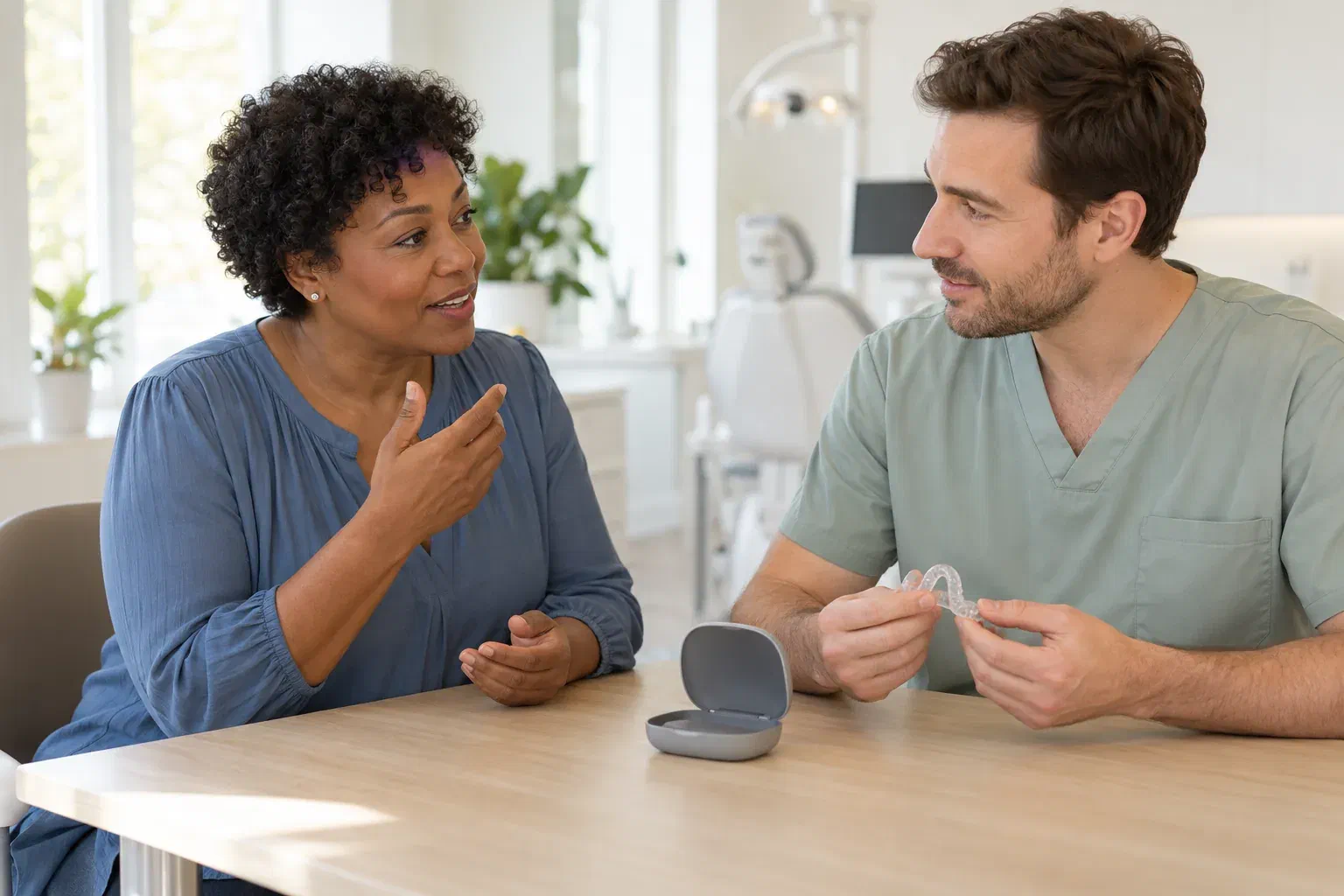
Illustrative discussion about sleep-appliance comfort and fit
Specialized Care

Sleep Appliance Adjustments in Caledon

A follow-up sleep test or a conversation with your physician can lead to a recommended change in your oral appliance. For households in Caledon, a dental review turns that recommendation into a safe, documented adjustment that your teeth, gums, and jaw can tolerate.

Connecting medical follow-up and dental care in Caledon

Your physician suggested a change. Here is how it happens.

Sometimes the push to adjust a sleep appliance comes from the medical side. A follow-up study, a review of symptoms, or a change in your health may lead your physician to recommend looking at the device again. The dental part of that process is about the practical question: can the appliance and your mouth support a change, and what kind? A fit issue, a contact point, and a shift in jaw position each require their own decision.

A recommendation to improve treatment does not automatically mean moving the jaw further. Extra advancement can cause tooth or jaw discomfort without bringing the expected benefit, and making the device grip harder is not the same as making it work better. The dental clinician weighs the medical aim against what your teeth, gums, and jaw can sustain. Afterwards, it is your physician who judges whether sleep apnea is adequately controlled, not the way the appliance feels.

For this kind of review, bring the appliance in its case, any setting log, and a copy of your physician’s letter or recommendation if you have one. Tell us who made the device and what has changed. We can then talk about an assessment, what information to send back to your physician, and whether the supplying office needs to be involved before adjusting.

Arrange a review after medical follow-up
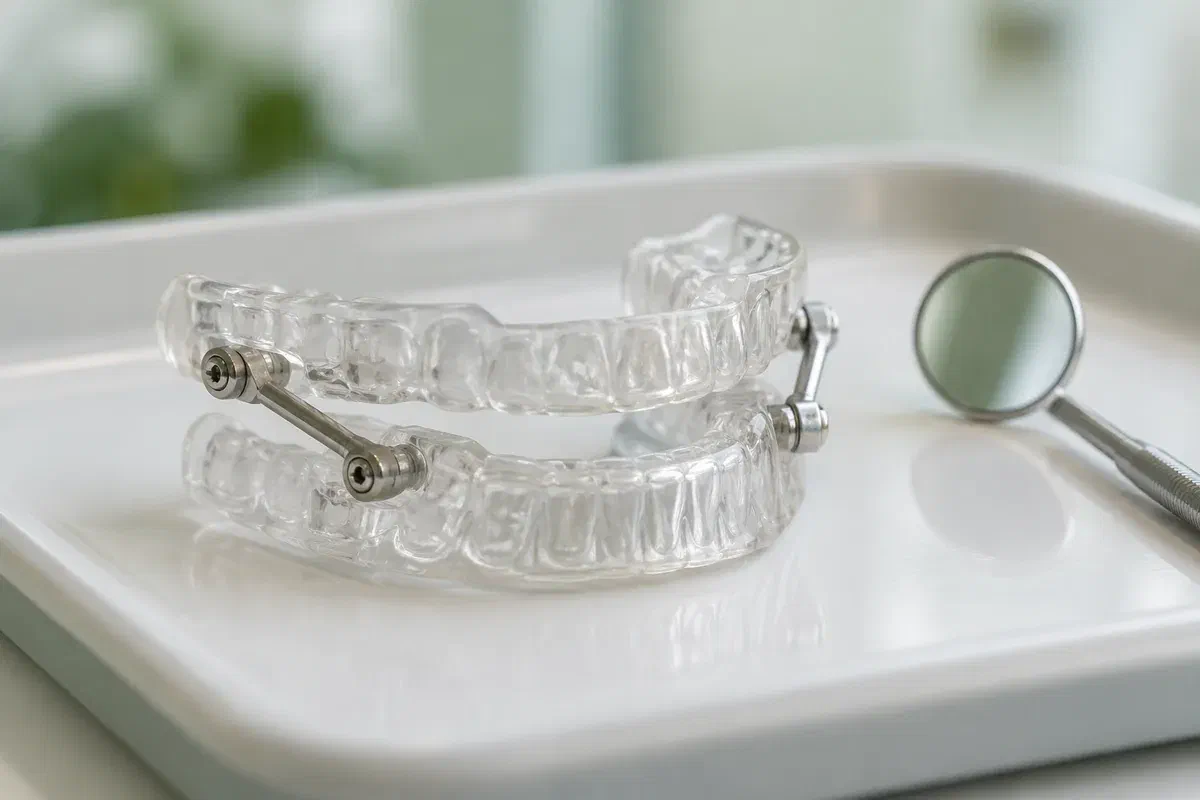
Illustrative connected oral sleep appliance beside a dental mirror
What the dental side needs to know

Your sleep results tell part of the story. Your mouth tells the rest.

Share the physician’s recommendation, the timing of any symptoms, and any dental work since your last review. Please do not make changes to the device yourself in anticipation of the visit.

An existing sore spot or pressure area

If something already rubs, a further change could make it worse, so point it out. Note whether tenderness lingers after removal and mention any new restoration. The device and the tissue or tooth involved are both considered before anything is altered.

Jaw discomfort or a bite that is slow to settle

Tell us whether you already feel jaw stiffness, when it appears, and whether your teeth find their usual contact after removal. Existing pain, locking, or a lasting bite change affects what can safely be done, and pushing further through it is not recommended.

Ongoing symptoms and the current setting

Bring your adjustment record and describe snoring, tiredness, or other symptoms your physician noted. If you are unsure of the current setting, say so. Knowing exactly where the device stands is essential before any position change is considered.

If the appliance is broken, loose, painful, or will not seat securely, stop wearing it and contact the managing provider. Let your physician know as well, so a plan for interim treatment can be agreed.

Why a dental review still matters

Turn a medical recommendation into a safe, measured step.

The physician identifies a reason to revisit treatment; the dental review establishes what the device and your mouth allow. That may confirm a position change is possible, or it may show a fit, tissue, wear, or tooth issue that needs attention first. Either way, the step taken has a stated purpose and can be checked.

This is a good time to clarify how communication will work. Ask what the dental clinician will report back to your physician and when. You can also ask for a demonstration of the mechanism and a written note of the approved change, so both you and your physician have the same record.

Patient information: AADSM — identifying an appropriate therapeutic appliance position

A clear record of where you started

The clinician reviews available records and the current setting before any change. If the device came from another office, ask whether its records can be shared. That baseline lets your physician interpret the next result in context.

A change suited to your mouth

Your physician’s goal and your dental findings both shape the response. Ask how the exam supports what is proposed. Sometimes a tooth or jaw concern needs dental care before a position change can be made.

A coordinated follow-up

Agree on what you should watch for, when the dental side will recheck, and when your physician expects to reassess. A change that feels fine at the visit still needs proper medical follow-up to confirm its effect.

How the review is carried out

Recommendation, examination, adjustment, report

Bring the whole appliance, your instructions, and any physician correspondence. If you have already changed a setting or tried a repair, tell the clinician exactly what was done.

  1. Review the physician’s recommendation and your history

    You share the medical recommendation, your symptoms, your wear routine, and any dental treatment. The clinician also considers the supplier’s instructions. Ask whether more information is needed from the physician or the supplying office.

  2. Assess the device and your oral health

    The clinician looks over the appliance for wear, cracks, and how securely it seats, then checks the teeth that anchor it, the gums beneath it, your bite, and your jaw joints. Ask whether anything found limits what is possible. A mechanism that still moves does not confirm the device is ready for a position change.

  3. Make a suitable change, if appropriate

    If a change is appropriate, you hear what it is intended to achieve and how to wear the device afterwards. Certain appliances can only be modified by the office that made them or by a dental laboratory, which may mean a short delay. Confirm whether the treatment setting itself was changed or only a fit or contact issue was addressed.

  4. Report back and plan both kinds of follow-up

    Take home written guidance and the symptoms that warrant a call. Confirm the next dental check and how your physician will be informed. Medical reassessment of sleep apnea remains separate from the dental check of comfort and fit.

While the change is being evaluated

Wear it consistently and keep the setting where it was left.

Instructions are specific to your device and treatment plan. If anything is unclear, ask before altering the mechanism, replacing parts, or going beyond the agreed setting.

Keep a record for both providers

Note the approved setting, the date, and brief observations about sleep or comfort. Consistent records help your physician interpret any follow-up testing. Avoid testing the device repeatedly.

Report pain or bite changes without delay

Contact the dental provider if discomfort continues, chewing feels different, or you cannot wear the device as instructed. Do not force it or advance further. If wear must pause, let your physician know so interim treatment can be arranged.

Attend the medical follow-up as planned

Your physician decides how and when the effect of the change is checked. Dental reviews continue to watch your teeth and jaw. Keep both informed about significant changes in symptoms or health.

Outcomes of a coordinated review

A position change, other dental care, or a wider discussion

Ask which option fits the findings and the medical goal, and what still needs review. The aim is appropriate care within your plan, not simply moving the device in response to a test result.

When a localized issue needs fixing before anything else

A fit or comfort change first

A pressure point or fit concern may need easing before a position change is considered, since moving the jaw can make an existing sore spot worse. Ask what will be altered and whether the setting is affected. A recheck should confirm the result before the next step.

When your physician and dental clinician agree it is appropriate

A prescribed change in jaw position

Some appliances allow gradual, professionally directed changes. The pace and limit are individual. Ask how the response will be evaluated medically and dentally, and when to stop and call. Changing the setting yourself is not a substitute.

When the appliance cannot deliver what is needed

Repair, replacement, or another treatment option

If the device cannot safely be adjusted further, or dental changes limit it, another approach may be discussed with your physician. Ask whether the manufacturer or the supplying office should be involved, and what treatment to use in the meantime.

Patient information: AADSM — professional management of oral-appliance side effects

Caledon questions about medical and dental coordination

Who decides what, and in what order

Bring the device, your instructions, and any physician correspondence. The right step depends on its design, the exam, and your medical plan.

(905) 876-4488
My sleep study suggests my appliance needs adjusting. What happens next?
Arrange a dental review and bring the physician’s recommendation. The clinician will assess the device and your mouth to see what change, if any, is suitable, and how it will be reported back.
Can my physician adjust the appliance directly?
Appliance adjustments are generally handled by a qualified dental provider who understands the device and your mouth. Your physician guides the medical goals and how treatment effect is assessed.
What if the appliance cannot be advanced any further?
The dental clinician will explain the limits. Options may include addressing fit or dental issues, discussing other designs, or reviewing other treatment approaches with your physician.
Will I need another sleep test after the adjustment?
That is your physician’s decision, based on your symptoms and their own assessment. Ask the dental clinician what information about the new setting will be shared, and when, so your physician has what they need to decide on follow-up.
My jaw already aches. Can the appliance still be moved forward?
Existing jaw pain needs to be assessed first. The clinician will consider whether a change is appropriate. Do not advance it yourself, and let both providers know about the discomfort.
Does it matter if my appliance was made by a different dentist?
It can. Records from the supplying office help confirm the design and starting setting. Bring what you have, and the clinician can discuss whether that office should be involved.
Book from Caledon

A recommendation from your physician is a good place to start.

Contact Milton Dental Clinic to arrange a review after medical follow-up of your sleep appliance. Share what kind of device it is, which office made it, and what your physician has recommended, so we can plan an assessment and coordinate with your care team.

Changes should stay aligned with the treatment plan you and your providers agree on.

Visit Milton Dental Clinic
Unit 1, 342 Bronte St. S, Milton, ON L9T 5B7
Get directions Clinic hours
Monday–Thursday
11am–7pm
Friday–Sunday
By appointment only

Areas we serve

  • Milton
  • Oakville
  • Mississauga
  • Georgetown
  • Halton Hills
  • Acton
  • Campbellville
  • Brampton
  • Burlington
  • Puslinch
  • Rockwood
  • Erin
  • Caledon
  • Etobicoke
  • Old Milton
  • Bronte Meadows
  • Timberlea
  • Dorset Park
  • Dempsey
  • Clarke
  • Beaty
  • Coates
  • Harrison
  • Scott
  • Willmott
  • Ford
  • Bowes
  • Cobden
  • Walker
  • Mountain View
  • Milton Heights
  • Hawthorne Village
  • Valley View
  • Fallingbrook
  • Nassagaweya
  • Trafalgar
  • Esquesing
  • Nelson
  • Brookville
  • Moffat
  • Glen Williams
  • Norval
  • Limehouse
  • Stewarttown
  • Ashgrove
  • Hornby
  • Silver Creek
  • Speyside
  • Scotch Block
  • North Oakville
  • River Oaks
  • Glen Abbey
  • West Oak Trails
  • Palermo
  • Bronte Creek
  • College Park
  • Joshua Creek
  • Uptown Core
  • Preserve
  • Iroquois Ridge
  • Lisgar
  • Meadowvale
  • Meadowvale Village
  • Churchill Meadows
  • Erin Mills
  • Central Erin Mills
  • Streetsville
  • East Credit
  • Creditview
  • Heartland
  • Sheridan
  • Mount Pleasant
  • Credit Valley
  • Huttonville
  • Churchville
  • Springbrook
  • Northwest Brampton
  • Bram West
  • Fletcher's Meadow
  • Fletcher's Creek South
  • Alton Village
  • Orchard
  • Millcroft
  • Headon Forest
  • Tansley
  • Brant Hills
  • Tyandaga
  • Kilbride
  • Lowville
  • Aberfoyle
  • Morriston
  • Arkell
  • Hillsburgh
  • Freelton
  • Carlisle
  • Waterdown
  • Flamborough
  • Mountsberg

How can we help?

Milton Dental Clinic

Have a question about your smile? Choose the option that works best for you.

For urgent dental concerns, please call.
Messages are reviewed during clinic hours.