
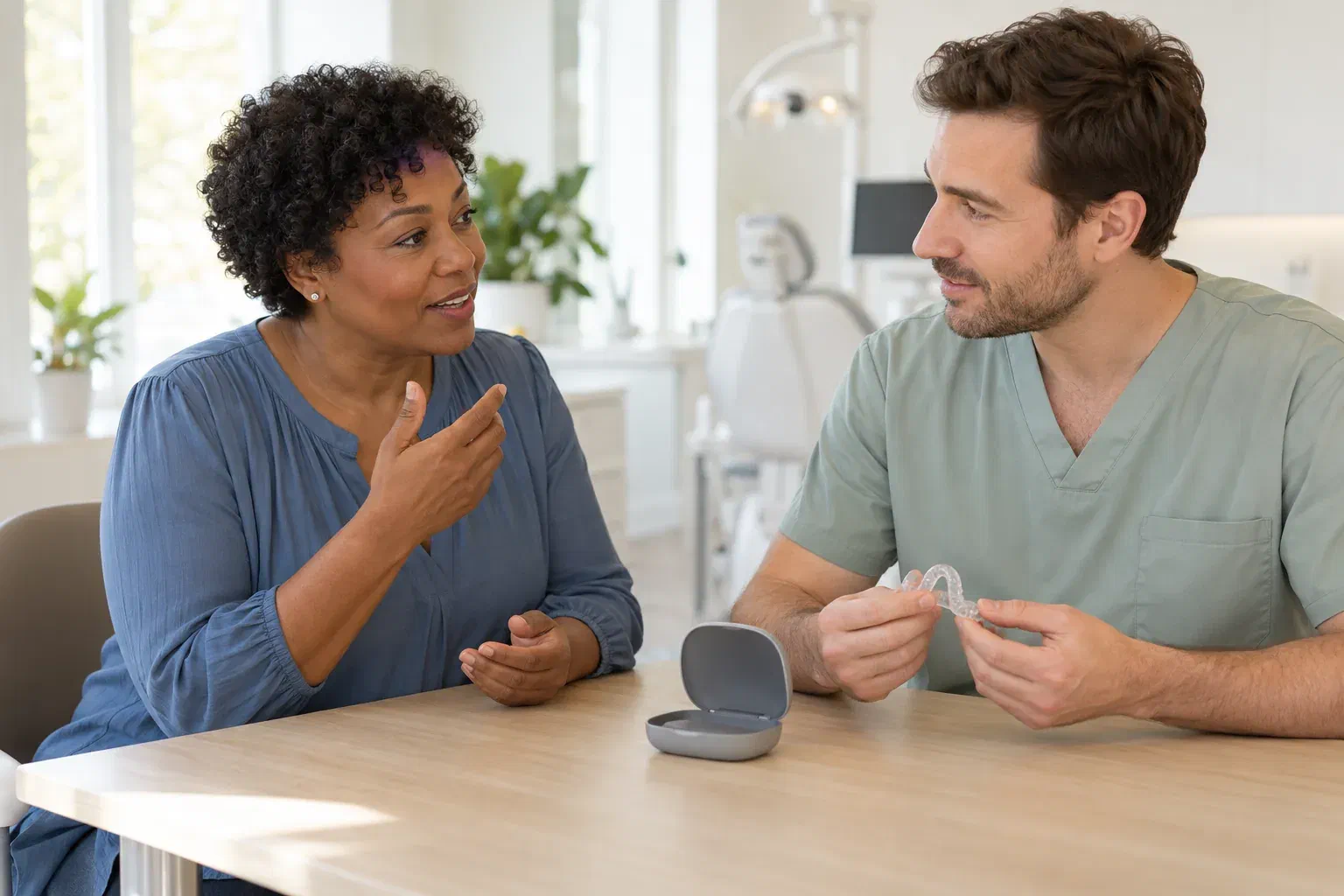
Illustrative discussion about sleep-appliance comfort and fit
Specialized Care

Sleep Appliance Adjustments in Erin

How a sleep appliance is cleaned, stored, and handled can quietly change the way it fits. For wearers in Erin and Hillsburgh, a review can check the device and your mouth, look at your care routine, and plan any adjustment within your prescribed sleep treatment.

Daily care and fit, for appliance wearers in Erin

Sometimes the change starts at the bathroom sink.

A rinse under the hot tap, a soak in the wrong cleaner, a few hours on a sunny windowsill: small habits like these can affect some appliance materials. So can a drop on a tile floor. When the device no longer feels right, your routine is one of the things worth discussing, alongside the fit itself, any edge irritating your gums, and the jaw position the appliance has been set to hold.

Whatever the cause, the response is not simply to advance the device or press it in harder. Additional forward movement does not reliably improve results, and a tighter grip is no guide to effectiveness. Your clinician aims for a position that suits your physician’s goals while protecting your teeth, gums, and jaw. And a device that has become comfortable again has not, through comfort alone, shown that sleep apnea is managed.

Bring the appliance in its usual case, along with the care and wear instructions you were given and any record of settings. Mention which products you use to clean it and where it is kept during the day. Tell us which provider made it, so we can discuss an assessment and whether that office should be contacted before any change.

Book a fit and care review
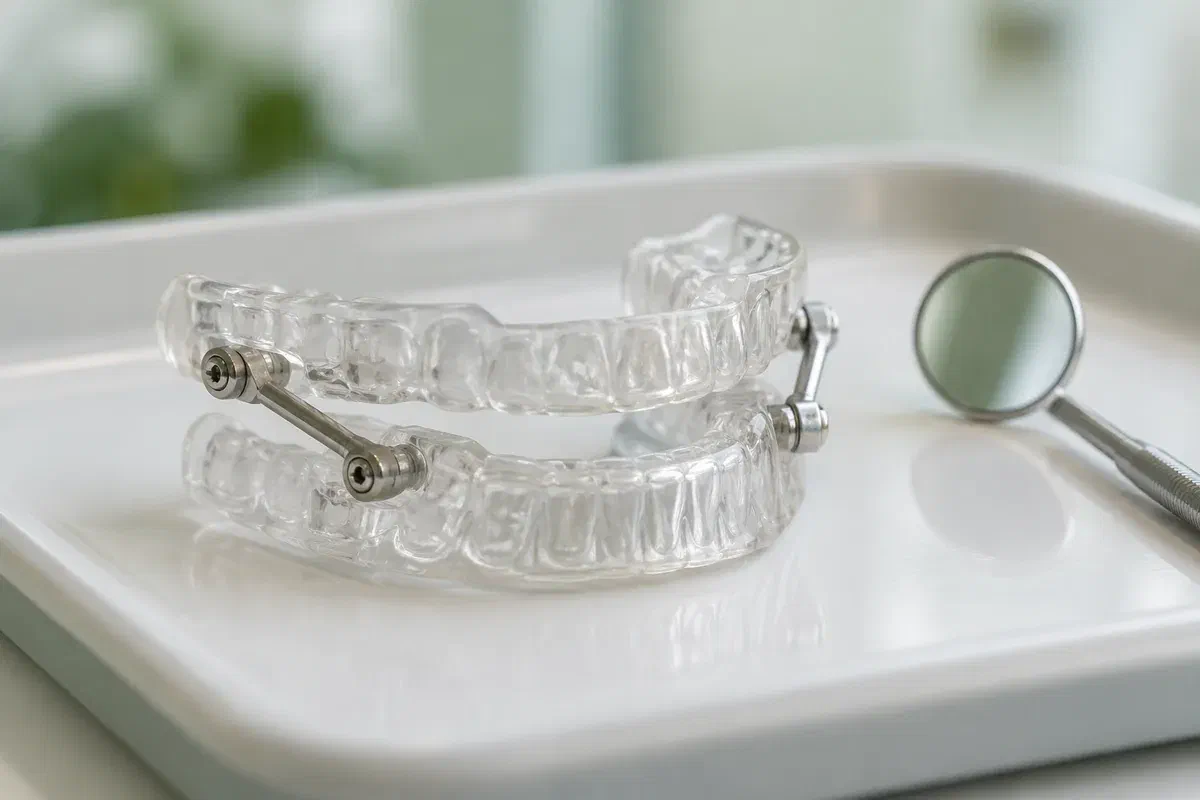
Illustrative connected oral sleep appliance beside a dental mirror
Clues to share at your visit

Has it changed shape, or have you?

Explain when the problem started, how the device has been cleaned and stored, and any dental work since. Please do not force it into place or wear it through pain to demonstrate the issue.

A new pressure point or rough area

Show where it presses and whether the soreness stays after removal. Mention any recent dental treatment. The clinician will look at the device surface and the tooth or gum involved, because trimming the appliance is not always the right response.

A jaw ache or a bite that feels unusual

Describe whether it occurs overnight, at waking, or later, and whether your teeth return to their normal contact. Persistent pain, locking, or a lasting bite change needs assessment. Advancing the device further to push past discomfort is not recommended.

A device that seems loose, warped, or no longer seats fully

If the fit feels different after a cleaning mishap or a fall, say so. Bring any setting log and describe whether snoring or tiredness has changed. Your physician may need to review effectiveness if the appliance has not been seating properly.

Do not wear an appliance that is cracked, warped, has loose parts, causes significant pain, or will not seat safely. Contact the managing provider soon, and ask your sleep physician about interim treatment while it is out of use.

What a review can uncover

A clear cause makes the right change obvious.

The review looks at the device and your mouth to find the real reason for the change: fit, a tissue contact, jaw position, material damage, or a dental issue needing its own treatment. With that settled, an adjustment has a defined purpose, and you can judge it at follow-up.

It is also a chance to check your care routine. Ask which cleaning products are suitable for your appliance and how it should be stored. You can request a demonstration of the mechanism and a written note of any approved change to keep with the instructions.

Patient information: AADSM — identifying an appropriate therapeutic appliance position

A comparison with the original fit

Records and settings from fitting help the clinician see whether the appliance has changed. If it was made elsewhere, ask what information is still needed. That comparison can show whether the material, the teeth, or the setting is responsible.

Care aimed at the cause

A rough edge, a warped fit, and jaw pain call for different responses. Ask how the exam supports what is proposed. If the device has been damaged, adjustment may not be suitable, and repair or replacement may need discussion.

A plan to confirm the result

Agree on what to notice over the next few weeks, which signs should prompt a call, and when the appliance will be rechecked. Something that feels right at the visit still needs a few ordinary nights to confirm.

What the appointment covers

Routine, device, mouth, and a written plan

Bring all parts of the appliance and your instructions. If you have tried to reshape, repair, or adjust it, tell the clinician exactly what was done.

  1. Talk through symptoms and daily care

    You describe the problem, your wear and cleaning routine, and when things changed. The clinician also asks about dental work, your physician’s plan, and the supplier’s guidance. Ask whether the supplying office’s records are needed.

  2. Inspect the device and examine the mouth

    The appliance is checked for fit, wear, and any distortion, and the relevant teeth, gums, bite, and jaw are assessed. Ask whether damage limits the options. A mechanism that still turns does not mean the device is sound.

  3. Carry out an appropriate change if suitable

    If an adjustment fits the findings, its purpose and the aftercare are explained. Some designs need the original provider or a lab. Ask whether the treatment setting changed or only a fit or contact concern was addressed.

  4. Record the plan and the care advice

    Take home written guidance on wear, cleaning, storage, and symptoms that need a call. Confirm the next dental check and whether your physician should be updated. Treatment effectiveness is assessed separately from comfort.

Looking after the appliance at home

Gentle cleaning, safe storage, no extra adjustments

Instructions depend on your device and its materials. If anything is unclear, ask before turning the mechanism, changing parts, or using a new cleaning product.

Note any change and how the fit feels

Keep a slip of paper in the case with the setting or instruction you were given and the day it took effect. If a particular night is noticeably better or worse, add a few words. Resist the habit of popping the device in and out to check it, and bring the slip along next time.

Phone if pain lingers or the bite changes

A sore jaw that hangs on, teeth that no longer meet the way they used to, or an appliance you simply cannot keep in are all reasons to ring the provider. Pressing it into place or turning it further will not help. If you need a break from wear, your physician should be part of deciding what happens overnight.

Keep up dental and medical reviews

Two kinds of checking run side by side. Dental visits look at how your teeth, gums, and jaw are coping, while your physician decides what evidence shows the sleep treatment is doing its job. Less snoring is worth mentioning to both, along with any larger change in your health or routine.

Next steps the review may suggest

A fit change, a repair, or a fresh plan

Ask which option fits what was found and what still needs checking. The goal is appropriate care within your plan, not reshaping the device until it simply feels different.

When the material is sound and the tissues allow it

A specific fit or comfort refinement

A rough area or pressure point may be eased at the visit. Ask which part will be altered and whether the treatment position changes. A recheck should follow, with guidance on what to report if irritation continues.

When advancement is part of your plan

A prescribed jaw-position change

Where the plan already includes forward movement, steps are small and directed by the clinician, and the right stopping point differs from one person to the next. Find out what will tell you a step went well and what would mean pausing. Turning it yourself to make up for a poor fit is not a substitute for review.

When the device has been damaged or distorted

Repair, replacement, or another route

Warping, cracks, dental changes, or intolerance may need a different approach. Ask whether the manufacturer, the supplying office, or your sleep physician should be involved, and what to use for treatment overnight in the meantime.

Patient information: AADSM — professional management of oral-appliance side effects

Erin questions about fit and care

Habits that help a device keep its shape

Bring the device, its case, and your instructions. The right step depends on the design, the exam, and your medical plan.

(905) 876-4488
Can hot water change the shape of my sleep appliance?
Some appliance materials can be affected by heat. Follow the cleaning instructions supplied with your device, and ask the provider if you are unsure which water temperature or products are suitable.
Where should I keep my appliance during the day?
Store it clean and dry in its case, out of direct heat and sunlight and away from pets. Follow any storage advice from the manufacturer or your provider.
I dropped my appliance and now it feels different. What should I do?
Stop wearing it if it is cracked, loose, or will not seat properly, and bring it in for a check. Do not try to bend it back or glue it. Ask your physician about interim treatment.
Can I use denture cleaner on my sleep appliance?
Only if the manufacturer or your provider says it is suitable for your device. Some products may not be appropriate for every material, so check before using them.
Is trimming a rough edge the same as changing my setting?
No. Smoothing a contact eases pressure, while a setting change moves your jaw. Ask which is proposed and whether the treatment position is affected. Neither should be done at home.
If the appliance feels right again, is my treatment back on track?
Not necessarily. Comfort shows it is wearable, and your physician decides how treatment effect is checked. Ask whether any change should be passed on to them.
Visiting from Erin

Bring the case, the cleaner, and your questions.

Reach Milton Dental Clinic about a sleep appliance that no longer fits as it did. Share what kind of device you wear, which office made it, how you care for it, and what you have noticed, and we can discuss an assessment and any coordination needed.

Any change to the device should stay within your agreed dental and medical plan.

Visit Milton Dental Clinic
Unit 1, 342 Bronte St. S, Milton, ON L9T 5B7
Get directions Clinic hours
Monday–Thursday
11am–7pm
Friday–Sunday
By appointment only

Areas we serve

  • Milton
  • Oakville
  • Mississauga
  • Georgetown
  • Halton Hills
  • Acton
  • Campbellville
  • Brampton
  • Burlington
  • Puslinch
  • Rockwood
  • Erin
  • Caledon
  • Etobicoke
  • Old Milton
  • Bronte Meadows
  • Timberlea
  • Dorset Park
  • Dempsey
  • Clarke
  • Beaty
  • Coates
  • Harrison
  • Scott
  • Willmott
  • Ford
  • Bowes
  • Cobden
  • Walker
  • Mountain View
  • Milton Heights
  • Hawthorne Village
  • Valley View
  • Fallingbrook
  • Nassagaweya
  • Trafalgar
  • Esquesing
  • Nelson
  • Brookville
  • Moffat
  • Glen Williams
  • Norval
  • Limehouse
  • Stewarttown
  • Ashgrove
  • Hornby
  • Silver Creek
  • Speyside
  • Scotch Block
  • North Oakville
  • River Oaks
  • Glen Abbey
  • West Oak Trails
  • Palermo
  • Bronte Creek
  • College Park
  • Joshua Creek
  • Uptown Core
  • Preserve
  • Iroquois Ridge
  • Lisgar
  • Meadowvale
  • Meadowvale Village
  • Churchill Meadows
  • Erin Mills
  • Central Erin Mills
  • Streetsville
  • East Credit
  • Creditview
  • Heartland
  • Sheridan
  • Mount Pleasant
  • Credit Valley
  • Huttonville
  • Churchville
  • Springbrook
  • Northwest Brampton
  • Bram West
  • Fletcher's Meadow
  • Fletcher's Creek South
  • Alton Village
  • Orchard
  • Millcroft
  • Headon Forest
  • Tansley
  • Brant Hills
  • Tyandaga
  • Kilbride
  • Lowville
  • Aberfoyle
  • Morriston
  • Arkell
  • Hillsburgh
  • Freelton
  • Carlisle
  • Waterdown
  • Flamborough
  • Mountsberg

How can we help?

Milton Dental Clinic

Have a question about your smile? Choose the option that works best for you.

For urgent dental concerns, please call.
Messages are reviewed during clinic hours.