
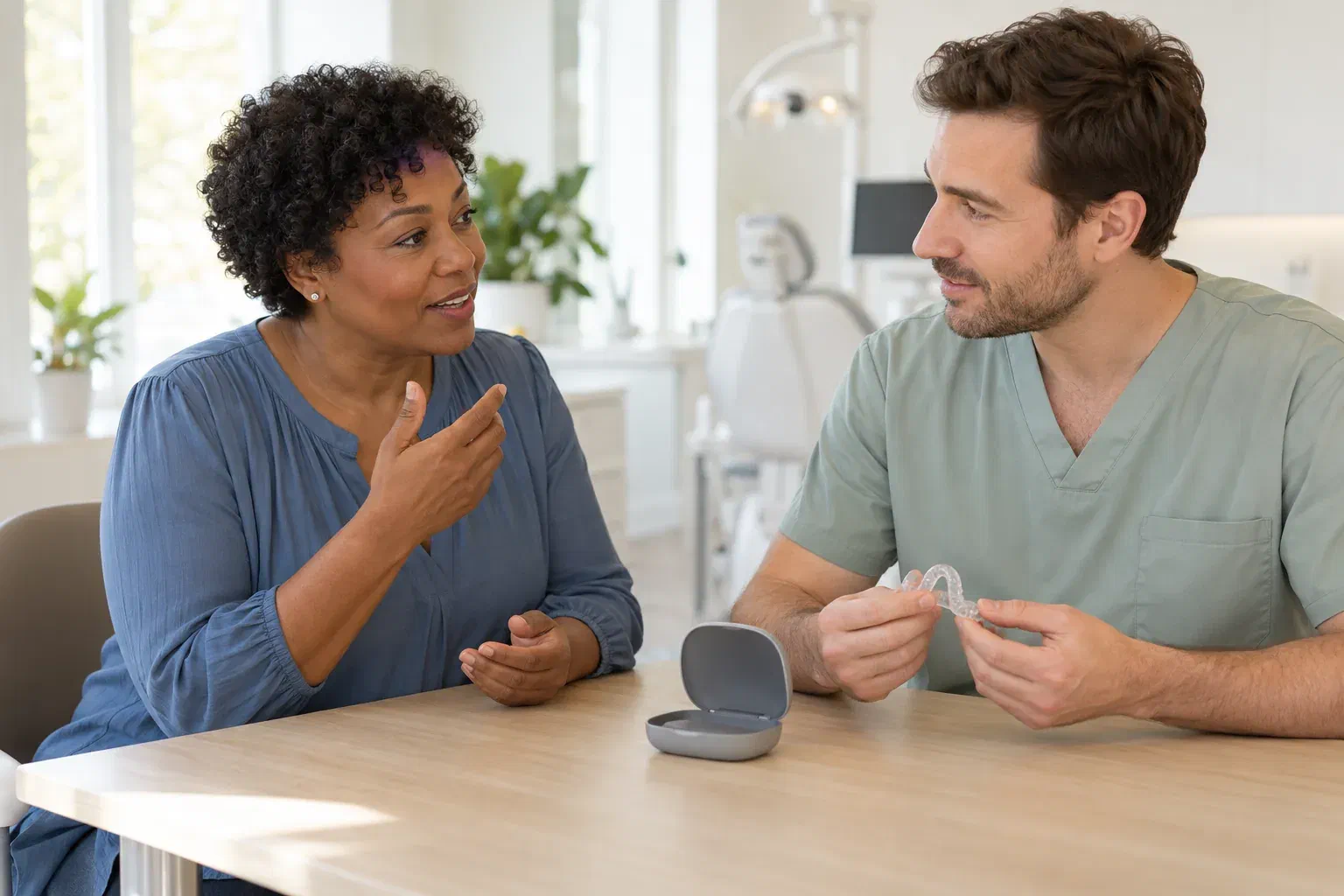
Illustrative discussion about sleep-appliance comfort and fit
Specialized Care

Sleep Appliance Adjustments in Milton

When your sleep appliance starts to rub, pinch, or leave your jaw feeling off in the morning, the device and your mouth both deserve a look. Arrange a review in Milton to talk through fit, comfort, settings, and the follow-up a change would need.

Sleep appliances, reviewed close to home in Milton

Morning soreness is a clue, not a verdict.

You take the appliance out at seven, and one spot along your gum still feels tender at lunch. That detail matters. A sore area might point to the way the device sits, an edge pressing on soft tissue, or a prescribed change in jaw position. Each has a different answer, so the first job is working out which one applies.

It helps to set aside two common assumptions. Pushing the lower jaw further forward does not guarantee better results, and a snugger fit is not proof of a stronger effect. The right position weighs the sleep benefit your physician is aiming for against what your teeth, gums, and jaw joints can handle night after night. An appliance can feel perfectly comfortable and still leave sleep apnea under-treated.

For your visit to our Bronte Street practice, pack the device in its case along with any written instructions or a log of past settings. Let us know who made or supplied it and what has felt different lately. From there we can talk about an assessment and whether the original provider, or another qualified clinician, should weigh in before anything on the appliance is changed.

Ask about a review of your sleep appliance
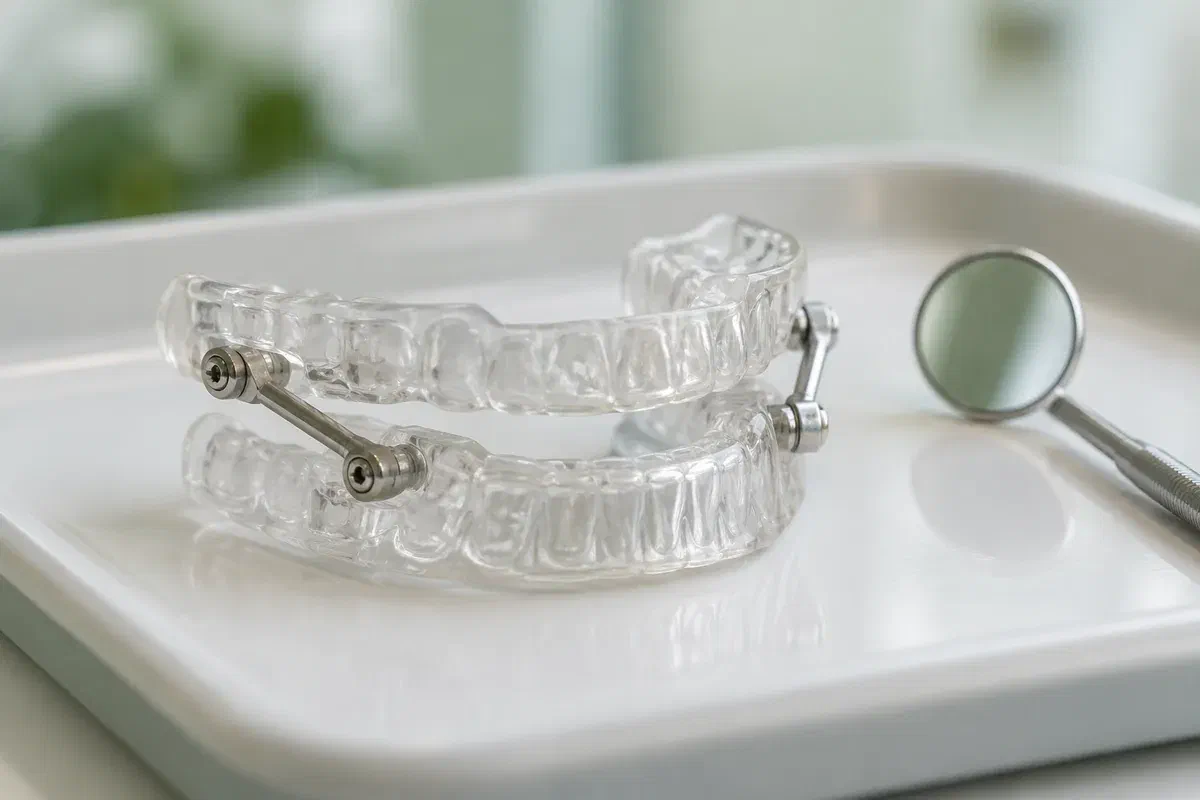
Illustrative connected oral sleep appliance beside a dental mirror
What to mention when you call

Three kinds of change, each pointing somewhere different

Tell us when the problem started and whether you have had dental work or a device change recently. There is no need to wear the appliance until it hurts, or to force it in, just to show us what is happening.

A tender spot on the gum, cheek, or tongue

Note where the device presses and whether the soreness fades once it is out. A recent filling or crown is worth mentioning too. The clinician will look at both the contact area and the tooth or tissue underneath, since trimming the appliance is only one of several possible responses.

An achy jaw or teeth that meet differently

Say whether the ache shows up while you sleep, right after waking, or later in the afternoon, and whether your back teeth settle into their usual bite. Ongoing pain, a jaw that catches or locks, or a bite that stays changed needs a review. Discomfort is not a sign the treatment is working, and advancing further to push past it is not advised.

Snoring that has crept back, or a setting you are unsure of

Bring whatever record you have of past adjustments and describe any return of snoring or daytime tiredness. If you are unsure where the mechanism was last set, say so rather than guessing. Your dentist and physician may each need to review part of the picture, including whether the treatment’s effect should be rechecked.

Stop wearing an appliance that is cracked, has a loose part, causes real pain, or will not seat properly. Get in touch with the provider who manages it soon, and ask your sleep physician what to do for treatment in the meantime.

Why a review comes before a change

Know the reason for an adjustment and how you will judge it.

Before any part of the appliance is altered, the review should pin down what actually needs attention. Is it the fit, a point of contact with your gums, the jaw position, wear or breakage, or a dental problem that needs treatment of its own? A change makes the most sense when its purpose is clear and its effect can be checked at the next visit.

The appointment is also a good moment to go back over your instructions. If some part of the routine became confusing, say which part. You can ask to be shown how the mechanism works and to receive a written note of any change that is approved, so you are not left trying to recall the setting from memory at bedtime.

Patient information: AADSM — identifying an appropriate therapeutic appliance position

A look back at where treatment started

The clinician can go through whatever records and settings are available and what has changed since the fitting. If the device came from another office, ask what information would still help. A clear history separates a genuinely new problem from an older one that was never fully sorted out or written down.

A response matched to the actual cause

A sore spot, a loose fit, and an aching jaw may each call for something different. Ask how the findings lead to the suggested step. When the issue lies with a tooth or the jaw rather than the appliance itself, further dental assessment may come first.

A plan for checking the result

Ask what to watch for, what should prompt a call, and when the change will be reviewed. Comfort matters, and so does ongoing sleep care. An adjustment that feels fine in the chair still needs follow-up once you have worn it through real nights at home.

Inside the appointment

Device first, mouth second, decision third

Bring every piece of the appliance and the instructions you follow today. If you have already turned a screw, swapped a part, or tried a fix, describe exactly what you did so the clinician understands its present condition.

  1. Talk through the problem and your sleep-care plan

    Describe your symptoms, how many nights a week you wear the device, and when the trouble began. Mention recent dental treatment, updates from your sleep physician, and instructions from whoever supplied the appliance. Ask whether the records on hand are enough.

  2. Examine the appliance, your teeth, and your bite

    The clinician inspects the device and checks the teeth, gums, bite, and jaw that relate to your concern. Ask whether wear or damage narrows the options. A mechanism that still turns does not by itself show that the appliance is sound, properly positioned, or suitable for further adjusting.

  3. Agree on a suitable change and make it if appropriate

    When an adjustment makes sense, the clinician explains what it is meant to do and what you should do afterwards. Some designs have to go back to the original provider or a dental lab, so not every change can happen that day. Ask whether the treatment setting itself was changed or only a fit or contact problem.

  4. Write it down and set up the next check

    Leave with clear guidance on wear, any planned progression, and what to do if symptoms come back. Confirm when your next dental review is and whether your sleep physician should hear about the change. Checking that sleep apnea is controlled is a separate step from confirming the device is comfortable.

The first few weeks after a change

Stick to the plan you were given, and only that plan.

Instructions after an adjustment are tailored to your appliance and your situation. If anything is unclear, call and ask before you turn a mechanism, replace a part, or go past the prescribed setting.

Jot down the approved setting and the date

Write down what the clinician changed or instructed, and when. Add a short line about noticeable symptoms, without testing the device over and over. That note gives the team something concrete to work from at the next visit, instead of a hazy memory of several positions.

Call about pain that lingers or a bite that feels wrong

Let the provider know if soreness continues, chewing feels off, or you cannot wear the appliance as directed. Do not force it in or keep advancing through pain. If you need to stop wearing it for a while, ask for a short-term plan and make sure your sleep physician is involved.

Keep both dental and medical appointments

A quieter night is worth mentioning, but it is not the whole measure of treatment. Regular dental visits check how your teeth and jaw are responding, and your physician decides how the sleep benefit is confirmed. Tell both about any major change that could affect the plan.

Possible next steps

Sometimes the answer is an adjustment, and sometimes it is something else.

Ask which route fits what was found and what still needs checking afterwards. The aim is sound care inside your prescribed plan, not moving the device around until it simply feels different.

When the device and tissues allow a local fix

A small change to fit or comfort

A qualified provider may be able to ease a pressure spot or correct another specific fit problem. Ask what will be altered and whether that touches the treatment position. The appliance should be checked again afterwards, and you should know how to report irritation that continues or a new problem that appears.

When gradual advancement is part of your plan

A planned shift in jaw position

Some appliances are designed to move forward in small steps under professional guidance. How fast and how far depends on the person. Ask how your response will be judged and when to stop and call. Turning the setting up yourself does not replace a review of ongoing symptoms.

When adjusting will not solve the problem

Repair, a new appliance, or another treatment route

Breakage, changes in your teeth, or trouble tolerating the device can call for a different approach. Ask whether the manufacturer, another qualified dental provider, or your sleep physician should be involved. If you have to stop using the appliance, find out how your sleep condition will be handled until then.

Patient information: AADSM — professional management of oral-appliance side effects

Common questions in Milton

Comfort fixes and setting changes are not the same thing.

Have your appliance and current instructions with you at the review. What is appropriate depends on the design, what the exam shows, and the medical plan the device is meant to support.

(905) 876-4488
My teeth feel slightly off for a few minutes after I take the appliance out. Is that a concern?
Many wearers describe a brief sense that the bite is different after removal, but mention it at your review. If your teeth do not return to their usual contact or the feeling lasts longer each morning, contact the provider who manages the device.
Can the dentist make my appliance looser if it feels too tight?
Possibly, but tightness needs a cause first. A tooth that has shifted, new dental work, or a change in the device can all play a part. The clinician will look at the appliance and your teeth before suggesting anything, and some designs need the original provider or lab to make changes.
Is it safe to keep wearing my appliance while I wait for an appointment?
That depends on what is wrong. Mild, short-lived irritation is different from sharp pain, a cracked part, or a device that will not seat. Describe the problem when you call. If it is broken or painful, stop and ask your sleep physician about an interim plan.
How should I clean the appliance before bringing it in?
Follow the care instructions supplied with your device, which usually involve rinsing and gentle brushing. Avoid hot water and harsh products unless the manufacturer allows them, since these can affect fit. Bring it in its case so it is protected on the way.
Will turning my appliance forward a little more stop the snoring that came back?
Not necessarily. Returning snoring deserves a review rather than a do-it-yourself fix. Extra advancement can bring new problems without helping, and snoring is not the only sign of whether sleep apnea is controlled. Call the treating provider and let your physician know as well.
Does a comfortable appliance mean my sleep apnea is under control?
No. Comfort tells you the device is wearable; it does not confirm the treatment effect. Your physician decides how that is checked. A dental review looks at the appliance and your mouth, and it can include sending an update to the sleep provider after a change.
Book a review in Milton

Bring the appliance. Tell us what changed.

Call Milton Dental Clinic about a sleep appliance that no longer fits or feels right. Share the type of device, who supplied it, and what you are noticing, and we can talk about an assessment, which records would help, and who else should be involved.

Any change to the device should stay within your agreed dental and medical plan.

Visit Milton Dental Clinic
Unit 1, 342 Bronte St. S, Milton, ON L9T 5B7
Get directions Clinic hours
Monday–Thursday
11am–7pm
Friday–Sunday
By appointment only

Areas we serve

  • Milton
  • Oakville
  • Mississauga
  • Georgetown
  • Halton Hills
  • Acton
  • Campbellville
  • Brampton
  • Burlington
  • Puslinch
  • Rockwood
  • Erin
  • Caledon
  • Etobicoke
  • Old Milton
  • Bronte Meadows
  • Timberlea
  • Dorset Park
  • Dempsey
  • Clarke
  • Beaty
  • Coates
  • Harrison
  • Scott
  • Willmott
  • Ford
  • Bowes
  • Cobden
  • Walker
  • Mountain View
  • Milton Heights
  • Hawthorne Village
  • Valley View
  • Fallingbrook
  • Nassagaweya
  • Trafalgar
  • Esquesing
  • Nelson
  • Brookville
  • Moffat
  • Glen Williams
  • Norval
  • Limehouse
  • Stewarttown
  • Ashgrove
  • Hornby
  • Silver Creek
  • Speyside
  • Scotch Block
  • North Oakville
  • River Oaks
  • Glen Abbey
  • West Oak Trails
  • Palermo
  • Bronte Creek
  • College Park
  • Joshua Creek
  • Uptown Core
  • Preserve
  • Iroquois Ridge
  • Lisgar
  • Meadowvale
  • Meadowvale Village
  • Churchill Meadows
  • Erin Mills
  • Central Erin Mills
  • Streetsville
  • East Credit
  • Creditview
  • Heartland
  • Sheridan
  • Mount Pleasant
  • Credit Valley
  • Huttonville
  • Churchville
  • Springbrook
  • Northwest Brampton
  • Bram West
  • Fletcher's Meadow
  • Fletcher's Creek South
  • Alton Village
  • Orchard
  • Millcroft
  • Headon Forest
  • Tansley
  • Brant Hills
  • Tyandaga
  • Kilbride
  • Lowville
  • Aberfoyle
  • Morriston
  • Arkell
  • Hillsburgh
  • Freelton
  • Carlisle
  • Waterdown
  • Flamborough
  • Mountsberg

How can we help?

Milton Dental Clinic

Have a question about your smile? Choose the option that works best for you.

For urgent dental concerns, please call.
Messages are reviewed during clinic hours.