
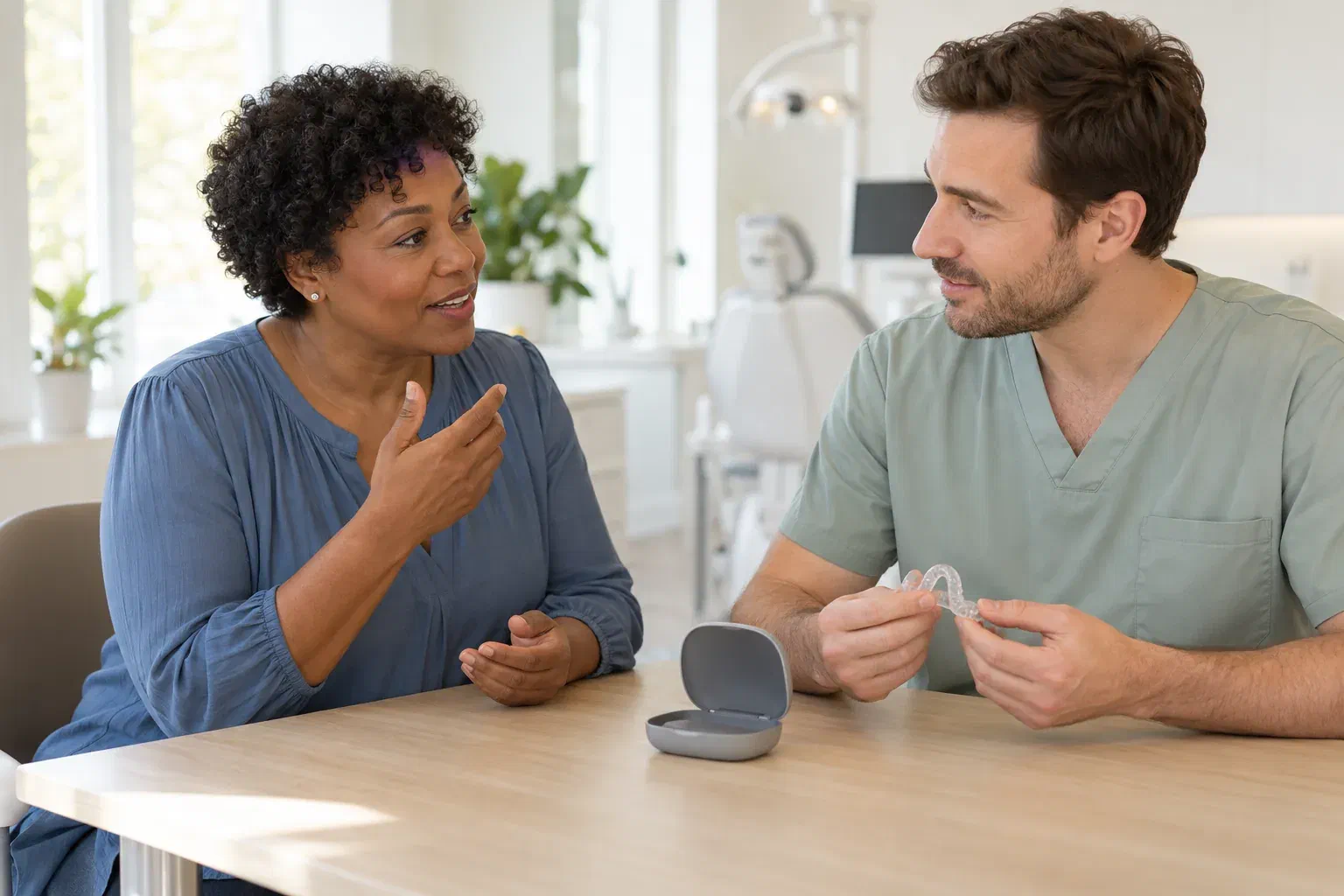
Illustrative discussion about sleep-appliance comfort and fit
Specialized Care

Sleep Appliance Adjustments in Old Milton

An oral sleep appliance you have worn for years can slowly stop feeling like it did on day one. From Old Milton, bring it in for a careful look at fit, jaw comfort, and settings, and plan any change and its follow-up within your prescribed sleep care.

Old Milton and the long-term appliance wearer

What if the appliance stayed the same and your mouth did not?

Plenty of people near Milton’s historic downtown have worn the same oral appliance for several years. Over that time, a crown gets placed, a tooth is repaired, or the material simply ages. When the device starts to feel tight, loose, or sore in one place, the question is what moved: the appliance, the teeth, or the jaw position set during an earlier adjustment. Those call for different decisions.

Two ideas are worth questioning early. A device pushed further forward is not automatically doing more good, and one that grips harder is not necessarily working better. The treatment position is a balance between the sleep benefit your physician intends and what your teeth, gums, and jaw tolerate. Feeling comfortable in it is welcome, yet comfort alone cannot tell you that sleep apnea is well managed.

Our Bronte Street practice is close by. Come with the appliance and its case, plus any instruction sheet or record of earlier settings you still have. Tell us where it was made and what has shifted since your last check. We can then discuss an assessment and whether the provider who supplied it, or another qualified clinician, should be part of the decision before the device is touched.

Arrange a look at your sleep appliance
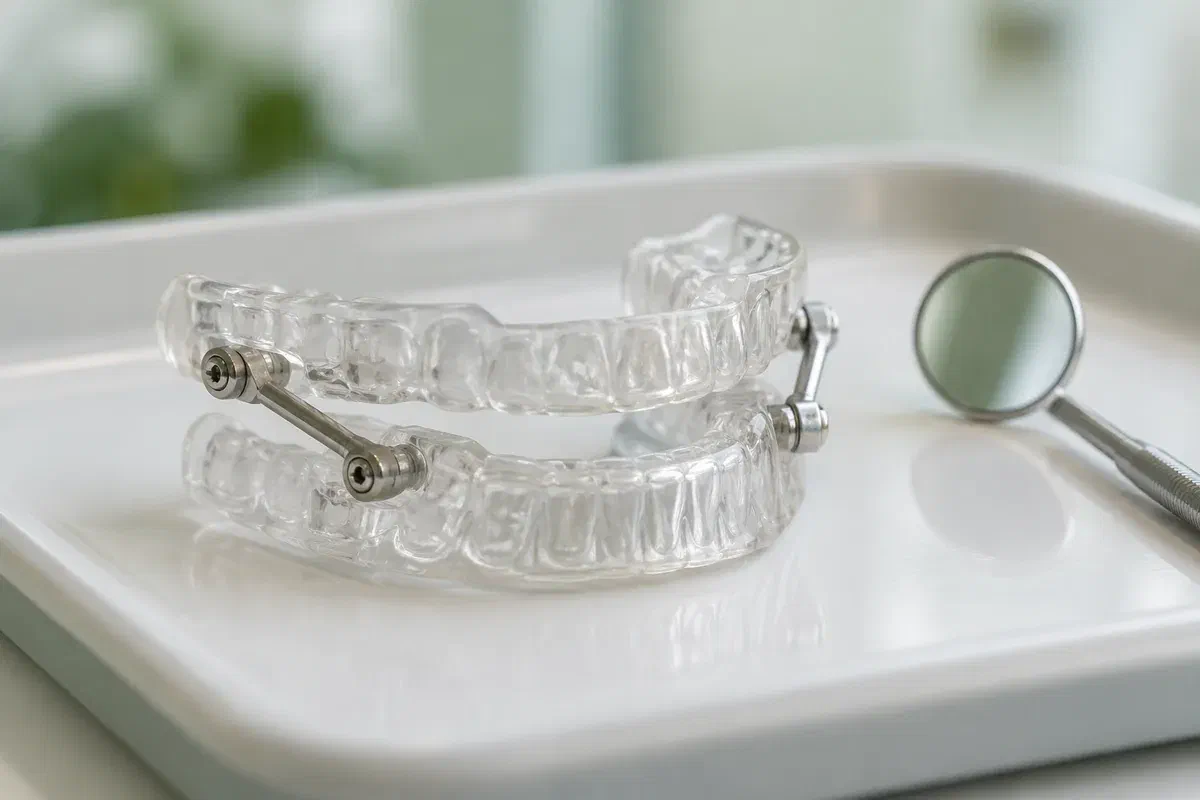
Illustrative connected oral sleep appliance beside a dental mirror
Signs a long-worn device needs attention

Sore spots, a different bite, and fading results each tell their own story.

Share when the change began and any dental work or appliance repairs in recent months. Please do not wear it through pain or press it into place to reproduce the problem before you come in.

One area that has started to rub

Point out where the irritation is and whether it lingers after the device comes out. A filling or crown placed since the appliance was made is important to mention. The exam considers the contact area and the health of the tooth or gum beneath it, because reshaping the device is not always the right fix.

A jaw that aches or a bite that has drifted

Explain whether the soreness appears overnight, first thing in the morning, or as the day goes on, and whether your teeth settle back into their familiar contact. Pain that persists, a jaw that locks, or a lasting bite change should be reviewed. Pushing the setting further to override discomfort is not a safe strategy.

Symptoms returning after years of quiet nights

If a bed partner mentions snoring again, or you feel more tired during the day, bring that up along with any setting log. If you have lost track of the mechanism after so long, that is fine to admit. Your dentist and your sleep physician may need to look at separate pieces, including whether treatment effectiveness should be retested.

Set the appliance aside if it is cracked, has a part working loose, causes significant pain, or cannot be seated securely. Reach the provider who manages it promptly, and ask your sleep physician how to manage your condition while it is out of use.

What a review can sort out

A clear reason, then a clear way to measure the result

With an older device especially, the review should identify the real issue before any component is changed. That might be fit, a tissue contact, jaw position, material wear, or a tooth that needs its own treatment. An adjustment earns its place when the cause is understood and the outcome can be checked at a later visit.

It also gives you a chance to refresh instructions that may have faded over the years. Mention which steps you are no longer sure about. Ask for a demonstration of the mechanism and a written note of any change that is approved, so you are not reconstructing the setting from memory at home.

Patient information: AADSM — identifying an appropriate therapeutic appliance position

A comparison with the original fitting

The clinician can go over records, previous settings, and what has changed since the device was first made. If it came from another office years ago, ask which details are still missing. A good history helps tell a new problem apart from an old one that was never properly resolved or recorded.

A fix aimed at the true source

Irritation from an edge, a device that has loosened, and an aching jaw do not share a single remedy. Ask how the exam findings support what is being recommended. When a tooth or the jaw is the real concern, further dental assessment may need to come before anything else.

A set time to see how it went

Ask what you should notice, which changes deserve a call, and when the result will be reviewed. The plan should cover comfort and your ongoing sleep care. Something that feels right in the chair still needs a check once you have slept in it for a while.

What happens at the visit

Four steps, from your story to a written plan

Bring every component and the instructions you currently use. If you have tightened, loosened, or repaired anything yourself, describe exactly what was done so the clinician understands the device as it is now.

  1. Hear the concern and revisit the care plan

    You describe the symptoms, how regularly you wear the appliance, and when the trouble started. The clinician asks about recent dental work, any updates from your sleep physician, and the supplier’s original instructions. Ask whether the records available are enough or if coordination is needed first.

  2. Check the device and the mouth together

    The appliance is inspected, and the relevant teeth, gums, bite, and jaw are assessed. Ask whether age or wear limits what can be done. A mechanism that still adjusts is not evidence that the device is intact, well positioned, or suitable for more changes.

  3. Make an appropriate, authorized change if one fits

    If an adjustment is suitable, its purpose and the instructions afterwards are explained. Certain designs must return to the original provider or a lab, so a same-day change is not always possible. Confirm whether the therapeutic setting was altered or only a fit or contact problem.

  4. Record the outcome and plan follow-up

    Leave with clear guidance on wear, any planned progression, and what to do if symptoms return. Confirm your next dental review and whether your sleep physician should be updated. Testing whether sleep apnea is controlled remains separate from checking how the device feels.

Living with the adjusted appliance

Let the new setting settle before you change anything else.

Aftercare is specific to your device and situation. If a step is unclear, ask before turning a mechanism, swapping a part, or moving past the setting you were given.

Write down what was changed and when

Keep a short note of the setting or instruction and the date. Record meaningful symptoms without repeatedly testing the appliance. That note helps the team see how you responded, instead of piecing together several positions from a vague memory.

Speak up about pain or a bite that feels wrong

Contact the provider if soreness continues, chewing feels different, or the device cannot be worn as advised. Do not force it or keep advancing through discomfort. If wear has to pause, ask for an interim plan and make sure your sleep physician knows.

Keep your regular dental and medical checks

Quieter sleep is good news to share, but it is not the only test of treatment. Dental visits watch for effects on your teeth and jaw, while your physician decides how the sleep benefit is confirmed. Let both know about any significant change.

Where the review may lead

Adjust, treat a tooth, or rethink the approach

Ask which option answers what was found and what still needs review afterwards. The purpose is appropriate care within your prescribed plan, not shifting the device until it simply feels new.

When the device and tissues allow it

A localized fit or comfort change

A qualified provider may be able to relieve a rubbing point or correct a specific fit issue. Ask what is being changed and whether the therapeutic position is affected. The appliance should be rechecked afterwards, with clear advice on reporting continued irritation or a new problem.

When advancement belongs to your plan

A prescribed shift in jaw position

Some designs allow gradual changes under professional direction, at a pace and endpoint set for you. Ask how the response will be judged and when to stop and call. Advancing the setting on your own does not take the place of reviewing persistent symptoms or effectiveness.

When adjustment is not enough

Repair, a replacement, or another pathway

An aging device, changes in your teeth, or difficulty tolerating it may point to a different approach. Ask whether the manufacturer, another qualified dental provider, or your sleep team should be involved. If use stops, clarify how your sleep condition will be managed in the meantime.

Patient information: AADSM — professional management of oral-appliance side effects

Questions from Old Milton

Easing a sore spot is one thing. Moving your jaw is another.

Have the device and your current instructions with you. The right step depends on its design, what the exam shows, and the medical plan it supports.

(905) 876-4488
My appliance is several years old. Can it still be adjusted?
Sometimes. Age, material wear, and the design all affect what is possible. The clinician will inspect it and your teeth before suggesting anything. If it cannot be safely changed, repair, replacement, or a discussion with your sleep physician may be the next step.
Can my teeth shift because of long-term appliance wear?
Changes in tooth position and bite are a recognized possibility with long-term oral appliance use, which is one reason regular dental review matters. Mention any change you notice in how your teeth meet. The clinician can assess it and discuss options with you.
I had a crown done after my appliance was made. Could that be why it pinches?
It could, because a new tooth shape can change how the device sits. It still needs assessment rather than assumption. Bring the appliance, mention the crown, and avoid forcing it over the tooth or altering it at home.
Is filing down a rough edge the same as changing my appliance setting?
No. Easing a contact point and changing jaw position serve different purposes. Ask which one is proposed and whether the treatment setting is affected. Both need an understanding of the device and your mouth, so neither should be tried at home.
I lost my old setting record. What now?
Call whoever looks after the appliance, then bring the device and any paperwork you can find. Do not guess or try a series of positions. The clinician may need to compare the mechanism with available records before advising you.
Should my sleep physician hear about an appliance adjustment?
Often, yes. The dental review covers the device and your mouth, while your physician oversees how sleep apnea control is assessed. Ask whether the change should be shared and whether a follow-up sleep evaluation is recommended.
Visit from Old Milton

An older appliance deserves a fresh look.

Contact Milton Dental Clinic about a sleep appliance that has started to fit or feel differently. Tell us the device type, who supplied it, and what you are noticing, so we can discuss an assessment, helpful records, and any coordination needed.

Changes to the device should stay within your agreed dental and medical treatment plan.

Visit Milton Dental Clinic
Unit 1, 342 Bronte St. S, Milton, ON L9T 5B7
Get directions Clinic hours
Monday–Thursday
11am–7pm
Friday–Sunday
By appointment only

Areas we serve

  • Milton
  • Oakville
  • Mississauga
  • Georgetown
  • Halton Hills
  • Acton
  • Campbellville
  • Brampton
  • Burlington
  • Puslinch
  • Rockwood
  • Erin
  • Caledon
  • Etobicoke
  • Old Milton
  • Bronte Meadows
  • Timberlea
  • Dorset Park
  • Dempsey
  • Clarke
  • Beaty
  • Coates
  • Harrison
  • Scott
  • Willmott
  • Ford
  • Bowes
  • Cobden
  • Walker
  • Mountain View
  • Milton Heights
  • Hawthorne Village
  • Valley View
  • Fallingbrook
  • Nassagaweya
  • Trafalgar
  • Esquesing
  • Nelson
  • Brookville
  • Moffat
  • Glen Williams
  • Norval
  • Limehouse
  • Stewarttown
  • Ashgrove
  • Hornby
  • Silver Creek
  • Speyside
  • Scotch Block
  • North Oakville
  • River Oaks
  • Glen Abbey
  • West Oak Trails
  • Palermo
  • Bronte Creek
  • College Park
  • Joshua Creek
  • Uptown Core
  • Preserve
  • Iroquois Ridge
  • Lisgar
  • Meadowvale
  • Meadowvale Village
  • Churchill Meadows
  • Erin Mills
  • Central Erin Mills
  • Streetsville
  • East Credit
  • Creditview
  • Heartland
  • Sheridan
  • Mount Pleasant
  • Credit Valley
  • Huttonville
  • Churchville
  • Springbrook
  • Northwest Brampton
  • Bram West
  • Fletcher's Meadow
  • Fletcher's Creek South
  • Alton Village
  • Orchard
  • Millcroft
  • Headon Forest
  • Tansley
  • Brant Hills
  • Tyandaga
  • Kilbride
  • Lowville
  • Aberfoyle
  • Morriston
  • Arkell
  • Hillsburgh
  • Freelton
  • Carlisle
  • Waterdown
  • Flamborough
  • Mountsberg

How can we help?

Milton Dental Clinic

Have a question about your smile? Choose the option that works best for you.

For urgent dental concerns, please call.
Messages are reviewed during clinic hours.