
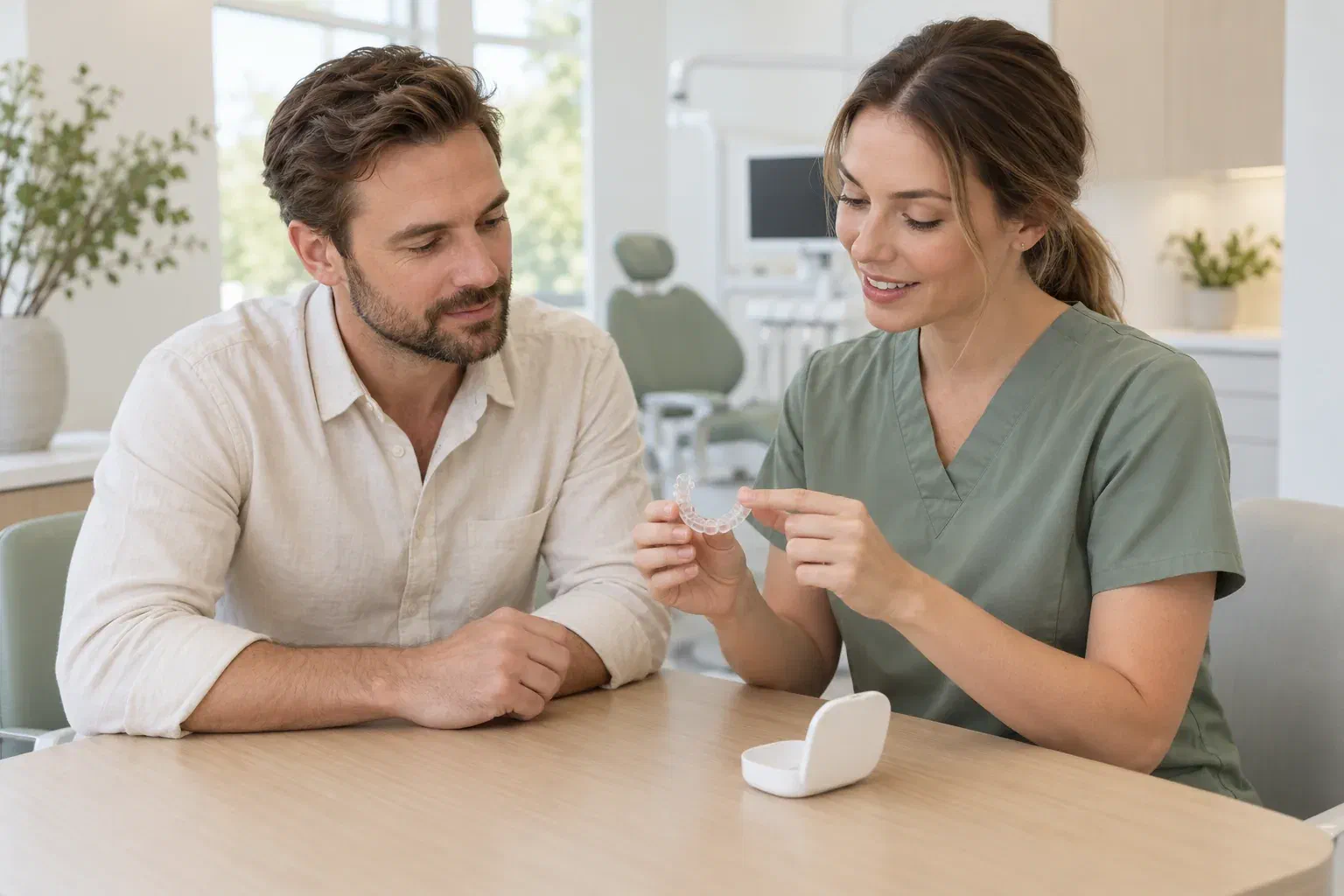
Illustrative explanation of how to handle a custom oral sleep appliance
Specialized Care

Sleep Appliance Fitting in Erin

A fitting is a checkpoint, not a formality. Sometimes the custom sleep appliance is ready that day; sometimes it needs more work first. For households in Erin, knowing both outcomes are possible makes the trip easier to plan.

Erin · a fitting is a checkpoint

Some appliances go home today. Some need one more step.

After weeks of assessment, planning and lab work, it is natural to expect the fitting to end with the appliance in your hand. Often it does. But the purpose of the visit is to find out whether the custom device actually suits your mouth and your plan, and occasionally the honest answer is not yet. Going in with that understanding makes the appointment far less stressful.

Readiness has two sides. The device has to sit properly, and you have to be able to use it: seat it, release it, clean it and understand whether anything is ever adjusted. Each design handles differently, so instructions borrowed from another appliance or a generic mouthguard can mislead. Watch the clinician demonstrate yours, then practise, and say if your hands, eyes or the mechanism are making it hard.

When you contact us, mention whether the appliance has been prescribed or made and which provider is managing your sleep care. That helps us plan records and coordination. Even when everything fits well, a comfortable device has not been shown by that alone to treat the sleep condition, and the fitting is not a diagnosis.

Find out what to expect from your fitting
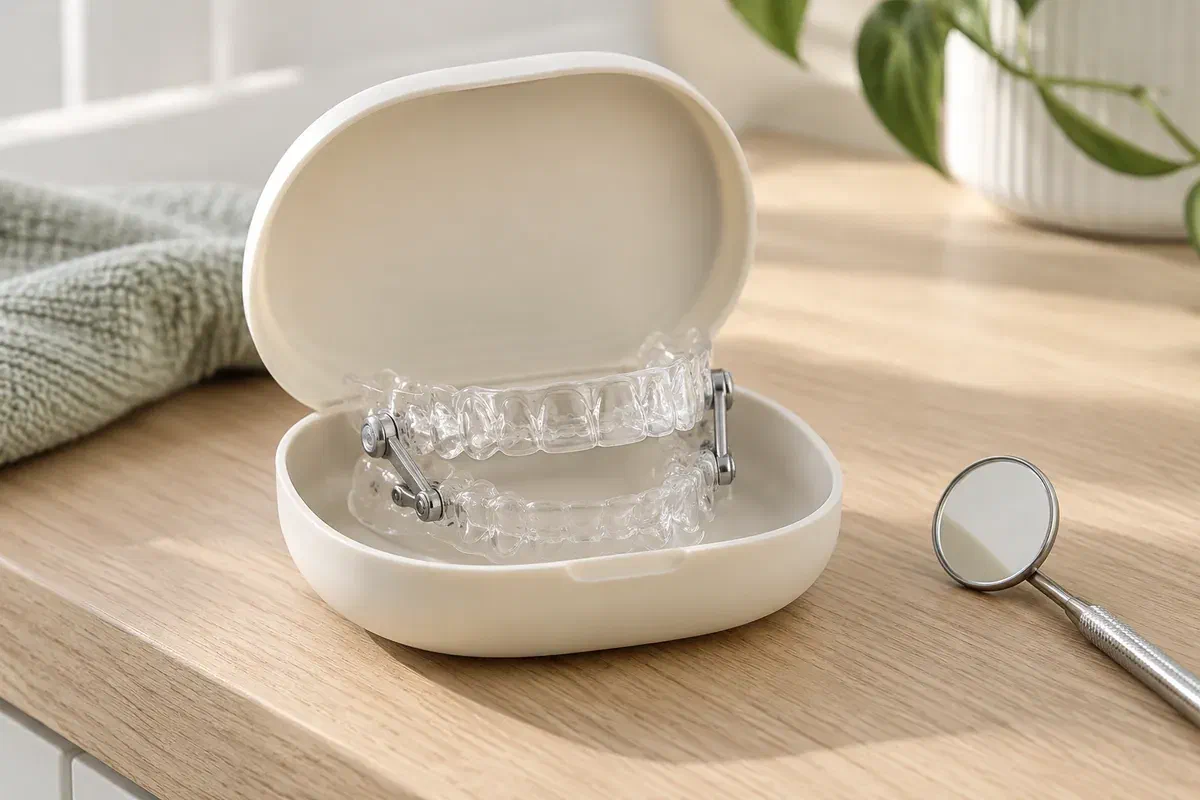
Illustrative connected sleep appliance in an open protective case
Things that can affect readiness

What decides whether it goes home with you?

Raise any doubt while the appliance is being checked. A question answered in the chair can be the difference between a device you can use and one that sits in a drawer.

You cannot yet manage the handling

Learn the grip and the order in which the parts engage for this design, then try removal as often as insertion. If neither feels dependable after practice, that matters to the decision. More teaching, or another approach, is a better outcome than leaving and resorting to force at home.

Something presses, pinches or will not settle

Describe every sensation during the check. Awareness of a new appliance is ordinary; pain, irritated gum tissue or a tray that will not seat fully is a reason to pause. The clinician will consider whether to adjust now, assess further or revisit the arrangement before you begin.

The starting instructions are not clear

You should know which setting the plan starts with and whether you are permitted to change it. Ask for the specific steps, when they apply and what would mean stopping and calling. The fitting setting is not always final, and many appliances are adjusted only by the clinician.

Tell the clinician about dental treatment or tooth changes since the appliance was designed. New restorations, an extraction or fresh sensitivity can affect the fit, and may be the reason a device needs attention before it is ready.

Why a real checkpoint helps

Better a short delay than a device you cannot wear.

The clinician tests the appliance against two things: the design that was planned and your mouth as it is now. Ask what each check involves and what would happen if one turned up a problem. A device does not become ready simply by arriving from the lab; the clinical fit and your understanding of it are what count.

Even on a day when everything goes smoothly, this is one stage of several. The starting position and schedule may be followed by adjustments and reviews of comfort and treatment response. Ask which steps sit with the dental team and how the medical provider will judge whether the appliance is working.

Patient information: AADSM — appliance delivery, patient instruction, and continuing management

Practice that shows you are ready

Demonstrate the routine yourself while the clinician watches, and ask for another run-through if anything falters. Be open about any handling limit. If a family member may help, ask what they should learn, rather than assuming any technique that seems to work is safe.

Instructions you can act on

Request written notes on wear, cleaning, storage and any permitted adjustment, filed with the lab and provider details. Clear notes are especially valuable when components look alike, or when you need to tell a routine care step from a change to the treatment setting.

A clear record of where things stand

Whether the device goes home or not, make sure the fit, bite and jaw findings are documented and the next appointment is agreed. Ask how to reach the provider in between. You should never leave unsure of what happens next or who to contact.

The fitting from start to finish

Each step can confirm readiness or flag a reason to wait.

Bring your sleep-care records and any lab paperwork, and mention changes since assessment. If you are making a longer trip, ask beforehand whether a second visit could be needed.

  1. Checking the prescription and your changes

    The clinician confirms the intended device and the pathway it supports, then asks about dental work, symptoms and health changes since you were assessed. Ask if anything here affects readiness. Appliances supplied by another office may need their prescription clarified before the fitting continues.

  2. Testing the fit

    Seating, retention and contact with your gums and cheeks are assessed against your teeth and restorations. Tell the clinician what you feel instead of guessing whether it is normal. This is the step most likely to reveal that more work is needed.

  3. Practising handling and care

    You rehearse insertion and removal and learn how this design is cleaned and stored. The starting setting is confirmed, along with anything you may change at home. Ask which parts are for you to handle and which are professional-only, and request another explanation if needed.

  4. Agreeing on what comes next

    If the appliance is ready, arrange the dental review and learn how the sleep provider will measure response. If it is not, confirm the next appointment and the interim sleep-care plan. Either way, ask what to do about significant discomfort or a change in your bite.

When the appliance does go home

Begin carefully, exactly as instructed.

Follow the starting plan for your device. A schedule or cleaning habit that works for someone else's appliance may be wrong for yours.

Use the technique from the fitting

Insert and remove the appliance the way you practised and follow the starting routine. If a step proves too difficult, or wearing it is uncomfortable, call the provider. Do not force it, advance the setting on your own or devise a homemade way to keep it in.

Clean and store it as directed

Ask which cleaner, water temperature and storage method suit its materials. Avoid heat and any product nobody has approved. Keep the case closed and out of reach of pets, away from anything that could crush or misplace it, and bring it to every review.

Report problems promptly

Note any difficulty with wear, the fit, your jaw or how your teeth meet after removal. Tell the provider what happened rather than quietly changing the plan. Early reports give them a chance to adjust, assess or bring in your physician.

Three possible outcomes

Ready now, ready soon, or a different route.

Ask why the clinician recommends a particular outcome and how it changes your timeline. The appliance should go home only once the fit is suitable and the instructions make sense, not because a delivery was booked.

Fit and handling are confirmed

Start wearing it as prescribed

Once every check is passed, you head home with a starting routine and a date for review. Find out the simplest way to raise a worry before that appointment. Comfort, how your teeth and jaw respond, and the effect on your sleep are all looked at again later.

The fit or your teeth need attention

One more step before it is ready

A pressure point, a seating problem or recent dental work may require adjustment, lab input or dental treatment first. Ask how long that is likely to take and whether you need to return. An explained delay beats a device you cannot use safely.

This device does not meet current needs

Reconsidering the appliance or plan

Findings may point toward another design, a specialist assessment or a conversation with your medical sleep provider. Ask which issue changed the plan and how care will continue. Your sleep condition should still have an agreed approach.

Questions from Erin

Ready today, or ready after one more visit?

Your device and plan shape every answer. List your questions in advance so the clinician can respond with the appliance in front of you.

(905) 876-4488
Can a fitting end without me taking the appliance home?
Yes. If the fit, your handling or a dental change needs attention, the clinician may recommend more work first. You should be told the reason, what happens next and what sleep care continues in the meantime.
What happens if the appliance has to go back to the lab?
Ask how long the work is expected to take and when you will return. Confirm your interim sleep-care plan with your medical provider. The appliance should be checked again at the next visit before use begins.
Who looks after my sleep condition while the appliance is delayed?
Your medical sleep provider. Continue any prescribed treatment unless they advise otherwise, and let them know about the delay if appropriate. The dental team can share relevant information as part of coordinated care.
Could the fitting show that a different appliance would suit me better?
It can happen. If the device cannot be made to fit safely, or you cannot manage its handling, a different design or approach may be discussed. Ask what led to that conclusion and how care will continue.
Can I ask for more practice before taking the appliance home?
Yes, and it is a reasonable request. Tell the clinician if you are not confident inserting or removing the device. Extra teaching, or a short return visit, is better than struggling at home.
How should I plan the trip from Erin if a second visit might be needed?
Ask when booking whether a follow-up is likely for your appliance, and leave some flexibility in your schedule. Bring all your records and dental updates to the first visit, which can reduce the chance of an extra trip.
Plan your fitting from Erin

Go in expecting a real check.

Get in touch with Milton Dental Clinic about fitting your sleep appliance and the records involved. Let us know who prescribed it, whether the lab has finished it, and about any dental work since your assessment, so we can prepare.

Readiness and instructions depend on the device and your coordinated care plan.

Visit Milton Dental Clinic
Unit 1, 342 Bronte St. S, Milton, ON L9T 5B7
Get directions Clinic hours
Monday–Thursday
11am–7pm
Friday–Sunday
By appointment only

Areas we serve

  • Milton
  • Oakville
  • Mississauga
  • Georgetown
  • Halton Hills
  • Acton
  • Campbellville
  • Brampton
  • Burlington
  • Puslinch
  • Rockwood
  • Erin
  • Caledon
  • Etobicoke
  • Old Milton
  • Bronte Meadows
  • Timberlea
  • Dorset Park
  • Dempsey
  • Clarke
  • Beaty
  • Coates
  • Harrison
  • Scott
  • Willmott
  • Ford
  • Bowes
  • Cobden
  • Walker
  • Mountain View
  • Milton Heights
  • Hawthorne Village
  • Valley View
  • Fallingbrook
  • Nassagaweya
  • Trafalgar
  • Esquesing
  • Nelson
  • Brookville
  • Moffat
  • Glen Williams
  • Norval
  • Limehouse
  • Stewarttown
  • Ashgrove
  • Hornby
  • Silver Creek
  • Speyside
  • Scotch Block
  • North Oakville
  • River Oaks
  • Glen Abbey
  • West Oak Trails
  • Palermo
  • Bronte Creek
  • College Park
  • Joshua Creek
  • Uptown Core
  • Preserve
  • Iroquois Ridge
  • Lisgar
  • Meadowvale
  • Meadowvale Village
  • Churchill Meadows
  • Erin Mills
  • Central Erin Mills
  • Streetsville
  • East Credit
  • Creditview
  • Heartland
  • Sheridan
  • Mount Pleasant
  • Credit Valley
  • Huttonville
  • Churchville
  • Springbrook
  • Northwest Brampton
  • Bram West
  • Fletcher's Meadow
  • Fletcher's Creek South
  • Alton Village
  • Orchard
  • Millcroft
  • Headon Forest
  • Tansley
  • Brant Hills
  • Tyandaga
  • Kilbride
  • Lowville
  • Aberfoyle
  • Morriston
  • Arkell
  • Hillsburgh
  • Freelton
  • Carlisle
  • Waterdown
  • Flamborough
  • Mountsberg

How can we help?

Milton Dental Clinic

Have a question about your smile? Choose the option that works best for you.

For urgent dental concerns, please call.
Messages are reviewed during clinic hours.