
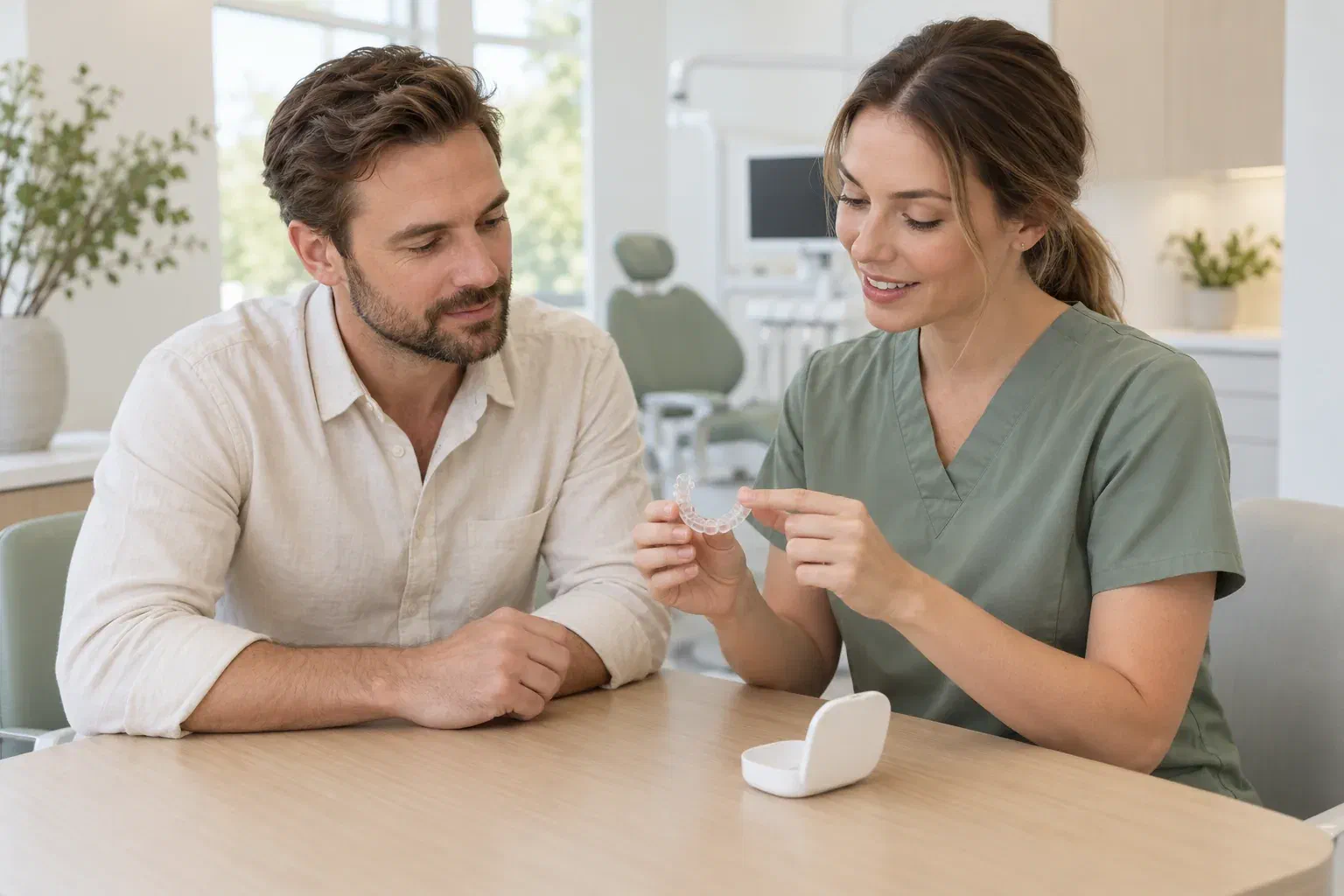
Illustrative explanation of how to handle a custom oral sleep appliance
Specialized Care

Sleep Appliance Fitting in Puslinch

Wearing a custom sleep appliance becomes a habit only if the first nights go smoothly. If you are travelling in from Puslinch, use the fitting to check the device, learn the handling and agree on a starting routine you can keep.

Puslinch · building the nightly habit

A good routine starts in the chair.

Habits stick when they are simple and familiar. A custom oral sleep appliance asks you to add a new step to every bedtime and every morning, and a shaky start can make it tempting to leave the device in its case. That is why the fitting matters. Once you have been assessed and a plan is in place, this visit checks the appliance and teaches the routine.

Your routine should be built around this specific design. The way it seats and releases, how it is cleaned and whether its position changes later are not the same for every appliance. Borrowed advice from a friend or a pharmacy mouthguard may not help. Ask for a demonstration on your own device, then practise in front of the clinician, and speak up if grip, vision or the mechanism slows you down.

When you call, let us know whether the device has been prescribed or made and which provider is guiding your sleep care. Together we can sort out records and coordination. Wearing the appliance every night is important, but comfort and consistency alone do not show that the treatment is effective.

Talk with us about starting your routine
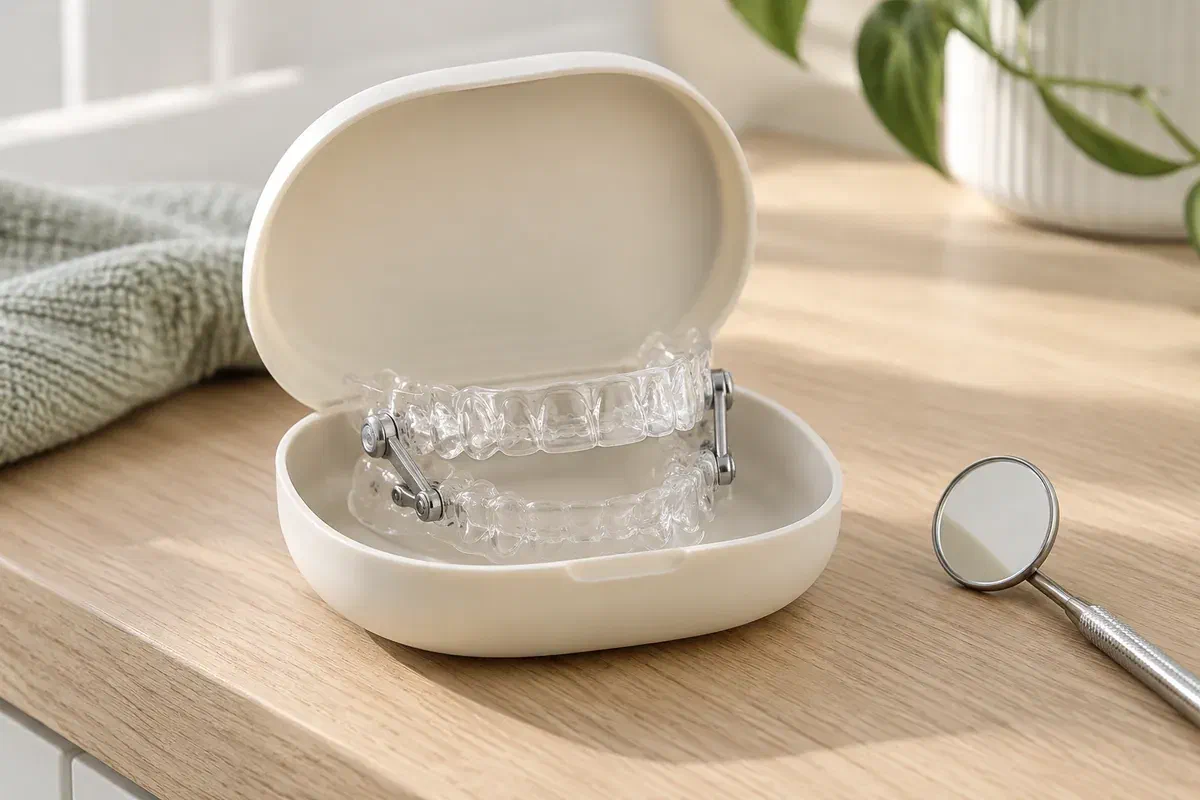
Illustrative connected sleep appliance in an open protective case
What could derail the first week?

Small obstacles are the ones that stop people wearing it.

Think through the steps you will repeat each night. Raise anything that feels awkward now, with the clinician beside you, rather than letting it become the reason the device stays in the drawer.

A fiddly step at bedtime

If inserting or removing the appliance takes several attempts, the habit will suffer. Ask exactly how to hold this design and how its parts fit together, and practise until the sequence feels smooth in both directions. Tell the clinician if it never does; pressing harder or biting down is not the solution.

Discomfort that makes you dread wearing it

Mention anything that feels wrong during the check. A new device will be noticeable, but pain, rubbing on the gums or a tray that does not settle are different. The clinician can decide whether to adjust, assess further or change the plan before your nightly routine begins.

Uncertainty about where to start

Confirm the starting setting and whether you are allowed to change it. Ask for clear steps, timing and the signs that should make you stop and call. The fitting setting may not be where you finish, and on many appliances adjustments are made only by a professional.

Has a dentist worked on your teeth since the appliance was designed? Say so at the start of the visit. Even a modest repair, a crown or a tooth taken out can change how the trays grip, so the fit deserves a fresh look before the habit begins.

How the fitting supports the habit

Confidence makes consistency easier.

Before anything else, the device is held up against two references: the design your clinician ordered and the teeth and gums in front of them now. You are welcome to ask what each check involves and what would happen if one fails. Coming back from the lab is not the same as being ready; a confirmed fit and usable instructions are what make it wearable night after night.

Expect the routine to evolve. The starting position and schedule may be early stages of a plan that includes later adjustments and reviews of comfort and response. Find out which tasks fall to the dental side and how your medical provider intends to check effectiveness, so you know where each question belongs as the weeks go by.

Patient information: AADSM — appliance delivery, patient instruction, and continuing management

Repetition with supervision

Habits form through repetition, so do the full sequence several times with the clinician looking on, and request another demonstration without hesitation. Be honest about stiff fingers or poor close vision. If a partner might help some nights, work out together what they should learn rather than trusting any method that happens to work.

A written routine to follow

A one-page routine on the bathroom shelf is easier to follow than a memory of the appointment. Request notes covering wear, cleaning, storage and any adjustment you are permitted, plus the names of the lab and provider. Those notes also help you tell ordinary care apart from a change in the treatment setting.

A baseline and an early check-in

Your fit, bite and jaw findings at the fitting become the reference for every later visit, so check they are written down. Put the first review in your calendar before leaving, and learn how to get in touch earlier if trouble starts. Struggling on alone until a routine checkup should never be the plan.

Step by step

From prescription check to your first night's plan.

Bring your sleep-care information and mention any changes since assessment. Plan enough time to practise the routine until it feels natural, without rushing to the next commitment.

  1. Prescription and health review

    Your clinician starts by matching the appliance to the treatment pathway it was made for, then catches up on dental visits, new symptoms and health news since the assessment. It is worth asking if anything raised here could hold up the fitting. A device supplied through a different office may need its paperwork confirmed first.

  2. Fit assessment

    Seating, retention and contact with the gums are checked against your teeth and restorations. Describe pressure or pain in your own words rather than deciding whether it is normal. The clinician decides whether the device is ready to use or needs more work first.

  3. Practising the routine

    You rehearse putting the appliance in and taking it out and learn how this design is cleaned and stored. The starting setting is confirmed, along with any change you may make. Ask which parts are safe for you to handle and which are for professionals only.

  4. Planning the weeks ahead

    Before you leave, settle when the dental team will see you next and how your sleep physician plans to judge whether the appliance is helping. Get advice on genuine discomfort, a bite that feels off, and nights when wearing it is impossible. Should use have to wait or pause, be clear about what sleep care carries on.

Making it part of every night

Same time, same steps, same case.

Follow the plan written for your device. Avoid adopting another person's schedule or cleaning habits, even if their appliance looks just like yours.

Keep the routine consistent

Place and remove the appliance the way you practised and follow the prescribed starting routine. A step you cannot manage, or wear that is clearly uncomfortable, is a reason to call. Do not force it, skip ahead in the settings or rig up a way to keep it in.

Make cleaning part of the routine

Ask which cleaner, water temperature and storage method suit the appliance, and pair cleaning with something you already do each morning. Avoid heat and products nobody has approved. Keep the case where pets and accidents cannot reach it, and take it to every review.

Track the nights, good and bad

Note when you wore it, what made a night difficult, and any jaw discomfort or a bite that feels different once it is out. Share those obstacles instead of quietly cutting back. With the full picture, the provider can help solve the problem and loop in your physician where that makes sense.

Next steps after the check

Start the habit now, or set it up properly first.

Whatever is recommended, you deserve the reasoning and a sense of how it shifts your timeline. Take the appliance home once it has passed its checks and the instructions make sense to you; finishing the appointment on schedule is not a reason.

Fit and instructions confirmed

Begin the prescribed routine

A suitable appliance goes home with a starting routine and a review date. Ask what the quickest way is to flag a concern before that visit. Later appointments revisit comfort, any oral effects and how your sleep is responding, so tonight is the first page of the plan, not the last.

A fit or oral-health issue remains

Adjust or treat first

Sometimes the trays press in one spot, refuse to seat, or no longer suit a tooth that was recently repaired. Find out if that can be fixed on the day or needs the lab or a second visit. Building a habit around a device that is not safe to wear would only make things harder later.

This appliance cannot meet current needs

Rethink the approach

Findings may suggest a different design, a specialist assessment or a discussion with the medical sleep provider. Ask what changed and how care continues. Your sleep condition should still have an agreed plan while the next step is worked out.

Puslinch questions about getting started

Habits, comfort and keeping everyone informed.

Your device and care plan shape the answers. Note your questions ahead of the fitting so they can be answered with your appliance in front of the clinician.

(905) 876-4488
How long does it take to get used to wearing a sleep appliance?
It varies from person to person. Follow the starting routine you were given and note how each night goes. If discomfort or difficulty continues, contact the provider rather than waiting for it to settle on its own.
Can I wear the appliance for only part of the night at first?
Only if your plan says so. Follow the prescribed starting routine, and if you find yourself removing the device during the night, mention it to the provider so the reason can be looked into.
Can I sip water while the appliance is in?
Ask at the fitting what is practical for your design. Some people find it easier to remove the device briefly. Follow the guidance you were given and put the appliance back in using the correct technique.
Should my family doctor know I have started using a sleep appliance?
Yes. Keeping your medical providers informed supports coordinated care. Ask whether the fitting clinician will share information with the provider managing your sleep condition, or whether you should do so.
What if I feel anxious or closed in with the appliance in my mouth?
Mention it at the fitting or to the provider afterwards. Do not force yourself through it in silence. The clinician can talk through the routine with you and discuss whether any change to the plan should be considered.
Can follow-up be arranged around trips from Puslinch?
Ask when booking how reviews will be scheduled, and whether some questions can be handled by phone first. Fit problems still need to be seen in person, so plan the first review before you leave the fitting.
Planning from Puslinch

Start with a routine you can keep.

Contact our team at Milton Dental Clinic to book a sleep-appliance fitting and learn which records to bring. Tell us who prescribed your appliance, whether it has been made, and about any dental treatment since your assessment.

Fitting instructions vary by appliance and the care plan your providers share.

Visit Milton Dental Clinic
Unit 1, 342 Bronte St. S, Milton, ON L9T 5B7
Get directions Clinic hours
Monday–Thursday
11am–7pm
Friday–Sunday
By appointment only

Areas we serve

  • Milton
  • Oakville
  • Mississauga
  • Georgetown
  • Halton Hills
  • Acton
  • Campbellville
  • Brampton
  • Burlington
  • Puslinch
  • Rockwood
  • Erin
  • Caledon
  • Etobicoke
  • Old Milton
  • Bronte Meadows
  • Timberlea
  • Dorset Park
  • Dempsey
  • Clarke
  • Beaty
  • Coates
  • Harrison
  • Scott
  • Willmott
  • Ford
  • Bowes
  • Cobden
  • Walker
  • Mountain View
  • Milton Heights
  • Hawthorne Village
  • Valley View
  • Fallingbrook
  • Nassagaweya
  • Trafalgar
  • Esquesing
  • Nelson
  • Brookville
  • Moffat
  • Glen Williams
  • Norval
  • Limehouse
  • Stewarttown
  • Ashgrove
  • Hornby
  • Silver Creek
  • Speyside
  • Scotch Block
  • North Oakville
  • River Oaks
  • Glen Abbey
  • West Oak Trails
  • Palermo
  • Bronte Creek
  • College Park
  • Joshua Creek
  • Uptown Core
  • Preserve
  • Iroquois Ridge
  • Lisgar
  • Meadowvale
  • Meadowvale Village
  • Churchill Meadows
  • Erin Mills
  • Central Erin Mills
  • Streetsville
  • East Credit
  • Creditview
  • Heartland
  • Sheridan
  • Mount Pleasant
  • Credit Valley
  • Huttonville
  • Churchville
  • Springbrook
  • Northwest Brampton
  • Bram West
  • Fletcher's Meadow
  • Fletcher's Creek South
  • Alton Village
  • Orchard
  • Millcroft
  • Headon Forest
  • Tansley
  • Brant Hills
  • Tyandaga
  • Kilbride
  • Lowville
  • Aberfoyle
  • Morriston
  • Arkell
  • Hillsburgh
  • Freelton
  • Carlisle
  • Waterdown
  • Flamborough
  • Mountsberg

How can we help?

Milton Dental Clinic

Have a question about your smile? Choose the option that works best for you.

For urgent dental concerns, please call.
Messages are reviewed during clinic hours.