

Illustrative conversation about ongoing sleep-appliance care
Specialized Care

Sleep Appliance Follow-Up in Burlington

Waking at 3 a.m. and pulling the appliance out is a common story, and a useful one to share. From Burlington, book a follow-up that looks at why, checks the device and your mouth, and keeps your sleep physician informed.

When the night routine wobbles

The device goes in at bedtime. By morning, it's on the nightstand.

Half-night wear is one of the most ordinary reasons to book a review. Dryness, a sore spot or plain restlessness can mean the appliance comes out without you quite deciding to remove it. Follow-up examines the device and your mouth, explores what is interrupting use, and keeps the dental part of care tied to your physician's sleep review.

Nobody needs a perfect log to make this appointment worthwhile. It helps more to describe what usually happens: the hour you tend to wake, whether your mouth feels parched, whether the clasp leaves a tender patch. You can mention a problem plainly, even if you are not sure it is related.

Before you come in from Burlington, note who made the appliance and who manages your sleep care, and we will talk through which records the review needs. We can assess oral and appliance concerns; the medical sleep team decides how to evaluate whether treatment is doing its job.

Talk to us about interrupted wear
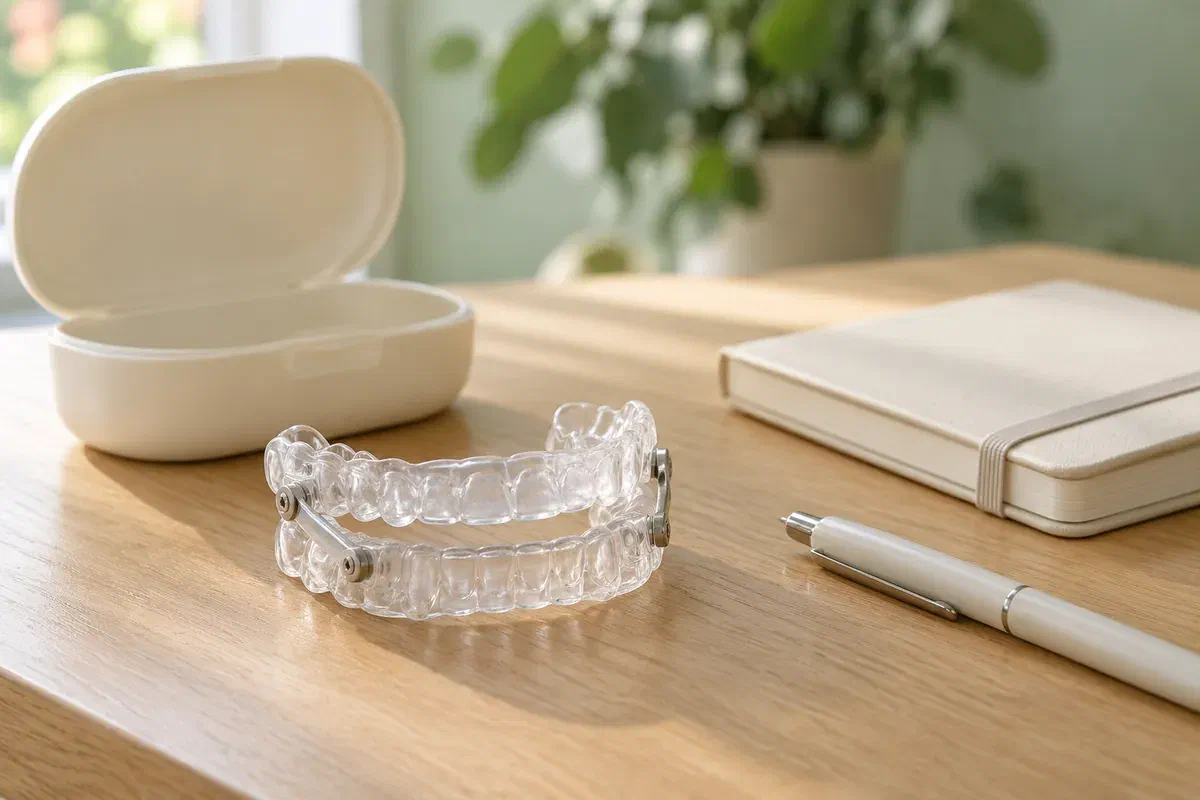
Illustrative oral sleep appliance beside its protective case and a closed journal
What to tell us from Burlington

Clues hidden in the way you wake up

Think about the mornings since your fitting or last check. When a change began, how often it occurs and whether it shortens your wearing time are all helpful, whether or not you can guess the reason.

The appliance comes out partway through the night

Say whether dryness, pressure, a feeling of crowding, a trip away or something else is behind it. Estimate how many hours or nights you manage on a typical week. That gives the clinician a realistic starting point instead of assuming your first instructions still suit you.

Morning bite or jaw comfort has changed

Describe teeth that feel slightly off when you first bite together, a tender tooth, tight jaw muscles, or new dental work. Mention how long the feeling lasts after removal and whether it is getting longer. A device that still fits in can need a fresh look against your current bite.

Your sleep doesn't feel as restful

Tell your sleep-care provider and the dental team if snoring has returned, someone has seen you stop breathing, or you are drowsier during the day. A tighter setting isn't presumed to be the answer. Those signs may call for medical reassessment, even with a device that seems intact.

For significant pain, a fit that feels unsafe or a component that has broken or loosened, contact your treating provider promptly. Don't wait for the next appointment to deal with a device you can't safely wear, and ask how your sleep treatment should carry on in the meantime.

What follow-up gives you

A clearer reason behind each change

Comparison is what turns an appointment into useful information. The clinician can read today's findings against earlier records, your description of wear and any dental treatment you have had. That is more revealing than inspecting the appliance by itself or treating the absence of complaints as proof that the plan still suits you.

It is also a chance to settle who acts next. Some concerns belong with the dental team, some with whoever made the device, and some with the medical sleep team. Asking that directly avoids confusion when your care happens across separate offices, or when a provider has changed along the way.

Patient information: AADSM — ongoing dental review and coordinated oral-appliance care

An examination of your mouth and appliance

Teeth, gums, bite and jaw movement can all be checked alongside the device itself. Ask what has changed and whether it needs attention. Many reviews don't involve any adjustment at all; the point is to identify what matters and agree how to respond.

A practical look at what breaks the routine

Explain the moment it usually goes wrong, whether that is falling asleep with it, waking at night or cleaning it in the morning. Bring the case and instructions if they confuse you. The answer may be more guidance, a fit check or a different plan rather than the same advice again.

Dental findings shared with your sleep provider

Check that your sleep physician has current information and whether any recommended test or appointment is outstanding. Feeling more rested is good news to share, but it doesn't settle every question about sleep apnea control. Ask how both sets of findings will guide the plan.

How the visit runs

From your mornings to a written plan

A good review begins with your experience of wearing the device and ends with clear tasks for everyone involved. Bring available records, the appliance instructions and any recent reports your sleep clinic has given you.

  1. Talk through a typical week of wear

    Describe how the appliance has been used since the last visit, including the nights it came out early and any changes you were told to make. Mention new symptoms, dental treatment, medications and health news. If you can't recall the setting, say so rather than guessing.

  2. Examine your mouth and the appliance

    The clinician looks at the relevant oral tissues and checks the device for wear and fit. Previous records may help make sense of a change in the bite or gums. Ask what was found, whether the appliance remains appropriate to wear, and whether anything else needs assessing first.

  3. Link what was found to the bigger picture

    Identify which concerns need dental care and which should reach your medical sleep provider. Ask whether effectiveness testing has been done or is under consideration. A comfortable device and a good treatment response are different things, and the plan should track both.

  4. Agree instructions and the next review

    Confirm what has been decided, who to contact and when to come back. Find out which warning signs mean ringing before then, and whether any wear or setting instruction has changed. If another provider needs an update, agree how it will be shared and who follows up.

The weeks after your review

Notice patterns, and keep guidance within reach.

You may be continuing as before, waiting on another assessment or trying a change your clinician recommended. Use the advice given for your appliance, and tell the dental and medical teams if keeping it in becomes harder.

Keep a simple note of disrupted nights

When discomfort, dryness, a fit issue or a sleep symptom cuts a night short, jot down the date. Nothing detailed is needed. Bring the notes to your next review, and seek help sooner if the problem can't reasonably wait.

Tell the dental team before work on gripped teeth

Mention the appliance when fillings, crowns or other treatment are planned on teeth it holds, and bring it with you. Ask how the work could alter the fit and whether the original provider needs to be involved. Don't push it over new work or grind it down yourself.

Hold on to dental and medical appointments

Know when each review is due and how to arrange any testing still outstanding. If time, cost or getting here is a barrier, let the team know. That conversation keeps an unresolved concern from quietly slipping between providers.

Patient information: NHLBI — living with sleep apnea and keeping treatment under review

Possible outcomes for Burlington appliance users

Each result points toward one of three paths.

Ask what each recommended step is supposed to fix. A device that appears to fit is not, by that alone, a reason for a stronger setting, a new appliance or stopping follow-up.

When dental findings support continued wear

Carry on with regular monitoring

If there is nothing to change, confirm how to wear and care for the device and when your next review is. Ask what should bring you back sooner. Medical follow-up still matters, because a reassuring dental exam isn't a full assessment of sleep apnea control.

When something in the mouth or the fit isn't right

Tackle a specific fit or dental problem

This may involve another examination, a professional adjustment, dental treatment or a visit to the provider who made the device. Ask whether to keep wearing it in the meantime, and understand why a step is advised before assuming the appliance is simply worn.

When symptoms, response or life circumstances change

Review the bigger plan with your sleep team

Should the current approach fall short, your physician might want a fresh measure of how well it works, or talk through other options. Share the dental findings and your difficulties with wear. In the meantime, avoid unprescribed mouthpieces, stopping treatment or making a big setting change yourself.

Night-time questions, answered

Small problems that cut nights short

Familiar treatment can still run into new obstacles. These answers cover dry mouth, half-night wear, testing and help between appointments.

(905) 876-4488
Why do I keep taking my appliance out in my sleep?
There can be several reasons, including discomfort, dryness or simply getting used to it. Describe the pattern at your review rather than guessing. The clinician can examine the fit and talk through practical support, and your sleep provider may need to know as well.
My mouth feels very dry in the morning. Is that worth mentioning?
Yes. Dryness can make wearing the device harder, so bring it up at follow-up along with how often it happens. The team can look at your mouth and the appliance and discuss whether anything else should be checked.
Should partial-night wear be counted as a missed night?
Just describe what happens, such as removing it after a few hours most nights. An accurate account matters more than a tidy record and helps both the dental and medical teams interpret how treatment is going.
How long should my teeth feel odd after removing the appliance?
Ask the clinician what to expect for your device. If the feeling lasts longer than it used to, becomes painful or changes how your teeth meet through the day, contact the treating provider rather than waiting for your scheduled review.
Does my sleep physician decide whether I need another test?
Yes, testing decisions belong with the medical sleep provider, who considers your symptoms, treatment stage and earlier results. A dental fit check can’t stand in for testing they recommend, so ask them directly.
Can I adjust the setting myself if snoring comes back?
Only follow setting instructions you have been given. Don’t make a large change on your own. Report returning snoring to your sleep provider and mention it at your dental review so the cause can be assessed.
Book from Burlington

Bring the appliance and a sense of how your nights really go.

Contact Milton Dental Clinic to set up a sleep-appliance review. Tell us who supplied the device, when it was last checked, and whether you are coping with a fit issue, interrupted wear, or a sleep-care review still to be booked.

Dental follow-up and the medical check on treatment effectiveness go hand in hand.

Visit Milton Dental Clinic
Unit 1, 342 Bronte St. S, Milton, ON L9T 5B7
Get directions Clinic hours
Monday–Thursday
11am–7pm
Friday–Sunday
By appointment only

Areas we serve

  • Milton
  • Oakville
  • Mississauga
  • Georgetown
  • Halton Hills
  • Acton
  • Campbellville
  • Brampton
  • Burlington
  • Puslinch
  • Rockwood
  • Erin
  • Caledon
  • Etobicoke
  • Old Milton
  • Bronte Meadows
  • Timberlea
  • Dorset Park
  • Dempsey
  • Clarke
  • Beaty
  • Coates
  • Harrison
  • Scott
  • Willmott
  • Ford
  • Bowes
  • Cobden
  • Walker
  • Mountain View
  • Milton Heights
  • Hawthorne Village
  • Valley View
  • Fallingbrook
  • Nassagaweya
  • Trafalgar
  • Esquesing
  • Nelson
  • Brookville
  • Moffat
  • Glen Williams
  • Norval
  • Limehouse
  • Stewarttown
  • Ashgrove
  • Hornby
  • Silver Creek
  • Speyside
  • Scotch Block
  • North Oakville
  • River Oaks
  • Glen Abbey
  • West Oak Trails
  • Palermo
  • Bronte Creek
  • College Park
  • Joshua Creek
  • Uptown Core
  • Preserve
  • Iroquois Ridge
  • Lisgar
  • Meadowvale
  • Meadowvale Village
  • Churchill Meadows
  • Erin Mills
  • Central Erin Mills
  • Streetsville
  • East Credit
  • Creditview
  • Heartland
  • Sheridan
  • Mount Pleasant
  • Credit Valley
  • Huttonville
  • Churchville
  • Springbrook
  • Northwest Brampton
  • Bram West
  • Fletcher's Meadow
  • Fletcher's Creek South
  • Alton Village
  • Orchard
  • Millcroft
  • Headon Forest
  • Tansley
  • Brant Hills
  • Tyandaga
  • Kilbride
  • Lowville
  • Aberfoyle
  • Morriston
  • Arkell
  • Hillsburgh
  • Freelton
  • Carlisle
  • Waterdown
  • Flamborough
  • Mountsberg

How can we help?

Milton Dental Clinic

Have a question about your smile? Choose the option that works best for you.

For urgent dental concerns, please call.
Messages are reviewed during clinic hours.