

Illustrative conversation about ongoing sleep-appliance care
Specialized Care

Sleep Appliance Follow-Up in Campbellville

A cracked piece or a loose clasp tends to show up at bedtime, not during office hours. From Campbellville, plan sleep-appliance follow-up that covers routine checks, helps you know what to do when something breaks, and keeps your sleep doctor informed.

Rural appliance care from Campbellville

The clasp gave way at bedtime. Now what?

Oral sleep appliances take a lot of handling, night after night, and parts eventually wear. Sometimes the first sign is a hairline crack or a connector that no longer holds. Regular follow-up is meant to spot that kind of wear early. It examines the device alongside your teeth and gums, and it keeps your physician aware of anything that affects your sleep treatment.

Talk to us about everyday use as it really is. Maybe the appliance spends a busy season of early starts and long workdays on the dresser, or a rough edge has been bothering your cheek. Those details shape practical advice, and you're welcome to raise them in plain terms without working out the cause first.

In a rural household, it often makes sense to plan dental visits together. When you call from Campbellville, tell us who made your appliance and who manages your sleep care, and we can discuss the records needed. We assess your mouth and the device; your medical team decides how to measure the treatment's effect.

Plan your next appliance check
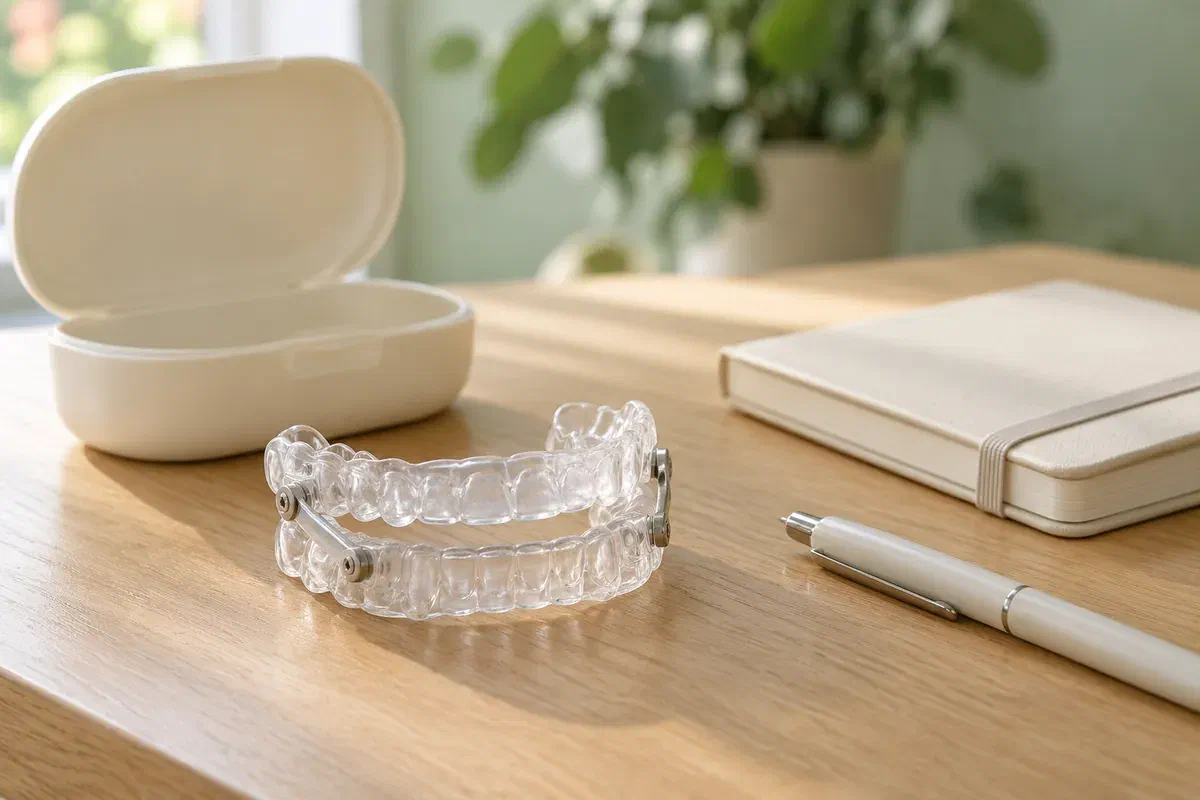
Illustrative oral sleep appliance beside its protective case and a closed journal
Problems worth flagging

Wear and tear rarely announces itself.

Look back at what has changed since the device was fitted or last examined. When you noticed it, how often it happens and whether it stops you wearing the appliance all count, even if the reason isn't obvious.

The appliance isn't worn as often

Describe what's getting in the way: a rough or cracked edge, soreness, a dry mouth, early starts, nights away, or just losing the habit. Estimate the nights it really goes in. That lets the clinician talk about realistic solutions rather than assuming the original routine still works.

Something in your mouth has changed

Point out a different bite, a tender tooth, jaw tightness, or a new filling or crown. Note when you first felt it and whether it lasts. A device that still snaps into place may need checking against your teeth as they are now.

Sleep symptoms are returning

Louder snoring, pauses someone has heard, or more daytime sleepiness should be reported to your sleep provider and mentioned at your dental visit. Tightening the appliance isn't taken for granted as the answer. These symptoms may need a medical reassessment, even with a device in good shape.

A broken component, sharp edge, significant pain or a fit that feels unsafe calls for a prompt call to your treating provider. Don't keep wearing the device or patch it with glue while you wait for a routine slot, and ask what to do about your sleep treatment in the meantime.

What a regular check does

Catching wear early, and keeping every provider informed

Each review adds to a record. Today's findings can be compared with earlier notes, your account of wear and any dental treatment since, which helps reveal whether a small crack or fit change is new. That comparison is more meaningful than looking at the appliance once, or assuming that because it hasn't failed it is fine.

It also clarifies who handles which problem. Damage to the appliance may need the office that made it, oral findings are for the dental team, and sleep symptoms go to your physician. Knowing that in advance is particularly useful when your appointments involve several offices and some planning.

Patient information: AADSM — ongoing dental review and coordinated oral-appliance care

Inspection of both the device and your mouth

The examination can include the teeth the device holds, gums, bite and jaw, plus cracks, wear and fit on the appliance. Ask what has changed and what needs attention. A review isn't an automatic adjustment; it is about finding what matters and agreeing on it.

Practical tips for the routine

Discuss the part of wearing or caring for the device that is hardest, and bring the case and instructions. You may come away with clearer guidance, a fit assessment or a different plan, rather than the original advice repeated word for word.

A link back to your sleep physician

Make sure your sleep provider has current information and ask whether any testing is due. Feeling rested is encouraging, but it doesn't confirm that sleep apnea is under control. Find out how dental and medical findings will be brought together in your plan.

Your follow-up from Campbellville

Four things we'll cover

We start with your experience of the appliance and end with a clear set of responsibilities. Bring the device and every piece of it, any instructions, treatment records and recent letters from your sleep-care provider.

  1. Catch up on wear and any damage

    Tell us how the appliance has been used, including breaks, any changes you were instructed to make, and when you noticed wear or damage. Share new symptoms, medications or dental work. If you can't recall the setting, just say so.

  2. Inspect the appliance and examine your mouth

    The clinician checks the device for cracks, wear and fit, and examines the relevant teeth and tissues. Earlier records help with interpretation. Find out what the examination shows, whether the appliance is still safe to use, and whether it needs to go back to its maker.

  3. Sort dental, appliance and sleep concerns

    Agree which findings need dental care, which belong with the office that made the device, and which your sleep physician should hear about. Your physician decides whether testing of treatment response is needed. Being able to wear it doesn't prove it works.

  4. Confirm instructions and the next step

    Leave knowing the agreed actions, the people to contact and when you're next due. Ask what should prompt an earlier call and whether your wearing instructions have changed. If another office needs information, agree how it gets there and who follows up.

Looking after the device at home

Check it in the light now and then.

You may continue as before, return for a further assessment or follow a professionally directed change. Use the care advice for your particular appliance, and let the dental and medical teams know if wear becomes harder.

Look for cracks and note problems

When you clean the appliance, glance over it for cracks or loose parts. Jot down the date if discomfort, a fit issue or a sleep concern affects your wear. A brief note is plenty. Bring it to the review, and call sooner if a problem can't wait.

Mention the appliance before dental work

Tell the dental team about the device when treatment is planned on teeth it engages, and bring it to the appointment. Ask how the work may affect fit and whether the maker should be involved. Don't force it over new work or file it down.

Plan both review types together

Ask when your dental and medical reviews are due and how to book any outstanding test. If timing, cost or travel is a problem, say so. Planning ahead helps keep a concern from being lost between offices.

Patient information: NHLBI — living with sleep apnea and keeping treatment under review

After the check

Repair, carry on, or look at the bigger picture?

Ask what each recommended step is meant to fix. An appliance that still seats doesn't by default call for more advancement, a replacement or an end to reviews.

When the device and dental findings look sound

Keep using it under monitoring

If nothing needs to change, review the wear and care routine and book your next check. Ask which signs should bring you in sooner. Medical follow-up continues as well, since a reassuring dental exam doesn't by itself confirm sleep apnea control.

When damage, fit or oral findings need attention

Repair the device or treat a dental issue

Options may include more examination, a professional repair or adjustment, dental treatment, or sending the device back to its maker. Ask whether it is safe to wear while that's arranged, and understand the reasoning before deciding it's beyond repair.

When symptoms or treatment response have changed

Revisit treatment with your physician

If the current approach isn't working, your physician may reassess how well it controls your sleep apnea or discuss alternatives. Pass along dental findings and any trouble with wear. In the meantime, avoid drugstore mouthguards, stopping treatment or making big setting changes on your own.

Repair and planning questions

What to do when the appliance needs attention

Breakages and wear can happen between scheduled visits. These answers cover damage, repairs and how to plan follow-up around a busy rural schedule.

(905) 876-4488
My appliance has a small crack. Can I keep wearing it?
Contact the treating provider and describe the crack before continuing to wear it. A damaged device may not be safe or effective. Ask what to do about sleep treatment until it has been assessed.
Can I glue a broken sleep appliance myself?
No. Home repairs can affect fit and safety. Keep all the pieces, stop wearing it if it’s damaged, and call the provider who manages it so it can be assessed or sent for repair.
How do I know if my appliance is wearing out?
Signs can include cracks, loose parts, rough edges or a fit that feels different. The review checks the device’s condition, so bring it to each appointment and mention any changes you’ve noticed.
Can my appliance review be booked alongside family checkups?
It may be possible. Tell the office when booking that you use a sleep appliance and that you’d like to coordinate visits. Ask whether a separate appliance review is needed and how much time it requires.
What should I tell the office if my appliance is away for repair?
Let us know before your appointment so it can be planned appropriately. Explain where the device is and when you expect it back, and ask your sleep provider what to do for treatment in the meantime.
Is the medical side still needed if the appliance is repaired?
Yes. A repaired device still needs your physician’s ongoing review of effectiveness, because a repair restores the appliance rather than confirming how well treatment is working. Ask whether testing is recommended after a repair or a significant change in fit.
Book from Campbellville

Bring the appliance, every piece of it, and your questions.

Contact Milton Dental Clinic to arrange a sleep-appliance review. Tell us which office made your device, about any damage or fit change, roughly when it was last examined, and whether a sleep-care review is still to be arranged.

Dental review and medical evaluation of treatment effectiveness each have a role.

Visit Milton Dental Clinic
Unit 1, 342 Bronte St. S, Milton, ON L9T 5B7
Get directions Clinic hours
Monday–Thursday
11am–7pm
Friday–Sunday
By appointment only

Areas we serve

  • Milton
  • Oakville
  • Mississauga
  • Georgetown
  • Halton Hills
  • Acton
  • Campbellville
  • Brampton
  • Burlington
  • Puslinch
  • Rockwood
  • Erin
  • Caledon
  • Etobicoke
  • Old Milton
  • Bronte Meadows
  • Timberlea
  • Dorset Park
  • Dempsey
  • Clarke
  • Beaty
  • Coates
  • Harrison
  • Scott
  • Willmott
  • Ford
  • Bowes
  • Cobden
  • Walker
  • Mountain View
  • Milton Heights
  • Hawthorne Village
  • Valley View
  • Fallingbrook
  • Nassagaweya
  • Trafalgar
  • Esquesing
  • Nelson
  • Brookville
  • Moffat
  • Glen Williams
  • Norval
  • Limehouse
  • Stewarttown
  • Ashgrove
  • Hornby
  • Silver Creek
  • Speyside
  • Scotch Block
  • North Oakville
  • River Oaks
  • Glen Abbey
  • West Oak Trails
  • Palermo
  • Bronte Creek
  • College Park
  • Joshua Creek
  • Uptown Core
  • Preserve
  • Iroquois Ridge
  • Lisgar
  • Meadowvale
  • Meadowvale Village
  • Churchill Meadows
  • Erin Mills
  • Central Erin Mills
  • Streetsville
  • East Credit
  • Creditview
  • Heartland
  • Sheridan
  • Mount Pleasant
  • Credit Valley
  • Huttonville
  • Churchville
  • Springbrook
  • Northwest Brampton
  • Bram West
  • Fletcher's Meadow
  • Fletcher's Creek South
  • Alton Village
  • Orchard
  • Millcroft
  • Headon Forest
  • Tansley
  • Brant Hills
  • Tyandaga
  • Kilbride
  • Lowville
  • Aberfoyle
  • Morriston
  • Arkell
  • Hillsburgh
  • Freelton
  • Carlisle
  • Waterdown
  • Flamborough
  • Mountsberg

How can we help?

Milton Dental Clinic

Have a question about your smile? Choose the option that works best for you.

For urgent dental concerns, please call.
Messages are reviewed during clinic hours.