

Illustrative conversation about ongoing sleep-appliance care
Specialized Care

Sleep Appliance Follow-Up in Rockwood

A dental check asks whether your sleep appliance and mouth are in good shape. A medical review asks whether treatment is working. From Rockwood, arrange follow-up that answers the first question and keeps the second one connected.

Understanding appliance follow-up

Two kinds of check answer two different questions.

Plenty of people assume a dental appointment will confirm whether their sleep apnea treatment is working. It can't do that alone. What a dental follow-up does is examine your teeth, gums, bite and the appliance, discuss how wear is going and identify changes that need attention. Those findings then sit alongside the physician's assessment of treatment effect.

Come prepared to describe your real experience, including the parts that haven't gone to plan. If the device has spent nights in its case, or your jaw protests in the morning, say so in whatever words come naturally. You don't need a complete record; useful advice starts from an accurate picture.

When contacting us from Rockwood, tell us who made your appliance and who oversees your sleep care. We can discuss what records would help and how dental findings might be shared. We look after the oral and appliance assessment, and your medical sleep team decides whether and how effectiveness should be tested.

Learn what a review covers
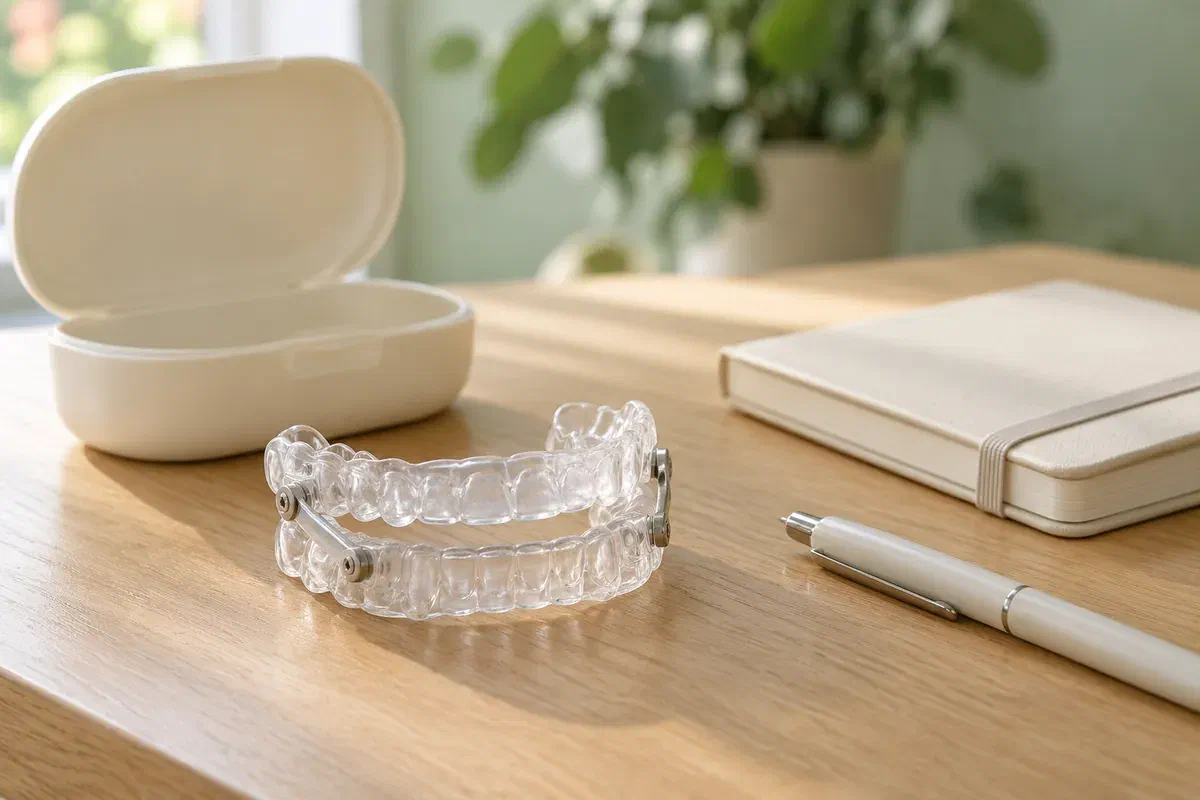
Illustrative oral sleep appliance beside its protective case and a closed journal
Raise these at your Rockwood review

Some changes are dental. Others belong with your physician.

Note what has happened since your fitting or most recent check. Timing, frequency and the effect on wear are the helpful parts. You don't need to know which team a concern belongs to before mentioning it.

You're not wearing it consistently

Explain whether discomfort, dryness, handling, travel or something else keeps the appliance out. Share a rough count of nights it's worn. That's useful for the dental team planning practical changes, and for your physician interpreting how well treatment is going.

Your bite, teeth or jaw have changed

Describe teeth that meet differently, new pressure on a tooth, jaw soreness, or restorations placed since the fitting. Mention when it started and whether it persists. These are dental questions, and even an easy-fitting device may need assessing against your current mouth.

Sleep-related symptoms have returned

Louder snoring, observed breathing pauses or growing daytime sleepiness are mainly for your sleep-care provider, though the dental team should hear about them too. A firmer setting isn't the default response. These changes may need medical reassessment even if the device seems fine.

Significant pain, an unsafe fit, or a broken or loosened component shouldn't wait for a scheduled visit. Call your treating provider promptly, and check with them how your sleep treatment should be handled until the device is usable.

Why both checks matter

Dental findings and medical results each fill a gap.

A dental review is strongest when it has history to draw on. The clinician can compare current findings with past records, your account of wear and any dental treatment in between. That's more informative than examining the appliance once, or assuming that a comfortable device means the overall plan still fits your needs.

Follow-up also clarifies the division of labour. Ask which concerns the dental team can resolve, which require the provider who made the device, and which are for your sleep physician. Being clear about that keeps important questions, like whether testing is due, from getting lost when appointments happen in separate offices.

Patient information: AADSM — ongoing dental review and coordinated oral-appliance care

An oral and appliance examination

The visit can cover your teeth, gums, bite, jaw function and the appliance's condition and fit. Ask the clinician to explain any changes and whether they need a response. Adjustments aren't automatic; the aim is to identify relevant findings and agree a plan.

A frank conversation about wear

Talk about the part of the routine you find hardest and bring the case and instructions if they're confusing. You might need a refresher, a fit assessment or a revised approach, rather than hearing the original advice again.

A clear handoff to your physician

Confirm whether your sleep provider has current information and whether testing or a review is outstanding. Feeling better is good to report, yet it's only part of the evidence on sleep apnea control. Ask how both teams' findings will shape what comes next.

The dental part of the process

What happens in the chair, and what happens after

Your description of daily use starts the appointment, and agreed responsibilities finish it. If you can, bring your appliance, any instructions, treatment records and correspondence or results from your sleep physician.

  1. Share your history since the last visit

    Describe how often you've worn the appliance, interruptions included, and any changes you were asked to make. Mention new symptoms, dental work, medications or health updates. It's fine to say you don't know the current setting or last instruction.

  2. Examine your mouth and the appliance

    The clinician checks the relevant oral tissues and the device's condition and fit. Previous records can help explain a change in bite or tissues. You can ask what the findings mean, whether to carry on wearing it, and whether more assessment should precede any change.

  3. Clarify what goes to your sleep physician

    Separate dental concerns from those your medical provider should evaluate. If you're wondering about a repeat sleep study, this is the point to note it for your physician, who makes that decision. Tolerating the device and responding to it aren't the same, and the plan covers both.

  4. Agree actions and timing

    Confirm what's been decided, who to contact and when you're due back. Ask what should trigger an earlier call and whether any wear or setting guidance is different now. If your physician needs dental findings, agree how they'll be shared and who follows up.

Between dental and medical visits

Keep track of two schedules, and the notes that link them.

Your plan may be to continue unchanged, return for a further assessment or follow a professionally directed change. Stick to the instructions for your device, and update both teams if the routine becomes hard to keep.

Write down anything that changes your wear

Record the date when discomfort, a fit problem or a sleep symptom appears, and whether the appliance stayed out as a result. A few words are enough. Share them with both teams at your next visits, and call earlier if it can't reasonably wait.

Mention the device before dental treatment

Tell the dental team about the appliance when work is planned on teeth it rests on, and bring it along. Ask how the work could change its fit and whether the original provider needs to be involved. Don't force it over new restorations or alter it yourself.

Book both kinds of review

Ask when your dental follow-up and medical review are each due, and how to arrange any testing your physician recommends. Putting both dates on the same calendar makes it easier to spot a gap. If cost, timing or travel is a barrier, tell the relevant team so it can be discussed openly.

Patient information: NHLBI — living with sleep apnea and keeping treatment under review

Outcomes for Rockwood appliance users

After the review, the plan takes one of three shapes.

Ask what each recommendation is designed to accomplish. Fitting well is not, alone, a reason to increase the setting, replace the device or close out follow-up.

When dental findings support continued wear

Continue and keep both reviews going

If the dental side needs no change, confirm how to wear and care for the appliance and when to come back. Ask which developments should bring you in sooner. Your physician's follow-up continues too, since a good dental exam doesn't establish sleep apnea control.

When comfort, fit or the mouth needs care

Act on a dental or fit finding

That might involve another examination, a professionally made adjustment, dental treatment or input from the appliance maker. Ask whether you should keep wearing the device while it's arranged, and make sure you understand the reason for each step.

When symptoms or treatment response have changed

Ask your physician to reassess

Your sleep provider may evaluate effectiveness again, possibly with testing, or discuss alternatives. Share the dental findings and any trouble with wear. Until then, don't swap in a store-bought mouthguard, stop treatment or make a significant setting change yourself.

Questions about testing and roles

Dentist or physician: who answers which question?

Appliance therapy involves both dental and medical follow-up. These answers explain the difference and what to do when you're unsure.

(905) 876-4488
Can my dentist order a sleep study?
Decisions about sleep testing are made by your medical sleep provider, who looks at your symptoms and history as a whole. If the dental review raises a concern, ask how it will be shared with your physician so they can decide whether testing is needed and how it would be arranged.
If my appliance fits well, why might my physician want another test?
Good fit shows the device is wearable, not that it’s controlling sleep apnea. Your physician considers symptoms, treatment stage and earlier results when deciding whether to check effectiveness. A test isn’t a sign that something has gone wrong; it can simply be part of keeping treatment under review.
What should I bring so both teams have the same information?
Bring your appliance and case, any instructions, recent results or letters from your sleep provider, and details of dental work. Ask how findings from each visit will be shared.
Who should I contact first about returning snoring?
Your medical sleep provider, who can decide whether reassessment is needed. Mention it at your dental follow-up too, so the fit and oral findings can be checked. Don’t change the setting on your own.
Will the dental team tell me if my sleep apnea has improved?
No. The dental team can report on your mouth and the appliance, including wear, fit and any changes in your bite. How well sleep apnea is controlled is evaluated by your physician, sometimes with testing, so ask them about progress directly.
Should I stop wearing the appliance while waiting for a test?
Not unless your provider tells you to. Continue as instructed if the device is comfortable and intact, and ask your physician if any special instructions apply before testing. If the appliance is painful or damaged in the meantime, call the treating provider rather than simply putting it away.
Book from Rockwood

Bring the device. We'll handle the dental side and help connect the rest.

Contact Milton Dental Clinic to set up a sleep-appliance review. Tell us who supplied the appliance, when it was last assessed, and whether you're facing a fit issue, trouble with wear, or a question for your physician about testing.

Dental follow-up and medical evaluation of treatment effectiveness complement each other.

Visit Milton Dental Clinic
Unit 1, 342 Bronte St. S, Milton, ON L9T 5B7
Get directions Clinic hours
Monday–Thursday
11am–7pm
Friday–Sunday
By appointment only

Areas we serve

  • Milton
  • Oakville
  • Mississauga
  • Georgetown
  • Halton Hills
  • Acton
  • Campbellville
  • Brampton
  • Burlington
  • Puslinch
  • Rockwood
  • Erin
  • Caledon
  • Etobicoke
  • Old Milton
  • Bronte Meadows
  • Timberlea
  • Dorset Park
  • Dempsey
  • Clarke
  • Beaty
  • Coates
  • Harrison
  • Scott
  • Willmott
  • Ford
  • Bowes
  • Cobden
  • Walker
  • Mountain View
  • Milton Heights
  • Hawthorne Village
  • Valley View
  • Fallingbrook
  • Nassagaweya
  • Trafalgar
  • Esquesing
  • Nelson
  • Brookville
  • Moffat
  • Glen Williams
  • Norval
  • Limehouse
  • Stewarttown
  • Ashgrove
  • Hornby
  • Silver Creek
  • Speyside
  • Scotch Block
  • North Oakville
  • River Oaks
  • Glen Abbey
  • West Oak Trails
  • Palermo
  • Bronte Creek
  • College Park
  • Joshua Creek
  • Uptown Core
  • Preserve
  • Iroquois Ridge
  • Lisgar
  • Meadowvale
  • Meadowvale Village
  • Churchill Meadows
  • Erin Mills
  • Central Erin Mills
  • Streetsville
  • East Credit
  • Creditview
  • Heartland
  • Sheridan
  • Mount Pleasant
  • Credit Valley
  • Huttonville
  • Churchville
  • Springbrook
  • Northwest Brampton
  • Bram West
  • Fletcher's Meadow
  • Fletcher's Creek South
  • Alton Village
  • Orchard
  • Millcroft
  • Headon Forest
  • Tansley
  • Brant Hills
  • Tyandaga
  • Kilbride
  • Lowville
  • Aberfoyle
  • Morriston
  • Arkell
  • Hillsburgh
  • Freelton
  • Carlisle
  • Waterdown
  • Flamborough
  • Mountsberg

How can we help?

Milton Dental Clinic

Have a question about your smile? Choose the option that works best for you.

For urgent dental concerns, please call.
Messages are reviewed during clinic hours.