

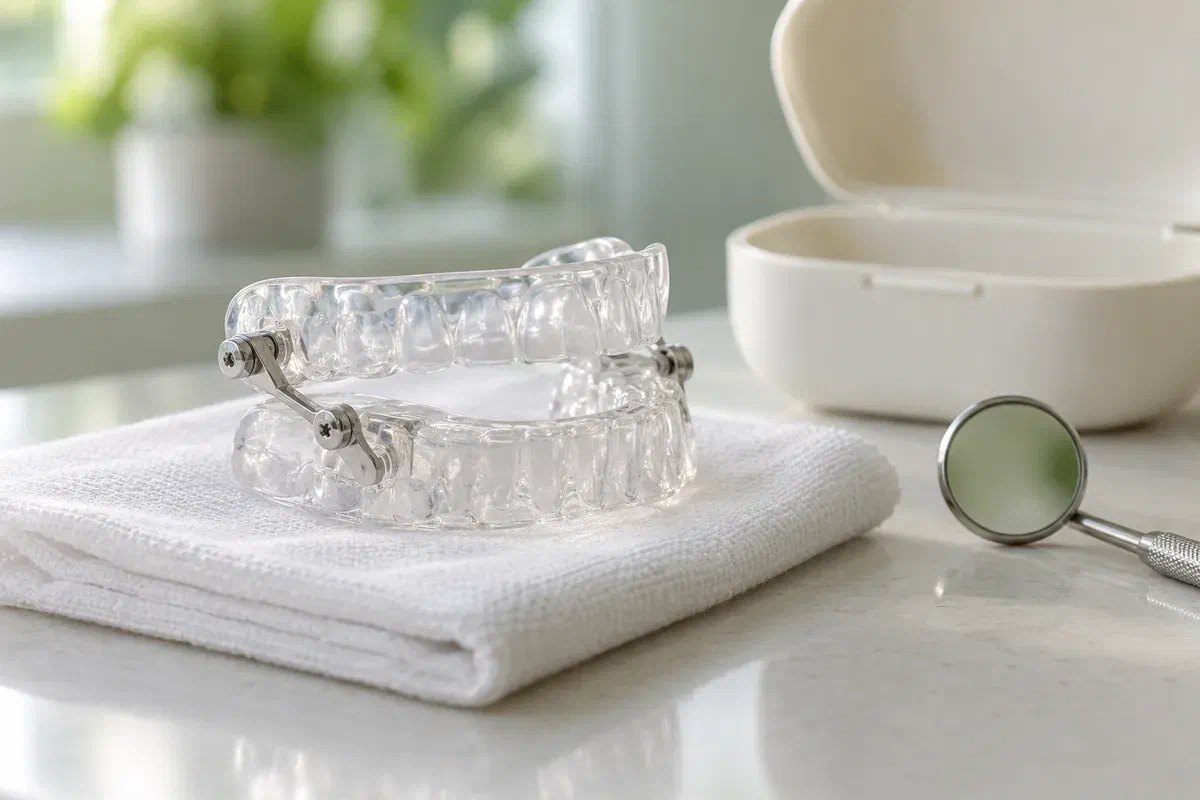
Illustrative discussion about having an oral sleep appliance assessed
Specialized Care

Sleep Appliance Repair

A damaged sleep appliance needs a professional check before it goes back into use. Discuss repair assessment in Milton, including the device's condition, its fit, and how to keep your sleep-care plan coordinated while the problem is addressed.

A closer look at sleep-appliance repair

Check the damage before deciding how to restore reliable use.

A crack, a loose connection, or a change in shape can affect how an oral sleep appliance fits and functions. Repair begins with understanding the problem and the type of device involved. The question is not only whether a damaged part can be joined or replaced, but whether the resulting appliance can be used appropriately within your treatment plan.

Bring the appliance and any detached pieces in a protective container, together with its original instructions and provider details if available. Describe when the problem appeared and whether the device had started fitting differently beforehand. A recent filling, crown, accidental drop, or exposure to heat may be relevant to the assessment.

At Milton Dental Clinic, contact us about the condition of the appliance before travelling in. We can discuss assessment arrangements and whether the original supplier or laboratory needs to be involved. Not every design or type of damage is repairable, and a same-day repair, particular part, or warranty outcome cannot be assumed before review.

Ask about assessing your damaged appliance
Illustrative intact sleep appliance beside a mirror and protective case before inspection
Problems that need a closer look

Describe what changed without testing how much the device can tolerate.

Stop using a broken appliance or one with loose parts, sharp damage, or an unsafe fit, and contact the treating provider. Trying to make it work for another night can obscure the problem or create additional risk.

A visible crack or broken section

Keep the appliance and any pieces together without gluing them. Tell the team whether the crack appeared after an accident or developed during normal use. A small-looking defect still needs assessment; its location and the device's construction matter more than whether it seems possible to overlook it.

A loose, missing, or damaged connector

Do not substitute a household screw, elastic, or an unverified replacement part. Explain which component has changed and whether any piece is unaccounted for. If a missing part may have been inhaled or swallowed, obtain appropriate medical advice rather than treating the issue solely as an appliance repair.

Distortion or a fit that has changed

Mention heat exposure, a new restoration, pressure on a tooth, or difficulty seating the appliance. Do not force it into place or try to reshape it with hot water. The clinician needs to distinguish damage to the device from a change in the mouth that requires a different response.

If there is choking or difficulty breathing, call 911. For other concerns about a swallowed or possibly inhaled component, seek prompt medical advice and explain what is missing. Keep the remaining appliance available for identification.

Why assessment comes before the repair

The aim is an appropriate device, not just a less visible defect.

An appliance can appear repaired without having its intended fit or working position restored. A professional assessment considers the design, material, damaged area, and current oral condition. Ask what the proposed work would address and how the device will be checked before you are advised to use it again.

The discussion should also cover what happens while the device is unavailable. Tell the medical sleep-care provider if you cannot use prescribed treatment and ask about an interim plan. Do not assume an old mouthpiece, sports guard, or unprescribed online product will provide equivalent treatment during a repair.

Identify the appliance and the relevant repair pathway

The original provider, manufacturer, or laboratory may hold information needed to assess repair options. Bring whatever documentation you have and explain where the device was supplied. A missing brand name is a reason to gather information, not a reason to choose a visually similar part and improvise.

Consider why the problem occurred

Explain whether there were earlier pressure points, repeated breakages, or a recent change in dental treatment. The cause may affect whether a repair is useful. Ask whether the mouth or treatment plan needs attention as well, so a recurrent issue is not treated as an isolated cosmetic defect.

Understand the limitations before authorizing work

Ask about the proposed work, likely time away from the device, estimated cost, and whether laboratory assessment is required. Clarify any uncertainty about repairability or replacement. A useful estimate distinguishes what is known now from decisions that depend on closer inspection or another provider's response.

How repair assessment is approached

Inspect the device, discuss the options, and check it again before reuse.

Bring all available parts and records, but do not try to demonstrate the problem by forcing a damaged appliance into your mouth. The appointment should establish what can be assessed locally and what needs further input.

  1. Describe the damage and the treatment background

    Explain how the problem was noticed, whether anything is missing, and whether the device can no longer be used. Share the original provider details and relevant sleep-care plan. Tell the clinician about recent dental work, previous repairs, and any attempt already made to alter the appliance.

  2. Review the appliance alongside the current oral findings

    The clinician examines the device and relevant teeth, tissues, and bite. The assessment considers whether the problem is confined to a component or involves the fit or wider condition of the appliance. Additional records or advice from the original supplier may be needed before a repair can be recommended.

  3. Agree on repair, replacement assessment, or referral

    Discuss the options supported by the findings and any laboratory requirements. Ask for the expected sequence, costs where available, and the person to contact for updates. Coordinate an interim treatment discussion with the medical sleep provider when the appliance cannot be worn during the process.

  4. Review the returned device and confirm its use

    Before resuming wear, the repaired appliance needs the appropriate clinical fit and function review. Ask whether the prescribed position has been verified and whether instructions have changed. Further follow-up or medical review may be required; receiving a repaired device is not proof that treatment effectiveness is unchanged.

While repair is being considered

Protect the device and keep the sleep-care team informed.

A short, clear account of the damage is more helpful than an attempted home repair. Keep the appliance available for assessment and follow the treating provider's advice about use and the next appointment.

Store the appliance and pieces securely

Use a protective container and keep detached components where they will not be lost or accessible to children or pets. Avoid further bending, trimming, or repeated fitting attempts. Tell the team if a piece is missing rather than assuming its absence will be obvious from the remaining device.

Avoid adhesives, heat, and improvised replacement parts

Do not use household glue or hot water to join or reshape the appliance. These actions can change the material or fit and may complicate assessment. If you have already tried a repair, describe exactly what was used so the clinician can take it into account without guessing.

Clarify how treatment continues during the interruption

Contact the medical sleep provider when your prescribed appliance is unavailable or unsafe to wear. Ask what interim approach is appropriate for you. Do not independently change PAP settings, abandon another prescribed treatment, or assume a spare device is suitable because it still fits into the mouth.

Patient information: NHLBI — keeping sleep-apnea treatment and provider follow-up connected

Choosing a sensible response to the damage

Repair is one possibility. The device and the findings guide the decision.

Ask what the proposed option is expected to achieve and what remains uncertain. The least expensive immediate fix may not be appropriate if the appliance cannot regain a suitable fit or the underlying cause is unresolved.

When the design and condition allow appropriate work

A supported repair of the existing appliance

A repair may be considered when suitable materials, components, and expertise are available and the remaining device is appropriate. Ask whether laboratory work is involved and what clinical check follows. Do not assume a repair restores an appliance to an unlimited lifespan or removes the need for later review.

When damage or changed circumstances limit repair

Assessment for a replacement device

Extensive damage, distortion, unavailable components, or a changed mouth may lead to replacement assessment. Ask why repair is unlikely to meet the clinical needs and which records must be updated. A replacement should follow the relevant treatment plan, rather than automatically copying an outdated fit or setting.

When specialized information or a broader review is needed

Coordination with the original provider or sleep team

The original supplier may be best placed to identify parts or explain a device-specific limitation. The medical provider may also need to review treatment while use is interrupted. Ask who will contact whom and how you will receive the next decision, so the appliance is not left between services without a plan.

Patient information: AADSM — device management and continued coordinated care

Questions about a damaged sleep appliance

Ask what can be repaired and what must be checked before reuse.

The right answer depends on the actual appliance and the damage. Bring the device and its history instead of relying on a photograph or a repair method intended for a different product.

(905) 876-4488
Can I keep wearing a cracked sleep appliance if it still fits?
Do not continue wearing a damaged device without professional advice. A crack may affect strength or create loose or sharp parts even when the appliance still seats. Contact the treating provider, describe the defect, and ask your sleep-care team about an interim plan if use must stop.
Should I keep a small piece that has broken off my sleep appliance?
Yes. Store it securely with the appliance and bring both for assessment. Do not glue the piece back on or discard it because it seems unimportant. Tell the provider if any component is missing, especially if there is concern that it was swallowed or inhaled.
Can heat distortion in a sleep appliance be reversed with more hot water?
Do not try this. Further heating can change the material and fit in unpredictable ways. Explain how the distortion occurred and have the device assessed. The clinician can discuss whether any supported correction is possible or whether replacement assessment is more appropriate.
Can a sleep appliance be repaired when its brand or original provider is unknown?
An assessment may still help identify the device, but repair cannot be promised. Bring any case, packaging, instructions, or earlier records you have. The team may need additional information to establish compatible parts and an appropriate repair pathway before advising on the next step.
Will a sleep-appliance repair automatically be covered by a warranty or insurance?
No. Coverage depends on the applicable terms, the device, and the circumstances of the damage. Ask for the proposed work and available estimate before proceeding, then check the relevant policy or warranty directly. A clinical recommendation does not establish payment eligibility.
Does my sleep appliance need another fit check after a laboratory repair?
Yes, the appropriate clinical review should be arranged before resuming use. The provider needs to consider fit, working components, and the prescribed position, and explain any updated instructions. Ask whether the repair or interruption also calls for further review with your medical sleep-care team.
Discuss appliance repair in Milton

Bring the damaged device. Start with a clear assessment.

Contact Milton Dental Clinic with the appliance type, the problem you have noticed, and whether you are currently unable to use it. We can discuss assessment arrangements and any information needed from the original provider before the next step is decided.

Repairability, timing, and costs depend on examination of the device and the appropriate provider or laboratory pathway.

Visit Milton Dental Clinic
Unit 1, 342 Bronte St. S, Milton, ON L9T 5B7
Get directions Clinic hours
Monday–Thursday
11am–7pm
Friday–Sunday
By appointment only

How can we help?

Milton Dental Clinic

Have a question about your smile? Choose the option that works best for you.

For urgent dental concerns, please call.
Messages are reviewed during clinic hours.