

Illustrative discussion about having an oral sleep appliance assessed
Specialized Care

Sleep Appliance Repair in Burlington

Your sleep appliance pinched after a new crown, or it suddenly rocks on one side. Is the device damaged, or has your mouth changed? Patients coming from Burlington can arrange an assessment that looks at both, along with a plan for sleep care in the meantime.

Device or teeth? Sorting it out from Burlington

Is it the appliance, or is it you?

A tray that used to click on smoothly and now binds, rocks or presses on one tooth can mean two very different things. The appliance may have cracked, warped or lost a part. Or a recent crown, filling or extraction may have altered the surface it was built to grip. Working out which one applies, and whether the device can still be used as your treatment plan intends, is the first job of a repair assessment.

Give yourself a head start by writing down a short timeline. When was the dental work done, and when did the appliance start to feel different? Was there a drop, a hot car or a run through the dishwasher? Then pack the device and any loose bits in their case with whatever instructions and supplier information you kept.

Before heading over from Burlington, phone us with that timeline. It lets us discuss how an assessment would be booked and whether the office or lab that made your appliance should be contacted as well. Some devices and some types of damage can’t be repaired, and a same-day result, a specific part or help from a warranty can’t be taken for granted until we have seen it.

Talk to us about a changed fit
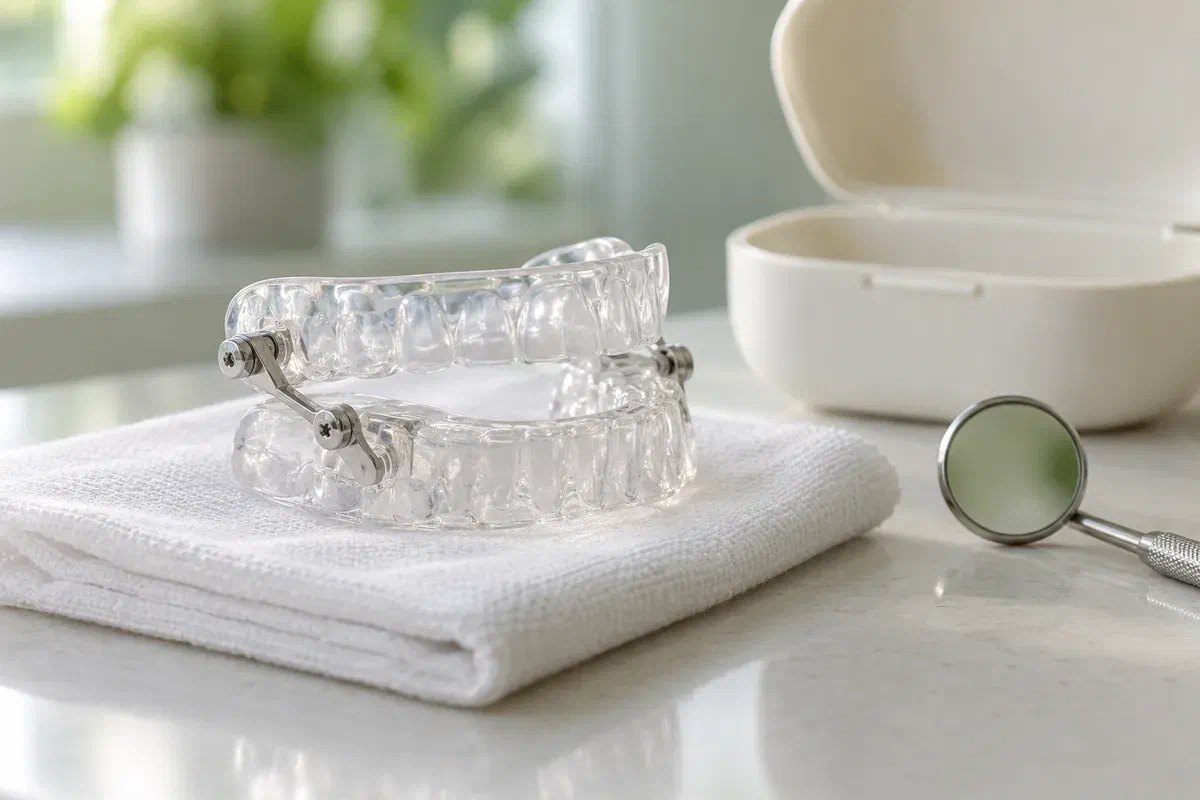
Illustrative intact sleep appliance beside a mirror and protective case before inspection
Clues worth mentioning

Three ways a problem tends to show up

Put the appliance aside if it has loose or sharp areas, or if seating it feels wrong, and let your treating provider know. Wearing it anyway for a few more nights can mask what changed and invites new trouble.

A line, chip or broken edge in the tray

Store the pieces alongside the device and leave them unglued. Mention whether the crack followed an accident or developed gradually, perhaps around a newly restored tooth. Small cracks still need a proper look, because the location and the way the appliance is made matter more than how easy the defect is to ignore.

A connector or adjustment part that has shifted

Household hardware, elastic bands and unverified spare parts are not safe substitutes. Tell us what has moved or gone missing. A component you can’t find may have been swallowed or inhaled, and in that case medical advice comes before any discussion about the device.

Pressure, rocking or a tray that won’t seat

Tell us about new dental work, a sensitive tooth or any time the appliance met heat. Don’t press it down harder or soften it in hot water to make it fit. The clinician will look at whether the device has changed shape, your teeth have changed, or both.

Call 911 if there is choking or difficulty breathing. If a part is missing and might have been swallowed or inhaled, get prompt medical advice and describe it. Keep the rest of the appliance so the missing piece can be identified.

Why both sides get examined

Fixing the wrong problem won’t restore the fit.

Mending a crack does nothing if the real issue is a crown that now sits a fraction higher, and adjusting a tooth won’t help a tray that has warped. That is why a review considers the appliance’s design and material, the damaged or pressured area, and your mouth as it is today. Ask what any suggested work is meant to change and how the outcome will be confirmed.

In the meantime, your sleep treatment matters. Tell the physician who manages it that you have stopped using the appliance and ask what they want you to do for now. An older guard, a store-bought mouthpiece or an online product is not interchangeable with what was prescribed.

Matching the device with its maker

Details held by the original provider, manufacturer or lab may shape what is possible. Bring any documentation and explain where the appliance was supplied. If the brand is a mystery, the next step is finding out, not choosing a part because it looks close.

Linking the timing to recent dental treatment

Explain what dental work was done, when, and how soon the fit changed. Earlier pressure spots or past breaks are relevant too. If the cause sits in the mouth, repairing the appliance alone may not solve it, and the treatment plan might need a look as well.

Understanding the trade-offs first

Ask about the scope of the work, how long you could be without the device, the likely cost, and whether a lab review is needed. A sound estimate is clear on which points are settled and which depend on inspection or on another provider getting back to us.

The questions an assessment answers

What changed, what can be done, and is it ready?

Bring the appliance, any loose parts and your records. You won’t need to force the tray in to show us the problem. The visit is about sorting out what we can evaluate here and where outside input is required.

  1. What happened, and when?

    You describe the change, the timing of any dental work, missing parts and whether the appliance can still be worn. Share the supplier’s details and how your sleep care is organized. Mention previous repairs and any adjustments already attempted at home.

  2. Where is the problem: device, teeth or bite?

    The clinician examines the appliance alongside the teeth, gums and bite it relies on. This shows whether the trouble is confined to one component, involves the overall fit, or starts with a change in the mouth. Records from the supplier may be needed before recommending a repair.

  3. Which route makes sense?

    Together you review repair, a replacement assessment or referral, along with any lab work. Ask about the order of steps, costs where available and who will update you. If the device can’t be worn, coordinate the interruption with your sleep physician.

  4. Is the returned appliance ready for nightly use?

    After repair, the clinician reviews the fit and function before you sleep in it again. Ask whether the prescribed position was verified and whether your instructions are different. Further follow-up may be needed, since receiving a repaired device doesn’t confirm treatment is as effective as before.

While you wait to be seen

Hands off the appliance. Keep your sleep team updated.

A clear explanation of what changed is more valuable than any attempt to fix it at home. Keep the device ready for the assessment and follow your provider’s advice about wearing it.

Keep everything together, out of reach

Store the appliance and any fragments in a rigid case away from children and pets. Avoid bending it, trimming it or seating it over and over to check. If something is missing, tell us outright instead of assuming it will be noticed.

Avoid glue, heat and DIY hardware

Adhesives and hot water can change the material and the fit, which makes it harder to see what went wrong. If a home fix has already been tried, list exactly what was used so the clinician can factor it in.

Ask how to cover the nights without it

Let the medical sleep provider know the prescribed device is unavailable or unsafe to wear. Ask which interim approach fits your situation. Don’t alter PAP settings on your own, stop other prescribed treatment, or rely on a spare just because it goes in.

Patient information: NHLBI — keeping sleep-apnea treatment and provider follow-up connected

Where the findings may lead

Repair, a fresh assessment, or a conversation with the maker

Ask what each choice should accomplish and what is still unknown. A fast, low-cost fix may not be right if the appliance can’t be made to fit your current teeth or if the cause of the change remains.

When the design and remaining structure allow it

Repair of your existing device

Repair may be considered when the materials, parts and skills it needs are available and the rest of the appliance is in good condition. Ask whether lab work is involved and what follow-up check is planned. Repair doesn’t make a device last forever or replace future reviews.

When your teeth or the device have changed too much

Assessment for a new appliance

Significant dental changes, distortion, extensive damage or parts that are no longer made can point toward a replacement assessment. Ask why repair would fall short and which records need refreshing. A new device should be based on your mouth now, not an outdated fit or setting.

When specialized details or a broader review are needed

Bringing in the original provider or sleep team

The supplier may know which parts are compatible or what a design can withstand. Your physician may want to revisit treatment while the device is out of use. Agree who will contact each office and how you’ll be told the decision, so the process keeps moving.

Patient information: AADSM — device management and continued coordinated care

Questions about fit changes and repairs

When something feels off, start here

Your answer depends on the specific appliance and what has changed. Bring the device and its history instead of relying on a photo or a repair approach meant for another product.

(905) 876-4488
Why does my sleep appliance feel tight after I got a new crown?
A crown can be shaped slightly differently from the tooth surface the appliance was made around, which may change how the tray seats. Stop forcing it on, and mention the dental work when you call. The clinician can assess whether the device, the crown or both need attention.
Should I tell my dentist about my sleep appliance before getting dental work?
Yes, it is helpful. Let the dentist know you wear an oral sleep appliance so they can consider it when planning crowns, fillings or other changes. Bring the device to the appointment if they ask, and report any change in fit afterwards.
My appliance rocks slightly on one side. Is it broken?
Not necessarily. Rocking can come from distortion, a cracked section, a loose part or a change in a tooth. Avoid bending it back or reshaping it with heat. An assessment can identify the cause and whether repair or a different approach makes sense.
Can I wear my sleep appliance for a few nights until my appointment?
Ask your provider before doing so. If it has loose or sharp parts, causes pain, or doesn’t seat properly, it is safer to stop. Contact your sleep physician about an interim plan rather than pushing through with a device that may not be working as prescribed.
Will my dental insurance pay for a sleep-appliance repair?
That can’t be assumed. Coverage depends on your plan’s terms, the device and how it was damaged. Ask for the proposed work and an estimate where possible, then check with the insurer directly. A clinical recommendation doesn’t establish eligibility.
Can I bring my appliance from Burlington and have it checked in a single trip?
Call ahead so we can understand the problem and explain how an assessment is arranged. Whether everything can be handled in one visit depends on the findings and whether a lab or the original supplier must be involved. We’ll be clear about what to expect before you come.
Burlington appliance assessments

A changed fit is worth a call

Contact Milton Dental Clinic with the type of appliance, what feels different, any recent dental work, and whether you’ve stopped wearing it. We’ll explain how an assessment works and whether we need information from the original provider before the next step.

Repair options, timing and cost depend on examining the device and on any provider or lab involvement.

Visit Milton Dental Clinic
Unit 1, 342 Bronte St. S, Milton, ON L9T 5B7
Get directions Clinic hours
Monday–Thursday
11am–7pm
Friday–Sunday
By appointment only

Areas we serve

  • Milton
  • Oakville
  • Mississauga
  • Georgetown
  • Halton Hills
  • Acton
  • Campbellville
  • Brampton
  • Burlington
  • Puslinch
  • Rockwood
  • Erin
  • Caledon
  • Etobicoke
  • Old Milton
  • Bronte Meadows
  • Timberlea
  • Dorset Park
  • Dempsey
  • Clarke
  • Beaty
  • Coates
  • Harrison
  • Scott
  • Willmott
  • Ford
  • Bowes
  • Cobden
  • Walker
  • Mountain View
  • Milton Heights
  • Hawthorne Village
  • Valley View
  • Fallingbrook
  • Nassagaweya
  • Trafalgar
  • Esquesing
  • Nelson
  • Brookville
  • Moffat
  • Glen Williams
  • Norval
  • Limehouse
  • Stewarttown
  • Ashgrove
  • Hornby
  • Silver Creek
  • Speyside
  • Scotch Block
  • North Oakville
  • River Oaks
  • Glen Abbey
  • West Oak Trails
  • Palermo
  • Bronte Creek
  • College Park
  • Joshua Creek
  • Uptown Core
  • Preserve
  • Iroquois Ridge
  • Lisgar
  • Meadowvale
  • Meadowvale Village
  • Churchill Meadows
  • Erin Mills
  • Central Erin Mills
  • Streetsville
  • East Credit
  • Creditview
  • Heartland
  • Sheridan
  • Mount Pleasant
  • Credit Valley
  • Huttonville
  • Churchville
  • Springbrook
  • Northwest Brampton
  • Bram West
  • Fletcher's Meadow
  • Fletcher's Creek South
  • Alton Village
  • Orchard
  • Millcroft
  • Headon Forest
  • Tansley
  • Brant Hills
  • Tyandaga
  • Kilbride
  • Lowville
  • Aberfoyle
  • Morriston
  • Arkell
  • Hillsburgh
  • Freelton
  • Carlisle
  • Waterdown
  • Flamborough
  • Mountsberg

How can we help?

Milton Dental Clinic

Have a question about your smile? Choose the option that works best for you.

For urgent dental concerns, please call.
Messages are reviewed during clinic hours.