

Illustrative discussion about having an oral sleep appliance assessed
Specialized Care

Sleep Appliance Repair in Campbellville

Out in the country, the toolbox is usually closer than the dentist, so it’s common for a cracked sleep appliance to meet the superglue first. If that has happened, stop there. From Campbellville, bring the device and an honest account, and the assessment can start from where things stand.

After a home repair attempt, in Campbellville

Already reached for the glue? That’s all right. Stop there.

Plenty of people try a quick fix before calling anyone: a dab of adhesive on a crack, a spare screw in place of a lost one, a soak in hot water to ease a tight tray. It is an understandable instinct, especially when appointments mean a drive and a free afternoon. The trouble is that an oral sleep appliance has to hold the jaw in a prescribed position, and a home repair can change that in ways you can’t see.

Nothing is gained by hiding the attempt, and a lot is gained by describing it. Note the product you used, how much, and whether heat was involved. Put the appliance and any loose parts in their case, with instructions and supplier details if you still have them. It also helps to recall when the original problem appeared, and whether a drop, dental work or a changing fit came first.

Campbellville sits within Milton’s boundaries, northwest of the town centre, but a call before you head in is still the sensible first step. We can talk about the damage and the fix that was tried, explain how assessment is arranged, and say whether the original lab or provider should be involved. Some appliances can’t be repaired, particularly after certain home treatments, so no particular part, timeline or warranty outcome can be assured beforehand.

Explain the fix you tried and book an assessment
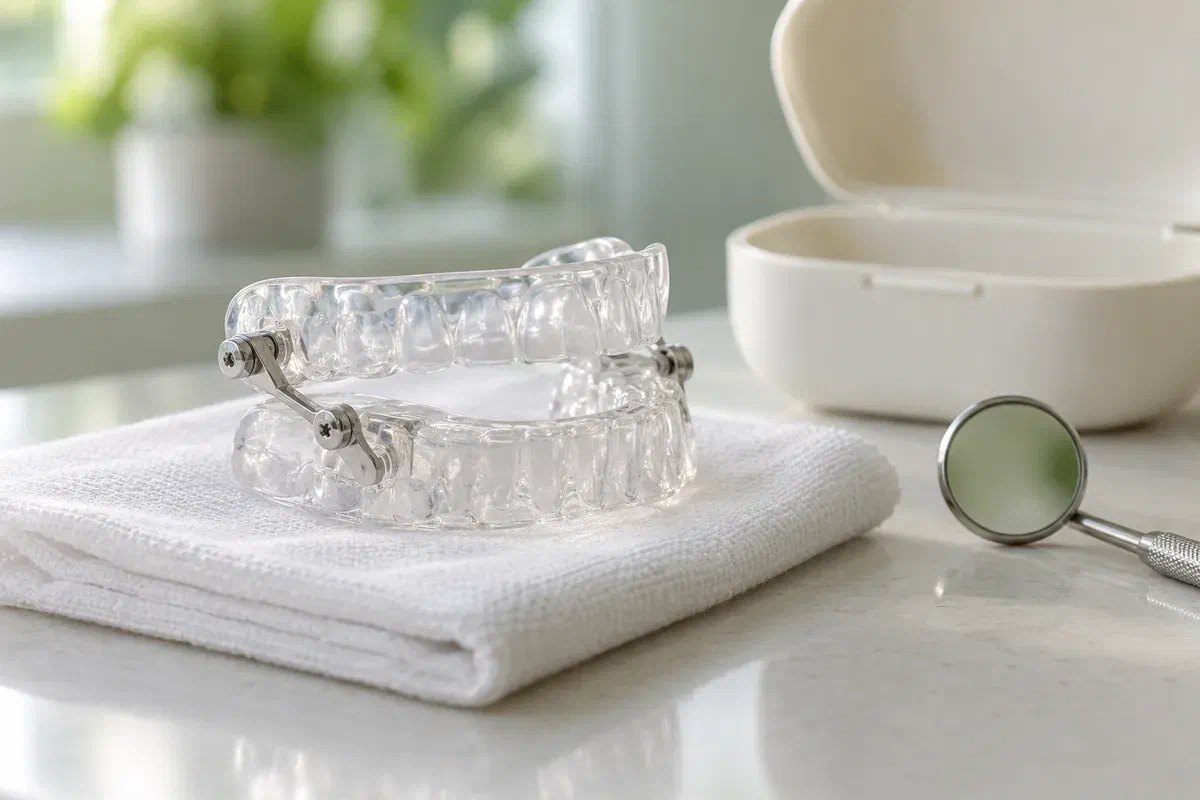
Illustrative intact sleep appliance beside a mirror and protective case before inspection
What to report, including any fix you tried

The original problem, and what happened after it

Stop wearing an appliance with loose parts, sharp edges or a doubtful fit, whether or not it has been patched, and contact your treating provider. A home repair that seems to be holding can still be hiding a problem.

A crack, whether glued or not

If you haven’t bonded it yet, don’t. If you have, leave the joint alone and tell us the adhesive used. Mention whether the crack came from a fall or normal use. Household glues aren’t made for the mouth, and a sealed crack still needs its location and the device’s construction assessed.

A connector swapped, tightened or missing

A screw from the workshop, a bit of wire or a rubber band can shift the jaw setting or come loose overnight. Tell us exactly what was fitted, or which piece is missing. If a part may have been swallowed or inhaled, get medical advice before anything else.

A tray that was heated, bent or trimmed

Describe any hot-water soaking, bending or filing, along with recent dental work or a sore tooth. Please don’t repeat it. The clinician needs to separate the original damage, the effects of the home fix and any change in your mouth.

Call 911 for choking or difficulty breathing. A lost screw or fragment that could have gone down your throat is a matter for a doctor first, so get advice promptly and say what is gone. Keep the appliance, including any glued or substituted parts, so it can be identified.

Why a professional look still matters

Holding together isn’t the same as working as prescribed.

A glued crack or substituted part might keep the device in one piece while changing how it sits or where it holds your jaw. The assessment considers the design, the material, the damaged area, what has been added or altered and the current state of your teeth and gums. Ask what any proposed work would correct and how that will be checked.

While the appliance is out of use, let your sleep physician know and ask what to do in the interim. A spare mouthguard from the barn or the hockey bag, or a product bought online, isn’t a replacement for the prescribed treatment.

Knowing the original design

Details from the provider, manufacturer or lab that made the appliance help show what it should look like and which parts belong. Bring what paperwork you have. If the brand is unknown, that is something to track down rather than guess at.

Understanding the first failure

Think back to what came before the home fix: earlier sore spots, past breaks or recent dental treatment. If the underlying cause hasn’t been addressed, a repair may not last, and your mouth or treatment plan may need attention too.

Being realistic about what can be undone

Some home fixes can be reversed and some can’t. Ask what work is proposed, how long you may be without the appliance, the likely cost and whether a lab is needed. A good estimate is honest about what depends on closer inspection.

How the assessment unfolds

Start with the full story, end with a confirmed fit

Bring the appliance as it is now, any removed or loose parts and your records. Please don’t try the device in to show us how it behaves. The visit sorts out what can be judged here and what needs input from the maker.

  1. Explain the damage and the home repair

    Tell us what failed first, when, and what was done about it, including products, tools and heat. Share whether anything is missing, whether you can wear it, who supplied it and how your sleep care is managed, plus any recent dental work.

  2. Inspect the appliance and your mouth

    The clinician examines the device, the repair attempt and your teeth, gums and bite. This shows whether the problem is local or now affects the overall fit. The original supplier may need to provide records or advice before a recommendation is made.

  3. Decide on repair, replacement review or referral

    Talk through the options the findings support and any lab involvement. Ask about the sequence, available costs and who will keep you informed. Coordinate with your sleep physician if the appliance can’t be worn during the process.

  4. Review the device before you sleep in it

    After a proper repair, the clinician seats the appliance and checks how it fits and moves. Confirm that the jaw setting your physician chose has been restored and whether any wear instructions are new. Your sleep team may still want to see you, because a mended device can’t by itself show that therapy is working.

From now until the appointment

No more fixes. Just a safe case and a phone call.

A frank account of the original damage and any home repair beats a second attempt every time. Leave the appliance just as it is now, and take your cue from whoever is treating you.

Store it as it is

Put the appliance and any loose or removed parts in a sturdy case, away from children, pets and farm or workshop clutter. Don’t keep fitting it, bending it or trimming it. If a part is missing, mention it clearly.

Put the tools away

More glue, more heat or another substitute part can make professional repair harder or impossible. Write down what has already been done, including any product name, so the clinician doesn’t have to guess.

Check in with your sleep physician

A patched device that you’ve now set aside means your treatment has paused, and the doctor who prescribed it should know. They can tell you how to manage until it’s sorted. Keep any CPAP settings and other therapy unchanged unless advised, and don’t lean on an old spare because it happens to go in.

Patient information: NHLBI — keeping sleep-apnea treatment and provider follow-up connected

Where things can go from here

What the findings may point toward

Once a home repair has altered the device, it’s even more important to know what each route is supposed to deliver and what remains unknown. A fast answer won’t help if the tray can never sit properly again or the first cause is still there.

When the design and remaining material allow it

A professional repair of the existing appliance

This becomes an option when the glue or substitute can be cleaned up, proper materials and parts are on hand, and the remaining appliance is still sound. You’ll want to know if a lab does the work and what testing happens before it comes home. Routine reviews carry on afterwards.

When damage or alterations rule out repair

Assessment for a new device

Heavy damage, heat warping, adhesive that won’t come away cleanly or real changes in your teeth can tip the balance toward a new appliance. The clinician should explain why mending it falls short and what fresh records are needed, so the replacement suits your treatment today.

When the maker’s knowledge or a medical review is needed

Input from the supplier or your sleep team

Whether a material can be rebonded, or which parts genuinely match, is often a question for the company that built it. Your doctor might also reconsider your therapy during the gap. Decide together who phones each office and how word gets back to you.

Patient information: AADSM — device management and continued coordinated care

Questions about home repairs

Honest answers about DIY fixes

What can be done depends on your appliance, the original damage and anything done to it since. Bring the device and the full story instead of relying on a photo or a fix meant for another product.

(905) 876-4488
I glued my sleep appliance. Can it still be professionally repaired?
Possibly, but it depends on the adhesive, the location of the crack and the design. Stop wearing it and bring it in as it is. Tell us exactly what was used so the clinician can assess whether the glue can be dealt with or a replacement review makes more sense.
Is household glue safe to have in my mouth overnight?
Household adhesives aren’t intended for use in the mouth, and that is one reason not to wear a home-glued appliance. Stop using it and have it assessed. If you notice irritation in your mouth, mention it when you call.
Should I remove the glue or the substitute part before my appointment?
No. Leave the appliance as it is, so the clinician can see what was done. Trying to undo a home repair can cause further damage. Just describe the product or part used.
Will a home repair void my appliance’s warranty?
It may; that comes down to the wording of the warranty, so ring the original supplier and ask. We can set out the work we’d suggest and give an estimate where one is possible. A clinical opinion, though, doesn’t decide what a warranty will pay for.
What tools or supplies should I keep away from my appliance?
Glue, tape, hot water, files, sandpaper, pliers and spare hardware. If something breaks or feels off, put the device in its case and call instead. Your provider can advise on safe cleaning and storage.
Can I arrange things so I make just one trip in from Campbellville?
Call first and describe the damage and the home fix. We’ll explain how assessment is arranged and whether the original supplier needs to be involved. That helps you plan, though the number of visits depends on what the examination finds.
Campbellville appliance assessments

Bring it in as it is. We’ll take it from there.

Phone Milton Dental Clinic and tell us what sort of appliance it is, what broke, what was tried at home and whether it’s still in use. We’ll describe how the assessment runs and let you know if anything should be requested from the office that made it.

Only an examination, including a look at any home fix, can show whether repair is possible, how long it may take and what it may cost.

Visit Milton Dental Clinic
Unit 1, 342 Bronte St. S, Milton, ON L9T 5B7
Get directions Clinic hours
Monday–Thursday
11am–7pm
Friday–Sunday
By appointment only

Areas we serve

  • Milton
  • Oakville
  • Mississauga
  • Georgetown
  • Halton Hills
  • Acton
  • Campbellville
  • Brampton
  • Burlington
  • Puslinch
  • Rockwood
  • Erin
  • Caledon
  • Etobicoke
  • Old Milton
  • Bronte Meadows
  • Timberlea
  • Dorset Park
  • Dempsey
  • Clarke
  • Beaty
  • Coates
  • Harrison
  • Scott
  • Willmott
  • Ford
  • Bowes
  • Cobden
  • Walker
  • Mountain View
  • Milton Heights
  • Hawthorne Village
  • Valley View
  • Fallingbrook
  • Nassagaweya
  • Trafalgar
  • Esquesing
  • Nelson
  • Brookville
  • Moffat
  • Glen Williams
  • Norval
  • Limehouse
  • Stewarttown
  • Ashgrove
  • Hornby
  • Silver Creek
  • Speyside
  • Scotch Block
  • North Oakville
  • River Oaks
  • Glen Abbey
  • West Oak Trails
  • Palermo
  • Bronte Creek
  • College Park
  • Joshua Creek
  • Uptown Core
  • Preserve
  • Iroquois Ridge
  • Lisgar
  • Meadowvale
  • Meadowvale Village
  • Churchill Meadows
  • Erin Mills
  • Central Erin Mills
  • Streetsville
  • East Credit
  • Creditview
  • Heartland
  • Sheridan
  • Mount Pleasant
  • Credit Valley
  • Huttonville
  • Churchville
  • Springbrook
  • Northwest Brampton
  • Bram West
  • Fletcher's Meadow
  • Fletcher's Creek South
  • Alton Village
  • Orchard
  • Millcroft
  • Headon Forest
  • Tansley
  • Brant Hills
  • Tyandaga
  • Kilbride
  • Lowville
  • Aberfoyle
  • Morriston
  • Arkell
  • Hillsburgh
  • Freelton
  • Carlisle
  • Waterdown
  • Flamborough
  • Mountsberg

How can we help?

Milton Dental Clinic

Have a question about your smile? Choose the option that works best for you.

For urgent dental concerns, please call.
Messages are reviewed during clinic hours.