

Illustrative discussion about having an oral sleep appliance assessed
Specialized Care

Sleep Appliance Repair in Erin

Second crack this year? Same hinge loose again? When a sleep appliance keeps failing, patching it once more rarely solves anything. For households in Erin and Hillsburgh, an assessment can look for the reason behind the repeat damage as well as the damage itself.

When it keeps breaking: help for Erin

Broken again

One break can be bad luck. A pattern usually has a cause. Heavy clenching or grinding at night, a bite that has shifted, a tray thinned by earlier adjustments, a design pushed past what it was made for, or simple wear on an older device can all lead to the same crack or loose part turning up over and over. Repair is only useful if the appliance that results can be worn reliably within your treatment plan, and that means understanding why it keeps failing.

Your history is the most useful thing you can bring. List the earlier breaks you remember, roughly when they happened and where on the device they were. Note any repairs and who did them. Then pack the current appliance and its pieces in a case with whatever instructions and supplier details you have, and think about recent dental work, heat exposure or a fit that had been drifting.

When you call from Erin, mention that this is a repeat problem. We can talk through the history, explain how assessment is arranged and say whether the original lab or provider should be consulted. Some designs, or devices that have been repaired several times, may not be good candidates for another repair, and no particular part, timeline or warranty outcome can be assumed before examination.

Talk to us about a recurring problem
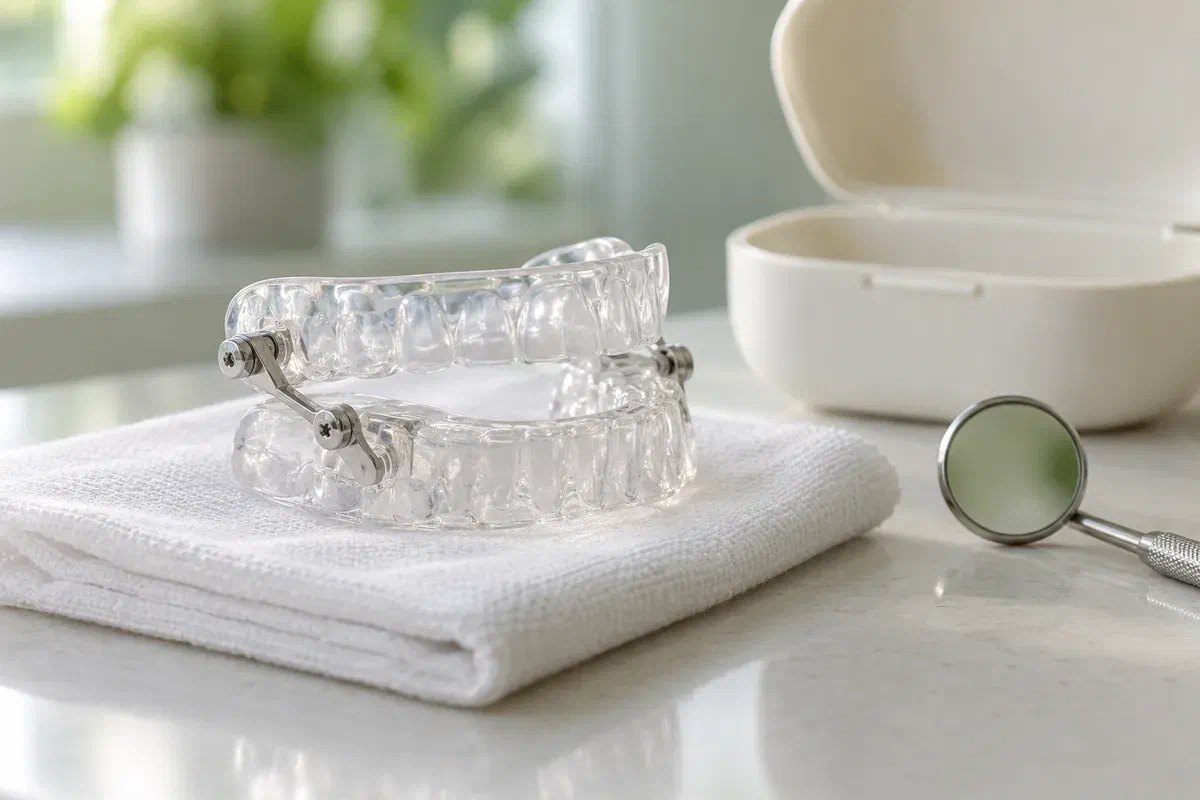
Illustrative intact sleep appliance beside a mirror and protective case before inspection
Patterns to describe

Same spot, same part, same story?

However familiar the damage looks, an appliance with loose parts, sharp edges or a questionable fit should come out of use until your treating provider has advised you. Wearing it in the meantime can deepen the pattern you’re trying to break.

A crack that keeps coming back

Tell us whether this break sits in the same area as an earlier one. Keep any fragments loose in the case rather than bonding them. Repeat cracks in one place can reflect stress concentrated by the design or by your bite, so their location matters far more than size.

A connector that won’t stay put

A hinge, screw or strap that keeps loosening is worth reporting in detail: how often, how quickly after the last repair, and on which side. Don’t reach for household substitutes. If a part may have been swallowed or inhaled this time, get medical advice before anything else.

A fit that drifts between repairs

If the appliance seems to sit differently each time it comes back, mention it, along with new dental work, sore teeth or any heat it met. Avoid forcing it on or reheating it to adjust. The clinician needs to see whether the device, your mouth or both keep changing.

Call 911 for choking or difficulty breathing. If a missing piece might have been swallowed or inhaled, seek medical advice promptly and describe it. Keep the rest of the device available so the part can be identified.

Why repeat damage changes the conversation

Another patch may only reset the countdown.

If the underlying cause stays put, a careful repair can still fail in the same place within months. An assessment for recurring damage looks beyond the crack to the design and material, the repair history, the stresses your bite places on the device, and the health of your teeth and gums. Ask what the proposed work would change about the pattern, not only about the current break.

Frequent gaps in treatment add up, too. Let your sleep physician know about each interruption, and ask how they’d like the gap handled. An old mouthpiece, a sports guard or an online product shouldn’t become the regular backup just because breakages have become routine.

Reviewing the device and every earlier repair

Records from the original provider, the manufacturer or labs that did previous repairs can show what was changed and where. Bring whatever you have. Without a clear history, the next step is to rebuild it, not to try a different-looking part.

Looking hard at the cause

Describe nighttime clenching or grinding if you’re aware of it, pressure spots, dental work and how soon after each repair the problem returned. Those clues can show whether the device, your bite or your treatment plan needs a different approach.

Weighing yet another repair honestly

Ask what the work involves, how long you may be without the appliance, the estimated cost and whether lab review is needed. With a repeat problem, also ask how likely the same failure is to recur, and expect a frank answer about what can’t yet be known.

Approaching a recurring problem

Map the history, then decide whether repair still fits

Have the device, its loose pieces and notes on earlier repairs with you. You don’t need to put the damaged device in to show us what happens. The visit is about understanding the pattern and what outside input may be needed.

  1. Lay out the timeline of failures

    Describe each break you remember, when it happened, where on the device and how it was repaired. Mention what’s missing now, whether you can still wear it, who supplied it, your sleep-care arrangements and any recent dental treatment.

  2. Examine the appliance, your bite and the wear patterns

    The clinician looks at the device, any repaired areas and your teeth, gums and bite, searching for signs of what is stressing the appliance. Records from the original supplier or earlier labs may be needed before advising on the next step.

  3. Choose between repair, replacement review and referral

    Discuss which options make sense given the pattern, along with any lab work. Ask about the sequence, available costs and who to contact. If treatment will be interrupted again, coordinate with your sleep physician.

  4. Confirm the result, then keep watch

    Whatever is done, the appliance is checked for fit and function before nightly use resumes. Ask whether the prescribed position has been verified and what early signs of the old problem to watch for. Follow-up with your sleep team may also be advised.

Breaking the cycle

Small habits can protect a fragile appliance.

A detailed account of the damage, and of past breaks, is more useful than another home fix. Keep the device ready for assessment and follow the guidance of the provider treating you.

Store it well every single day

Use a hard case each time the appliance is out, kept away from pets, children and heat. Avoid bending it, trimming it or repeatedly testing its fit. If a piece is missing this time, say so clearly.

No more improvised repairs

Glue, hot water and makeshift parts can weaken material that has already been stressed. If any home fix has been tried, now or in the past, describe it in full so the clinician can see the whole picture.

Keep your sleep physician informed each time

Tell the doctor managing your treatment whenever the appliance is out of use, and ask how to handle the interval. Don’t change PAP settings, stop other therapy or settle on a spare as the default backup without their advice.

Patient information: NHLBI — keeping sleep-apnea treatment and provider follow-up connected

Options when damage keeps recurring

Sometimes the best fix is a different plan

Ask what each option should achieve and what’s still uncertain, including how likely the problem is to return. Repeating the same quick repair may not be sensible if the appliance can’t hold a reliable fit or the cause hasn’t been dealt with.

When the device is sound and the cause can be addressed

One more repair, done with the cause in mind

Repair may still make sense if suitable materials and parts exist, the rest of the appliance is in good condition and whatever caused the earlier breaks can be managed. Ask whether a lab will reinforce or change anything, and how the result will be checked.

When repeat repairs have reached their limit

Assessment for a replacement

A device weakened by several repairs, a design that isn’t coping with your bite, discontinued parts or changes in your teeth may make a new appliance more appropriate. Ask why, and what would be done differently so the same failure is less likely.

When the pattern raises design or treatment questions

A wider review with the maker or sleep team

The original supplier may know whether a design has known weak points, and your physician may want to reconsider treatment after repeated interruptions. Agree on who will contact whom and how the outcome will reach you.

Patient information: AADSM — device management and continued coordinated care

Questions about repeat breakage

Why does this keep happening?

The answer depends on your appliance, your bite and the history of past repairs. Bring the device and as much of that history as you can, rather than relying on photos or a generic fix.

(905) 876-4488
Why does my sleep appliance keep cracking in the same place?
Repeated cracks in one spot often point to concentrated stress, which may come from the design, the material, earlier repairs or forces from your bite. An assessment looks at all of these so the next step addresses the cause, not just the latest crack.
Could grinding or clenching my teeth be damaging the appliance?
It can contribute. Clenching or grinding at night places extra force on the device. Mention it if you or a partner have noticed it, and the clinician can consider it when recommending repair or other options.
Is there a limit to how many times an appliance can be repaired?
There’s no fixed number, but each repair can change the material and fit. At some point replacement assessment may be more sensible. The examination and the device’s history help decide where yours stands.
Would a different appliance design be less likely to break?
Possibly, depending on why the current one keeps failing and what your treatment requires. That’s a question for a replacement assessment, ideally with input from your sleep physician, rather than something to decide from product descriptions.
Should I keep a record of every break and repair?
Yes, it’s very helpful. Note the date, what happened, where the damage was and who repaired it. Bring the record to each assessment so patterns are easier to spot.
How can people in Erin reduce the number of repair trips?
Call before coming, bring the full repair history and the device with all pieces, and ask at the first visit what the complete sequence may look like. Addressing the cause of repeat damage is often the best way to avoid future trips.
Recurring damage? Erin, let’s talk.

Bring the appliance and its history. We’ll look for the pattern.

Reach Milton Dental Clinic by phone and describe the appliance, the damage you’re seeing now, how often it has happened before and whether you’ve stopped wearing it. We can explain how assessment works and whether records from the original provider or earlier repairs will help.

What can be done, and the timing and cost, depend on examining the device and its history, and on any lab or supplier involvement.

Visit Milton Dental Clinic
Unit 1, 342 Bronte St. S, Milton, ON L9T 5B7
Get directions Clinic hours
Monday–Thursday
11am–7pm
Friday–Sunday
By appointment only

Areas we serve

  • Milton
  • Oakville
  • Mississauga
  • Georgetown
  • Halton Hills
  • Acton
  • Campbellville
  • Brampton
  • Burlington
  • Puslinch
  • Rockwood
  • Erin
  • Caledon
  • Etobicoke
  • Old Milton
  • Bronte Meadows
  • Timberlea
  • Dorset Park
  • Dempsey
  • Clarke
  • Beaty
  • Coates
  • Harrison
  • Scott
  • Willmott
  • Ford
  • Bowes
  • Cobden
  • Walker
  • Mountain View
  • Milton Heights
  • Hawthorne Village
  • Valley View
  • Fallingbrook
  • Nassagaweya
  • Trafalgar
  • Esquesing
  • Nelson
  • Brookville
  • Moffat
  • Glen Williams
  • Norval
  • Limehouse
  • Stewarttown
  • Ashgrove
  • Hornby
  • Silver Creek
  • Speyside
  • Scotch Block
  • North Oakville
  • River Oaks
  • Glen Abbey
  • West Oak Trails
  • Palermo
  • Bronte Creek
  • College Park
  • Joshua Creek
  • Uptown Core
  • Preserve
  • Iroquois Ridge
  • Lisgar
  • Meadowvale
  • Meadowvale Village
  • Churchill Meadows
  • Erin Mills
  • Central Erin Mills
  • Streetsville
  • East Credit
  • Creditview
  • Heartland
  • Sheridan
  • Mount Pleasant
  • Credit Valley
  • Huttonville
  • Churchville
  • Springbrook
  • Northwest Brampton
  • Bram West
  • Fletcher's Meadow
  • Fletcher's Creek South
  • Alton Village
  • Orchard
  • Millcroft
  • Headon Forest
  • Tansley
  • Brant Hills
  • Tyandaga
  • Kilbride
  • Lowville
  • Aberfoyle
  • Morriston
  • Arkell
  • Hillsburgh
  • Freelton
  • Carlisle
  • Waterdown
  • Flamborough
  • Mountsberg

How can we help?

Milton Dental Clinic

Have a question about your smile? Choose the option that works best for you.

For urgent dental concerns, please call.
Messages are reviewed during clinic hours.