

Illustrative discussion about having an oral sleep appliance assessed
Specialized Care

Sleep Appliance Repair in Old Milton

An oral sleep appliance that has served you for years can start to show its age: worn hinges, fine cracks, a looser grip. From Old Milton, you can have it examined close by, decide whether repair still makes sense, and keep your sleep physician informed.

When a well-used appliance needs attention in Old Milton

Years of nightly wear leave their mark

An appliance worn every night for several years goes through a great deal. Material can fatigue, a connector can work loose a little at a time, and teeth themselves shift or get restored along the way. So the decision is rarely just about one broken spot. It is about whether this particular device, in its current condition, can still do the job your sleep physician prescribed it for.

It helps to bring the full story with you. Pack the appliance and any pieces in its case, along with the original instructions and the name of the office or lab that supplied it. Then jot down a few notes: roughly how old it is, when the problem appeared, any earlier repairs, and whether it had been feeling different before something visibly gave way.

Old Milton is Milton’s historic downtown, and our Bronte Street practice is close by, but a phone call before you come is still the best start. We can hear what has changed, explain how assessment is arranged, and say whether the original supplier may need to weigh in. Some older designs, and some kinds of wear, cannot be repaired, and no timeline, part or warranty result can be promised before the device is examined.

Have your older appliance assessed
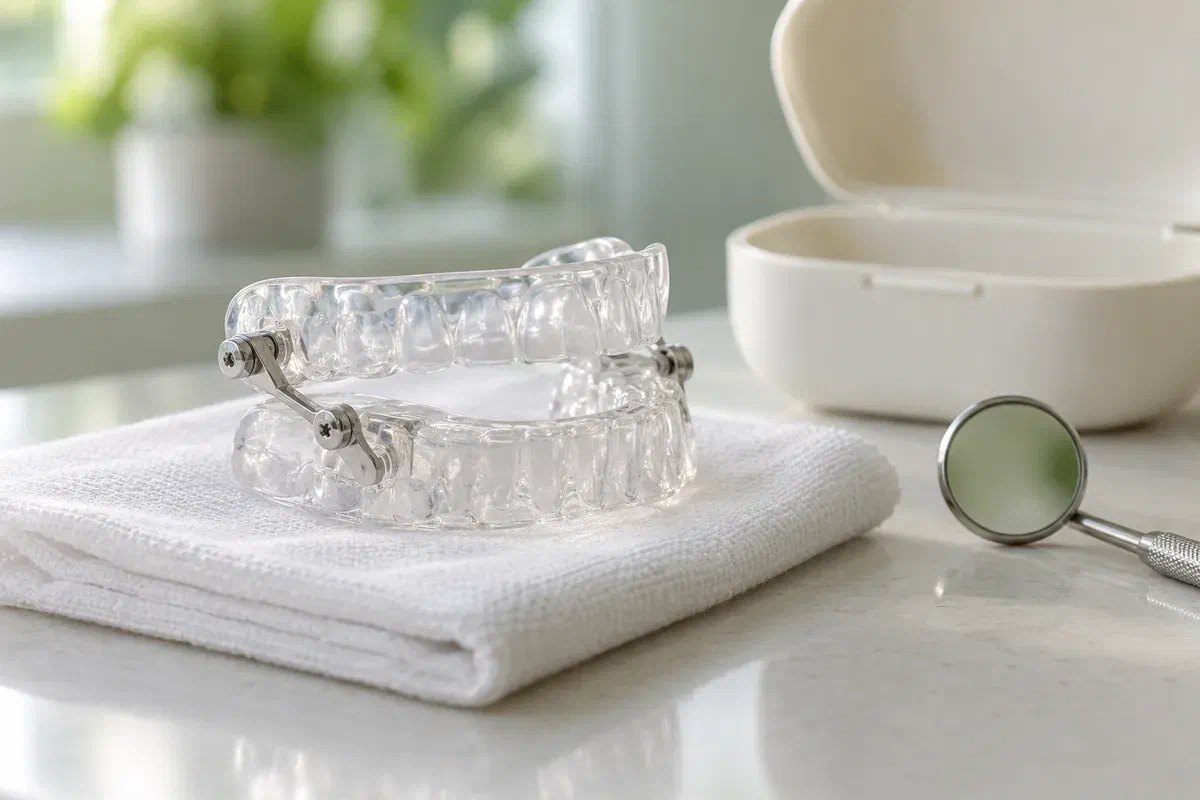
Illustrative intact sleep appliance beside a mirror and protective case before inspection
What age and wear tend to look like

Slow changes count as much as sudden breaks

Set the appliance aside if anything is loose, sharp-edged or no longer sitting securely, and get in touch with the provider who treats you. Nursing it along for a few more nights can blur the picture and adds risk you don’t need.

Fine cracks, chips or a section that has given way

Keep every fragment with the appliance and don’t try to bond it. Let the team know whether the crack followed a drop or crept in gradually. On an older tray, a line that seems minor may sit in a stress point, and its position and the device’s construction matter more than how small it looks.

Hardware that has worn, loosened or gone missing

Hinges, screws and bands wear with time, but a substitute from the junk drawer is not the answer. Tell us which part has changed and whether anything is unaccounted for. If a small piece may have been swallowed or inhaled, get medical advice first and treat the appliance as the second concern.

A grip that has loosened or a tray that no longer seats

Mention new crowns or fillings, any tooth that feels tender, or a time the device sat near heat. Don’t force it on or try to reshape it in hot water. The clinician needs to work out whether the appliance has changed, the mouth has changed, or both, because each leads somewhere different.

For choking or difficulty breathing, call 911. If a part is missing and could have been swallowed or inhaled, seek prompt medical advice and describe what is gone. Keep the rest of the appliance on hand so the missing piece can be identified.

Why an older device deserves a careful review

A neat repair on a tired appliance may not be enough.

It is possible to close a crack while the tray around it no longer holds your jaw in the intended position. A thorough review weighs the design, the material’s condition, the damaged area and the health of your teeth and gums today, not as they were when the device was first made. Ask what any proposed work would put right and how its success will be checked.

Plan for the nights without it as well. Tell your sleep physician the prescribed appliance is out of use and ask what they suggest in the meantime. An earlier mouthpiece from years ago, a sports guard or something ordered online should not be assumed to give the same treatment.

Tracing where the appliance came from

With an older device, the supplier may have changed or records may be hard to find. Bring whatever you still have, such as a case label or old receipt. Gaps in the paper trail are a reason to gather details, not to fit a part that simply resembles the original.

Separating ordinary wear from a deeper cause

Describe past sore spots, previous repairs and dental work done since the appliance was made. Repeated breakage or a changed bite can affect whether repair is worthwhile. Ask whether your mouth or the treatment plan needs a fresh look too.

Comparing repair with a replacement review

Ask what the work would involve, how long you might go without it, what it may cost, and whether a lab must see it first. A clear estimate shows what is known today and what still hinges on closer inspection or another provider’s answer.

The assessment, one step at a time

How we approach a long-serving device

Bring the appliance, any parts and whatever records survive. You won’t be asked to push a damaged tray into place to demonstrate the issue. The visit sorts out what can be judged here and what needs outside input.

  1. Share the appliance’s history

    Tell us its approximate age, how the problem showed up, whether anything is missing, and whether you can still wear it. Let us know who supplied it and how your sleep care is managed. Mention dental treatment since it was made, earlier repairs and any adjustments you have tried.

  2. Look closely at the device and your current mouth

    The clinician inspects the appliance along with your teeth, gums and bite as they are now. The question is whether wear is confined to one component or has affected the fit and overall condition. The original supplier may need to provide records before a repair is recommended.

  3. Choose between repair, replacement assessment or referral

    Talk through the options the findings support and any lab involvement. Ask about the sequence, costs where they are available, and who to call for news. If the appliance can’t be worn in the meantime, involve your sleep physician in planning for the interruption.

  4. Confirm fit and function on its return

    Before you resume nightly use, the repaired device needs a proper clinical review. Ask whether the prescribed jaw position was verified and whether your wear instructions are different now. Further follow-up may still be needed, because a returned appliance is not proof that treatment is working as before.

Until the device has been seen

Handle it gently and keep everyone in the picture.

A plain account of what has changed is more useful than any home repair. Keep the appliance available for assessment and follow your provider’s advice on wearing it and on timing your visit.

Keep it, and every loose part, in one safe place

A sturdy case is ideal. Store small components well away from grandchildren, children or pets, and where they won’t get tidied away. Avoid flexing, trimming or trying it on repeatedly. If a piece has gone missing, mention it rather than expecting the gap to speak for itself.

Skip adhesives, heat and stand-in hardware

Household glue and hot water can change the material or the fit and make the assessment harder. If you or a family member already tried a repair, describe exactly what was used, so the clinician can account for it.

Check with your sleep physician about the gap

Contact the medical sleep provider if the prescribed appliance can’t be worn safely. Ask what interim plan is right for you. Don’t adjust CPAP settings yourself, drop another prescribed treatment, or assume an old spare is suitable because it still fits.

Patient information: NHLBI — keeping sleep-apnea treatment and provider follow-up connected

Deciding what comes next

Three realistic paths for an ageing appliance

Ask what each choice is meant to achieve and what remains uncertain. A quick, inexpensive fix may not be sensible if the device can’t regain a proper fit or the reason it is failing hasn’t been addressed.

When the design and remaining material can support it

Repair of your current appliance

Repair may be possible when suitable materials, parts and expertise exist and the rest of the device is in reasonable shape. Ask whether a lab is involved and what clinical check follows. Even a good repair won’t make an older appliance last indefinitely or replace the need for future reviews.

When wear, damage or a changed mouth limit repair

A review for a replacement device

Extensive wear, warping, discontinued parts or significant dental changes may lead to a replacement assessment. Ask why repair is unlikely to meet your needs and which records must be updated. A new appliance should reflect your current treatment plan instead of copying an outdated fit.

When device-specific details or a medical review are needed

Input from the original supplier or sleep team

The maker of an older design may be the only source for certain parts or limitations. Your sleep physician may also wish to review treatment while you are without it. Ask who is contacting whom and how you’ll be told the decision, so the appliance doesn’t sit in limbo.

Patient information: AADSM — device management and continued coordinated care

Questions about repairing an older appliance

What people ask when a familiar device starts to fail

The answer depends on the actual appliance, its age and the kind of damage. Bring the device and its history rather than relying on a photo or a repair method meant for another product.

(905) 876-4488
How long should an oral sleep appliance last before it needs replacing?
There is no fixed lifespan. It depends on the design, the material, how it has been cared for, and changes in your mouth. Regular reviews with your provider help judge its condition, and the assessment can tell you whether repair or a replacement review is more sensible now.
My appliance feels looser than it used to. Is that a repair problem?
It might be, but a looser grip can also come from wear, shifting teeth or new dental work. Avoid tightening or adjusting it yourself. Describe when you noticed the change, and the clinician can look at both the device and your teeth to find the cause.
Is a chip on an old tray still worth saving the fragment for?
Yes. Keep the chip in the case with the appliance and bring both along. Don’t glue it or throw it out. If you can’t find a piece and there’s a chance it was swallowed or inhaled, mention that and seek medical advice.
Can an older appliance from a provider who has since retired still be assessed?
Often an assessment can still help identify the device, although repair can’t be guaranteed. Bring any case, paperwork or records you have kept. Additional information may be needed to find compatible parts or confirm a suitable repair route before we advise you.
Do I need to tell my sleep physician that my appliance is being repaired?
Yes, let them know while it is out of use. They can advise on an interim approach and may want to review your treatment once it returns. Don’t switch to an old device or change another prescribed therapy without their input.
Is it easy to come in from Old Milton for a repair assessment?
Our Bronte Street practice is close to Milton’s historic downtown, but please call before dropping in. We’ll ask about the damage, explain how an assessment is arranged, and let you know if records from the original supplier would help, so your visit is useful from the start.
Repair assessments for Old Milton

Has your trusted appliance started to fail? Let’s take a look.

Call Milton Dental Clinic and tell us what kind of appliance you have, what has changed, and whether you have had to stop wearing it. We’ll explain how an assessment is arranged and whether details from the original provider are needed before deciding anything.

Repairability, timing and cost depend on an examination of the device and on the provider or lab pathway that applies.

Visit Milton Dental Clinic
Unit 1, 342 Bronte St. S, Milton, ON L9T 5B7
Get directions Clinic hours
Monday–Thursday
11am–7pm
Friday–Sunday
By appointment only

Areas we serve

  • Milton
  • Oakville
  • Mississauga
  • Georgetown
  • Halton Hills
  • Acton
  • Campbellville
  • Brampton
  • Burlington
  • Puslinch
  • Rockwood
  • Erin
  • Caledon
  • Etobicoke
  • Old Milton
  • Bronte Meadows
  • Timberlea
  • Dorset Park
  • Dempsey
  • Clarke
  • Beaty
  • Coates
  • Harrison
  • Scott
  • Willmott
  • Ford
  • Bowes
  • Cobden
  • Walker
  • Mountain View
  • Milton Heights
  • Hawthorne Village
  • Valley View
  • Fallingbrook
  • Nassagaweya
  • Trafalgar
  • Esquesing
  • Nelson
  • Brookville
  • Moffat
  • Glen Williams
  • Norval
  • Limehouse
  • Stewarttown
  • Ashgrove
  • Hornby
  • Silver Creek
  • Speyside
  • Scotch Block
  • North Oakville
  • River Oaks
  • Glen Abbey
  • West Oak Trails
  • Palermo
  • Bronte Creek
  • College Park
  • Joshua Creek
  • Uptown Core
  • Preserve
  • Iroquois Ridge
  • Lisgar
  • Meadowvale
  • Meadowvale Village
  • Churchill Meadows
  • Erin Mills
  • Central Erin Mills
  • Streetsville
  • East Credit
  • Creditview
  • Heartland
  • Sheridan
  • Mount Pleasant
  • Credit Valley
  • Huttonville
  • Churchville
  • Springbrook
  • Northwest Brampton
  • Bram West
  • Fletcher's Meadow
  • Fletcher's Creek South
  • Alton Village
  • Orchard
  • Millcroft
  • Headon Forest
  • Tansley
  • Brant Hills
  • Tyandaga
  • Kilbride
  • Lowville
  • Aberfoyle
  • Morriston
  • Arkell
  • Hillsburgh
  • Freelton
  • Carlisle
  • Waterdown
  • Flamborough
  • Mountsberg

How can we help?

Milton Dental Clinic

Have a question about your smile? Choose the option that works best for you.

For urgent dental concerns, please call.
Messages are reviewed during clinic hours.