

Illustrative consultation about replacing a custom oral sleep appliance
Specialized Care

Sleep Appliance Replacement

A replacement sleep appliance should reflect your current teeth and treatment plan. Discuss the next steps in Milton when a device is lost, worn, damaged, or no longer fits, with attention to dental changes and coordinated sleep care.

A closer look at sleep-appliance replacement

Start with what has changed before making another appliance.

Replacing an oral sleep appliance involves more than ordering another item with the same name. Your teeth, restorations, jaw comfort, and sleep-care needs may have changed since the original device was made. A current assessment helps determine whether replacement is appropriate and what information is needed before a new appliance is arranged.

You may be seeking help because a device was lost, damaged beyond a suitable repair, or has become difficult to wear. Bring the old appliance if you have it, even if it cannot be used, and explain how it performed before the problem occurred. Its history can help clarify what should be retained or reconsidered in the next plan.

At Milton Dental Clinic, tell us who originally supplied the appliance and which medical provider manages your sleep condition. We can discuss the appropriate assessment and coordination. A new device should fit the current clinical situation; copying an old shape or setting without review does not establish that it remains right for you.

Discuss replacing your sleep appliance
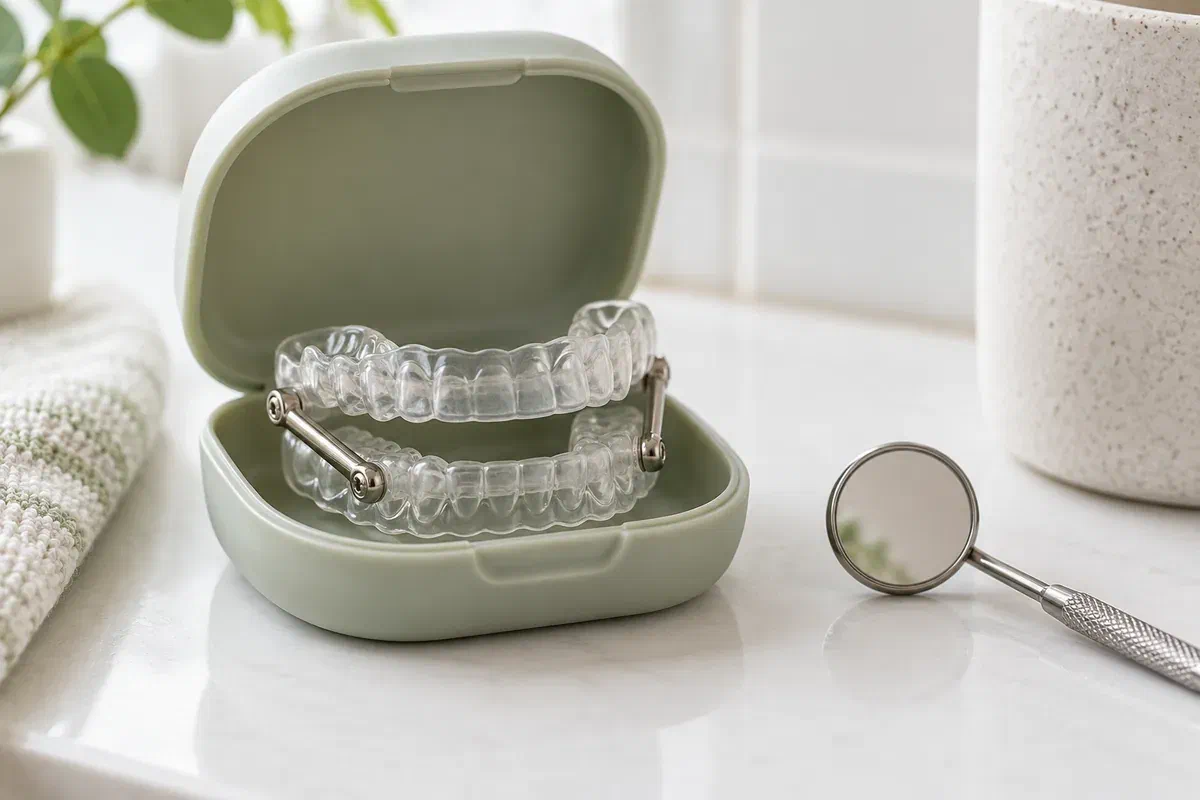
Illustrative connected oral sleep appliance inside an open protective case
Reasons to review an existing device

Explain why replacement has become a question now.

The reason matters. Loss, damage, a changed mouth, and poor treatment response are different problems, and they may require different decisions before an appliance is replaced.

The appliance has been lost or cannot be recovered

Contact the original provider or the team arranging your care and explain when use stopped. Ask which previous records are available and what needs updating. If the device was part of prescribed sleep treatment, contact the medical sleep provider about an interim plan rather than waiting silently for a replacement.

Wear or damage makes continued use uncertain

Bring the appliance for assessment and describe any recurring cracks, loose components, or changes in its shape. Replacement is not automatic because the device is old, and repair is not automatically suitable because the defect seems small. The condition, design, available parts, and clinical fit need consideration.

Your mouth or treatment experience has changed

Mention new restorations, missing teeth, gum concerns, bite changes, or difficulty tolerating the device. Tell the sleep-care provider about returning symptoms too. A new appliance may be only one part of the response; an oral problem or an ineffective treatment approach should not be overlooked during replacement planning.

Do not force an ill-fitting device or continue wearing one with broken or loose parts. Contact the treating provider for advice and coordinate the interim sleep-care plan if the appliance cannot be used.

What a replacement assessment can clarify

Use the experience of the first appliance to inform the next decision.

Your previous device provides a useful history, even when it is no longer available. Explain what was comfortable, what was difficult, and whether a medical review assessed its effectiveness. The clinician can consider that experience alongside current dental findings instead of assuming the same design and instructions will automatically work again.

A replacement discussion is also a chance to identify unfinished care. Ask whether recent dental treatment should be completed before new records are taken, whether the sleep provider needs an update, and how fitting and follow-up will be arranged. Understanding the sequence can prevent an avoidable mismatch between a new device and a changing mouth.

Patient information: AADSM — current assessment, appliance management, and coordinated follow-up

Review the current foundation for appliance use

The clinician considers the teeth, supporting tissues, restorations, bite, and jaw function relevant to a new device. Ask whether any finding needs attention first. Previous success with an appliance is useful context, but it does not remove the need to examine the mouth as it is today.

Identify which records remain useful

Original device details, earlier dental records, adjustment instructions, and sleep-care information can help explain the treatment history. Ask which records can be obtained and which must be updated. Do not assume an old impression or scan will be suitable simply because it is still stored somewhere.

Plan the transition and the later review

Clarify what happens while the appliance is being arranged and who to contact if that period becomes longer than expected. Ask how the new device will be fitted and how the treatment response will be reviewed. Receiving a replacement is one step in the plan, rather than the end of care.

Planning a replacement appliance

Review the history, update what is needed, and confirm the new plan.

Bring the old appliance and available records, or explain what is missing. The appointment should establish why replacement is being considered and what must happen before a suitable new device can be provided.

  1. Understand the reason for replacement

    Describe loss, damage, fit difficulty, or another concern and explain how the device was used before the problem. Share the original provider details and any recent sleep-care review. Tell the clinician whether treatment is currently interrupted and whether you already have advice about managing that interruption.

  2. Examine the current mouth and assess relevant changes

    The clinician reviews oral health and the structures involved in supporting and wearing an appliance. Planned or recent dental work may affect the sequence. Ask which findings change the options and whether further dental care or specialist input is needed before new appliance records are obtained.

  3. Discuss the appropriate device and updated records

    If replacement is suitable, discuss the proposed design, required records, estimated costs, and expected stages. Ask why that option is being considered in light of your previous experience. Any available timing should be confirmed by the treating provider rather than assumed from the date of the assessment.

  4. Arrange fitting and subsequent treatment review

    A replacement device needs its own fit check, handling instructions, and prescribed starting plan. Ask how early dental review and medical assessment of effectiveness will be coordinated. Do not transfer settings or alter components yourself unless this is explicitly part of the device-specific instructions you receive.

While waiting and when the new device arrives

Keep the treatment plan connected through the change.

The advice depends on why the appliance is being replaced and whether the original can safely be used. Ask for clear instructions for the waiting period and for beginning with the new device.

Tell the sleep-care provider about an interruption

Explain if you cannot wear the existing appliance and ask what interim care is appropriate. Do not independently abandon other prescribed treatment or substitute a generic guard. If daytime sleepiness is a concern, seek medical advice and avoid driving while sleepy.

Report dental changes before the replacement fitting

Let the team know about new dental treatment, tooth loss, pain, or a change in the bite after records have been taken. These changes may affect fitting. Do not wait until the appointment is nearly finished to mention that the mouth no longer matches the earlier assessment.

Learn the replacement's instructions on its own terms

Practise insertion and removal and confirm cleaning, storage, and any permitted adjustment. A similar appearance does not guarantee identical handling or settings. Keep the new instructions and provider details together, and ask when to return or call if the first period of use is difficult.

Choosing the next step for your device

Replace, repair, or reconsider according to the reason for the problem.

Ask what the proposed approach will resolve and what it will not. A new appliance is not automatically the answer to discomfort, recurrent damage, or returning sleep-related symptoms without understanding their cause.

When replacement is supported by the assessment

A new custom appliance within the current care plan

A replacement may be appropriate after the relevant dental and medical information has been reviewed. Ask which design and records are needed and how fitting will be arranged. The decision should reflect the present findings and your previous experience, with follow-up to address the new device's use.

When the existing appliance may still have a useful role

Assessment for an appropriate repair

Some problems may be assessed for repair rather than immediate replacement. Suitability depends on the damage, materials, components, and clinical fit. Ask what the repair would achieve and how the device would be checked afterward, without assuming that all defects can be corrected or that repair is always economical.

When the underlying needs have changed

A broader dental or medical treatment review

If oral health, tolerance, or treatment response has changed, another assessment or care pathway may be needed. The clinician may coordinate with the original provider or sleep physician. Ask which issue must be resolved first so replacement does not simply repeat the same unresolved difficulty.

Questions before arranging another appliance

Know what carries forward and what needs a fresh look.

Bring questions about the old device, current fit, costs, and the transition. The available records and examination help make the replacement discussion specific to you.

(905) 876-4488
Can my lost sleep appliance be replaced directly from the old scan?
The earlier scan may be useful, but the provider needs to consider whether it still represents your mouth and whether the treatment plan remains suitable. New records may be required. Tell the team about any dental work, tooth movement, or symptoms since the original appliance was made.
Does every oral sleep appliance need replacement after the same number of years?
No universal lifespan applies to every device or patient. Condition, material, fit, oral changes, and the care plan all matter. Have the appliance reviewed when recommended and report damage or new difficulties rather than using age alone to decide that it is either safe or due for replacement.
Should a planned crown be mentioned before a replacement sleep appliance is made?
Yes. A crown changes the tooth surface and can affect appliance fit. Discuss the dental treatment sequence with the providers involved before new records or fitting are arranged. They can explain whether the restoration should be completed first or whether another coordinated approach is needed.
Will a replacement sleep appliance automatically use my previous setting?
No. The clinician needs to consider the device design, current findings, previous response, and prescribed plan. A setting is not necessarily interchangeable between appliances. Ask what starting position and adjustment instructions apply to the replacement instead of trying to transfer the old setup yourself.
Can I request a different sleep-appliance design when replacing the old one?
Yes, discuss what worked and what was difficult with the previous design. The clinician can explain which options may be suitable for your mouth and treatment needs. Preference matters, but availability and clinical suitability need assessment before a particular design can be recommended.
If the replacement feels better, is further sleep-treatment review still needed?
Follow the agreed dental and medical review plan. Improved comfort may help use, but it does not by itself establish effective control of a sleep condition. Ask how response to the new device will be assessed and when any recommended follow-up or testing should occur.
Discuss replacement in Milton

Bring the history of your appliance into the next decision.

Contact Milton Dental Clinic about a lost, worn, damaged, or unsuitable sleep appliance. Tell us whether you still have the device, who supplied it, and whether treatment is currently interrupted so we can discuss the appropriate assessment arrangements.

Replacement planning depends on current dental findings and the coordinated sleep-care plan.

Visit Milton Dental Clinic
Unit 1, 342 Bronte St. S, Milton, ON L9T 5B7
Get directions Clinic hours
Monday–Thursday
11am–7pm
Friday–Sunday
By appointment only

How can we help?

Milton Dental Clinic

Have a question about your smile? Choose the option that works best for you.

For urgent dental concerns, please call.
Messages are reviewed during clinic hours.