
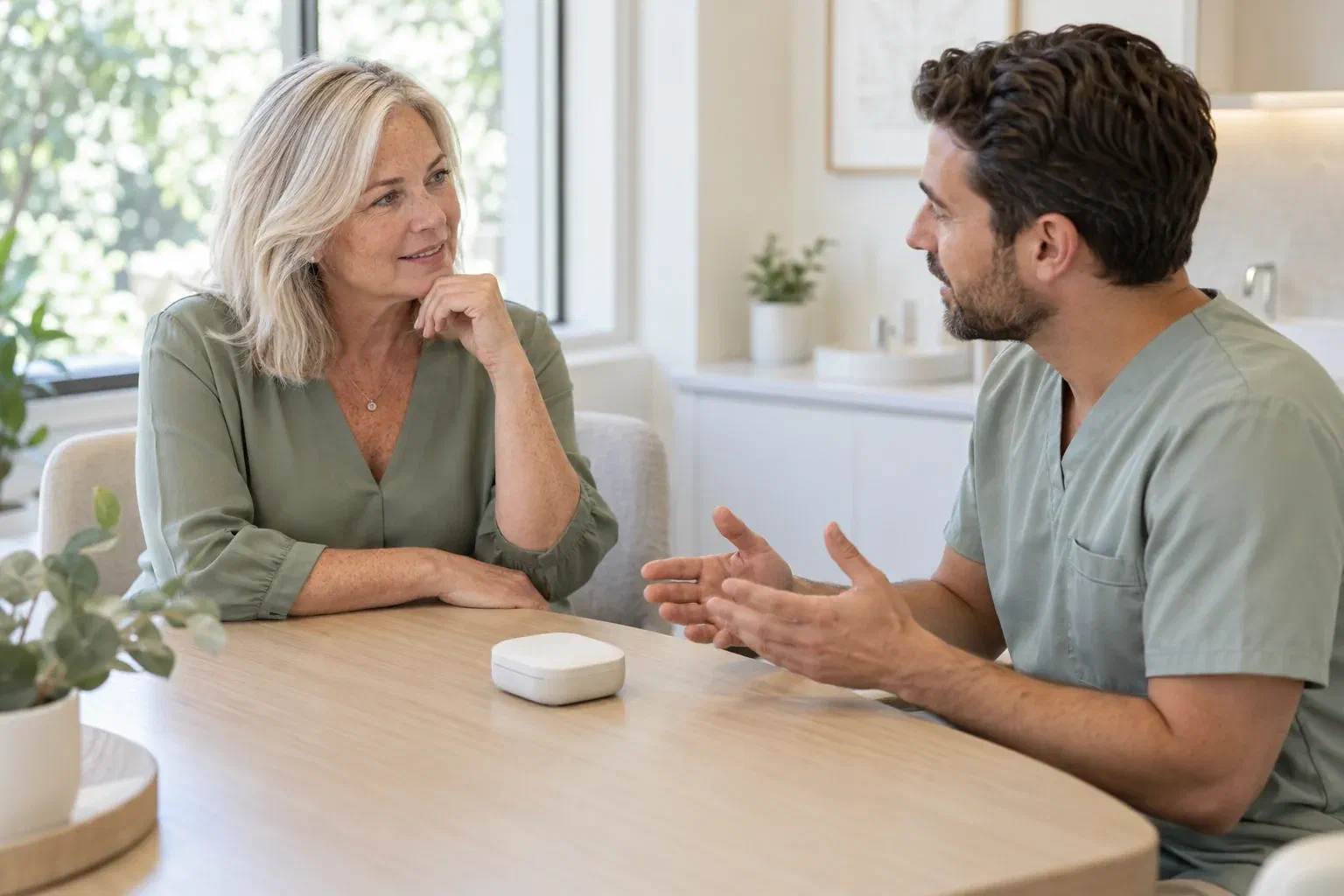
Illustrative consultation about replacing a custom oral sleep appliance
Specialized Care

Sleep Appliance Replacement in Brampton

Dogs love the smell of a worn sleep appliance, and a busy household can knock one off a nightstand or into the laundry. If yours has been chewed, crushed or misplaced, a Brampton household can arrange a review of the damage, your teeth and your sleep plan.

Accidents at home

Tooth marks that are not yours.

It happens more often than you might think. The appliance is left on the bedside table for a minute, and the family dog finds it. Or a toddler carries it off, or it ends up in a pocket in the washing machine. Whatever the route, the result is a device that may be bent, punctured or missing a piece — and a decision about what comes next.

Gather up every fragment and put it in the case, even if the damage looks hopeless. A chewed appliance can still show the dentist how it was designed and how it sat on your teeth. Jot down roughly how old it was and how well it was working before the accident, since that history informs the plan.

Then tell Milton Dental Clinic who made the device and which doctor manages your sleep condition. The dentist can talk through the assessment that makes sense and how to keep your physician informed. Even after an accident, the replacement has to suit your mouth now; simply duplicating the old appliance would skip that check.

Get advice about a damaged appliance
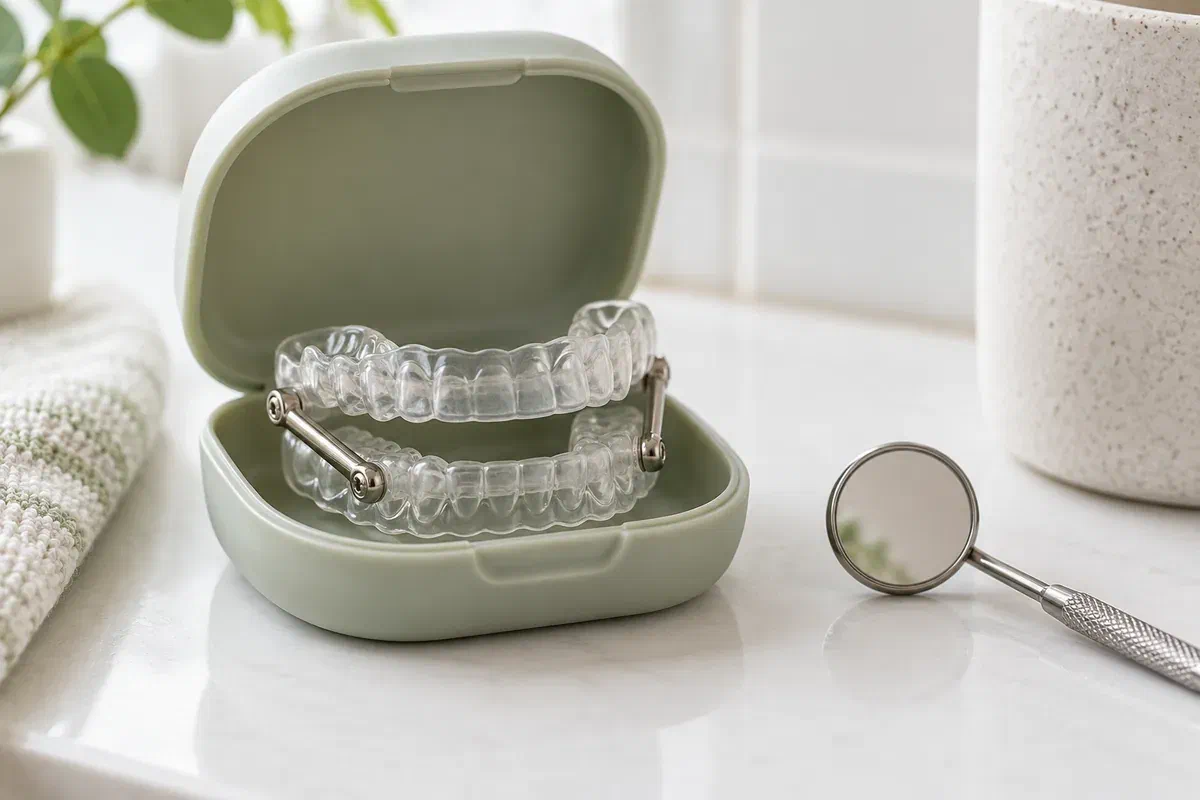
Illustrative connected oral sleep appliance inside an open protective case
What kind of damage, and what else

Chewed, crushed, lost or no longer right for you?

Household accidents usually mean damage or loss, but they can also prompt a look at issues that were already brewing. Telling the dentist the whole story helps them decide what to check.

The pieces cannot be found

If the appliance vanished entirely, note when you last saw it and contact the provider who made it about any records on file. Because you are now without part of your prescribed treatment, phone your sleep physician as well and ask how to manage until a decision is reached.

It is punctured, bent or in parts

Do not try to straighten or glue it; altered shapes and household adhesives do not belong in your mouth. Bring everything in. Some damage may be assessed for repair, but tooth marks can hide cracks, and a device that looks mostly intact may not hold its intended position any more.

It was already becoming a problem

Perhaps the device had started to feel tight, your bite felt different, or snoring was creeping back before the accident. Mention it, along with new dental work, missing teeth or gum concerns. Those issues need attention in their own right, not just a replacement device.

Please do not wear an appliance that has been chewed, cracked or bent, even if it seems to go in. Call the treating provider for advice, and contact your physician about sleep care while you are without it.

Making the most of the setback

An accident can become a useful review.

Think back over life with the old device. Which parts were easy, which were annoying, and did your physician ever confirm it was helping? That account, combined with a current examination, gives the dentist a clearer basis for the next appliance than any copy of the old one could.

It also creates a natural pause to tidy up. If a filling or crown was on the list, it may be better done before new records. If the sleep clinic has not seen you for a while, now is a good time. Agreeing on the order and on who manages fitting and review keeps the new device in step with your mouth.

Patient information: AADSM — current assessment, appliance management, and coordinated follow-up

An up-to-date examination

The dentist looks at teeth, gums, existing restorations, bite and jaw movement, since a new appliance depends on each. Ask whether anything needs treatment before records are taken. A good run with the last device is welcome, but it cannot replace a current look.

Finding which records survived

Your original provider may have device specifications, scans or adjustment notes, and your sleep clinic may have reports. Ask which can be requested and which are likely out of date. Stored files help with history but may not reflect your teeth now.

A clear plan for the gap

Agree on what you will do until a decision is made and whom to call if it drags. Ask how the replacement would be fitted and how its effect would be reviewed with your physician. Getting a new device is a step, and the check afterwards counts too.

After the accident

From a chewed device to a confirmed plan.

Bring the damaged appliance and any pieces, or explain that it is gone. The visit works out whether replacement makes sense and what needs to happen before a new device can be offered.

  1. Show what happened

    Hand over the remains and explain how the damage occurred and how you used the appliance before it. Give the original provider’s name and mention when your sleep care was last reviewed. Say whether you are currently without treatment and whether your physician has already advised you.

  2. Look at your mouth as well as the device

    Beyond the damage, the dentist examines oral health and the teeth and tissues that would hold a new appliance. Planned dental work may change the sequence. You will learn which findings affect your choices and whether other care should come first.

  3. Weigh the options together

    If replacement is appropriate, the conversation covers the suggested design, the records needed, a cost estimate and the likely stages. It is worth asking whether a different case or storage habit would help prevent a repeat. The provider making the device confirms any timeline.

  4. Fit and review the new appliance

    On fitting day, the replacement is checked in place, and you receive handling instructions and a prescribed starting position. Ask how the dental check and your physician’s assessment of effectiveness will be linked. Leave the old settings behind unless the new instructions say otherwise.

Around the house

Keep your sleep care on track, and the new device out of reach.

Instructions vary with the reason for replacement and whether any existing appliance is usable. Request guidance that covers both the nights without a device and the first stretch with its successor.

Let your physician know you are without it

A pause in appliance use is a pause in treatment. Tell the provider managing your sleep condition and ask what interim care fits. Keep up any other prescribed therapy and avoid a store-bought substitute. Daytime drowsiness calls for medical advice, and for someone else behind the wheel until it is addressed.

Mention any dental news before the fitting

If a tooth chips, a crown is placed, something starts aching or your bite feels different after records are taken, call the team. The fit of the replacement may depend on it.

Build a safer routine with the new device

Get comfortable seating and removing it, and confirm how to clean and store it. Make the closed hard case its only resting place, out of reach of pets and small hands, and never leave it wrapped in a tissue. Keep instructions handy and call if the first nights are hard.

What can be done

Fit the solution to the damage — and to you.

Each route has a job and a limit, so ask about both. A replacement solves a destroyed device, but it does not resolve discomfort or returning symptoms that started before the accident.

When the damage or loss makes replacement sensible

A replacement made for your current mouth

After the dental and medical picture has been reviewed, a new custom appliance may be the right step. Ask about the design, the records it needs and how fitting will be arranged. The choice should reflect today’s findings and your experience with the old device, with follow-up included.

When the harm is limited

A repair, if the damage allows

Minor damage may be assessed for repair. That depends on where the damage is, the materials, the available components and the fit. Ask what the repair would achieve and how it would be rechecked. Chewing often causes hidden harm, so repair is not always possible or economical.

When something else had changed already

Attention to issues beyond the accident

If oral health, comfort or treatment response had been changing before the dog got involved, another assessment or care route may be appropriate. Expect some back-and-forth with the clinic that made the device or with your sleep doctor. Ask which issue to resolve first so the new device does not inherit an older problem.

Brampton questions

Damaged-appliance questions we hear.

Bring questions about the damage, the fit, costs and the time in between. Your records and examination let the dentist answer for your situation.

(905) 876-4488
My dog chewed my sleep appliance. Can it be saved?
Sometimes limited damage can be assessed for repair, but chewing often causes cracks or distortion that are hard to see. Bring the device and all pieces in so the dentist can judge whether repair is reasonable.
Is a chewed appliance safe to wear if it still clicks into place?
It is best not to. Punctures and bends can create rough edges, weaken parts or change the position the device holds. Stop using it and contact the treating provider.
Should I clean a damaged appliance before bringing it in?
Rinse it gently with cool water and put it in its case with any fragments. Avoid trying to reshape or repair it. If you are unsure how to handle it, call ahead for guidance.
How can I keep a new appliance safe from pets?
Store it in a closed hard case on a high shelf or in a drawer, rather than on a nightstand or wrapped in tissue. Pets are attracted to the scent of worn appliances, so the case should be its only resting place.
Will a replacement be shaped exactly like my old device?
Not necessarily. The design and starting position depend on your current findings, your previous response and your prescribed plan. Follow the instructions given for the replacement rather than trying to match the old one.
Can I ask for a sturdier design this time?
You can raise it. The dentist can explain which designs and materials may suit your mouth and needs. Durability is one factor alongside fit, comfort and clinical suitability.
From Brampton to our Bronte Street practice

Bring the case, the pieces, and the story.

Whatever the dog, the toddler or the washing machine did to it, call Milton Dental Clinic if your sleep appliance is chewed, crushed, lost or has become uncomfortable. Let us know which clinic supplied it, the name of your sleep doctor and how many nights you have gone without it, and the team can suggest how the assessment should be set up.

Whether a chewed device is repaired or replaced rests on what the exam shows and on the plan your sleep physician is running.

Visit Milton Dental Clinic
Unit 1, 342 Bronte St. S, Milton, ON L9T 5B7
Get directions Clinic hours
Monday–Thursday
11am–7pm
Friday–Sunday
By appointment only

Areas we serve

  • Milton
  • Oakville
  • Mississauga
  • Georgetown
  • Halton Hills
  • Acton
  • Campbellville
  • Brampton
  • Burlington
  • Puslinch
  • Rockwood
  • Erin
  • Caledon
  • Etobicoke
  • Old Milton
  • Bronte Meadows
  • Timberlea
  • Dorset Park
  • Dempsey
  • Clarke
  • Beaty
  • Coates
  • Harrison
  • Scott
  • Willmott
  • Ford
  • Bowes
  • Cobden
  • Walker
  • Mountain View
  • Milton Heights
  • Hawthorne Village
  • Valley View
  • Fallingbrook
  • Nassagaweya
  • Trafalgar
  • Esquesing
  • Nelson
  • Brookville
  • Moffat
  • Glen Williams
  • Norval
  • Limehouse
  • Stewarttown
  • Ashgrove
  • Hornby
  • Silver Creek
  • Speyside
  • Scotch Block
  • North Oakville
  • River Oaks
  • Glen Abbey
  • West Oak Trails
  • Palermo
  • Bronte Creek
  • College Park
  • Joshua Creek
  • Uptown Core
  • Preserve
  • Iroquois Ridge
  • Lisgar
  • Meadowvale
  • Meadowvale Village
  • Churchill Meadows
  • Erin Mills
  • Central Erin Mills
  • Streetsville
  • East Credit
  • Creditview
  • Heartland
  • Sheridan
  • Mount Pleasant
  • Credit Valley
  • Huttonville
  • Churchville
  • Springbrook
  • Northwest Brampton
  • Bram West
  • Fletcher's Meadow
  • Fletcher's Creek South
  • Alton Village
  • Orchard
  • Millcroft
  • Headon Forest
  • Tansley
  • Brant Hills
  • Tyandaga
  • Kilbride
  • Lowville
  • Aberfoyle
  • Morriston
  • Arkell
  • Hillsburgh
  • Freelton
  • Carlisle
  • Waterdown
  • Flamborough
  • Mountsberg

How can we help?

Milton Dental Clinic

Have a question about your smile? Choose the option that works best for you.

For urgent dental concerns, please call.
Messages are reviewed during clinic hours.