
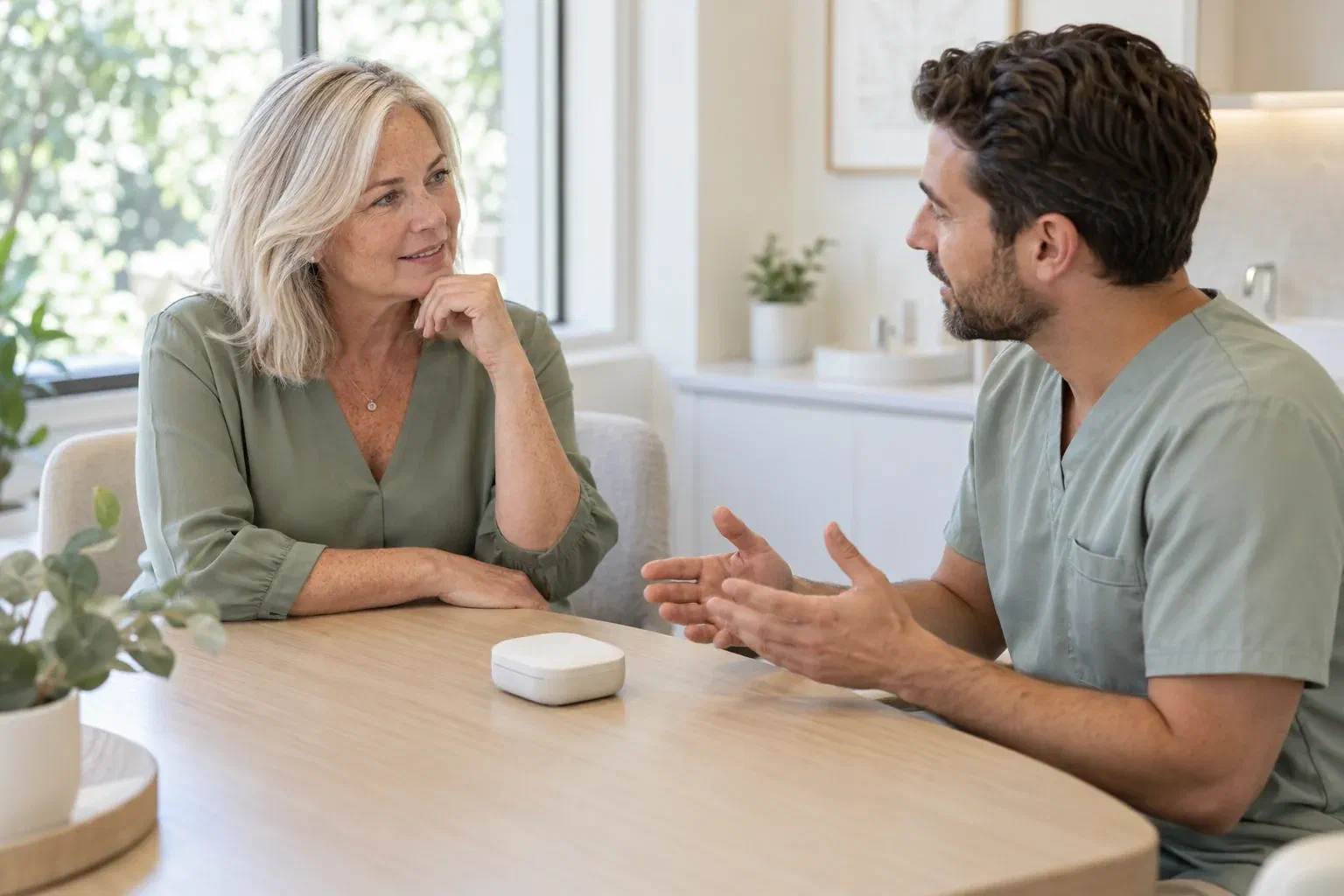
Illustrative consultation about replacing a custom oral sleep appliance
Specialized Care

Sleep Appliance Replacement in Burlington

When your partner says the snoring is back, the appliance is the first suspect. From Burlington, book a dental review that checks the device, your teeth and the sleep-care picture before anyone decides a replacement is the answer.

When results start slipping

Is it the appliance, your mouth, or the sleep condition itself?

Sometimes nothing looks broken. The device goes in each night, yet the person beside you hears the old snoring again, or you wake feeling foggy. A worn or loosened appliance could be part of it. So could dental changes, weight changes or a shift in the sleep condition — which is why replacement deserves a careful look before it is assumed.

Bring the device and describe the change as precisely as you can. When did it start? Is it every night or only some? Has the appliance begun to feel looser, or does it sit differently on one side? Those observations help the dentist judge whether the hardware is likely involved.

Returning symptoms are also medical information, so please tell the physician or sleep clinic that manages your condition, and let our team know who that is and who made your current device. Milton Dental Clinic can then discuss a suitable dental assessment and how findings might be shared. A new copy of the old appliance would not, by itself, answer why things changed.

Book a review of a less effective appliance
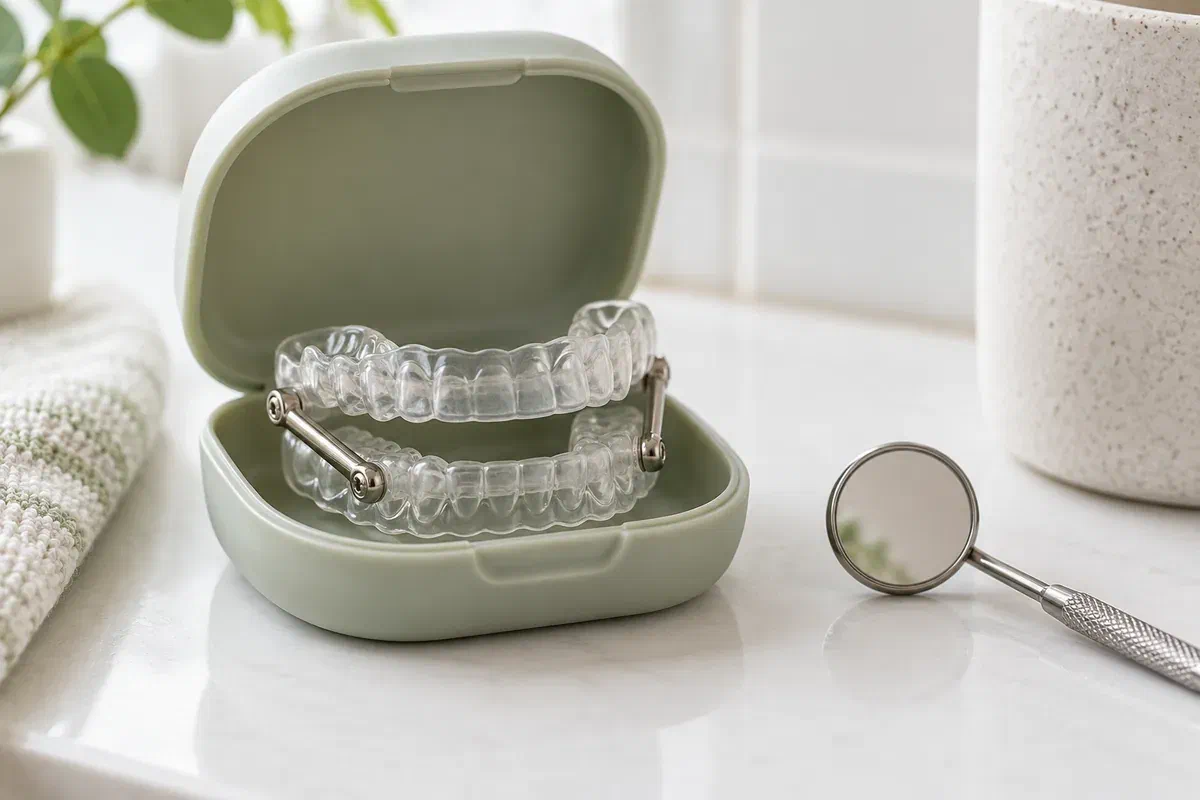
Illustrative connected oral sleep appliance inside an open protective case
Clues worth mentioning

Three situations that bring people from Burlington to this question.

Losing a device, damaging it and finding it less helpful are separate problems. Each points the examination in a different direction, so it helps to say which one — or which mix — you are dealing with.

The device is gone

If it is lost, note when you last used it and contact the provider who made it about stored records. Because you are now without prescribed treatment, call your sleep physician too and ask how to manage the nights in between, rather than waiting quietly.

It looks or feels worn out

Thinning plastic, small cracks, a hinge or strap that has gone slack, or a shape that seems different can all affect how the appliance holds the jaw. Bring it in. Neither its age nor the apparent size of a fault settles whether repair or replacement is right.

Symptoms have crept back

Snoring, choking awake, unrefreshing sleep or daytime tiredness should go to your sleep-care provider. Mention dental changes as well: new fillings, a missing tooth, sore gums or a different bite. A replacement may help, but it should not hide an oral problem or a treatment approach that needs revisiting.

If the device has to be forced in, is cracked, or has a part that rattles, stop wearing it. Phone the provider treating you for advice, and ask your physician what to do about sleep care in the meantime.

Why the dental side matters

A worn appliance can explain some changes — not all of them.

The dentist’s role is to judge the device and the mouth that holds it. Did it once work well, as confirmed by a physician or a sleep study? What was comfortable, and what was a struggle? Laying that history beside today’s findings shows whether the hardware has changed, the teeth have changed, or neither has.

That distinction matters for what happens next. If the appliance is sound and fits, the conversation turns to your physician. If dental work is pending, it may need to come first. Clear roles for fitting and follow-up help prevent a new device being made before the underlying question has been asked.

Patient information: AADSM — current assessment, appliance management, and coordinated follow-up

Checking the mouth beneath the device

Teeth, gums, restorations, bite and jaw function are reviewed because an appliance relies on all of them. You can ask whether any finding should be treated before records are taken. A device that once worked is a good sign, but today’s mouth still has to be examined on its own merits.

Comparing old details with new findings

The original device’s specifications, earlier dental records, adjustment history and sleep-clinic reports give useful context. Ask which can be obtained and which need refreshing. An archived scan may be out of date even though it is still on file.

Keeping the follow-up connected

Agree on what happens while decisions are made and whom to contact if it drags on. Ask how a new appliance would be fitted and how its effect on your sleep condition would be judged. A replacement is a step in treatment, and the review after it matters as much.

What the review looks like

Describe, examine, discuss, then fit and follow up.

Come with the current appliance and any records you have. The visit aims to explain why results have changed, whether replacement is warranted and what needs to be settled before a new device is offered.

  1. You describe what has changed

    Tell the dentist when symptoms returned, how often you wear the device and whether it feels different. Name the original provider and your sleep physician, and share any recent sleep review. Say whether you have already received medical advice about the change.

  2. The dentist examines device and mouth together

    Wear on the appliance, its fit on the teeth, oral health and jaw function are checked side by side. Recent or planned dental treatment may affect the sequence. You will hear which findings matter and whether other dental or specialist care should come first.

  3. You talk through the options and costs

    If replacement is appropriate, the dentist explains the design being proposed, the records needed, estimated costs and likely stages. Ask how the plan responds to what has gone wrong. The treating provider confirms timing; it should not be assumed.

  4. A new device is fitted and its effect reviewed

    Any replacement has its own fit check, instructions and prescribed starting position. Ask how dental follow-up and a medical check of effectiveness will be linked, especially since symptoms prompted the visit. Do not transfer the old setting or alter parts unless the device’s instructions say so.

While questions are being answered

Report symptoms, protect your sleep, learn the new device.

Your instructions will depend on what the review finds and whether the current appliance is safe to keep using. Ask what to do in the interim and how to start with a replacement if one is made.

Keep your physician in the loop

Returning symptoms or a pause in appliance use should be reported to the provider managing your sleep condition. Do not drop other prescribed treatment or switch to a generic mouthguard. If you are sleepy during the day, seek medical advice and avoid driving while drowsy.

Mention mouth changes along the way

Tell the team about new dental work, a lost or broken tooth, pain or a bite that feels different after records are taken. Raising it early gives time to reconsider the fit.

Start fresh with any replacement

Practise placing and removing it, and confirm how to clean, store and, if permitted, adjust it. It may look like the old one and still behave differently. Keep its instructions with your sleep-care contacts, and ask when to call if early use is uncomfortable.

Where the review may lead

Replacement is one answer among several.

Before agreeing to anything, ask what an option would fix and what it would not. If symptoms came back for reasons unrelated to the device, a replacement on its own may simply repeat the problem.

When wear or fit explains the change

Replacing the appliance

A new custom device may be appropriate once dental findings and medical information are considered together. Ask about the design, the records it needs and how fitting will be organised. The plan should reflect what has changed since the first appliance, with a review of its effect built in.

When a specific part has failed

Repairing what is there

A worn or broken component may be assessed for repair. Whether that is sensible depends on the damage, the materials, available parts and the present fit. Ask what the repair should achieve and how it will be checked; not every fault can be corrected, and repair is not always economical.

When the cause may lie elsewhere

Looking beyond the device

If the appliance and fit look sound, the explanation may be dental or medical. The dentist may share findings with your sleep physician or the original provider. Ask which concern needs to be resolved first so the next step targets the real reason symptoms returned.

Burlington questions about changing results

When your appliance does not seem to work like it used to.

Bring questions about the device, its fit, costs and what to do while things are sorted out. Your examination and records help the answers apply to you.

(905) 876-4488
My partner says I am snoring again. Does that mean I need a new appliance?
Not necessarily. Wear or loosening can play a part, but so can dental, weight or health changes. Tell your sleep physician, and have the device and your mouth examined so the cause can be narrowed down before replacement is considered.
Can weight changes affect how well an oral appliance works?
Changes in weight can influence a sleep-breathing condition, so they are worth mentioning to your physician. The dentist can check whether the device itself still fits well; your physician can consider whether treatment needs a medical review.
How can I tell if my appliance has worn out?
Look for cracks, thinning, cloudiness, loose parts or a fit that feels slack or uneven. Some wear is hard to see, so bring the device in if you have doubts. Report changes rather than waiting for it to fail.
Should I adjust the appliance further myself if snoring returns?
Only if adjustment is already part of the written instructions for your device and your provider has explained the limits. Otherwise, contact the treating provider; adjusting without guidance can strain teeth or the jaw.
Is my old scan still good enough to make a replacement?
It might serve as a reference, but the provider has to judge whether it still matches your teeth and whether the plan is still right. Fresh records are often needed, particularly after dental work.
Will I need another sleep test with the new device?
That decision belongs to your physician. Feeling better with a replacement is encouraging, but it does not confirm that the sleep condition is controlled. Ask how its effect will be assessed and when.
Burlington appointments

Your partner’s observations are welcome too.

Reach out to Milton Dental Clinic if your sleep appliance seems less effective, or if it is lost, damaged or uncomfortable. Tell us who made it, who manages your sleep care and whether you are still wearing it, and we will talk through suitable assessment arrangements.

Any replacement depends on what the dental examination finds and on your coordinated sleep-care plan.

Visit Milton Dental Clinic
Unit 1, 342 Bronte St. S, Milton, ON L9T 5B7
Get directions Clinic hours
Monday–Thursday
11am–7pm
Friday–Sunday
By appointment only

Areas we serve

  • Milton
  • Oakville
  • Mississauga
  • Georgetown
  • Halton Hills
  • Acton
  • Campbellville
  • Brampton
  • Burlington
  • Puslinch
  • Rockwood
  • Erin
  • Caledon
  • Etobicoke
  • Old Milton
  • Bronte Meadows
  • Timberlea
  • Dorset Park
  • Dempsey
  • Clarke
  • Beaty
  • Coates
  • Harrison
  • Scott
  • Willmott
  • Ford
  • Bowes
  • Cobden
  • Walker
  • Mountain View
  • Milton Heights
  • Hawthorne Village
  • Valley View
  • Fallingbrook
  • Nassagaweya
  • Trafalgar
  • Esquesing
  • Nelson
  • Brookville
  • Moffat
  • Glen Williams
  • Norval
  • Limehouse
  • Stewarttown
  • Ashgrove
  • Hornby
  • Silver Creek
  • Speyside
  • Scotch Block
  • North Oakville
  • River Oaks
  • Glen Abbey
  • West Oak Trails
  • Palermo
  • Bronte Creek
  • College Park
  • Joshua Creek
  • Uptown Core
  • Preserve
  • Iroquois Ridge
  • Lisgar
  • Meadowvale
  • Meadowvale Village
  • Churchill Meadows
  • Erin Mills
  • Central Erin Mills
  • Streetsville
  • East Credit
  • Creditview
  • Heartland
  • Sheridan
  • Mount Pleasant
  • Credit Valley
  • Huttonville
  • Churchville
  • Springbrook
  • Northwest Brampton
  • Bram West
  • Fletcher's Meadow
  • Fletcher's Creek South
  • Alton Village
  • Orchard
  • Millcroft
  • Headon Forest
  • Tansley
  • Brant Hills
  • Tyandaga
  • Kilbride
  • Lowville
  • Aberfoyle
  • Morriston
  • Arkell
  • Hillsburgh
  • Freelton
  • Carlisle
  • Waterdown
  • Flamborough
  • Mountsberg

How can we help?

Milton Dental Clinic

Have a question about your smile? Choose the option that works best for you.

For urgent dental concerns, please call.
Messages are reviewed during clinic hours.