
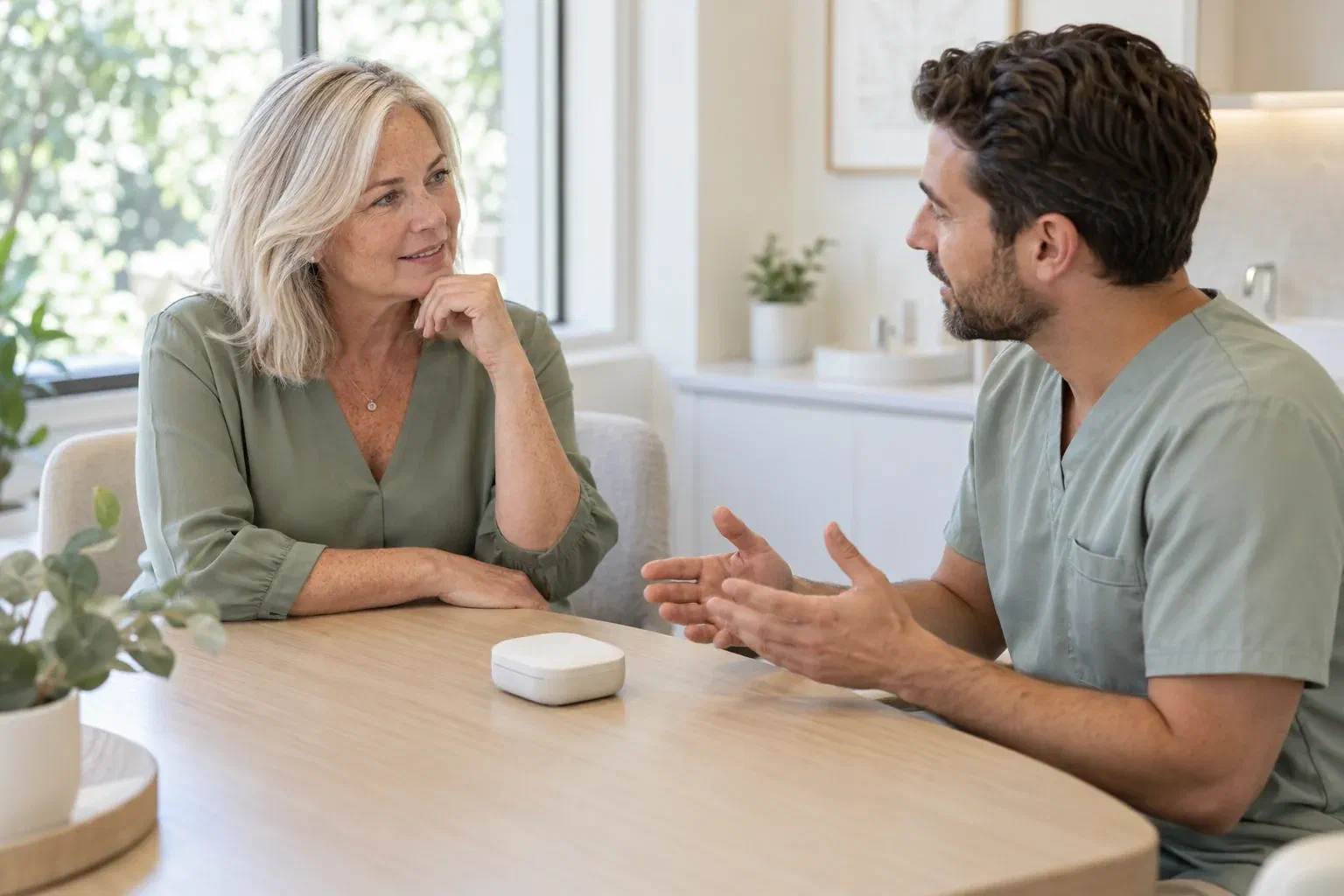
Illustrative consultation about replacing a custom oral sleep appliance
Specialized Care

Sleep Appliance Replacement in Erin

A replacement sleep appliance can look like your old one and still feel like a stranger for the first few weeks. Plan for that from the start. From Erin or Hillsburgh, the review covers your current teeth, the old device and how you will settle in.

Thinking ahead from Erin

Same purpose, new device, fresh learning curve.

People who have worn an oral sleep appliance for years often expect a replacement to slip straight into the old routine. It may. More often there is a short adjustment: a slightly different grip on the teeth, new pressure points, or a starting position that is not where the old device ended up. Knowing that ahead of time makes the first weeks easier.

Getting there starts earlier, though. Your mouth has probably changed since the original was made, and the reason you need a new one — loss, damage, discomfort, fading results — shapes what the dentist checks. Bring the old device if you have it, and think about what you would keep and what you would change.

Let Milton Dental Clinic know who made the first appliance and which physician follows your sleep condition. The dentist can explain the assessment and how your physician will be kept informed. A replacement is built for the mouth and treatment plan you have now, which is exactly why it may feel new rather than familiar.

Plan a replacement from start to settling in
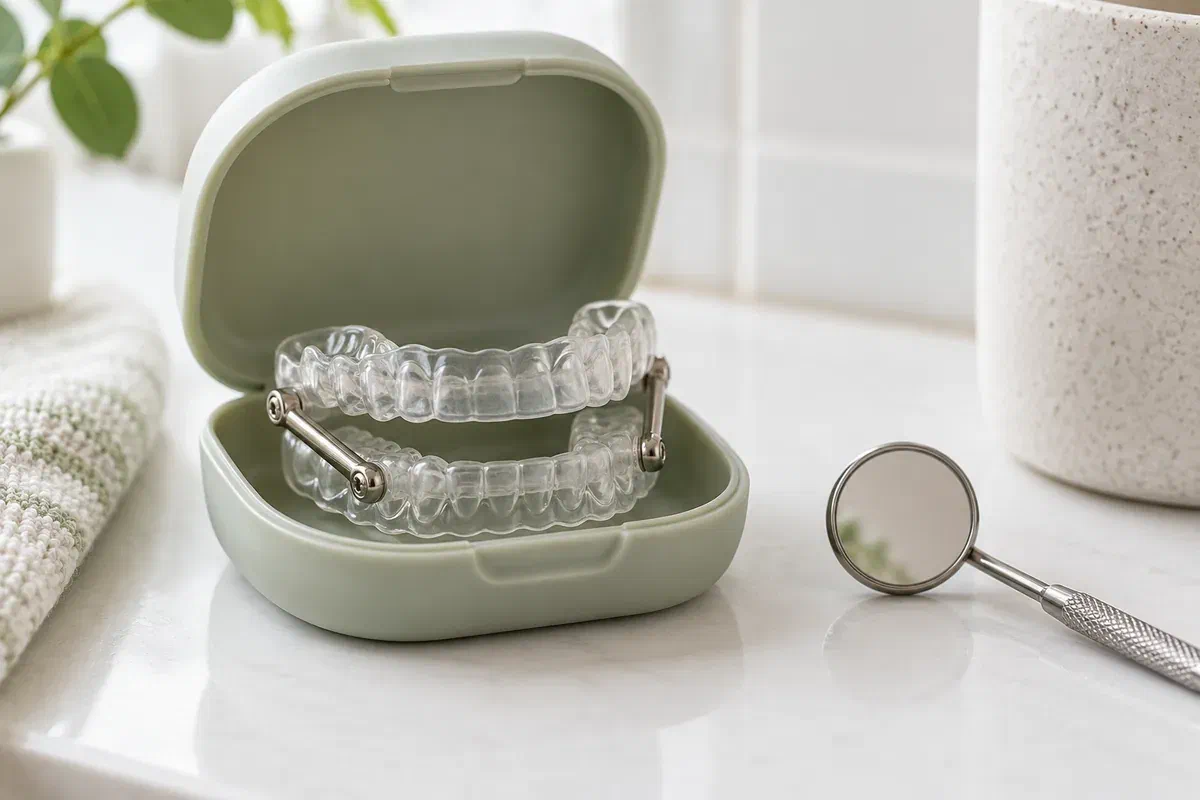
Illustrative connected oral sleep appliance inside an open protective case
How you got here

The reason for replacing it shapes everything after.

A lost device, a broken one, a mouth that has changed and a treatment that seems to be slipping each lead to a slightly different plan — and a slightly different settling-in period.

You no longer have the device

Note when you last wore it and ask its maker which records are on file. Then tell your sleep physician about the gap and ask what to do until the replacement is ready, so you are not simply waiting it out at home without guidance.

It is broken or worn beyond comfort

Bring the device and any loose pieces. Repair may be worth assessing for some faults, but not all, and an old appliance is not automatically due for replacement. Where it failed, what it is built from and how snugly it still sits all steer the decision.

Your mouth or results have shifted

Mention crowns, fillings, missing teeth, gum soreness, a change in your bite or growing discomfort. If snoring or tiredness has returned, let your sleep-care provider know as well. Those changes affect how the new device is designed and how you will adapt to it.

Stop wearing an appliance that is cracked, forced into place or has loose parts. Phone whoever is treating you, and ask your physician how to manage the nights between one device and the next.

What careful planning buys you

A smoother start with the new appliance.

The more the dentist knows about the old device, the better they can anticipate how the new one will feel. Tell them what you got used to, what never felt right, and whether your physician ever confirmed the treatment was working. That shapes the design, the starting position and what to watch for once you begin wearing it.

Planning also prevents an awkward mismatch. If a filling or crown is due, finishing it before records can help the new device fit from the start. If your sleep clinic has not seen you in a while, they may want to. Settling the sequence, and who handles fitting and later review, makes the settling-in period about adapting, not troubleshooting.

Patient information: AADSM — current assessment, appliance management, and coordinated follow-up

A current picture of your mouth

Every tooth the trays will touch, along with gums, existing dental work, your bite and the way the jaw opens, is looked at so the new appliance matches them. Ask whether anything should be treated first. An easy experience with the first device is a good sign, but it does not predict how a new one will fit today’s teeth.

Records that inform the new design

The name of the original design, how far it was adjusted and what your sleep clinic reported give the dentist a sense of where you are coming from. Ask what can be obtained and what will be retaken. Old impressions rarely match a mouth that has changed, so expect fresh records in many cases.

A settling-in plan, written down

Before fitting, ask what is normal in the first weeks, what is not, who to call and when the first review will be. Confirm how your physician will check effectiveness. A replacement is a new start to treatment, not a quiet swap.

Start to finish

From the first conversation to the first review.

Bring the old appliance and any papers, or explain what is missing. The first visit establishes why replacement is needed and what has to be in place before a suitable device is made.

  1. Share the history and your wish list

    Explain why you need a replacement, how often you wore the old device and what you would like to be different. Give the original provider’s name, your physician’s details and the date of your last sleep review. Mention whether you are currently without treatment.

  2. Examine the mouth the device will fit

    The dentist reviews oral health, the teeth and tissues that will hold the new appliance, and how your jaw moves. Planned dental work may come first. You will hear which findings shape the options and whether new records can be taken right away.

  3. Choose a design and know the stages

    If a new appliance is the way forward, you will go through the design on offer, the records it depends on, an estimate of cost and each stage still to come, including what the adjustment period may involve. Timing is confirmed by the provider making the device, not assumed.

  4. Fit, learn and review

    At fitting, the new appliance is checked, and you are shown how to insert, remove, clean and store it, with its own prescribed starting position. Ask when you will be seen again and how your physician will review effectiveness. Leave old settings behind.

The first weeks

Expect a short adjustment, and say so when it is more.

What to do before and after fitting depends on why the device was replaced and whether an older one is safe. Ask for clear guidance on both stages.

Before fitting: protect your sleep care

Nights with no appliance are nights without treatment, and the doctor handling your sleep condition can suggest how to bridge them. Keep using anything else they have prescribed; a drugstore guard will not do the same job. Heavy eyelids at the wheel or at your desk are a reason to phone your doctor and let someone else drive for now.

Between records and fitting: report changes

If a tooth chips, a crown is placed, pain starts or your bite changes after records are taken, let the team know. The new device was made for the mouth on record, so changes can affect fit.

After fitting: learn it on its own terms

Practise insertion and removal at home, and confirm cleaning, storage and whether any adjustment is yours to make. Mild pressure or saliva changes may settle; sore spots, jaw pain or a device that will not seat should be reported. Keep instructions handy and call if the first nights are hard.

The routes available

Not every replacement visit ends in a new appliance.

Before choosing, find out what a given route fixes and what it leaves behind. A new device does not fix discomfort, repeated breakage or returning symptoms unless their cause has been understood.

When the review supports replacement

A new custom appliance

Once your teeth have been examined and your physician’s view is known, a newly made appliance is often the sensible way forward. Talk over the design, the scans it requires and, just as usefully, how the first fortnight of wear tends to feel with that style. Build the plan on what your mouth shows today and what years with the old device taught you, and book the review in advance.

When the existing appliance still has a role

A repair of the current device

Keeping a device you already know has an obvious appeal: there is little to relearn. Certain faults can be looked at for repair, though it hinges on where the device failed, what it is made of, whether parts exist and how snugly it still sits. Find out what the repair would restore and how it gets tested; some breaks cannot be mended well, and some mending costs more than it saves.

When the underlying needs are different

A wider dental or sleep review

Gum or tooth problems, a jaw that no longer tolerates the old position, or a sleep condition that seems less controlled can each mean the appliance is not the first thing to address. Your physician and the clinic that made the original may be asked for input. Sort out which issue leads, so settling in to any new device is not complicated by an old one.

Erin questions

What the early days with a replacement are like.

Bring questions about the old device, the new one, costs and settling in. Your examination and records allow the dentist to answer for your situation.

(905) 876-4488
Why does my replacement feel different from my old appliance?
It is made for your mouth as it is now, may use a different design or material, and starts at a prescribed position rather than where the old one ended up. Some difference is common; persistent discomfort should be reported.
How long does it take to adjust to a new sleep appliance?
It varies. Many people settle within days or a couple of weeks, while others need adjustments. Ask what to expect for your device and call if discomfort does not ease.
Is extra saliva or a dry mouth normal with a new device?
Changes in saliva are commonly reported at first and often settle. Mention it at your follow-up, or sooner if it is interfering with sleep or comfort.
What should I bring to my replacement fitting?
Bring your old appliance if you still have it, any questions you have noted, and details of your sleep physician. Plan time to practise insertion and removal before you leave.
Can I adjust the new appliance at home if it feels tight?
Only if your instructions specifically allow it and explain how. Otherwise contact the provider; a device that feels tight may need a professional check.
If I sleep better right away, can I skip the follow-up?
No. Feeling better is encouraging, but follow-up checks fit and your physician confirms effectiveness. Keep the review appointments you are given.
Booking from Erin

Start the conversation before the new device is even made.

Reach Milton Dental Clinic by phone once you know your appliance needs replacing, whether it went missing, broke, wore thin or simply stopped suiting you. Mention if it is still in your hands, the clinic that made it and how long you have gone without treatment; we can then plan the assessment and talk about life with the new device.

Both the new device and the way you ease into it are planned from this exam and from your physician’s guidance.

Visit Milton Dental Clinic
Unit 1, 342 Bronte St. S, Milton, ON L9T 5B7
Get directions Clinic hours
Monday–Thursday
11am–7pm
Friday–Sunday
By appointment only

Areas we serve

  • Milton
  • Oakville
  • Mississauga
  • Georgetown
  • Halton Hills
  • Acton
  • Campbellville
  • Brampton
  • Burlington
  • Puslinch
  • Rockwood
  • Erin
  • Caledon
  • Etobicoke
  • Old Milton
  • Bronte Meadows
  • Timberlea
  • Dorset Park
  • Dempsey
  • Clarke
  • Beaty
  • Coates
  • Harrison
  • Scott
  • Willmott
  • Ford
  • Bowes
  • Cobden
  • Walker
  • Mountain View
  • Milton Heights
  • Hawthorne Village
  • Valley View
  • Fallingbrook
  • Nassagaweya
  • Trafalgar
  • Esquesing
  • Nelson
  • Brookville
  • Moffat
  • Glen Williams
  • Norval
  • Limehouse
  • Stewarttown
  • Ashgrove
  • Hornby
  • Silver Creek
  • Speyside
  • Scotch Block
  • North Oakville
  • River Oaks
  • Glen Abbey
  • West Oak Trails
  • Palermo
  • Bronte Creek
  • College Park
  • Joshua Creek
  • Uptown Core
  • Preserve
  • Iroquois Ridge
  • Lisgar
  • Meadowvale
  • Meadowvale Village
  • Churchill Meadows
  • Erin Mills
  • Central Erin Mills
  • Streetsville
  • East Credit
  • Creditview
  • Heartland
  • Sheridan
  • Mount Pleasant
  • Credit Valley
  • Huttonville
  • Churchville
  • Springbrook
  • Northwest Brampton
  • Bram West
  • Fletcher's Meadow
  • Fletcher's Creek South
  • Alton Village
  • Orchard
  • Millcroft
  • Headon Forest
  • Tansley
  • Brant Hills
  • Tyandaga
  • Kilbride
  • Lowville
  • Aberfoyle
  • Morriston
  • Arkell
  • Hillsburgh
  • Freelton
  • Carlisle
  • Waterdown
  • Flamborough
  • Mountsberg

How can we help?

Milton Dental Clinic

Have a question about your smile? Choose the option that works best for you.

For urgent dental concerns, please call.
Messages are reviewed during clinic hours.