
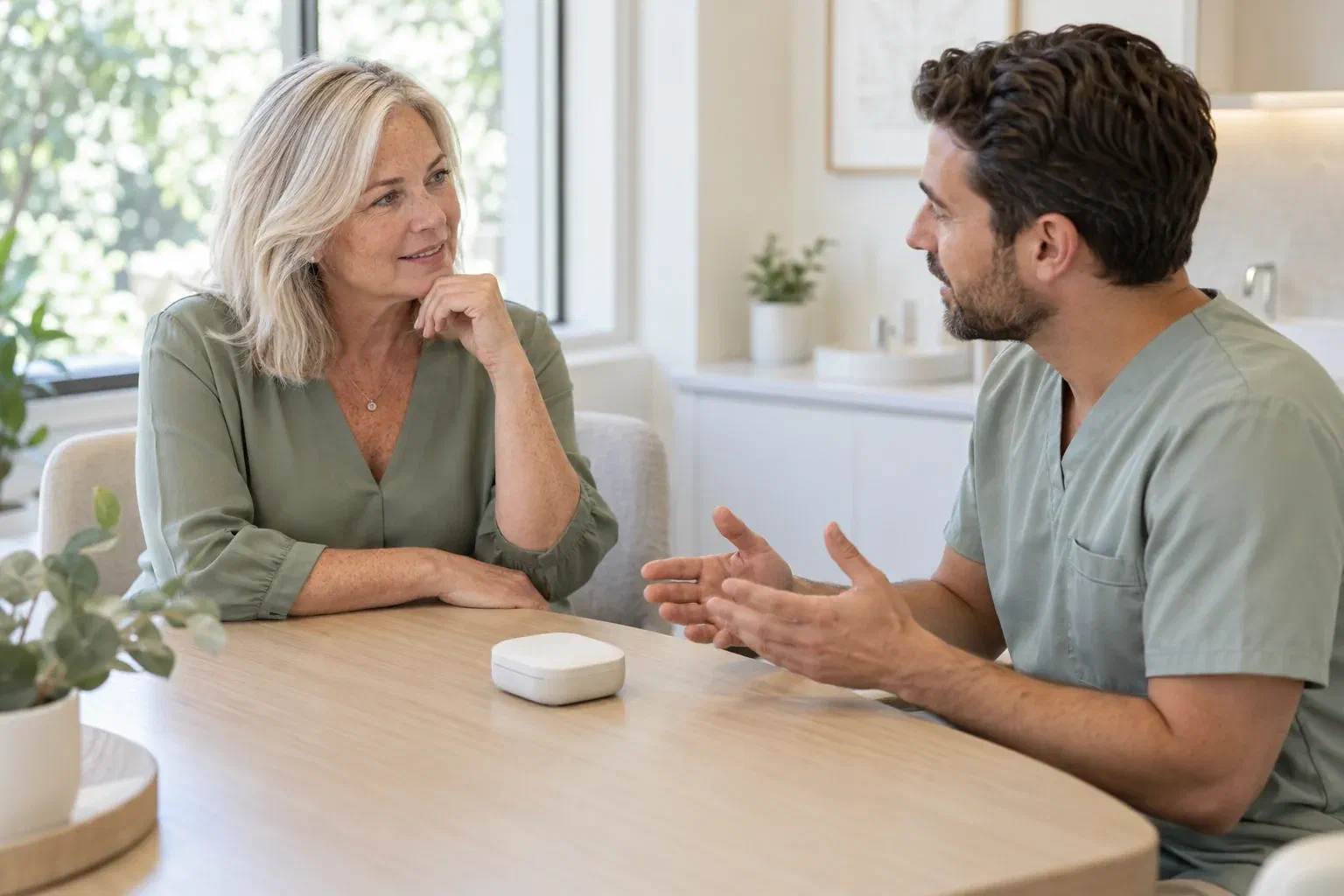
Illustrative consultation about replacing a custom oral sleep appliance
Specialized Care

Sleep Appliance Replacement in Etobicoke

Replacing a sleep appliance can take more than one appointment, so it pays to arrive prepared. From Etobicoke, gather your device, records and sleep-clinic details first, and we can make each visit count while your current teeth and plan are reviewed.

Coming from Etobicoke

Do the groundwork at home, so the appointments do the rest.

When the trip to an appointment is a longer one, the question is less “what do I need?” and more “what can I sort out before I leave the house?” A replacement oral sleep appliance usually involves an assessment, records and a fitting, with review afterwards. Arriving with the right information makes it more likely each visit moves things forward.

Start a short folder. Put in the old device if you have it, even broken; the name and phone number of the clinic that made it; your sleep physician’s details; and a few lines on how the appliance worked and why you need a new one. Requesting copies of earlier records ahead of time can also help, though some may need to be retaken.

Milton Dental Clinic will use that information to discuss what assessment fits your situation and how your physician can stay involved. The aim is not to rush a copy of the old device. A replacement still has to match your current teeth and treatment plan, and that check is the part worth travelling for.

Plan an organized replacement visit
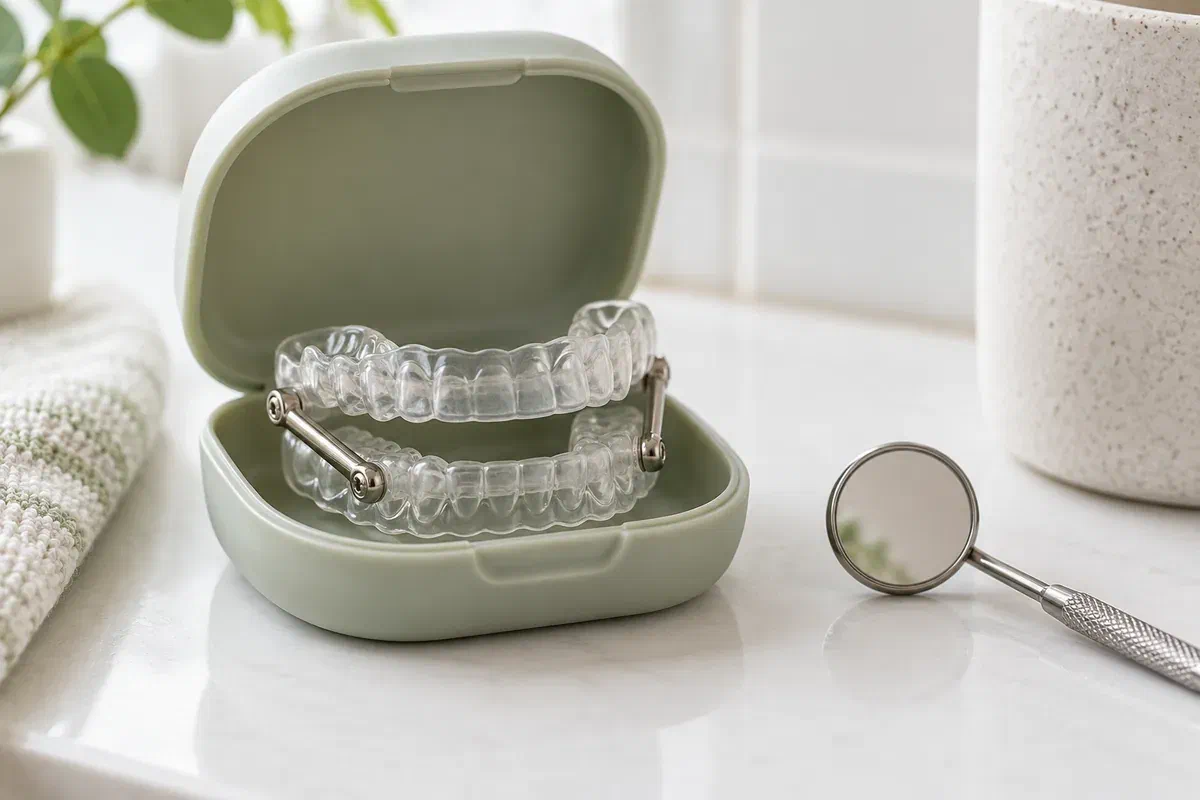
Illustrative connected oral sleep appliance inside an open protective case
Before you book

Pin down the reason. It shapes how many visits you will need.

A lost appliance, a damaged one and a mouth or treatment that has changed lead to different conversations. Being clear about which applies helps the team plan appointments sensibly.

You have nothing to bring but the case

If the appliance is lost, call the provider who made it and ask what records they still hold and whether they can send them. Let your sleep physician know about the interruption at the same time, so an interim plan is in place rather than leaving the gap open-ended.

It is broken, warped or loose

Pack the device and any fragments in the case and bring them along. Whether repair is worth assessing depends on the damage, design, parts and how it fits now. Age alone does not settle it, and neither does how small the defect looks.

Teeth, comfort or results have shifted

Note any new crowns or fillings, missing teeth, gum problems, a different bite or growing discomfort. If symptoms have returned, share that with your sleep-care provider. A replacement may be one step, but those changes need attention too, or the new device may run into the same trouble.

If an appliance is cracked, sharp or has a loose part, stop wearing it. For a cut, swelling or significant dental pain, seek care close to home rather than waiting for a planned visit, then let us and your physician know.

Why a full review is worth the trip

Make one good assessment instead of several partial ones.

The dentist will want to hear what you liked and disliked about the old appliance, and whether a physician or sleep test ever confirmed it was effective. Having those answers ready means the examination can focus on what has changed, rather than reconstructing your history from scratch.

A thorough review also surfaces anything that could cause a second trip later. Is dental work planned that would change the fit? Does your sleep clinic want to see you first? Sorting the sequence early, and confirming which office fits the device and which one checks it afterwards, cuts down on surprises between appointments.

Patient information: AADSM — current assessment, appliance management, and coordinated follow-up

One careful look at the mouth

Because a new device leans on your teeth, gums, dental work, bite and jaw joints, each is examined in one sitting. Ask whether any treatment should come first, and whether it could be coordinated with your own dentist closer to home. Past success with an appliance does not replace a current examination.

Records requested before, not after

Device details, scans, dental charts, adjustment notes and sleep reports may already exist. Ask which are worth requesting before your visit and which will need to be retaken anyway. A file that still exists is not automatically up to date.

A schedule you can plan around

Ask roughly how many appointments are expected and what each involves, while knowing timing is confirmed by the provider making the device. Find out who to contact if the wait runs long and how your response to the new appliance will be reviewed after fitting.

A planned sequence

What each visit is for.

Bring your folder and the old appliance, or a note of what is missing. The first appointment pins down the reason a new device is needed and lists the jobs to finish before one can be made.

  1. First visit: history and reasons

    Walk the dentist through how the appliance was lost, damaged or became unsuitable, and how you used it before. Share the original provider’s and sleep physician’s details. If you have been sleeping without the appliance, say so, along with anything your physician has told you about it.

  2. Examination of what has changed

    The dentist checks oral health and the structures that would support the new appliance. If dental work is needed or planned, you will discuss where it fits in. Ask whether records can be taken during the same visit or whether another step should come first.

  3. Agreeing the design and the estimate

    When a new appliance is the right call, the dentist sets out the design, which scans or impressions it needs, a cost estimate and how many appointments to plan for. Ask why this option suits you given the last device. Any timing comes from the treating provider and may change, so avoid planning firmly around a guess.

  4. Fitting, instructions and review

    The replacement is fitted and checked, and you go home with its handling instructions and its own prescribed starting point. Ask how follow-up will be arranged and whether your physician will reassess effectiveness. Do not carry the old setting over or adjust parts unless the new instructions say you can.

Between appointments

Know who to call, and when not to wait.

Interim guidance depends on why the device is being replaced and whether any existing appliance is safe. Ask for written instructions covering the waiting period and the first weeks with the new device.

Keep your sleep physician informed

Let them know you are without the appliance and ask what interim care is appropriate. Keep any other prescribed treatment going and do not substitute a generic guard. If you are sleepy during the day, seek medical advice — and on a longer drive especially, do not get behind the wheel while drowsy.

Call before travelling if something changes

A chipped tooth, new dental work, pain or a bite change after records are taken may affect the fitting. Phone ahead so the team can decide whether the appointment should go ahead as planned or be adjusted.

Learn the new device before you rely on it

Practise inserting and removing it at home and confirm how to clean, store and, if allowed, adjust it. It may look like your previous appliance but behave differently. Keep instructions and phone numbers together, and ask when a quick call might save an unnecessary trip.

Likely directions

Choose the path that solves the actual problem.

Ask what each option would address and what it would leave. A new device will not on its own resolve discomfort, repeated breakage or returning symptoms if the reason behind them has not been identified.

If the review backs a new device

A newly made appliance

Once dental findings and medical information are reviewed, a new custom device may be suitable. Ask which design and records are involved and how the fitting will be scheduled around your travel. The plan should reflect your current mouth and your past experience, with follow-up built in.

When the appliance may still be serviceable

Repair of the existing device

Some damage can be assessed for repair. Its suitability depends on the defect, materials, components and fit. Ask what repair would achieve and how the device would be rechecked. It is not always possible, and it is not always the most economical choice.

When underlying needs have changed

A wider dental or medical review

If oral health, tolerance or treatment response is different, the next step may be another kind of assessment rather than a device. Our dentist may liaise with your original provider, your own dentist or your sleep physician. Ask what should be settled first so a replacement does not repeat old problems.

Etobicoke planning questions

Practical answers before you make the trip.

Bring questions about records, fit, costs and the waiting period. Your examination and the information you gather help the dentist answer them clearly.

(905) 876-4488
How many appointments does a replacement sleep appliance usually involve?
It varies. Typically there is an assessment, a records stage and a fitting, followed by review. Some steps may be combined depending on your situation, and the dentist can outline the likely sequence after examining you.
Can I ask the original clinic to send my records before my first visit?
Yes, and it can be helpful. Ask them for device details, scans or impressions and any adjustment notes. The dentist will still need to judge whether those records reflect your current mouth.
What should I do if my appliance breaks and cuts my mouth while I am waiting?
Stop wearing it. For a cut that will not stop bleeding, swelling or significant pain, seek care close to home. Let our team and your physician know afterwards so the plan can be updated.
Can my regular dentist handle part of the process?
Coordination is possible in some cases, for example if dental treatment is needed before records are taken. Tell us who your dentist is, and the providers can discuss what makes sense.
Does a replacement mean I start over with my sleep physician?
Not necessarily from the beginning, but your physician should know about the change. They decide whether any review or testing is needed once the new device is in use.
Is it worth trying a different style of appliance this time?
It may be. Tell the dentist what worked and what did not with your previous one. They can explain which designs could suit your mouth and treatment needs, though suitability has to be assessed.
Booking from Etobicoke

Call first, bring your folder, and we will plan from there.

Phone Milton Dental Clinic about a sleep appliance that is lost, damaged, worn or no longer comfortable. Tell us whether you still have it, who made it and whether treatment is currently interrupted, so we can discuss assessment arrangements that make good use of your trip.

A replacement is based on current dental findings and the sleep-care plan coordinated with your physician.

Visit Milton Dental Clinic
Unit 1, 342 Bronte St. S, Milton, ON L9T 5B7
Get directions Clinic hours
Monday–Thursday
11am–7pm
Friday–Sunday
By appointment only

Areas we serve

  • Milton
  • Oakville
  • Mississauga
  • Georgetown
  • Halton Hills
  • Acton
  • Campbellville
  • Brampton
  • Burlington
  • Puslinch
  • Rockwood
  • Erin
  • Caledon
  • Etobicoke
  • Old Milton
  • Bronte Meadows
  • Timberlea
  • Dorset Park
  • Dempsey
  • Clarke
  • Beaty
  • Coates
  • Harrison
  • Scott
  • Willmott
  • Ford
  • Bowes
  • Cobden
  • Walker
  • Mountain View
  • Milton Heights
  • Hawthorne Village
  • Valley View
  • Fallingbrook
  • Nassagaweya
  • Trafalgar
  • Esquesing
  • Nelson
  • Brookville
  • Moffat
  • Glen Williams
  • Norval
  • Limehouse
  • Stewarttown
  • Ashgrove
  • Hornby
  • Silver Creek
  • Speyside
  • Scotch Block
  • North Oakville
  • River Oaks
  • Glen Abbey
  • West Oak Trails
  • Palermo
  • Bronte Creek
  • College Park
  • Joshua Creek
  • Uptown Core
  • Preserve
  • Iroquois Ridge
  • Lisgar
  • Meadowvale
  • Meadowvale Village
  • Churchill Meadows
  • Erin Mills
  • Central Erin Mills
  • Streetsville
  • East Credit
  • Creditview
  • Heartland
  • Sheridan
  • Mount Pleasant
  • Credit Valley
  • Huttonville
  • Churchville
  • Springbrook
  • Northwest Brampton
  • Bram West
  • Fletcher's Meadow
  • Fletcher's Creek South
  • Alton Village
  • Orchard
  • Millcroft
  • Headon Forest
  • Tansley
  • Brant Hills
  • Tyandaga
  • Kilbride
  • Lowville
  • Aberfoyle
  • Morriston
  • Arkell
  • Hillsburgh
  • Freelton
  • Carlisle
  • Waterdown
  • Flamborough
  • Mountsberg

How can we help?

Milton Dental Clinic

Have a question about your smile? Choose the option that works best for you.

For urgent dental concerns, please call.
Messages are reviewed during clinic hours.